
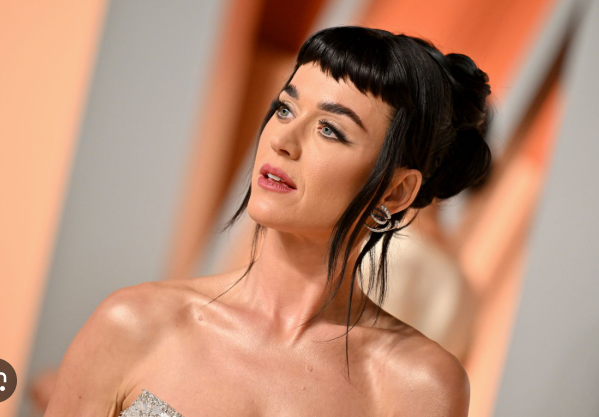
The detail that explains everything comes from her childhood. Katy Perry grew up in a household where secular music was not a preference. Indeed, it was a prohibition. Her parents were, specifically, Pentecostal pastors. The radio, consequently, played gospel or nothing. She was not, for instance, allowed to say the word lucky — too close to Lucifer for comfort. Katy Perry net worth and the catalog empire both trace back to that single biographical fact: a girl raised on gospel music broke every rule in that house, then systematically turned the break into a $340 million asset. However, the asset did not arrive all at once.
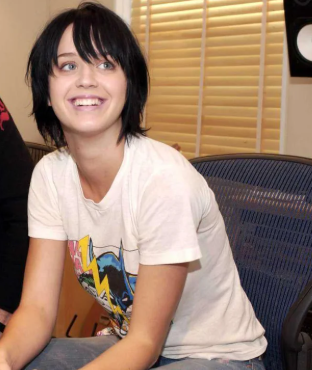
Santa Barbara, Pentecostal Pastors, and the Name She Had to Leave Behind
Katheryn Elizabeth Hudson was born on October 25, 1984, in Santa Barbara, California. Her father, Keith Hudson, and her mother, Mary Perry Hudson, were both ordained Pentecostal ministers. Notably, the faith was not decorative. Indeed, it governed the house entirely. Indeed, there was no secular music, no secular television, no context for pop culture at all. As a result, she grew up unable to name the chart toppers her classmates treated as air. The Billboard Hot 100 was, in fact, a foreign language in that household. Meanwhile, she was already fluent in a different one.
Meanwhile, she was singing. Additionally, gospel came naturally — the voice, the stage comfort, the instinct for an audience. By fifteen, she had, nonetheless, recorded a Christian music album under her birth name, Katheryn Hudson. Subsequently, Red Hill Records released it in 2001. Consequently, the label folded within months. Furthermore, the album disappeared without trace. Moreover, she moved to Los Angeles at seventeen with two hundred dollars and a working theory about what she wanted. She did not, however, move back.
Accordingly, Island Def Jam signed her, then dropped her. Columbia Records signed her, then dropped her too. Still, she stayed in Los Angeles. In total, by her early twenties, three major labels had signed and released her. She changed her name to Katy Perry — her mother’s maiden name — to avoid confusion with actress Kate Hudson. The new name was, ultimately, one of the few things she kept from before. Consequently, everything else had to be rebuilt from scratch.
The Pivot: “I Kissed a Girl” and the Irony That Launched Everything
Capitol Records signed her in 2007. In June 2008, she released “I Kissed a Girl.” It reached number one in twenty-seven countries. After all, she was the daughter of two Pentecostal ministers. Her first hit was a song they could not play in church. Specifically, the irony was not accidental. It was structural — the pressure release of someone whose desire had spent fifteen years under doctrinal management.
However, the real statement came two years later. Teenage Dream arrived in August 2010. By 2012, it had produced five consecutive number-one Hot 100 singles. Billboard confirmed she had matched Michael Jackson’s record from Bad. No female artist had done it before. No artist has done it since — generally, records of that kind do not stand long. This one has.
In fact, that record is the detail most people skip. Generally, people remember the whipped cream costumes and the stadium productions. The chart history — the actual story behind Katy Perry net worth — gets bypassed entirely. Five consecutive number-one singles is not luck. It is a disciplined manufacturing operation by someone who had been preparing since age eight.

The Climb: American Idol, Las Vegas, and Two Decades of Architecture
By the mid-2010s, Katy Perry had constructed a multi-leg brand architecture. Touring numbers were consistent. Endorsements were premium-tier. Then came television. Her American Idol judging contract opened a second income stream entirely separate from music. At a reported $25 million per season, television added demographics that had never bought a Katy Perry album. The overlap was the strategy, not a side effect.
Meanwhile, the Las Vegas chapter. Her Play residency at Resorts World ran from 2021 through 2024. Residencies operate on a specific financial logic: low overhead, guaranteed nightly attendance, revenue-sharing that favors established acts. By the time it concluded, the run had become one of the highest-grossing on the Strip in that period. Revenue did not, therefore, come from a single night. It compounded, systematically, across more than eighty performances.
The infrastructure beneath Katy Perry net worth compounds by design. She designed every income stream to run independently, with minimal exposure to any single one failing. Music could tour without a new album. Television could run without touring. Las Vegas could run without either. That architecture is what twenty years of discipline looks like from the inside.
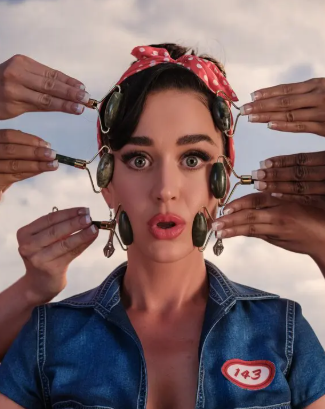
Katy Perry in Montauk: The East End on Its Roughest Terms
Press photographers have documented Katy Perry and her partner, Orlando Bloom, in Montauk regularly. Press coverage documents their presence there across multiple summers. Bloom is a known surfer who gravitates to Montauk’s breaks. Press photographers have caught Perry in the water alongside him. They return, and the East End press takes notice — then leaves them alone, which is precisely why certain people choose Montauk over the more photographed Hamptons towns to the west.
Montauk is the part of the East End the Hamptons crowd typically bypasses. The bluffs are rough-cut and unfinished. Atlantic weather arrives without filtering. The culture runs closer to surf than to privet hedges and Pellegrino. For someone who spent fifteen years in a household where adults controlled and categorized everything, the appeal is not difficult to read. Montauk operates by different rules than the softer Hamptons towns — fewer pretensions, rougher coastline, a community that values water over scene.
Their daughter, Daisy Dove Bloom, was born in August 2020. She has grown up making the trip east. When the family eats out in the area, Montauk’s dining scene offers exactly the kind of unpretentious discretion they move with elsewhere. The East End rewards that. So does the community.
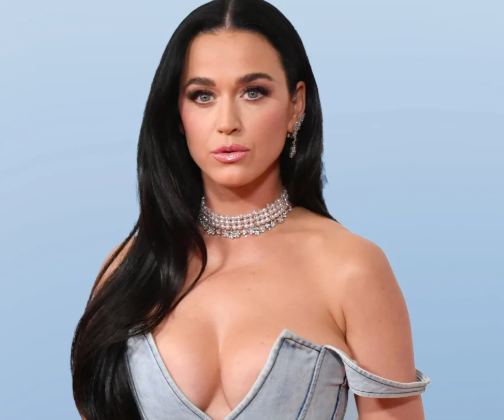
What Katy Perry Net Worth Actually Measures: The $225M Catalog Decision
In 2023, Katy Perry sold her music catalog to Litmus Music for approximately $225 million. The catalog covers her Capitol Records era — “Roar,” “Firework,” “Dark Horse,” “I Kissed a Girl,” and the entirety of Teenage Dream. In practical terms, she sold the recorded evidence of the decade that built her brand. The catalog is gone. Nevertheless, the capital it generated is not.
The Wall Street Journal documented the market logic: Bob Dylan sold to Universal for over $300 million, Bruce Springsteen to Sony for a reported $500 million. The market treats music rights like cash-flowing infrastructure. Reliable royalty income, predictable growth curves, near-zero operational overhead. She exited at close to peak valuation.
Forbes places Katy Perry net worth at approximately $340 million in 2026. That figure incorporates catalog sale proceeds alongside touring income, American Idol judging fees, and Las Vegas residency earnings. It is not a number produced by a single hit or a lucky deal. It is the consequence of two decades of income stream architecture, all running simultaneously. For the full wealth picture, Social Life Magazine’s Music Industry Net Worth Rankings 2026 maps where Katy Perry net worth lands among every major artist active today.
Where Katy Perry Is Now: Montauk, Mornings, and the Long Game
The Catalog Decision in Context
She surfs, specifically, when she is in Montauk. Press coverage documents it. Nobody is inferring. The stadium costumes are the image the industry promoted. The woman underneath them chose catalog ownership over advances, Las Vegas over touring arenas, and the rough end of the East End over the manicured one. She has been making the same choice, in different forms, since she was seventeen years old in Los Angeles with two hundred dollars and a working theory.
The Katy Perry net worth story is still being written. Specifically, she has deployed the catalog proceeds. The residency revenue has compounded. She has not announced the next chapter. In the meantime, she returns to Montauk. Architectural Digest has documented this pattern across five decades of East End celebrity culture: the ones who keep coming back rarely came for the scene. They came for the water.
The catalog decision and the East End chapter place her at the center of a larger argument covered in Pop Empire Builders: How Ariana Grande and Katy Perry Turned Music Into $580M — the strategic framework both artists used to convert a music career into something that compounds without touring. Meanwhile, the brand-founder parallel runs through Celebrity Brand Founders: The Artists Who Built More Than Catalogs.
She sold the catalog. Ultimately, the story that generated those songs belongs to her permanently. Katheryn Hudson from Santa Barbara still owns that. She always will.
Feature your brand: Contact Social Life Magazine — we connect luxury properties with the audiences that close.
The East End’s premier sporting event: Polo Hamptons — sponsorships, VIP access, and brand activations where the Hamptons actually convenes.
Get the Hamptons insider list: Subscribe to Social Life Magazine — 23 years of the East End, delivered to your door.
Support independent Hamptons journalism: Donate $5
Part of these collections:
→ Celebrity Net Worth Rankings 2026
→ Pop Empire Builders: Ariana Grande & Katy Perry — $580M
→ Celebrity Brand Founders: Artists Who Built More Than Catalogs
Related reading:
→ Ariana Grande Net Worth 2026 and the r.e.m. Beauty Story
→ Post Malone Net Worth 2026: The Genre Refusal That Paid Off
Author

Written by
Recent Posts

How to Choose Useful Tech Gifts for Employees and Clients in 2026
The Garage Question: Which Car Goes South for the Season?
VandS Clinic Review Treatment: How Seoul Injectable and Laser Options Compare for US Patients
Before Buying a View Home: What a Sloped Lot Means for the Purchase

Powerful Strategies to Stay Ahead in a Fast-Moving Real Estate Market
Categories
- Art
- Articles
- Business of Luxury
- Celebrities
- Culture
- Entertainment
- Events
- Faces of Summer 2026
- Fashion
- Fashion & Style
- Featured
- Finance
- Food, Spirits, Wine
- Hamptons
- Hamptons Celebrities
- Health
- Health & Beauty
- Lifestyle
- Luxury Lifestyle
- Press
- Profiles
- Real Estate
- Technology
- The Chronicles
- Travel
- Uncategorized
- Weddings