

ARTICLE BODY, PASTE INTO WORDPRESS HTML EDITOR
Most artists blame the gap between albums on label politics, budget disputes, or creative exhaustion, and, generally, that story is easy to tell. Solána Imani Rowe blamed it on herself. The five years between Ctrl and SOS, 2017 to 2022, were, specifically, not the result of contractual deadlock or a difficult producer relationship. They were the result of anxiety severe enough that she has described, in multiple interviews, nearly not finishing the second album at all. The woman who would, ultimately, break the longest-running number one record for a female artist in Billboard 200 history almost quit before she got there. SZA net worth and the empire it represents were, in fact, nearly unmade by the artist herself. That is, in short, the counterintuitive detail. Remarkably, the paralysis was not an obstacle to the process. It was, rather, the process itself.
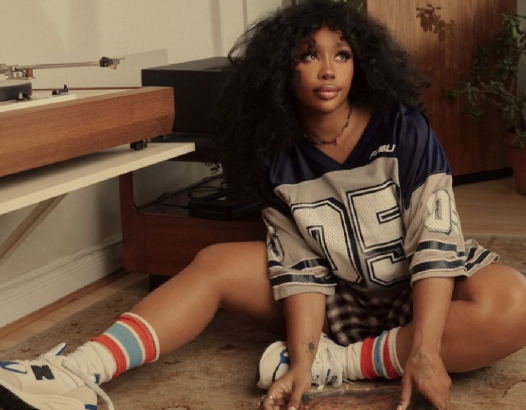
Maplewood, New Jersey: The Household That Did Not Explain What Came Next
Solána Rowe was born in St. Louis, Missouri, and raised in Maplewood, New Jersey, a suburb nine miles from Manhattan, at the edge of Essex County. Her father, Terrence Rowe, was a vice president at AT&T and a television producer. Furthermore, her maternal grandfather was chairman of CBS News. The household was Muslim, upper-middle-class, and, notably, entirely outside the music industry in any commercial sense. Additionally, she trained competitively in gymnastics and acrobatics. Academically, she enrolled at Webster University in Missouri as a marine biology major, then dropped out. The sequence does not, therefore, explain what came next. Indeed, almost nothing about the Maplewood chapter does.
Top Dawg, the Five-Year Wait, and What Silence Produces
She was selling music independently before she had a label, small runs, self-distributed, through channels that barely existed in the early 2010s, with no publicist, no playlist placement, and no coordinated rollout behind any of it. She made the music and put it out. Top Dawg Entertainment, the label that housed Kendrick Lamar, signed her in 2013. The signing carried an implicit endorsement from one of the most credibility-dense operations in the industry. Consequently, it did not produce a release for four years. Instead, that time went into EPs, into features, and into building an audience that had no commercial product to attach itself to. By the time Ctrl arrived in June 2017, the audience was already, consequently, formed and waiting. Indeed, the debut was not discovery. It was, in other words, confirmation.
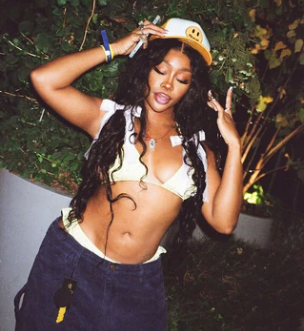
Ctrl, the Starting Point, and the Five Years That Followed
Ctrl debuted at number three on the Billboard 200. Accordingly, its critical reception was strong. “Love Galore” featuring Travis Scott became, moreover, her highest-charting single to that point. The album earned a Grammy nomination for Best Urban Contemporary Album. By any conventional metric, it was, accordingly, a successful debut. However, by the standard she appeared to apply to herself, it was only a starting point. The space between that starting point and what came next nearly swallowed five years entirely. In interviews, she has been specific about the mechanism: the fear that SZA net worth, career, and reputation all depended on whether the second album could prove the first one was real. That is not a small fear to carry for five years. It is, however, a precise description of what happened.
SZA Net Worth and the Architecture of SOS
SOS arrived on December 9, 2022. It debuted, specifically, at number one. Then, notably, it stayed. Billboard documented SOS at number one for ten consecutive weeks, the longest uninterrupted run at the top by a female artist in the history of the chart. The last comparable performance was Lauryn Hill in 1998. Twenty-four years, consequently, separated the two records. SOS also became one of the most-streamed albums in the R&B and pop categories since streaming replaced physical as the primary consumption model. “Kill Bill,” “Shirt,” “Seek & Destroy,” and “Nobody Gets Me” each built individual streaming totals that compounded across the album as a whole.
At the 65th Grammy Awards, SOS won Best R&B Album. “Blind” won Best Progressive R&B Album. Both wins, therefore, confirmed what the chart run had established. Rolling Stone documented the creative process behind SOS extensively, including her accounts of the periods when completion seemed unlikely. The anxiety she has described publicly is, in fact, not separate from the record. It is in the record. The album that broke the chart record was, ultimately, the one that was almost not made. That remains the central fact of the SZA net worth story.
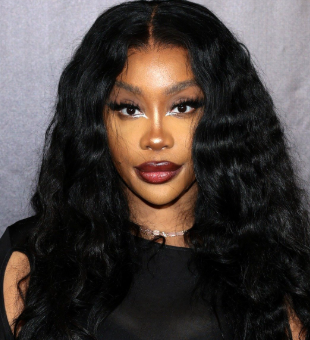
The Sag Harbor Chapter: SZA and the East End
Sag Harbor sits at the northern tip of the South Fork, where the Hamptons geography quiets into something older. Moreover, the significance runs deeper than geography. The Sag Harbor Hills, Azurest, and Ninevah Beach communities, collectively known as SANS, represent one of the oldest African American summer enclaves on the East Coast. The New York Times has documented the community’s history extensively, a place where Black professionals, artists, and intellectuals built a summer presence that predates most of the celebrity Hamptons geography by decades.
SZA has been documented in the Sag Harbor area during summer months. Press coverage has placed her in the East End social circuit. For an artist whose positioning runs through R&B credibility and understated taste, Sag Harbor is the correct geography. It is, rather, not the Hamptons as brand. It is the Hamptons as community. That distinction matters to the people who have been there longest. It also maps precisely onto how SZA net worth and the aesthetic it funds operate, the version of success that does not perform itself for the summer. For the full architecture of East End neighborhoods, Social Life Magazine’s Hamptons Real Estate Guide covers the geography in detail. For dining on the East End, the Sag Harbor restaurant guide maps the village’s best tables.
What SZA Built: The Publishing Gap and the Streaming Floor
Current estimates place SZA net worth between $8 and $15 million. That range is, specifically, the most instructive figure in this article, not because it is large, but because it is disproportionately small relative to her streaming footprint. SOS is among the most-streamed albums of its era. Her catalog generates streaming figures that most artists at the $15 million level cannot approach. The gap between what she streams and what she has accumulated is, in part, a function of deal structure. TDE’s arrangements have not historically been artist-favorable on publishing. Kendrick Lamar’s public departure from the label is, additionally, instructive context. Her publishing position on TDE-era material is not fully disclosed.
Touring income from the SOS cycle was substantial. The tour reached arenas across North America, Europe, and beyond, one of the larger R&B touring footprints of 2023. Brand partnerships have remained selective and fashion-forward. Forbes has tracked her wealth trajectory as one of the most undervalued figures in contemporary R&B relative to commercial footprint. A third album, when it arrives, will reset the conversation. Depending on the deal structure under which it is made, it may substantially revise the SZA net worth figure upward. For the competitive context, Social Life Magazine’s Music Industry Net Worth Rankings 2026 positions SZA net worth against every major recording artist working today.
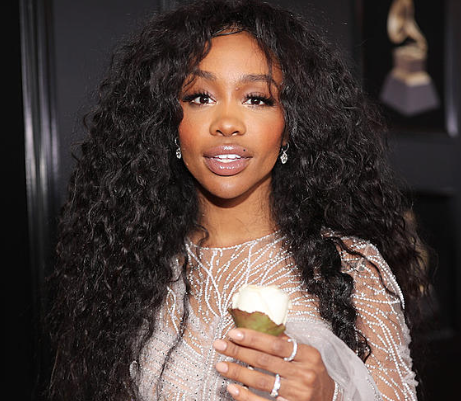
Where SZA Is Now: The Record, the Next Album, and the Long Calculation
She is thirty-five years old. Behind her: one album considered a canonical R&B debut, another that broke a Billboard record that stood for twenty-four years, and a net worth that does not yet reflect either. The third record has not been announced. Based on the timeline of the first two, patience is, notably, built into the process. Based on the commercial result of the second, that patience has been worth it.
The Sag Harbor chapter and the five-year-gap strategy connect her to a larger picture examined in Female Rap Royalty: Cardi B, Nicki Minaj, and SZA Built $205M, how three women from different boroughs and backgrounds built the most dominant era in female hip-hop history at exactly the same time.
Sag Harbor is still there. The SANS communities are still there. The East End still holds its own geography of the kind of success that does not perform itself for the summer. SZA net worth in 2026 is a floor number, being built toward something more accurately calibrated, by an artist who has demonstrated twice that the gap between where she starts and where she lands is larger than anyone watching could predict. The five-year silence, consequently, produced the longest number one run in chart history for a female artist. Whatever the next silence produces is, by available evidence, worth waiting for.
Feature your brand: Contact Social Life Magazine, we connect luxury brands with the audiences that close.
The East End’s premier sporting event: Polo Hamptons, sponsorships, VIP access, and brand activations where the Hamptons actually convenes.
Get the Hamptons insider list: Subscribe to Social Life Magazine, 23 years of the East End, delivered to your door.
Support independent Hamptons journalism: Donate $5
Part of these collections:
→ Celebrity Net Worth Rankings 2026
→ Female Rap Royalty: Cardi B, Nicki Minaj & SZA — $205M
Related reading:
→ Cardi B Net Worth 2026: How Belcalis Almánzar Built $40M
→ Billie Eilish Net Worth 2026: How a Bedroom Demo Built $53M
Author

Written by
Recent Posts

How to Choose Useful Tech Gifts for Employees and Clients in 2026
The Garage Question: Which Car Goes South for the Season?

VandS Clinic Review Treatment: How Seoul Injectable and Laser Options Compare for US Patients
Before Buying a View Home: What a Sloped Lot Means for the Purchase

Powerful Strategies to Stay Ahead in a Fast-Moving Real Estate Market
Categories
- Art
- Articles
- Business of Luxury
- Celebrities
- Culture
- Entertainment
- Events
- Faces of Summer 2026
- Fashion
- Fashion & Style
- Featured
- Finance
- Food, Spirits, Wine
- Hamptons
- Hamptons Celebrities
- Health
- Health & Beauty
- Lifestyle
- Luxury Lifestyle
- Press
- Profiles
- Real Estate
- Technology
- The Chronicles
- Travel
- Uncategorized
- Weddings