
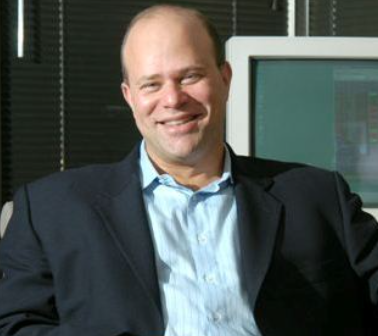
According to Forbes, David Tepper net worth sits at approximately $20.6 billion, making him the 91st-wealthiest person in the world — and, by the measure of total dollars generated in a single year, the author of the greatest trade in hedge fund history. He made roughly $7 billion in 2009. He bought Bank of America at $3 a share when every other serious investor was heading for the exits. Then he waited. Forbes called him “arguably the greatest hedge fund manager of his generation.” The market, eventually, agreed.
Indeed, the house he built in Sagaponack tells a more compressed version of the same story.
The Room Before the Room
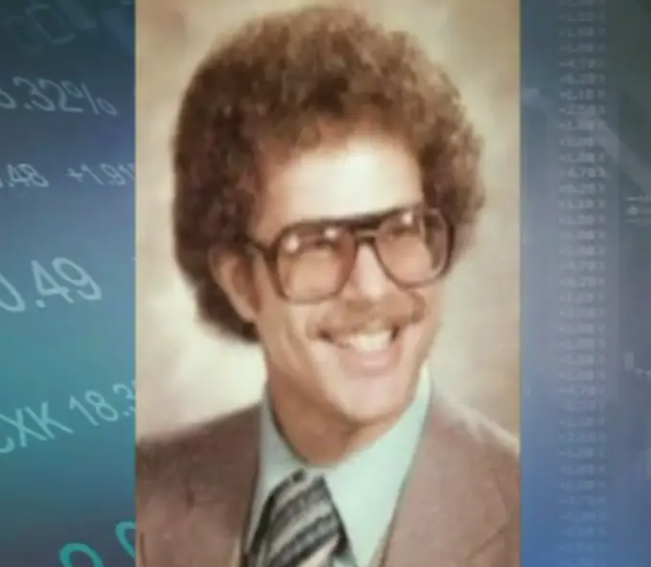
David Alan Tepper was born on September 11, 1957, in Pittsburgh, Pennsylvania. His father was an accountant; his mother, meanwhile, taught elementary school. His mother taught elementary school. The family lived in the East Liberty section of the city — a neighborhood that, in the 1960s, was in the middle of a slow economic retreat, the kind that leaves a generation watching money leave without understanding why it left.
Even as a boy, Tepper watched his father follow stock prices. That early exposure became something more systematic at the University of Pittsburgh, where he earned a degree in economics in 1978. He followed that with an MBA from Carnegie Mellon in 1982 — the school that would, three decades later, carry his name on its business building after he gave it $122 million.
After graduating, he went to Equibank, then to Republic Steel’s treasury department, then to Goldman Sachs in 1985. Goldman was where he learned the game at the highest level — and, indeed, also where he learned that the game had a ceiling — and that the ceiling was a person.
At Goldman, however, his boss was Jon Corzine, who would later become a U.S. Senator, Governor of New Jersey, and the subject of an MF Global fraud investigation. Corzine passed Tepper over for partner twice in two years. In December 1992, after the second rejection, Tepper quit. He began trading his personal account from a desk at mutual fund manager Michael Price’s offices, building capital and a thesis. By early 1993, he had enough of both. He named his new fund after a horse breed known for endurance and independence, according to biographical accounts. Consequently, Appaloosa Management opened with $57 million.
The Belief System — Shown, Not Told
Ultimately, the trade that explains David Tepper is February 2009. By then, the financial system had been coming apart for eighteen months. Bear Stearns was already gone. Lehman was gone. The remaining major banks — Bank of America, Citigroup — were trading at prices that assumed they might not survive. Most sophisticated investors were treating those prices as reasonable. Tepper, however, treated them as an opportunity.
He bought Bank of America common stock at $3 a share and acquired distressed debt across the major surviving financial institutions. His operating thesis was precise: the federal government would not let the systemically important banks fail. It was not, in fact, a moral argument. It was a reading of political incentive structures, fiscal capacity, and institutional self-preservation. He was right. By year’s end, Appaloosa had made roughly $7 billion. As a result, Tepper personally earned approximately $4 billion — at the time, the largest single-year payout in hedge fund history.
The Consistency Behind the Outlier Year
However, 2009 was not a fluke in a thin career. Rather, it was the sharpest expression of a method Tepper had been running since 1993. Appaloosa specializes in distressed assets — debt and equity of companies or nations at or near collapse, where the market price reflects maximum fear rather than probable outcome. He bought Korean government bonds when the won fell 50% in 1997, finishing the year up 29.5%. He loaded up on utility debt in 2002, contributing to a 149% gain the following year when those utilities recovered. On average, Appaloosa has delivered gross annualized returns of approximately 28–30% since inception — a sustained performance record that has no meaningful peer in its era.
That said, the friction point is the variability. Appaloosa lost 29% in 1998 during Russia’s default and 27% in 2008 as the mortgage system collapsed. The same conviction that generated the 2009 return — the refusal to reduce positions under pressure — also produced those losses. In short, Tepper does not run a smooth fund. Instead, he runs a high-conviction fund. The distinction has made him $20 billion and has cost investors in bad years who could not hold through the volatility. Notably, Appaloosa paid back more than $10 billion to outside investors over its lifetime before Tepper converted it to a family office in 2019. He did not need their capital anymore. His own was sufficient.
The Timeline: Wins, Wreckage, and What Came Next
| Period | What Happened | Net Worth / AUM |
|---|---|---|
| 1993 | Launches Appaloosa with $57M after Goldman rejection. Delivers 57.6% net return in first 6 months. AUM reaches $300M by year-end. | ~$50M personal est. |
| 1996–1997 | AUM tops $800M. Buys Korean government bonds during won collapse; up 29.5% for the year. | ~$300M personal est. |
| 1998 | Russia defaults. Appaloosa loses 29%. Tepper holds. Rebuilds the following year. | Down significantly |
| 2001 | 9/11 happens on Tepper’s 44th birthday. Markets drop 7.13% on reopening. Appaloosa returns 61% for the year on distressed debt. | ~$1B personal est. |
| 2002–2003 | Buys utility debt (Williams Companies et al). Appaloosa surges 149% in 2003. AUM approaches $7B by 2007. | ~$2B personal est. |
| 2008 | Financial crisis. Appaloosa loses 27%. Tepper studies the wreckage. | Down significantly |
| 2009 | Buys Bank of America at $3/share, distressed bank debt broadly. Appaloosa surges 130%+. Tepper earns ~$4B personally — largest single-year hedge fund payout in history at the time. | ~$5B personal |
| 2010 | Pays $43.5M for Jon Corzine’s ex-wife’s Sagaponack oceanfront. Demolishes it. Begins building 15,000 sq ft replacement. | ~$7B personal |
| 2012 | Earns $2.2B for the year — Institutional Investor ranks it the world’s highest hedge fund manager payday. Viral ATM receipt from Hamptons shows ~$100M account balance. | ~$10B personal |
| 2016–2019 | Relocates Appaloosa from New Jersey to Miami. Announces conversion to family office; returns outside capital. Pays record $2.275B for Carolina Panthers (2018). | ~$12–16B personal |
| 2023–2025 | Appaloosa posts 18–19% gains in 2023, 26.29% returns year-over-year through May 2025. AUM approximately $6.9B at end of 2025. Panthers make playoffs for first time under Tepper’s ownership (2025 season). | ~$20.6B personal (Forbes) |
The Hamptons Chapter: The Demolition at Sagaponack
In 2010, the year after he earned $4 billion, David Tepper paid $43.5 million for an oceanfront property in the Hamptons hamlet of Sagaponack. At 6.7 acres of South Fork oceanfront, the parcel was essentially unheard-of in a market where a half-acre carries a premium. The previous owner had been renting the property for $900,000 per summer. Accordingly, Tepper did the deal off-market, all-cash, no brokers, no fees.
Specifically, the seller was Joanne Dougherty. She had received the house in her divorce settlement from Jon Corzine — the Goldman Sachs boss who had passed Tepper over for partner twice. By that point, Corzine had been fired from Goldman in 1999 after losing a power struggle with Hank Paulson. He and Joanne later divorced; her primary condition was the Sagaponack house. She was ultimately awarded it, though Corzine had valued it at $9 million. When Tepper bought it in 2010, he paid $43.5 million. Nearly five times what Corzine had claimed it was worth.
The Demolition Decision
Subsequently, Tepper demolished it. Specifically, the structure that Corzine had spent years and significant money renovating — that he had been heartbroken to surrender in the divorce — Tepper razed to the ground. In its place, he built an 11,268-square-foot Georgian-style mansion with a pool shaped, according to tabloid accounts, in a form that was not ambiguous in its symbolism. Tabloids called it the “Revenge Mansion.” Tepper later told New York magazine, in what may be the most economical quote in Hamptons history: “You could say there was a little justice in the world.”
Among Hamptons power players, the address of Sagaponack signals what the template calls a working billionaire — someone who bought the East End for the property, not for the scene. It is not Meadow Lane, which signals financial arrival. It is not Georgica Pond, which signals entertainment royalty. Sagaponack is where someone who made their money in a very concentrated way chooses to be very near the water. Tepper fits the geography precisely: he is not performing wealth. He is living it, often loudly, entirely on his own terms.
David Tepper Net Worth: What He Actually Built
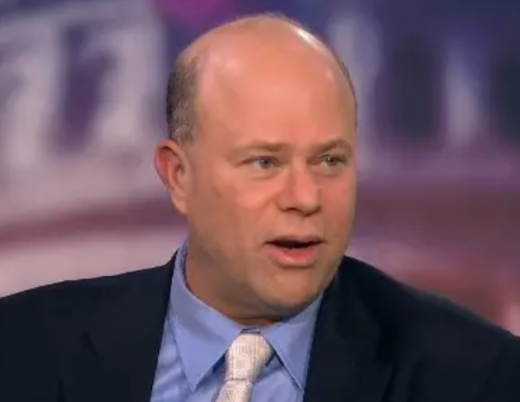
David Tepper net worth — estimated at $20.6 billion by Forbes and similarly by Bloomberg — is almost entirely the product of Appaloosa Management, a fund he started because he was turned away. That origin story, moreover, is not incidental. It is the investment philosophy in narrative form.
For three decades, Appaloosa’s method has been to find assets the market has priced for catastrophe and buy them before the catastrophe resolves. The Korean won, Russian ruble aftermath, 9/11 aftermath, utility bankruptcies, bank debt at the bottom of the financial crisis, Chinese equities in 2024 when most American investors were rotating away from them — the pattern is consistent across three decades. In each case, Tepper buys the thing the room is afraid to touch. He holds until the fear resolves. Then he moves on.
The Shift to Family Office
In 2019, Tepper returned all remaining outside capital and converted Appaloosa to a family office — a transition he had announced publicly in May of that year. Rather than a retreat, the conversion was a statement: his own capital was now large enough that managing outside money introduced more constraint than it added value. As of late 2025, Appaloosa holds approximately $6.9 billion in assets — nearly all of it Tepper’s own money and that of his employees. The most recent 12-month return available, through May 2025, was 26.29%, meaningfully ahead of the S&P 500’s 12.29% over the same period, per Bloomberg.
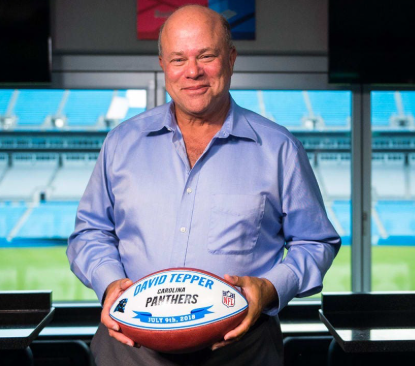
Additionally, the Carolina Panthers — purchased for $2.275 billion in 2018, the highest price ever paid for an NFL franchise at that time — are now valued at approximately $4.1 billion according to Sportico, nearly doubling despite seven head coaches, a demolished practice facility, and eight consecutive losing seasons before 2025’s first playoff appearance. The asset appreciated despite the turbulence. That outcome, too, is consistent with the biography. According to Forbes, the Panthers holding alone represents a substantial portion of his total net worth.
Public Reputation vs. What the Room Goes Quiet About
On the surface, the approved public narrative reads cleanly: David Tepper is a Pittsburgh kid from a working-class family who built one of the greatest hedge funds in history through distressed debt genius, personal toughness, and a refusal to follow consensus. Philanthropist. Self-made. Owns an NFL team and an MLS franchise. Forbes calls him “arguably the greatest hedge fund manager of his generation.” Few dispute that framing.
Yet the insider correction arrives when the conversation shifts from Appaloosa to the Panthers. Finance peers describe Tepper in terms approaching reverence — his conviction, his preparation, his reading of macro environments. Football insiders, however, describe seven head coaches in six years, a franchise valuation built on scarcity economics rather than competitive performance, and an owner who threw a drink at a fan during a game against Jacksonville in December 2023. Both reputations belong to a single person and do not reconcile easily.
What Failure Revealed
More interesting, however, is what the Panthers failure revealed. At Goldman, Tepper competed in an environment where skill was the primary variable and the feedback was clear. In the NFL, by contrast, he inherited an institution with a culture, a geography, a fan base, and a set of interdependencies he had not navigated before. His initial instinct — to be as hands-on as he was at Appaloosa — produced exactly the wrong outcome. In effect, the revolving door of coaches was not a product of bad luck. It was a product of applying a single-manager conviction style to a team-building context that requires delegation.
By 2025, however, something had visibly shifted. Nevertheless, Tepper grew noticeably quieter, stepped back from daily football operations, and allowed the coaching staff to work. The Panthers finished first in the NFC South with an 8-9 record — their first playoff appearance since 2017, the last season before he bought the team. The turnaround was modest in absolute terms. In context, however, it was the first evidence that Tepper could learn from a public failure, which is, ultimately, a more useful skill than being right from the beginning.
Contribution: To Whom, and at What Scale
Overall, David Tepper’s philanthropic record is substantial and geographically concentrated. The majority of his giving has gone to two institutions: Carnegie Mellon University and Pittsburgh’s broader civic infrastructure. He has donated $122 million to Carnegie Mellon in total — $55 million in 2004 and $67 million in 2013 — resulting in the Tepper School of Business bearing his name. That gift was, at the time, the largest in the university’s history.
Specifically, the pattern differs from many hedge fund philanthropists who give to Harvard or Yale, schools they attended or that confer maximum social capital on the donor. Tepper’s giving to Carnegie Mellon is a return. He attended, in fact, on partial scholarship. The school accepted him when other programs did not. His giving back to Carnegie Mellon is the least performative philanthropy on Meadow Lane — or, in his case, Sagaponack. It cost him social positioning he chose not to maximize.
The Gaps in the Record
Beyond Carnegie Mellon, Tepper has given to Charlotte-area causes since purchasing the Panthers, including stadium infrastructure discussions and local economic development initiatives tied to the team. Yet, notably absent from his philanthropic record is the kind of broad civic giving — arts institutions, hospital wings, named buildings outside his alma mater’s zip code — that characterizes donors like Griffin or Kravis at comparable wealth levels. His total documented lifetime giving remains well below 1% of current net worth.
In short, the simplest honest accounting: Tepper gives back to the place that gave him something, and he gives in ways that are structurally modest relative to his fortune. Whether that represents a philosophy or simply a prioritization of Appaloosa over everything else is not clear from the public record. What is clear is that the brass testicles — a gift from a colleague acknowledging a successful distressed debt bet, displayed prominently in his office — tell you more about Tepper’s value system than any naming-rights donation does.
The East End Verdict on David Tepper Net Worth
David Tepper net worth is a story about proximity to failure — someone else’s first, then his own. Jon Corzine’s failure to make him partner created Appaloosa. Consequently, the 2008 crash created 2009. Eight consecutive losing seasons with the Panthers, ultimately, created whatever comes next in Charlotte. That pattern suggests Tepper does not process adversity the way most people do. Instead, he processes it as inventory.
Of all his public gestures, the Sagaponack property is the cleanest expression of that psychology available to the public. He did not buy a new house and move on. He bought the specific house that belonged to the specific man who kept him from the partner track, demolished it, and replaced it with something twice as large. Furthermore, he told a magazine about it while his office displayed a pair of brass testicles as workplace decor. This is not the behavior of someone who has achieved peace with the Goldman rejection. It is the behavior of someone who found the rejection extremely useful and would like you to know it.
What Sagaponack Signals for the East End
Among the Hamptons’ billionaire class, Tepper occupies a distinct position. His neighbors on the oceanfront — further east than the Meadow Lane hedge fund cluster — are less concentrated in finance, more mixed in industry, and less socially connected to each other. Sagaponack is where you go when you want to be near the ocean, not near the room. Tepper has never needed the room. He has generally preferred to be the person the room is discussing in his absence.
In 2012, meanwhile, an ATM receipt he left behind at a Hamptons cash machine was found by the next person in line and posted online. The balance was approximately $100 million. It became a minor internet sensation. Tepper was apparently unbothered. That equilibrium, however — between spectacular wealth and authentic indifference to its display — is the one consistent thread from Peabody High School in Pittsburgh through 650 Sagaponack oceanfront. The fortune is enormous. The performance of the fortune is minimal. Both facts are, for the Hamptons’ hedge fund demographic, entirely characteristic.
For 23 years, Social Life Magazine has been covering the East End. The working billionaires — the ones who came for the water and stayed for the returns, who built and demolished and rebuilt on the South Fork’s most coveted acres — are the story the Hamptons has been quietly telling since Goldman’s high-water mark. Tepper is that story at its most concentrated.
Social Life Magazine has been operating inside that room for twenty-three years — five summer issues from Westhampton to Montauk, fall delivery to Upper East Side doorman buildings, 25,000 readers who are the demographic every luxury brand is trying to reach by doing things significantly less effective than simply being in the magazine. The brands here are not buying exposure. They are being introduced to people who have already decided to trust the publication that introduced them. If your brand belongs in that introduction: sociallifemagazine.com/contact.
The email list is the year-round version of the same room — 82,000 readers, same zip codes, the winter conversation. Free. Eleven seconds. Join it here.
Polo Hamptons is the event version of the same insight. There are gatherings people attend and gatherings where something actually happens — where the introduction that required six months of mutual adjacency becomes, on a July afternoon, simply a handshake between two people who were always going to meet. Category-exclusive sponsorships from $14,000. Private cabanas from $6,500. One sponsor per category. Most are already claimed. polohamptons.com.
The print subscription is the physical object on the coffee table in the house on Further Lane, handed by the family office principal to the person he is trying to introduce to the concept of your brand before the introduction has technically happened yet. Five summer issues. sociallifemagazine.com/subscription.
And then this, which is the most honest sentence here and therefore the one most likely to be skimmed: independent luxury media with no advertiser leverage and no engagement algorithm is genuinely rare, which is why the judgment, when present, is worth something. You have already formed an opinion about whether it was present here. If yes: paypal.com/donate. The amount is whatever you think that judgment is worth, which is the only honest way to price it.
Related Reading:
Ken Griffin Net Worth: Citadel’s $49B Meadow Lane Titan
Hamptons Hedge Fund Billionaires: The Complete Net Worth Guide
Hamptons Power Players 2026: The Complete Map
David Tepper net worth data sourced from Forbes Billionaires List and Bloomberg Billionaires Index. Real estate figures reflect reported transaction records. Social Life Magazine is an independent publication and has no affiliation with David Tepper or Appaloosa Management.
Author

Written by
Recent Posts

Victoria Justice Kicks Off Halloween Early with Love Zombie Bash in Hollywood

Planning an Arizona Road Trip? Practical Details to Handle Before You Leave

Short Homecoming Dresses That Feel Polished, Not Overdone
Men’s Health After 40: Important Changes to Pay Attention To
What You Need to Know About Spray Tanning
Categories
- Art
- Articles
- Business of Luxury
- Celebrities
- Culture
- Entertainment
- Events
- Faces of Summer 2026
- Fashion
- Fashion & Style
- Featured
- Finance
- Food, Spirits, Wine
- Hamptons
- Hamptons Celebrities
- Health
- Health & Beauty
- Lifestyle
- Luxury Lifestyle
- Press
- Profiles
- Real Estate
- Technology
- The Chronicles
- Travel
- Uncategorized
- Weddings