
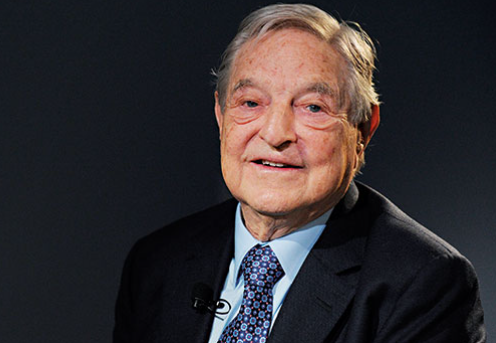
According to Forbes, George Soros net worth is listed at approximately $7.2 billion by Forbes as of early 2025 — a figure that is technically accurate and almost entirely misleading. In total, over his lifetime, Soros generated a fortune estimated at more than $40 billion. Remarkably, he gave $32 billion of it to the Open Society Foundations, including an $18 billion single transfer in 2017. Forbes, consequently, calls him the most generous giver in terms of percentage of net worth. That number reflects what he kept, not what he built.
His Hamptons property sits in Southampton — a quiet fact about a very loud biography. The biography itself begins considerably further from there.
The Room Before the Room
He was born György Schwartz on August 12, 1930, in Budapest, Hungary — the son of a pragmatist. Specifically, his father, Tivadar, was a lawyer — and, more relevantly, a survivor of the First World War and a practical man who understood that documents and identities could be the difference between life and death. When the Nazis occupied Hungary in 1944, however, Tivadar obtained false papers for the family, creating new identities that allowed them to pass as gentile Hungarians. Fourteen-year-old György became György Schwartz no longer. He survived the war inside that fiction, watching neighbors and classmates disappear into a system that had decided who was permitted to exist.
In 1947, at seventeen, he consequently left Budapest for London. To support himself at the London School of Economics, he worked as a railway porter and as a waiter. He studied philosophy, and there, ultimately, his trajectory was shaped by a single encounter: Karl Popper, the philosopher whose concept of the open society — a system that permitted dissent, error-correction, and the challenge of entrenched power — became the intellectual architecture of everything Soros built afterward. Under Popper, he graduated with a BSc and later an MSc in philosophy. Notably, he was not studying finance. He was studying how fallibility and feedback loops determine outcomes in complex systems.
From Philosophy to Finance
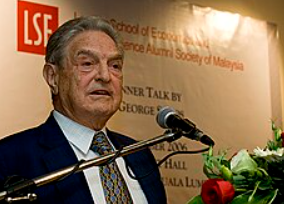
In 1956, Soros moved to New York. There, he worked at F.M. Mayer & Co., then at Arnhold and S. Bleichroeder as an analyst, spending years in European arbitrage and developing the framework he would eventually call Reflexivity. By 1969, accordingly, he had enough conviction and capital to launch Double Eagle, his first fund, with $12 million in assets. By 1970, moreover, he had renamed the vehicle Soros Fund Management. In 1973, he relaunched it as the Quantum Fund with co-founder Jim Rogers. What followed over the next two decades was, by any measure, one of the most sustained performances in all of hedge fund history — roughly 30% annualized returns, compounding for twenty years. Yet the mechanism behind those returns was not trading skill in the conventional sense. It was a theory.
The Belief System — Reflexivity, Shown Through One Trade
In essence, the theory Soros developed under Popper holds that markets are not objective mechanisms for pricing assets. Rather, they are feedback systems in which participants’ beliefs about value influence actual value, which in turn influences beliefs, which reinforces or corrects the original perception. He called it, simply, Reflexivity — and it worked. In straightforward terms: what the market believes tends to become true, until it doesn’t — and the moment the feedback loop breaks is when the largest moves happen.
By the spring of 1992, Soros had identified what he later described as the perfect Reflexivity trade: the British pound’s membership in the European Exchange Rate Mechanism. The ERM required member nations to maintain their currencies within fixed bands against the German Deutsche Mark. Britain had joined in 1990 at a rate most economists considered unsustainable. At that point, Britain’s economy was weak, inflation was three times Germany’s, and the interest rates required to defend the peg were actively damaging growth. The government knew the pound was overvalued. Markets, similarly, already knew it too. Ultimately, what kept the peg alive was purely political will — a promise that Soros believed could not hold under sufficient pressure.
Black Wednesday: September 16, 1992
Working closely with his chief strategist, Stanley Druckenmiller — who had originally identified the weakness and pushed Soros to take a larger position — the Quantum Fund quietly built a short position in British pounds that ultimately reached more than $10 billion. The mechanism was straightforward: borrow pounds, sell them for Deutsche Marks, wait for devaluation, buy them back at the lower price. Unprecedented in scale, the position forced the Bank of England to spend billions defending the peg and raise interest rates from 10% to 12%, then to 15% in a single day.
By the end of September 16, nevertheless, the effort had failed. Consequently, Accordingly, Britain withdrew from the ERM. The pound fell 15% against the Deutsche Mark and 25% against the dollar. The UK Treasury estimated its losses at £3.4 billion. Soros, meanwhile, had made more than $1 billion in a single day.
Immediately and permanently, he was dubbed “The Man Who Broke the Bank of England.” Importantly, the trade was not a bet against Britain. It was a bet that a government promise was unsustainable — that political will, even when backed by a central bank, has limits against markets that have reached consensus on economic reality. Consequently, Soros told The New York Times shortly afterward: “Our total position by Black Wednesday had to be worth almost $10 billion.” He said it without apology. The trade was the theory in action. Importantly, the forced exit from the ERM ultimately benefited Britain’s economy. Indeed, freed from the peg, the UK lowered interest rates, the pound found its natural level, and growth followed. The man who “broke” Britain, in practice, released it from a system it could not sustain.
The Timeline: Wins, Wreckage, and What Came Next
| Period | What Happened | Net Worth / AUM |
|---|---|---|
| 1944–1947 | Survives Nazi occupation of Hungary under false identity arranged by his father. Departs for London at 17. | — |
| 1956 | Moves to New York. Begins career at F.M. Mayer & Co., later Arnhold and S. Bleichroeder. Develops Reflexivity theory through years of European arbitrage. | — |
| 1969–1973 | Launches Double Eagle fund (1969), renamed Soros Fund Management (1970), relaunched as Quantum Fund with Jim Rogers (1973). Starts with $12M AUM. | $12M AUM |
| 1979 | Begins philanthropic giving, establishing Open Society Institute in Hungary. First donation to Solidarity movement in Poland. Philosophy drives capital. | ~$100M+ personal est. |
| 1992 | Black Wednesday. Shorts £10B against British pound. Makes $1B+ in a single day. Quantum Fund grows from $15B to ~$22B instantly. Earns “The Man Who Broke the Bank of England.” | ~$1B+ personal that day |
| Late 1990s | Quantum Fund reaches $22B AUM by 1998 — the world’s largest hedge fund at the time. Takes large losses in Russia default crisis (1998) and dot-com tech bets (1999–2000). Soros acknowledges being late to exit the bubble. | ~$5B personal |
| 2002 | French court convicts Soros of insider trading related to a 1988 Société Générale stock deal. Fined €2.2 million. Soros appeals and loses; pays the fine. | N/A |
| 2011 | Returns outside capital; converts Quantum Fund into Soros Fund Management family office. Retains ~$25B in assets. Philanthropy accelerates. | ~$20B personal |
| 2013 | Quantum Fund posts $5.5B profit — ranked the most successful hedge fund in history by total returns generated since inception ($40B+). | ~$24B personal |
| 2017–2018 | Transfers $18 billion to Open Society Foundations in a single move — the largest philanthropic transfer in history at the time. Personal net worth drops from ~$25B to ~$8B on paper. | ~$8B personal (post-transfer) |
| 2023–2026 | Hands control of Open Society Foundations to son Alex Soros (June 2023). Receives Presidential Medal of Freedom from President Biden (January 2025). Family office manages ~$28B (Dec 2025 per Bloomberg), including foundation endowments. | ~$7.2B personal (Forbes 2025) |
The Hamptons Chapter: Southampton
George Soros owns a property in Southampton on Long Island’s South Fork, along with a Fifth Avenue Manhattan residence and a 115-acre estate in Katonah, New York, valued at approximately $10 million. Unlike the Meadow Lane cluster of hedge fund billionaires — Ken Griffin, Henry Kravis, Leon Black — Soros does not operate from the most visible address on the East End. Southampton Village signals a different social physics: proximity to the established resort community, association with old-money charity circuits and cultural institutions, less conspicuous than oceanfront Sagaponack or the explicit status geography of Meadow Lane.
That geography is consistent with the biography. Soros has never needed the Hamptons as a signal. He is the person other people cite as the reason things happened — the man whose position broke a peg, whose donations shaped governments, whose name appears in the origin stories of post-communist civil society movements across three continents. Among Hamptons power players, he holds a position that has no precise equivalent: not finance royalty in the Meadow Lane sense, not entertainment royalty in the Georgica Pond sense, but something closer to institutional gravity — the person whose presence confirms that a place is where things matter.
The Succession Question
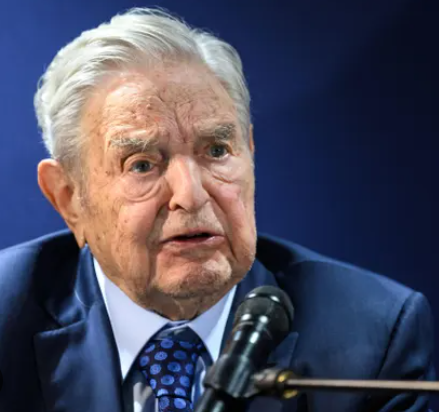
In June 2023, furthermore, Soros handed control of the Open Society Foundations to his son, Alexander Soros, who had already been deepening relationships with Democratic political figures and world leaders. Alexander subsequently married Huma Abedin in June 2025, creating a social alliance that operates across both political strategy and New York society. Consequently, the Soros presence in the Hamptons is no longer simply a question of one billionaire’s summer geography. It is increasingly a family enterprise operating across finance, philanthropy, and political influence simultaneously.
George Soros Net Worth: What the Number Actually Means
Measured correctly, George Soros net worth requires two numbers. The Forbes personal figure — approximately $7.2 billion — reflects what remains in his personal accounts after a lifetime of giving. The second figure is $32 billion donated, including a single $18 billion transfer to the Open Society Foundations in 2017 alone. In aggregate, Soros generated and deployed more than $40 billion. By comparison, the Bloomberg Billionaires Index notes that Soros Fund Management’s family office managed approximately $28 billion as of December 2025, a figure that includes the foundation endowments alongside personal assets.
Since its inception in 1973, moreover, the Quantum Fund generated approximately $40 billion in total profits for investors — ranking it, historically, among the most profitable hedge funds ever operated. Soros’s average annualized return across the fund’s active decades was approximately 30%. In practice, the peer comparison for that sustained performance is essentially a field of one. By contrast, his contemporary Ken Griffin’s Citadel has delivered exceptional recent-year returns, but Soros’s 20-year compounding record, built on macro insight rather than quantitative infrastructure, has not been replicated at scale.
The Family Office and What Remains
After converting to a family office in 2011, furthermore, Soros Fund Management continued to compound. The foundations themselves — the Open Society Institute, Foundation to Promote Open Society, and Fund for Policy Reform — held approximately $18.3 billion in assets at the end of 2024, per tax return filings. These are not Soros’s personal assets; yet they represent the output of the capital he generated and chose to redirect. Moreover, in January 2025, President Biden awarded Soros the Presidential Medal of Freedom. That recognition arrived forty-six years after he began giving away money in 1979. By that point, he had donated more than $32 billion before receiving it.
Public Reputation vs. What the Room Goes Quiet About
On the surface, the public narrative in finance circles: Soros is the greatest macro trader of his generation. A man whose Reflexivity theory anticipated everything from the 1992 ERM collapse to the 2008 financial crisis. The founder of a hedge fund that averaged 30% annual returns for two decades. The person who gave away more money, as a percentage of net worth, than any major donor in modern history. Forbes called him the most generous giver on record. These facts are, by any reasonable measure, accurate.
Yet the public narrative in certain political contexts is different. Soros has been the primary target of a sustained, decades-long conspiracy apparatus that attributes to him personal control over elections, migration policy, judicial nominations, and various international events. Numerous far-right political figures across Europe and the United States have built careers on Soros-related narratives. Furthermore, anti-Soros rhetoric has been formally described by civil rights organizations as a vector for antisemitism, given that it frequently borrows the imagery and structure of classical Jewish conspiracy theories and applies it to a Hungarian-born Holocaust survivor. Notably, the French insider trading conviction — fined €2.2 million in 2002 for a 1988 Société Générale trade — is the one legitimate legal finding against him, small in scale relative to both his fortune and his reputation.
The Insider View
Inside finance, however, the room does not go quiet about Soros the trader. Instead, it goes quiet about his losses — specifically, the late 1990s, when the Quantum Fund lost heavily in Russia’s 1998 default and again when Soros admitted in 2000 that he had been late to exit the technology bubble. He told reporters after those losses that he had made a mistake, which is rare enough in finance to be noteworthy. His 1998 Russian exposure cost the fund significantly at a time when his philanthropy in the former Soviet republics was scaling dramatically.
The overlap — losing money in the same geography where he was giving it away — created one of the stranger juxtapositions in hedge fund history. Furthermore, he has been quoted as writing, in his memoir, that he carries “messianic fantasies” he must control. He later said he had grown comfortable with them “since I began to live them out.” Few people discuss that passage in financial contexts. Nonetheless, it is the passage that explains the rest.
Contribution: To Whom, and at What Scale
Notably, the accounting of George Soros’s philanthropy is unlike any other billionaire’s in this series. He has donated more than $32 billion through the Open Society Foundations, making him one of the largest philanthropists in recorded history. The $18 billion transferred in 2017 alone exceeded the total endowments of most major university systems. According to tax filings, the foundations had approximately $18.3 billion in assets at the end of 2024.
At its core, that giving follows a coherent philosophy rooted in Popper’s open society concept: funding civil society organizations in countries where dissent is suppressed, supporting free press infrastructure, funding legal defense organizations, subsidizing education in post-communist countries, and challenging concentrated governmental or corporate power. The Central European University in Budapest — founded by Soros, later pressured out of Hungary by Prime Minister Viktor Orbán — received one of Europe’s largest private higher education endowments. In total, the OSF has operated in over 120 countries. By the measure of geographic reach, no private philanthropy in history has operated at greater scale.
The Controversy the Giving Created
By contrast with Griffin’s naming-rights model or Tepper’s return-to-alma-mater pattern, Soros’s giving was structurally designed to challenge governments. That created enemies in proportion to the ambition. In Hungary, Orbán effectively expelled the Central European University. Across multiple Eastern European countries, OSF-funded organizations have faced legal restrictions and government investigations. Meanwhile, in the United States, political figures have spent two decades attributing to Soros — through OSF’s legitimate grant-making — personal control over outcomes he neither directed nor, in many cases, endorsed. The philanthropy has been more politically consequential than any other private fortune in living memory. It has also been more contested.
Notably absent from the giving record: any major gift to cultural institutions in the United States that would generate the kind of building-naming recognition that Griffin or Kravis have pursued. The Soros name appears on the Central European University. It does not appear on a wing of the Metropolitan Museum or a Harvard research center. That choice is either a philosophical position about where capital does the most work, or it is a deliberate decision to avoid the kind of soft-power cultivation that naming rights provide. Both interpretations are consistent with the biography.
The East End Verdict on George Soros Net Worth
Ultimately, George Soros net worth — in its most accurate form — is a carefully constructed understatement. He built a fortune estimated at $40 billion or more. He then transferred most of it to a philanthropic infrastructure designed to operate independently of his personal wealth — and of governments that would prefer it didn’t exist. What remains personal is approximately $7.2 billion, managed through a family office now run in coordination with his son, son-in-law of Huma Abedin, in an environment where the political and financial stakes of the Soros name remain as elevated as at any point in his career.
The Southampton property is, in that context, perhaps the quietest thing about him. In truth, he does not need the Hamptons to establish presence. He established presence in 1992 when he broke the pound, and again, in the 1980s when his money helped dismantle communism in Eastern Europe, and finally in 2017 when he moved $18 billion in a single transfer. The house is simply where he goes in summer. For the Hamptons billionaire cohort, that indifference to the social mechanics of a Hamptons address is, in itself, its own signal.
The Legacy the Number Obscures
Within the Hamptons hedge fund biography series, Soros occupies a position that has no equivalent. Griffin built the infrastructure markets run on. Tepper bought the thing everyone else was afraid to touch. Soros, by contrast, bet that an entire government’s monetary policy was a fiction — and proved it in a single day. Then he gave most of the proceeds away to organizations whose purpose was to challenge other fictions in other governments. The $7.2 billion on the Forbes leaderboard is, in effect, the residual. The $32 billion given away is the primary output. Social Life Magazine, documenting the East End for 23 years, covers the hedge fund geography of the Hamptons in full. Soros, ultimately, is the figure at the center who least requires the geography to define him.
Social Life Magazine has been operating inside that room for twenty-three years — five summer issues from Westhampton to Montauk, fall delivery to Upper East Side doorman buildings, 25,000 readers who are the demographic every luxury brand is trying to reach by doing things significantly less effective than simply being in the magazine. The brands here are not buying exposure. They are being introduced to people who have already decided to trust the publication that introduced them. If your brand belongs in that introduction: sociallifemagazine.com/contact.
The email list is the year-round version of the same room — 82,000 readers, same zip codes, the winter conversation. Free. Eleven seconds. Join it here.
Polo Hamptons is the event version of the same insight. There are gatherings people attend and gatherings where something actually happens — where the introduction that required six months of mutual adjacency becomes, on a July afternoon, simply a handshake between two people who were always going to meet. Category-exclusive sponsorships from $14,000. Private cabanas from $6,500. One sponsor per category. Most are already claimed. polohamptons.com.
The print subscription is the physical object on the coffee table in the house on Further Lane, handed by the family office principal to the person he is trying to introduce to the concept of your brand before the introduction has technically happened yet. Five summer issues. sociallifemagazine.com/subscription.
And then this, which is the most honest sentence here and therefore the one most likely to be skimmed: independent luxury media with no advertiser leverage and no engagement algorithm is genuinely rare, which is why the judgment, when present, is worth something. You have already formed an opinion about whether it was present here. If yes: paypal.com/donate. The amount is whatever you think that judgment is worth, which is the only honest way to price it.
Related Reading:
Ken Griffin Net Worth: Citadel’s $49B Meadow Lane Titan
David Tepper Net Worth: The Revenge Mansion at $20B
Hamptons Hedge Fund Billionaires: The Complete Net Worth Guide
George Soros net worth data sourced from Forbes Billionaires List and Bloomberg Billionaires Index. Philanthropic figures sourced from Open Society Foundations public filings. Social Life Magazine is an independent publication and has no affiliation with George Soros or Soros Fund Management.
Author

Written by
Recent Posts
Victoria Justice Kicks Off Halloween Early with Love Zombie Bash in Hollywood

Planning an Arizona Road Trip? Practical Details to Handle Before You Leave

Short Homecoming Dresses That Feel Polished, Not Overdone
Men’s Health After 40: Important Changes to Pay Attention To
What You Need to Know About Spray Tanning
Categories
- Art
- Articles
- Business of Luxury
- Celebrities
- Culture
- Entertainment
- Events
- Faces of Summer 2026
- Fashion
- Fashion & Style
- Featured
- Finance
- Food, Spirits, Wine
- Hamptons
- Hamptons Celebrities
- Health
- Health & Beauty
- Lifestyle
- Luxury Lifestyle
- Press
- Profiles
- Real Estate
- Technology
- The Chronicles
- Travel
- Uncategorized
- Weddings