
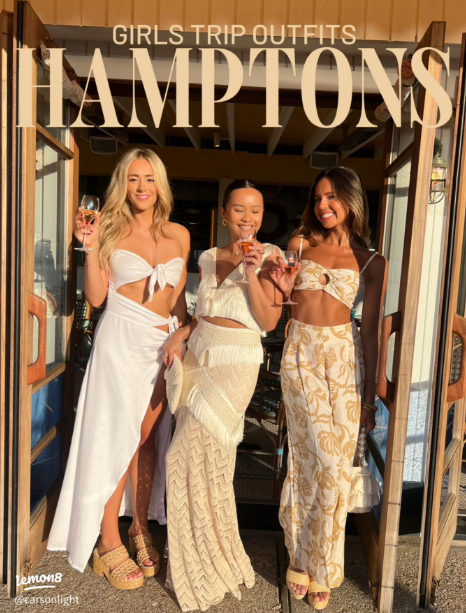
Ralph Lauren didn’t build a polo field in Montauk because he liked horses. He built a mythology — and for fifty years, every fashion brand that wanted Hamptons credibility had to buy a ticket to his movie. That era is ending. A new class of Hamptons fashion brands arrived with real budgets, permanent stores, and a customer base that learned to dress from Instagram, not Vogue. They aren’t waiting for permission. They’re writing their own zip code story.
This is the cluster worth watching. Not the legacy houses managing decline from Madison Avenue, and not the pop-up brands chasing a single summer headline. These are the established challengers — founders who understood the Hamptons as infrastructure, not aesthetics. Each one chose a different entry strategy. Each one is eating market share from brands that thought the address was enough.
Why the Hamptons Fashion Map Is Being Redrawn
The math changed after 2020. Boston Consulting Group managing director Pierre Dupreelle noted that the Hamptons shifted from a seasonal destination to a primary residence for a significant portion of the ultra-wealthy. Consequently, brands that once ran a Memorial Day pop-up and called it summer strategy now face a twelve-month, seven-figure marketing decision. The casual calculus — rent a space on Jobs Lane for eight weeks, throw a rosé party, go home — no longer moves the needle for a brand serious about this market.
Furthermore, the customer changed. The Hamptons fashion buyer in 2026 is younger, more digitally native, and considerably less impressed by institutional prestige than her predecessor. She knows what Zimmermann costs in Sydney. She watched Jacquemus do a Surf Lodge activation on TikTok before the brand had a single US flagship. Additionally, she spent three years watching social media flatten the hierarchy between legacy houses and emerging challengers. The result: a fashion market in the Hamptons that is more competitive, more interesting, and more lucrative than at any previous point in its history.
According to Business of Fashion reporting on the current Hamptons fashion surge, brands are now deploying car services, Burgundy wine, and chefs flown in from Paris to out-compete each other for this customer’s attention. The one-upmanship is real. So is the spend. The brands profiled below are not dabbling — they are building.
LoveShackFancy: The Brand That Grew Up in the Hamptons
No other brand in this cluster has a more native Hamptons origin story. Rebecca Hessel Cohen launched LoveShackFancy through local trunk shows before the brand had a single retail location. The Hamptons was not a marketing play — it was the founding environment. Notably, that origin story now anchors a two-store Hamptons footprint: a 2,250-square-foot flagship on Madison Street in Sag Harbor and a permanent boutique in Southampton, the brand’s ninth brick-and-mortar location overall.
The Sag Harbor flagship operates as an experience, not simply a store. Pastel awnings, original hand-painted trellis walls, vintage pieces sourced from Paris — the space exists to make a woman feel she has entered the brand’s world rather than a retail environment. That distinction matters enormously to the Hamptons customer. Additionally, LoveShackFancy has extended its Hamptons presence through seasonal collaborations: a beach shack pop-up at Montauk Beach House in partnership with Havaianas, and trunk shows co-hosted with charitable organizations that embed the brand in the social calendar rather than just the shopping strip.
The strategic lesson here is patience. LoveShackFancy did not parachute into the Hamptons with a marketing budget. It earned its position over years of community investment. Now, with more than twenty stores nationally, the Hamptons locations function as both revenue centers and brand legitimacy engines — the proof that this is not a New York City brand visiting for the summer, but a Hamptons brand that happens to be everywhere else too.
Zimmermann: The Australian That Out-Hamptonized the Americans
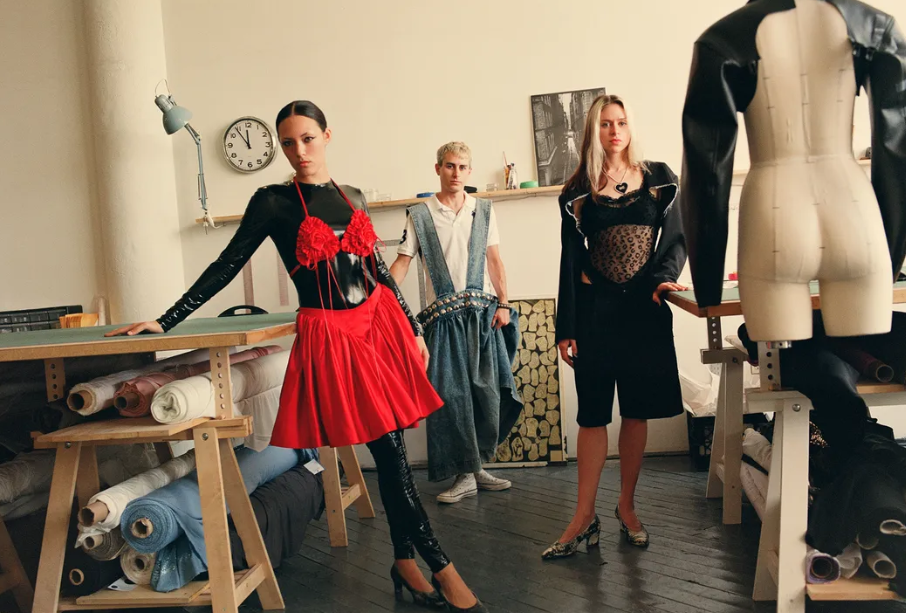
Zimmermann‘s American expansion strategy is a case study in deliberate market building. Rather than launching with a flagship in SoHo and hoping the Hamptons would follow, the Australian luxury house reversed the sequence entirely. Early in its US push, Zimmermann focused its clienteling efforts in the Hamptons, hosting private dinners and building one-to-one relationships with the specific type of high-net-worth customer that every luxury brand wants but few know how to cultivate.
The brand opened its first US store in the Hamptons in 2017 — before establishing itself in most major American markets. That sequencing was intentional. The Hamptons customer, once acquired, becomes an ambassador. She wears the brand at Polo Hamptons, at Nick and Toni’s, at the Guild Hall benefit. She is photographed. Furthermore, she brings the brand back to Manhattan, to London, to wherever she is the following season. Zimmermann understood that the Hamptons is not a retail market — it is a referral engine for every other market.
The price point positions Zimmermann above the contemporary brands but below the European couture houses — a deliberate gap that the brand has occupied with considerable success. A Zimmermann dress at $600 to $950 is aspirational without being inaccessible to the demographic that summers in East Hampton. That precision is not accidental. It reflects a brand that studied its target customer before it opened a single door.
Veronica Beard: Permanent Real Estate as Market Statement
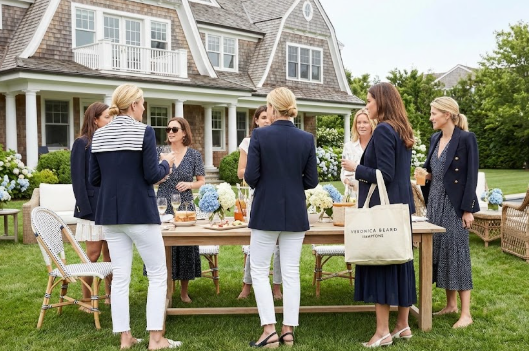
When a brand opens its largest store to date in the Hamptons, the statement is not about retail square footage. It is about conviction. Veronica Beard‘s Southampton boutique — 2,562 square feet, the biggest in the company’s portfolio at opening — made an unmistakable argument: this market is not a seasonal experiment. It is a core business location. The floral photography, the Namay Samay fabrics, the Samuel & Sons fringe on the curtains — every detail signals that the brand invested in permanence, not presence.
Veronica Beard occupies a specific lane in the Hamptons fashion ecosystem: polished American sportswear for women who are accomplished and want their clothes to confirm it without announcing it. The customer is not chasing trends. She is building a wardrobe that works from the morning tennis match through the evening benefit. Consequently, the brand’s Hamptons location functions as a year-round resource for a year-round resident — exactly the customer profile that BCG identified as the post-pandemic Hamptons transformation.
The brand has also navigated the Hamptons social infrastructure intelligently, appearing in editorial contexts that reinforce its positioning without tipping into the promotional. Moreover, the Veronica Beard woman is not the LoveShackFancy woman — she is older, more established, and less interested in whimsy than in quality. The Hamptons market is large enough to accommodate both, and smart enough to tell the difference.
TWP and the New Entrants Writing the Next Chapter

TWP — That’s What P Said — launched in 2021 and moved directly into the Hamptons with stores in both Sag Harbor and Southampton. The speed of that commitment signals a generation of founders who understand that the Hamptons is not a reward for national success. It is a starting point for a specific kind of luxury brand building. TWP’s tailored, minimalist aesthetic targets a customer who has moved past maximalism — the woman who spent her twenties in sequins and her thirties in LoveShackFancy and now wants something quieter and more considered.
Additionally, Revolve‘s return to the Hamptons after an eight-year absence for a gifting suite activation reflects a different kind of calculus. The digital-native platform recognized that its customer — the influencer-adjacent, digitally sophisticated, aspirationally wealthy millennial — had migrated from Coachella to the East End. Furthermore, Revolve’s chief brand officer Raissa Gerona has been explicit: the Hamptons customer is their customer. The platform’s ability to turn an activation into social content at scale makes the Hamptons ROI calculation fundamentally different from a traditional brand’s.
Jacquemus at the Surf Lodge. Net-a-Porter’s first physical pop-up in the market. Goop returning for its fifth consecutive season in Sag Harbor. Each of these represents a brand doing the math and concluding that the concentrated wealth per square mile in the Hamptons justifies experiential investment that would seem disproportionate in any other geography. They are right. The density of qualified buyers in a twelve-week window is unmatched anywhere else in American retail.
What the Patriarchs Are Watching — and What They’re Missing
Ralph Lauren’s relationship with the Hamptons is architectural, not strategic — he owns the mythology. The brand’s polo sponsorship, including its decades-long association with ambassador Nacho Figueras, transformed polo itself into a Ralph Lauren visual. That depth of cultural integration is genuinely difficult to replicate. However, the challenger brands are not trying to replicate it. They are building parallel mythologies for a customer who respects Ralph Lauren the way she respects a historical landmark — appreciatively, but not aspirationally.
The gap the challengers are exploiting is not quality or price. It is cultural currency. The new Hamptons fashion brands speak to a woman who defines her identity through curation rather than inheritance. She is choosing Zimmermann over Polo because Zimmermann feels discovered rather than received. She is buying from LoveShackFancy because the brand’s origin story — trunk shows, Sag Harbor, community before capital — resonates with values she claims as her own. Furthermore, she is shopping at TWP because the brand’s restraint signals a sophistication that louder luxury cannot replicate.
The legacy brands that fail to account for this shift will continue to hold real estate on Jobs Lane and Further Lane. Nevertheless, the customer traffic and the cultural conversation will increasingly belong to the challengers. The Hamptons fashion market in 2026 rewards brands that earned their place over brands that simply paid for it. That is a distinction the patriarchs built, and the challengers are now using against them.
The East End Verdict
The Hamptons fashion brands profiled here share one characteristic: they treated the East End as infrastructure rather than decoration. LoveShackFancy grew up here. Zimmermann built its American identity here. Veronica Beard committed its largest store here. TWP launched here. These are not brands sampling the market — they are brands that decided the market was essential to what they are building and acted accordingly.
The implications for luxury brand strategy extend beyond fashion. Any brand targeting the ultra-high-net-worth demographic should study how these challengers moved: community before commerce, permanence before presence, relationships before transactions. That sequence is the Hamptons playbook, and it works because it mirrors how this customer actually makes decisions.
The patriarchs built the room. The challengers are redecorating it — one seasonal activation, one flagship, one private dinner at a time. By next summer, the room will look different. It will still be expensive. It will just no longer belong to anyone who hasn’t earned it recently.
Go deeper on each founder: Rebecca Hessel Cohen & LoveShackFancy · Nicky & Simone Zimmermann · Veronica Beard founders · Trish Wescoat Pound & TWP · Revolve & Jacquemus
For editorial features, advertising, and brand partnership inquiries, visit sociallifemagazine.com/contact. For Polo Hamptons tickets and brand sponsorships, visit polohamptons.com. Subscribe to the Social Life Magazine email list for exclusive Hamptons coverage year-round.
Author

Written by
Recent Posts
What to Do When Illness Threatens a Trip You Already Paid For
How Independent Watch Brands Are Challenging Traditional Luxury
Meet Pamela Adlon’s Family: Her Daughters and Former Husband

“Your GLP-1 Game Plan” by Heidi Skolnik
6 Finishing Touches That Complete An Interior
Categories
- Art
- Articles
- Business of Luxury
- Celebrities
- Culture
- Entertainment
- Events
- Faces of Summer 2026
- Fashion
- Fashion & Style
- Featured
- Finance
- Food, Spirits, Wine
- Hamptons
- Hamptons Celebrities
- Health
- Health & Beauty
- Lifestyle
- Luxury Lifestyle
- Press
- Profiles
- Real Estate
- Technology
- The Chronicles
- Travel
- Uncategorized
- Weddings