

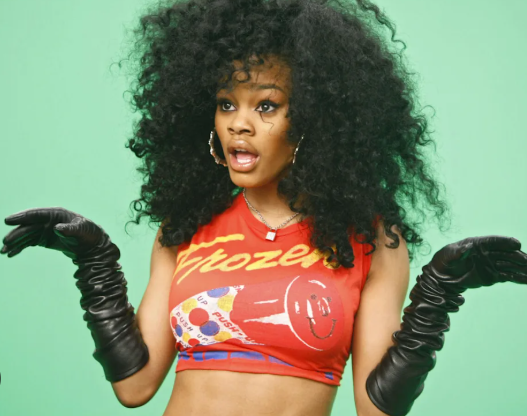
The Before: A Planet Called Harlem
She was born on December 10, 1990, into a Harlem that was still Harlem — before the condos and the cold-brew coffee shops and the Zillow listings that list “historic neighborhood character” as a selling point. Her mother Nikki Taylor raised her alone in a building on a block where the culture was curriculum and nothing about artistic ambition was considered unusual. Harlem had always produced people like this. The unusual thing was what Teyana did with it so early.
At nine years old, she picked up a microphone in front of a crowd. Not as a stunt. As a statement. She entered every talent competition she could find — including the Apollo Theater’s National All-Stars search, a stage that separates people who have something from people who only think they do. By the time she was a teenager, she had been in enough rooms to understand how rooms worked.
Her influences were not her contemporaries. They were Lauryn Hill, Michael Jackson, Toni Braxton, Stevie Wonder — artists whose work came from somewhere internal and irreducible, not from what the market asked for that quarter. This mattered. It meant that when the market eventually came for her, she already had a reference point that existed outside of it.
The Pivot Moment: Beyoncé’s Video and a Fifteen-Year-Old’s Choreography Credit
In 2006, Beyoncé released “Ring the Alarm.” The video required specific choreography. Someone in the production chain — the chain of assistants and creative directors and favor-traders that constitutes the connective tissue of the industry — recommended a fifteen-year-old from Harlem named Teyana Taylor.
She got the credit. A choreography credit on a Beyoncé video, at fifteen, before her first single, before her first album, before most of her peers had held a professional job of any kind. The credit opened a door that ordinarily stays locked for years: Pharrell Williams signed her to Star Trak Entertainment in 2007. Within twelve months, she had appeared in Jay-Z’s “Blue Magic” video and released her debut single, “Google Me.”
However, the signing that would define the next chapter came later, and it came sideways. In 2010, during a studio session with Kanye West, he asked her fashion advice. She gave it. He liked it, then invited her to sing. She sang.
Those vocals appeared on My Beautiful Dark Twisted Fantasy — on “Dark Fantasy” and “Hell of a Life,” two of the album’s centerpiece tracks. According to Forbes, Kanye’s GOOD Music label became her formal home in 2012, and the arc of Teyana Taylor net worth had found its institutional spine.
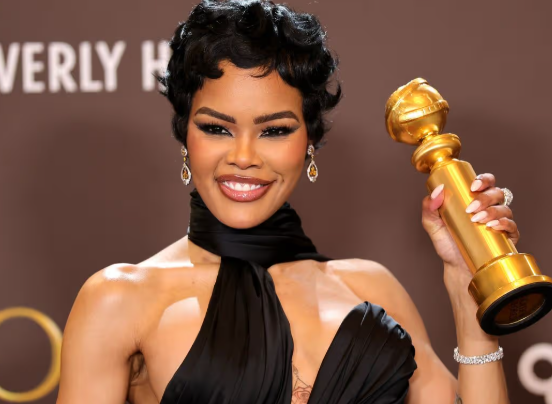
The Climb: What She Did When Nobody Was Watching
Between 2012 and 2016, she was not on the cover of anything major. Her debut album VII reached number one on the R&B charts in 2014 and generated genuine critical heat — then largely disappeared from the cultural conversation the way R&B albums by Black women often did during that era. She responded not by chasing pop crossover but by going deeper into what she already was.
Meanwhile, she opened Junie Bee Nail Salon on 125th Street in Harlem. Not as a celebrity vanity project. As a Black-owned business on a block she understood. The Harlem GLC sneakers she designed for Adidas became the fastest-selling shoe in Adidas Originals history at that point. Fade2Fit came next — a fitness platform built around the specific physicality she’d developed as a dancer, not around whatever fitness trend was generating press that season.
By contrast, her industry peers were scaling toward maximum visibility. She was building infrastructure. The distinction would matter later. Infrastructure compounds. Visibility fluctuates.
Then came the 2016 MTV Video Music Awards. Kanye debuted his “Fade” video — and Teyana Taylor, in a white sports bra and sweatpants, demonstrated what it looks like when someone has been working on their body and their craft for two decades and finally gets a stage worthy of both. The internet did what it does with genuinely extraordinary things: it tried to process it and couldn’t quite. According to Billboard, the response to that three-minute video generated more cultural conversation than most full album releases that year.
The Human Chapter: What the Fortune Didn’t Fix
There is a specific way Teyana Taylor talks about the December 2020 retirement announcement that is worth paying attention to. She didn’t say she was tired. Instead, she named the feeling exactly: “underappreciated” and “overlooked.” There is a clinical precision in those two words that her more florid contemporaries would have softened into something more palatably vague.
The retirement lasted five years as a musician. It did not last five minutes as a creative force. Through The Aunties, she directed music videos and commercial campaigns. Atlanta came next, then a drift back toward New York.
In 2023, a role in A Thousand and One arrived — a quiet, devastating film set in the New York City she grew up in — and the National Board of Review named her a Breakthrough Performer for it. She was 32. The industry had known her name for seventeen years.
(There is something that happens to multi-hyphenate women from working-class origins when the industry finally stops treating them as a category and starts treating them as a talent. It doesn’t always feel triumphant from the inside. Sometimes it just feels like the room finally went quiet enough to hear what you’d been saying all along.)
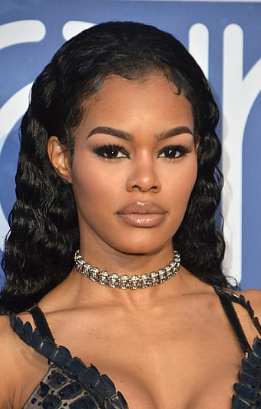
The Performance Nobody Predicted
In 2025, Paul Thomas Anderson cast her in One Battle After Another opposite Leonardo DiCaprio and Sean Penn. Her character, Perfidia, navigates both revolution and postpartum depression — the specific, embodied, socially invisible weight of new motherhood layered against the demand to remain useful to causes larger than yourself.
Critics called it the best performance in the film. At the 2026 Golden Globes, holding the award for Best Supporting Actress, she said: “Our softness is not a liability.” She dedicated it to her daughters.
You have been in rooms like this — not at the Globes, but at the moment before the thing that was supposed to fix it finally arrives. And you know, in that moment, that it helps. That it is real. What it is not, however, is the thing you actually wanted — which was for none of the overlooking to have happened in the first place.
Winning an award for what you always were is not the same as having been seen when it would have cost the industry something to see you. Teyana Taylor knows this. You can hear it in how she said thank you.
In February 2026, Time named her one of their Women of the Year. She is currently dating British actor Aaron Pierre and is set to make her feature directorial debut with Get Lite for Paramount Pictures — a project she is producing, not just appearing in. The Oscar nomination is still live as of this writing. The answer arrives March 15.
What She Built: Teyana Taylor Net Worth Breakdown
Estimates of Teyana Taylor net worth as of early 2026 range between $5 million and $8 million, with Celebrity Net Worth placing the figure at $8 million. The spread reflects the deliberate opacity of her business structure more than genuine uncertainty about her financial position.
Music royalties and touring account for approximately $2–3 million of the total, built across four studio albums and a tour run that sold out arenas. The Fade2Fit platform — subscription fitness at $19.99 per month — generates ongoing recurring revenue that, unlike one-time album sales, compounds without requiring a new release cycle.
Beyond music, The Aunties production company has expanded from music video direction into commercial campaigns and fashion editorial. Her Adidas collaboration, the Harlem GLC, remains a reference point in limited-edition streetwear. Real estate holdings in Los Angeles and New York contribute both equity and commercial utility — she uses her properties as creative workspaces, which has tax structure implications that most celebrity net worth estimates ignore entirely.
However, the number that matters most to the trajectory of Teyana Taylor net worth is not any of these. It is the figure her One Battle After Another performance is now generating in re-appraisal. Film roles at this level, in projects of this cultural weight, do not just pay a fee — they reprice everything retroactively: the streaming catalog, the brand partnership rates, the Fade2Fit subscriber conversion.
According to The Wall Street Journal’s entertainment economics reporting, a single major award win typically increases an actor’s project fee by 40–70% within eighteen months. She has the Golden Globe. The Oscar nomination is pending. Her directorial career has not yet been priced at all.
The $8 million figure is accurate. It is also, almost certainly, a number that will read as significantly low within three years.

Where She Is Now: The East End Verdict
She is in a specific, unhurried phase of construction. The music retirement she announced in 2020 was not a retreat. In retrospect, it looks more like a controlled demolition — clearing a structure that had been built around other people’s expectations of what Teyana Taylor was, so that what she actually is could stand without that scaffolding.
Most mornings start the same way they started on 125th Street: mother first, creator second, celebrity somewhere much further down the list. Her daughters Junie and Rue are eleven and five. School drop-offs happen. Breakfast at home happens.
She has spoken, in various interviews, about maintaining the specific ordinariness of daily life — routines that existed before the Globes and will continue after the Oscars, regardless of outcome. The details are not public. That is intentional. The softness, she said, is not a liability. But it is also not for everyone to see.
What Comes Next
Meanwhile, the feature directorial debut is in development. The acting career has its own momentum now, separate from the music and the fitness empire and the production company. And the production company is expanding toward narrative film — a creative progression that suggests a woman who understands that the most durable position in the industry is not in front of the camera or behind it, but in ownership of both.
Teyana Taylor’s net worth is $8 million and rising. But the fortune is not the story. She built three separate careers, announced she was leaving one of them, got overlooked across all of them at various points, and is now in the position most people in her industry spend their entire careers trying to reach — at 35, with everything still ahead. Her number tells you where she is. Harlem tells you where she started. The distance between those two coordinates is the article.
If your brand belongs in a conversation that understands that distance — reach out. Social Life Magazine has been covering exactly these stories for 23 years.
Feature your brand: Contact Social Life Magazine — we connect luxury brands with the audiences that close.
The East End’s premier sporting event: Polo Hamptons — sponsorships, VIP access, and brand activations where the Hamptons actually convenes.
Get the Hamptons insider list: Subscribe to Social Life Magazine — 23 years of the East End, delivered to your door.
Support independent luxury journalism: Donate $5
Related: Celebrity Net Worth Hub | Music Industry Net Worth Rankings 2026
Author

Written by
Recent Posts

The Man Who Isn’t at Your Party: Howard Stern’s Hamptons
A Field Guide to the Hamptons Casualty
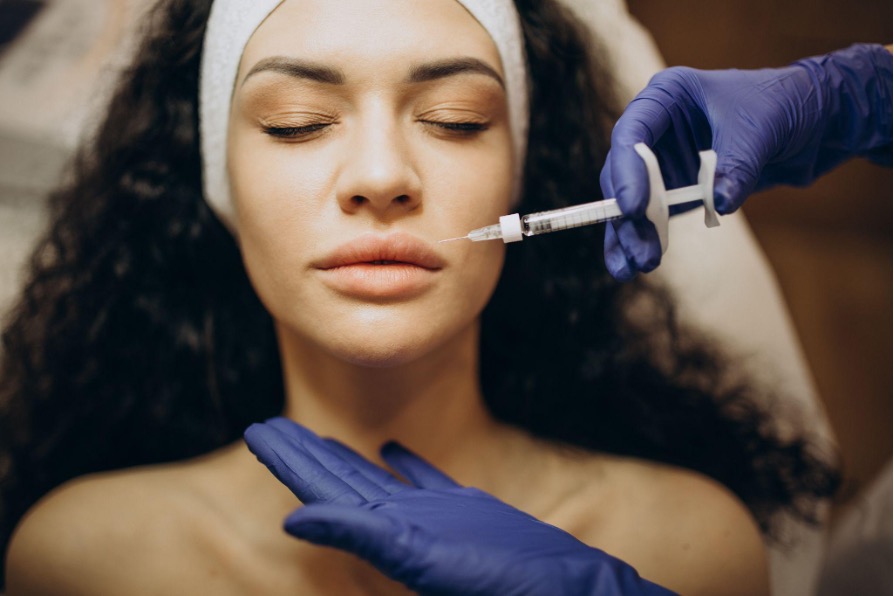
Aesthetic Medicine Distributor: The Foundation of Patient Confidence in Modern Aesthetic Medicine
What Makes a Custom Wool Rug Worth the Higher Price Tag
Simple DIY Air Conditioner Maintenance Tips That Extend Unit Life
Categories
- Art
- Articles
- Business of Luxury
- Celebrities
- Entertainment
- Events
- Faces of Summer 2026
- Fashion
- Fashion & Style
- Featured
- Finance
- Food, Spirits, Wine
- Hamptons
- Hamptons Celebrities
- Health
- Health & Beauty
- Lifestyle
- Luxury Lifestyle
- Press
- Profiles
- Real Estate
- Technology
- The Chronicles
- Travel
- Uncategorized
- Weddings