
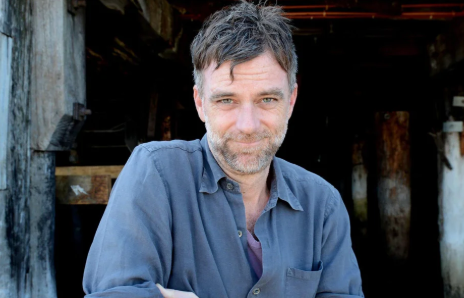
Before Paul Thomas Anderson became the most formally decorated director in American cinema today, he sat in a classroom at Emerson College in Boston and listened to David Foster Wallace teach English. This is not a metaphor. It is a fact so precisely placed by the universe that it almost defeats description. The writer who understood loneliness, ambition, and the weight of extraordinary work in a culture that rewards spectacle, that writer was the actual professor of this filmmaker.
Anderson left Emerson after two semesters. He enrolled at NYU film school and lasted two days before quitting to take a job as a production assistant. He has never explained the NYU departure at length, and the absence of explanation is itself instructive. When you know what you need to learn, classrooms become optional.
The $70 Million That Grew From a Pet Store Cage
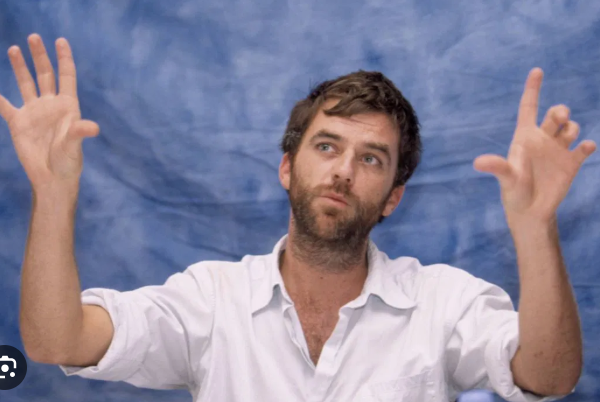
Paul Thomas Anderson net worth in 2026 is estimated at $70 million. Built across nine feature films, zero sequels, zero franchise entries, and one production company named after his father’s horror television alter ego. The $70 million is real. The method that produced it is, by Hollywood standards, almost defiantly strange.
Studio City, 1970: The Father Who Made Everything Possible
He was born on June 26, 1970, in Studio City, Los Angeles. Ernie Anderson, his father, was the voice of ABC, literally the voice that introduced network television to millions of American households. Ernie also moonlighted as Ghoulardi, a Cleveland late-night horror host in the 1960s who became a regional cult legend. Meanwhile, his mother Edwina gave him a troubled relationship he has rarely discussed publicly. His father gave him something more durable: a Betamax camera in 1982, and the permission to believe that making things was a serious occupation.
Cleaning Pet Store Cages and Funding the First Film
By age eight, Anderson was making films. By eighteen, he funded them himself, cleaning cages at a pet store to save enough money to shoot a thirty-minute mockumentary about a fictional porn star. That film would eventually become Boogie Nights. That pet store money would eventually become $70 million. Moreover, the San Fernando Valley, where he grew up and still lives, would become the recurring landscape of almost everything he ever made.
The Two-Day Film School and the Education That Actually Mattered
In the early 1990s, Paul Thomas Anderson was working as a production assistant on television shows, music videos, and game shows across Los Angeles and New York. Entry-level work in an industry that doesn’t care how talented you are until you give it evidence it cannot ignore. He watched how the machine worked from the inside and saved whatever he could to fund the next short film.
Sundance, 1993: The Only Film School That Counted
The evidence arrived in 1993. He made a short film called Cigarettes and Coffee for $20,000, starring character actor Philip Baker Hall. Sundance selected it for their Shorts Program. Suddenly, people in rooms Anderson had not yet entered were saying his name.
That Sundance screening was the actual film school, not Emerson, not NYU, not the classrooms he had serially abandoned. What Sundance taught him was precise: the industry responds to work it cannot categorize. His short had a voice that didn’t sound like anyone else’s. That voice was the asset. Everything since has been a defense and extension of it.
From Hard Eight to Punch-Drunk Love: Building the Fingerprint
Hard Eight followed in 1996. Boogie Nights in 1997. Magnolia in 1999. By thirty, Anderson had earned three Academy Award nominations. At Cannes, he won Best Director for Punch-Drunk Love. His working method had hardened into a fingerprint: long takes, moving cameras, ensemble casts from a recurring company of actors. Original screenplays took years to write, because he wrote them alone, in the Valley, without announcing what he was doing until he was ready.
No Sequels. No Superhero. No Social Media.
He has never made a sequel. A superhero franchise has never been part of his filmography. Nor has a social media account, to any publicly documented degree. In the content economy, Paul Thomas Anderson is a controlled experiment. What happens when a filmmaker refuses every shortcut the industry builds to make his job easier and more profitable?
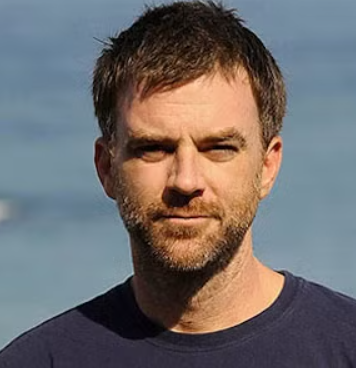
The Climb: Daniel Day-Lewis, Jonny Greenwood, and the Architecture of Obsession
The Box Office Numbers Nobody Talks About Correctly
The financial structure of Anderson’s career is unusual in ways most profiles underreport. Before One Battle After Another, none of his films had crossed $100 million at the box office. There Will Be Blood, widely considered one of the great American films of the century, grossed $76 million worldwide. The Master made $18 million. Phantom Thread made $23 million. These are not failures. They are box office numbers of films designed, from the first frame, to do something other than maximize opening weekend revenue.
Daniel Day-Lewis and the Currency That Doesn’t Show on Spreadsheets
What they generated instead was a different kind of currency. Anderson directed Daniel Day-Lewis to two of the most acclaimed performances in cinema history, Daniel Plainview in There Will Be Blood and Reynolds Woodcock in Phantom Thread. Day-Lewis retired from acting after Phantom Thread. Being the last project one of the greatest actors in history chose to make is not quantifiable on any financial statement. But it compounds in ways pure box office revenue does not.
Greenwood, Ghoulardi, and the $200 Million Validation
Anderson’s collaboration with composer Jonny Greenwood began with There Will Be Blood and continued through One Battle After Another. Together they produced some of the most discussed scores in contemporary cinema, earning Greenwood an Oscar nomination in 2026. His production company, Ghoulardi Film Company, named for his father’s horror persona, operates with intentional obscurity that makes industry observers simultaneously frustrated and respectful.
Then One Battle After Another arrived in September 2025 and crossed $200 million worldwide. Consequently, it became Anderson’s highest-grossing film by a factor of nearly three. The industry had a word for what happened: validation. Anderson, characteristically, said nothing publicly that suggested the number changed anything about how he planned to work next.
The Human Chapter: What $70 Million Looks Like When You’re Not Performing Wealth
SECTION 4: PATH B, DFW TOOLKIT
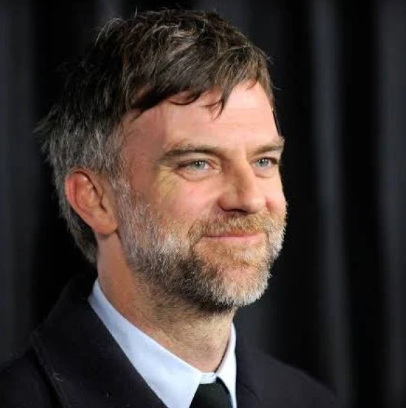
Here is the most specific publicly known fact about how Paul Thomas Anderson lives: four children with Maya Rudolph, not married, San Fernando Valley. The same stretch of Los Angeles suburb where he grew up, attended private schools, cleaned pet store cages, and set the majority of his work. No Malibu estate. No New York relocation to be closer to the industry’s center of gravity. He stayed in the Valley, made the films, and did not perform the life of a celebrated director for anyone’s benefit.
Lucille, the Unmanaged Arrival, and What It Reveals
His second daughter, Lucille, was born at home unexpectedly. Rudolph described the baby as having gently glided into her father’s arms. There is something almost unbearably fitting about this. The director who uses long, unbroken takes, who believes the camera should stay in the room, that man’s child arrived before anyone could intervene. Before a more managed version of events could be arranged.
Fiona Apple, Music Videos, and the Instinct That Runs Through Everything
Anderson was previously in a relationship with Fiona Apple, for whom he directed music videos during her second album. The videos are extraordinary, spare, precise, made by someone who understood that the song was the architecture and his job was not to get in the way of it. That same instinct runs through every film. He does not impose. Instead, he constructs conditions in which something true can occur, and then he films it.
Consider what the life actually looks like. Worth $70 million. The only person to hold Best Director simultaneously at Cannes, Venice, and Berlin. His last film just grossed $200 million. And yet: living in the same suburb where he grew up, in a house purchased in 2021, making films at one every four years. Because that is how long it takes to write something he actually believes in.
What the Valley Builds That Money Cannot Displace
The fortune has not purchased a different version of the life. Instead, it has purchased the ability to continue living exactly this one. Either the most disciplined act of self-knowledge in contemporary Hollywood, or proof that the Valley gets into people in ways money cannot displace. Probably both.
What the $70 million has not bought is the thing Wallace’s fiction kept circling: the feeling that the work is finished. Anderson makes films the way Wallace wrote sentences, as if the subject is always slightly larger than the form can contain. The only honest response to that gap is to try again with more precision next time. One Battle After Another is his ninth feature. The tenth is already somewhere in the San Fernando Valley, assembled from scraps and instincts that no one outside that house knows about yet.
Paul Thomas Anderson Net Worth: The Wealth Audit
According to Celebrity Net Worth’s 2026 estimate, Paul Thomas Anderson’s net worth is approximately $70 million. For a director of his stature and critical standing, that number is notably modest. The gap between his reputation and his wealth is itself a financial story worth examining.
The Income Sources Behind the Number
The breakdown looks roughly like this:
- Director fees (career): Feature film director fees at the studio level typically range from $3 million to $10 million per picture. Anderson’s nine features over nearly three decades, at budgets ranging from $15 million to $100 million, suggest career directing fees of $30–50 million before taxes and reinvestment
- Screenplay fees: Anderson writes his own films. Original screenplay fees at his level add $1–3 million per script. Nine films means nine original screenplays, several earning Academy Award nominations
Production, Music Videos, and Real Estate
- Ghoulardi Film Company: His production company receives producer fees on every project. One Battle After Another‘s $200 million gross against a $100 million budget will generate meaningful backend for the company
- Music video and documentary work: Anderson has directed 25 music videos for Radiohead, Haim, Fiona Apple, and Aimee Mann, plus the documentary Junun (2015). These add income at modest rates while maintaining his creative network
- Real estate: A San Fernando Valley home purchased in 2021 is his primary documented real estate holding, a notably conservative footprint for a $70 million net worth
What a Best Director Win Changes
The trajectory from here is significant. According to Forbes’ analysis of director compensation following Best Picture wins, a Best Director Oscar typically increases a filmmaker’s fee by 30–60% on subsequent projects. If Anderson wins Sunday night, his next film’s deal begins from a fundamentally different floor. For the first time in his career, the commercial scale of his work gives studios a revenue argument to match the critical one.
The $70 million is the result of thirty years refusing every financial shortcut the industry offered. The next decade may look different, not because Anderson will change his method. It will look different because One Battle After Another has demonstrated, in language the industry understands, that his method works at commercial scale too.
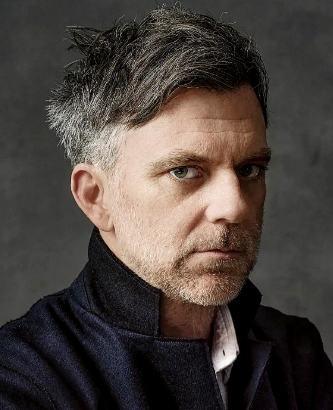
Where Paul Thomas Anderson Is Now
On Sunday night, March 15, 2026, Paul Thomas Anderson is the Best Director frontrunner at the 98th Academy Awards. After sweeping the DGA and PGA awards, the most reliable predictors of Oscar outcome in both categories, his position is as strong as any director’s has been in recent memory. One Battle After Another is a loose adaptation of Thomas Pynchon’s Vineland, shot on 35mm VistaVision, starring Leonardo DiCaprio, Sean Penn, Benicio del Toro, and Teyana Taylor. It grossed more than double its $100 million budget.
Anderson will attend the ceremony the same way he attends most public events: without a publicist’s script, without a brand strategy, without a social media account for the occasion to feed. Whether his name gets called or not, he returns to the San Fernando Valley afterward. The slow, private work of figuring out what comes next begins the following morning.
The Valley, the Camera, and What the $70 Million Actually Bought
The Valley does not change for the Oscars. That pet store where he cleaned cages is probably something else now. Somewhere in a closet or a box, or gone entirely, is the Betamax camera his father gave him in 1982.
What Wallace Taught Him and What He Has Never Stopped Doing
That classroom where David Foster Wallace taught him English, it exists now in another form. As the residue of a specific education in paying attention to what language does when it’s working. When it tells the truth about what it feels like to be a person trying to make something that matters.
That is what the $70 million bought. The right to keep doing this, on his own terms, in the Valley, without explaining himself to anyone.
Some directors make films. Paul Thomas Anderson makes the only films he knows how to make, which happen to be extraordinary. That is a different thing entirely, and a significantly harder one.
Read Next & Stay Connected
Feature your brand: Contact Social Life Magazine, we connect luxury brands with the audiences that move markets.
The East End’s premier sporting event: Polo Hamptons, sponsorships, VIP access, and brand activations where the Hamptons actually convenes.
Get the Hamptons insider list: Subscribe to Social Life Magazine, 23 years of the East End, delivered to your door.
Support independent Hamptons journalism: Donate $5
RELATED ARTICLES, swap URLs for live internal links before publishing
Read next:
Michael B. Jordan Net Worth: The Newark Origin Story Behind the $50M Fortune
Celebrity Net Worth 2026: The Ultimate Guide to Hollywood Wealth
Author

Written by
Recent Posts
Get Panama Residency in 30 Days — A Simple Look at Mercan’s Easy Program Process
How to Choose a Stay for a Multigenerational Resort Trip
How Family Property Disputes Can Affect Relationships and Long-Term Plans

Choosing a Reformer for the Life You Already Have

Artful Living: Unique Gifts With A Creative Edge
Categories
- Art
- Articles
- Business of Luxury
- Celebrities
- Culture
- Entertainment
- Events
- Faces of Summer 2026
- Fashion
- Fashion & Style
- Featured
- Finance
- Food, Spirits, Wine
- Hamptons
- Hamptons Celebrities
- Health
- Health & Beauty
- Lifestyle
- Luxury Lifestyle
- Press
- Profiles
- Real Estate
- Technology
- The Chronicles
- Travel
- Uncategorized
- Weddings