
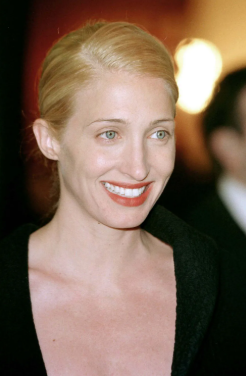
A Calvin Klein publicist. No Instagram. No interviews. No merch. The cultural economy she built by refusing to participate in it.
Every website covering Carolyn Bessette-Kennedy’s net worth arrives at the same impasse: she died in 1999 without a will, her personal finances were never fully disclosed, and the estate math absorbed into Kennedy trust structures that remain private by design. However, those facts miss the point entirely. The financial figure attached to her name — estimated at $5–8 million in personal wealth at the time of her death — tells you nothing about what she is actually worth now. In 2026, she is selling out headband inventory at a Greenwich Village apothecary. Meanwhile, a revival of 1990s minimalism she embodied is running through Prada and The Row runway notes simultaneously. Ryan Murphy’s series about her life reached number one on Hulu. All of this for a woman dead twenty-seven years. That is not a net worth story. That is a compounding interest story.
The Hamptons watched it happen in real time. The East End has always understood what the rest of the country eventually figures out: that restraint, applied precisely, is the most powerful form of wealth there is.
The Before: Greenwich, Boston University, and the Education in Withholding
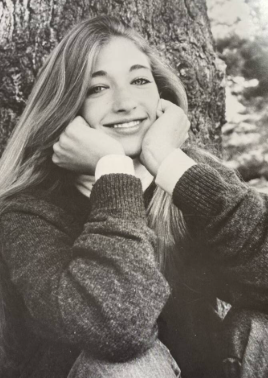
Carolyn Jeanne Bessette was born on January 7, 1966, in White Plains, New York. However, Greenwich, Connecticut was where she was formed. Her mother, Ann Messina Freeman, was an academic administrator. Her father, William Bessette, was an artist and educator. Neither background reads as a fast lane to the upper floors of New York fashion. That is precisely why it matters.
Greenwich in the 1970s and 1980s occupied a specific register of American wealth — established, understated, and deeply allergic to display. Old families. Quiet money. The kind of social environment where what you chose not to wear communicated more than what you put on. Carolyn absorbed that code before she understood it as a code. By the time she arrived at it professionally, it was already instinct.
Boston University, 1988, and the Degree Nobody Mentions
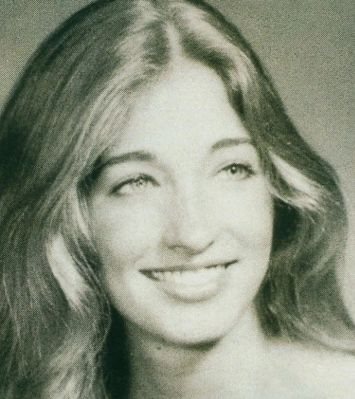
She graduated from Boston University in 1988 with a degree in elementary education. Almost every profile buries that fact or skips it entirely. It is, however, the most instructive thing about her. She did not study fashion. She did not study communications. Instead, she studied how to hold the attention of a room full of people who would rather be somewhere else — and how to make them feel that staying was their own idea. In fact, that is not a bad description of what she did for the rest of her career.
After graduating, she moved to New York and joined Calvin Klein’s sales floor at the Madison Avenue boutique. She was twenty-two. Calvin Klein promoted her into the publicity department within two years. By the early 1990s, she ranked among the most respected young publicists in American fashion — managing the public face of a brand whose entire aesthetic rested on the precise withholding of excess. The job suited the person. Or perhaps the person had already been building toward the job her entire life.
The Pivot Moment: September 21, 1996, Cumberland Island, Georgia
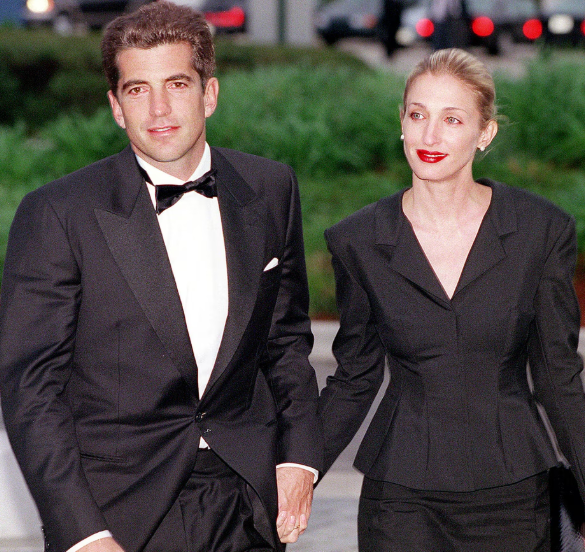
In September 1994, the New York tabloids discovered that JFK Jr. was dating a Calvin Klein publicist from Greenwich. The press siege that followed was immediate and total. Photographers camped outside their Tribeca apartment on North Moore Street. Tabloids documented arguments and published everything they captured. Eventually, every restaurant, every street corner, every private moment became potential inventory for the machine.
Carolyn Bessette did not engage. No interviews were granted. Access was declined across the board — no cultivated press relationships, no managed narrative, no publicist of her own working the phones on her behalf. Consequently, the tabloids were left with photographs and speculation — no quotes, no controlled story, no managed access. The silence was not an accident. Instead, it was a strategy, applied consistently over five years of the most intense media scrutiny an American civilian had experienced since Jackie Kennedy.
The Secret Wedding and What It Told the World
On September 21, 1996, she married John F. Kennedy Jr. in a secret ceremony on Cumberland Island, Georgia — a remote barrier island accessible only by boat, with no roads and no press infrastructure. Twenty-plus guests. Complete blackout. Narciso Rodriguez designed the wedding dress — then a relatively unknown name — in a bias-cut silk crepe slip that became one of the most referenced bridal garments of the twentieth century. No logos. No beading. The line was the only thing left to look at.
The fashion industry understood the signal immediately. She had chosen an emerging designer over an established name, selected a dress that required a specific kind of confidence to wear, and staged the entire event in a location that made coverage impossible. The move combined aesthetic precision with total media control. Furthermore, it generated more coverage — and more enduring cultural impact — than any highly publicized celebrity wedding of that era. The lesson was not lost on the designers who spent the next three decades citing her as an influence.
The Climb: What She Built by Refusing to Build Anything
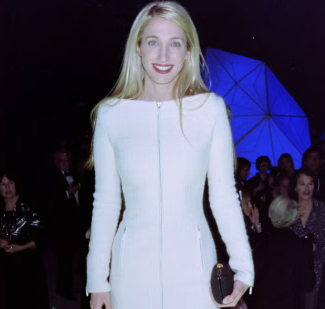
Between 1996 and 1999, Carolyn Bessette-Kennedy made no public appearances designed for press access. No interviews were granted. No product lines launched, no fragrance, no clothing collaboration bearing her name. She did not leverage her position as arguably the most photographed woman in America into any conventional form of commercial output. Instead, she simply appeared — at charity events, at Kennedy family occasions, at the occasional public function — and then disappeared again.
The Wardrobe as Architecture
What she wore during those appearances became the subject of sustained, almost academic analysis. Pencil skirts and Prada coats. Black turtlenecks and Levi’s 517s. Yohji Yamamoto and Calvin Klein in the same rotation as Gap and J.Crew basics. Tortoiseshell headbands from C.O. Bigelow on Sixth Avenue — $12, available to anyone. The wardrobe communicated a specific and radical message: that taste was not a function of price, and that restraint was available to anyone disciplined enough to exercise it.
According to fashion editor Sunita Kumar Nair, whose book CBK: Carolyn Bessette Kennedy: A Life in Fashion became the definitive record of her style, she did not assemble the wardrobe for an audience. That quality — dressing for herself rather than for the camera — is precisely what made it so persistently influential. Budget alone could not replicate it. Moreover, it required a specific internal orientation that most public figures, trained by the media ecosystem to perform rather than inhabit, were unable to access.
The Hamptons Chapter: What the East End Understood First
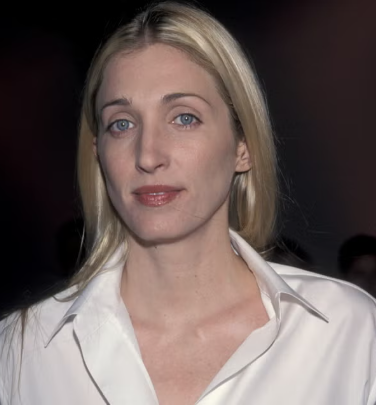
The Kennedy family’s relationship with the East End runs deep and complicated. Hyannis Port is the more documented anchor. However, the waters off Martha’s Vineyard — the specific geography of her death — created a resonance with the Hamptons social circuit that no amount of editorial coverage could manufacture. She died on a flight toward the Kennedy compound on July 16, 1999. The East End mourned with the specific grief of a community that understood, at close range, what had been lost.
The Pre-Fame Summers and the Social Geography She Navigated
Before her marriage, Bessette was a working fashion publicist navigating the New York-to-Hamptons summer circuit that Calvin Klein’s social world occupied. She understood the East End not as aspiration but as professional infrastructure — the summer extension of the same rooms, the same relationships, and the same social economy she operated within year-round. Consequently, she moved through that world with the ease of someone who had studied it carefully and decided what it was worth.
The Hamptons crowd saw her in those years before the Kennedy marriage made her famous globally. At Polo Hamptons and its predecessor events, at the East Hampton parties that ran through August, she was already recognizable as something specific — a woman with a more precise relationship to luxury than anyone around her. She understood the difference between wearing things and using things. The East End, which has always been better at distinguishing between the two than anywhere else in America, registered that quality immediately.
The Posthumous Hamptons Legacy and the 2026 Revival
In 2026, the Love Story effect is visible on the East End as clearly as anywhere else. Women lining up at C.O. Bigelow for headbands. The Row’s East Hampton presence selling pieces in the exact CBK register — unadorned, expensive, deliberately quiet. Younger visitors to the Hamptons arriving with a specific visual vocabulary drawn from a woman who has been dead since before most of them started school.
The specific thing the Hamptons understands about this moment is its structural irony. The woman who refused to participate in the celebrity economy is generating more cultural commerce in 2026 than most of the celebrities who participated fully. Meanwhile, the brands that spent the 1990s trying to dress her in exchange for visibility are now citing her aesthetic in press releases as if they were the ones who invented it. She did not build a brand. She became one. That is a considerably more durable outcome.
What Carolyn Bessette-Kennedy Built: The Wealth Audit
Standard Carolyn Bessette-Kennedy net worth estimates range from $5 to $8 million in personal wealth at the time of her death — reflecting her Calvin Klein salary, her share of the couple’s Tribeca apartment, and savings accumulated across a decade in New York fashion. However, framing her value through that lens is like evaluating Coco Chanel by her personal checking account balance in 1930. The number captures the asset. It misses the architecture entirely.
The Estate: What the Kennedy Wealth Absorbed
JFK Jr.’s estate was estimated between $30 million and $100 million at the time of his death, per Encyclopaedia Britannica. Per his will, Carolyn was the primary beneficiary of his personal property — including the Tribeca apartment and all tangible assets. Because she died with him, everything passed instead to his sister Caroline’s children. The Bessette family subsequently filed a wrongful death suit against the Kennedy estate. In 2001, they received a settlement of approximately $15 million, funded in part by proceeds from the sale of JFK Jr.’s 50% stake in George magazine to Hachette.
Those figures represent the financial settlement of a tragedy. However, they do not represent the cultural capital that has been compounding since 1999.
The Posthumous Economy: What Silence Generated
The book market alone quantifies a portion of it. Sunita Kumar Nair’s CBK sold through multiple printings after the Love Story premiere. Retrospectives in major fashion publications — Vogue, Harper’s Bazaar, The Cut — generate sustained traffic without any licensing agreement or estate approval required. The Narciso Rodriguez wedding dress is referenced in bridal press approximately once per week, twenty-seven years after the event.
C.O. Bigelow confirmed to Vogue that CBK was a frequent customer for their Charles Wahba tortoiseshell headbands — items retailing under $30. After Love Story premiered on FX, those headbands sold out. The apothecary has since had to manage ongoing demand for a product that became a cultural artifact through nothing more than one woman’s consistent personal preference. According to The Wall Street Journal’s analysis of posthumous brand influence, this kind of unmanaged, unmonetized cultural traction is the most valuable form of brand equity precisely because it cannot be manufactured or purchased.
The Love Story Premium: Quantifying the 2026 Revival
Ryan Murphy’s Love Story reached number one on Hulu in its opening weeks of 2026. The production’s costume design challenge — authenticating CBK’s wardrobe required borrowing pieces from a private Canadian collector — generated its own press cycle. Meanwhile, Reformation launched a CBK-coded collection. Brands ranging from The Row to J.Crew explicitly cited her aesthetic in spring 2026 runway notes. Notably, none of these outcomes required any action from an estate, any licensing agreement, or any commercial infrastructure. They emerged entirely from the cultural residue of a woman who spent thirty-three years being exactly herself.
That is what the net worth number cannot capture. She built nothing deliberately. However, she inhabited herself with such specific consistency that the market built around her instead.
Where Carolyn Bessette-Kennedy Is Now
The Legacy That Runs Without Management
There is no CBK estate office managing her image. No family-approved merchandise line exists. No official social account runs in her name. Her mother, Ann Freeman, has maintained the family’s privacy with the same commitment to discretion that her daughter demonstrated throughout her life. Consequently, the cultural machine running in her name operates entirely without permission — which is, structurally, the most accurate tribute possible to the way she operated when she was alive.
In the Hamptons this summer, her presence will be felt the way it always has been on the East End: not through signage or official presence, but through what people are wearing and why. A tortoiseshell headband. The Levi’s 517. That simple black dress costing either $40 or $4,000 depending on where you bought it, looking exactly the same either way. That equation — the leveling of luxury through taste rather than price — is the specific insight she spent her career embodying. The East End has always understood it. Now the rest of the world is finally catching up.
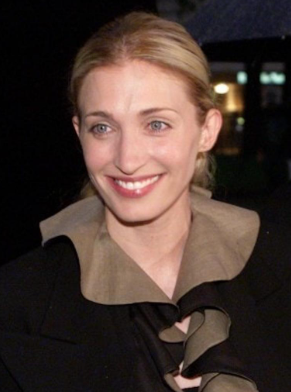
What She Understood That Nobody Else Did
The most instructive thing about Carolyn Bessette-Kennedy is not her style or her tragedy or her marriage into American royalty. It is this: she understood, at a cellular level, that the most powerful position in any attention economy is the position of the person everyone is trying to get to. Not the person chasing coverage. Not the person managing access. The person who makes access feel like a privilege by declining to offer it freely.
She built that position by being exactly one thing, consistently, without apology or explanation. The culture has been trying to explain it ever since. For more on the women who defined the era, explore our It Girls of the Early 2000s hub. For the East End social landscape she moved through, read our Hamptons Real Estate Guide and our East End Dining Guide.
Feature your brand: Contact Social Life Magazine — we connect luxury properties with the audiences that close.
The East End’s premier sporting event: Polo Hamptons — sponsorships, VIP access, and brand activations where the Hamptons actually convenes.
Get the Hamptons insider list: Subscribe to Social Life Magazine — 23 years of the East End, delivered to your door.
Support independent Hamptons journalism: Donate $10
Related:
Paris Hilton Net Worth: Dubai Fixed What Hollywood Broke
Tinsley Mortimer Net Worth: The Blog, The Brand, The Divorce — and the $35M Exit
Author

Written by
Recent Posts
Smart Cooking and Simple Party Planning for Home Bakers
The Benefits of Using an AI Speech Generator for Special Occasions
7 Best Custom DTF Transfer Suppliers in 2026
Protected: Exit Money vs. Inherited Money: Why Hamptons’ Wealthiest Handle Them Completely Differently
Protected: MASQUERADE: The Immersive Phantom NYC Is Obsessed With