

The twins who turned down the spotlight, killed their own franchise, and built the most coveted fashion label in America. On purpose.

Every profile of Mary-Kate and Ashley Olsen’s net worth starts with Full House. That is the wrong starting point. The correct starting point is September 2024, when the Wertheimer brothers — heirs to the Chanel empire — and Françoise Bettencourt Meyers — heiress to L’Oréal — bought minority stakes in The Row at a valuation of $1 billion. The buyers were not investing in nostalgia for Michelle Tanner. They were investing in the most disciplined brand architecture in contemporary American luxury fashion. The twins built that architecture by doing almost everything wrong, according to conventional celebrity wisdom. No press, no social media, no licensing deals, no reunion specials. They turned down Fuller House without a public statement. Just the clothes, and the silence around them, compounding quietly for eighteen years.
The Hamptons has always understood this play. The East End runs on exactly the same currency — restraint as status signal, access as privilege, the conspicuous display of not displaying.
The Before: Sherman Oaks, Six Months Old, and the Franchise Nobody Planned
Mary-Kate and Ashley Olsen were born on June 13, 1986, in Sherman Oaks, California. They are fraternal twins — not identical, a distinction the press has consistently ignored since 1987. Their parents, Dave Olsen and Jarnette Jones, divorced in 1995. Meanwhile, their younger sister Elizabeth would later build her own separate career without ever quite escaping the family legacy’s gravitational pull.
At six months old, the twins were cast as Michelle Tanner on ABC’s Full House. Child labor laws required them to split the role. As a result, each twin worked every other filming day. Consequently, they had no choice in the matter, no agency over the beginning, and no ability to evaluate what they were entering. By the time they were old enough to understand what had happened, it had already happened to them entirely.
The Dualstar Empire and What $100M Looks Like at Seventeen
By the time Full House ended in 1995, the twins were generating serious income. Full House salaries reportedly grew from $2,400 per episode to $80,000 by the series finale. However, the larger machine was already running in parallel. Dualstar Entertainment — the production company their parents helped them form — produced a catalog of direct-to-video films and television specials specifically targeting the pre-teen market. The videos sold millions of copies. Merchandise followed: books, dolls, school supplies, apparel, a Walmart fashion line for girls aged four to fourteen. By the time they enrolled at NYU’s Gallatin School in 2004, they were already millionaires who had been millionaires for years.
Meanwhile, they had also entered treatment, publicly and separately, for eating disorders — Mary-Kate in 2004, amid the same tabloid ecosystem that was simultaneously consuming Nicole Richie and Mischa Barton. The Rachel Zoe years were happening to everyone around them. The twins absorbed the pressure and then, notably, made a different choice than most of their contemporaries. They got quiet. And then they got to work.
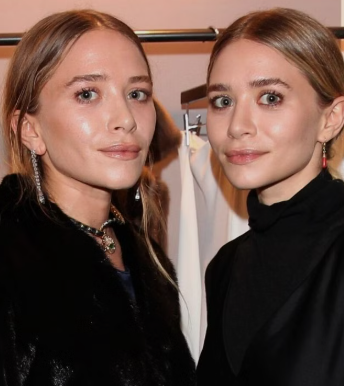
The Pivot Moment: 2005, One White T-Shirt, and Ashley’s Challenge to Herself
In 2005, Ashley Olsen set herself a single design challenge: create the perfect white T-shirt. Not a celebrity T-shirt. Not a licensed product. Instead, a garment that fit correctly across different body types, different ages, and different contexts — one that justified its existence on the quality of its construction alone. She tested the prototype on women of varying shapes and sizes. She adjusted the fit until it worked universally. Then she showed it to Mary-Kate.
That T-shirt became the conceptual foundation of The Row. In 2006, the twins produced a seven-piece inaugural collection: the T-shirt, cotton sateen leggings, and a cashmere wool tank dress. They presented it to Barneys New York. Barneys bought the entire collection. Furthermore, the twins did not give a single interview about The Row for three years after that sale. They insisted their names stay off the brand. The label was called The Row — a reference to Savile Row’s tradition of bespoke tailoring — not “Mary-Kate and Ashley.” The decision was so counterintuitive that most industry observers initially assumed it was strategic humility. It was not. It was architectural conviction.
The Fuller House Refusal and What It Means Financially
In 2015, John Stamos announced Fuller House, the Netflix continuation of Full House. The original cast returned. The twins declined — no press releases, no explanations, no managed statements. They simply did not participate. The financial opportunity cost was real — cast members on Netflix continuations of that profile can earn $500,000 per episode or more. However, the brand equity protection was worth considerably more. Associating The Row with Michelle Tanner nostalgia would have collapsed the price positioning the twins had spent nine years building. They ran the math. They stayed home.
The Climb: Eighteen Years of Saying No to Almost Everything
Between 2006 and 2024, The Row grew from a seven-piece collection to a global luxury label with five monobrand stores, presence in 37 countries, and annual revenue estimated between $100 million and $200 million. According to Business of Fashion’s analysis of quiet luxury brand architecture, The Row’s growth rate is structurally anomalous for a celebrity-founded label. Most celebrity fashion businesses plateau within five years. The Row accelerated across two decades.
The Brand Architecture Most Profiles Miss
The mechanism is specific and reproducible, which is why it will not be reproduced. The Row does not advertise in the conventional sense. It presents at New York Fashion Week without fanfare. The Tribeca studio at 609 Greenwich Street — occupied since 2012 — functions as a working atelier, not a showroom. The first Los Angeles store, opened in 2014 on Melrose Avenue, was designed inside a converted home set back from the street and invisible from passing traffic. The New York flagship, opened in 2016 on the Upper East Side, drew its first customers through editorial coverage alone. In 2024, the CFDA had already awarded them Womenswear Designer of the Year twice — in 2012 and 2015.
The twins won both awards without a single interview explaining their aesthetic. That silence forced critics to do the work themselves. When critics explain your design philosophy in their own words, they become invested in the story. As a result, that investment generates more durable press than any publicist-managed campaign. The twins understood this intuitively. Fashion editors, by contrast, understood it only after the fact.
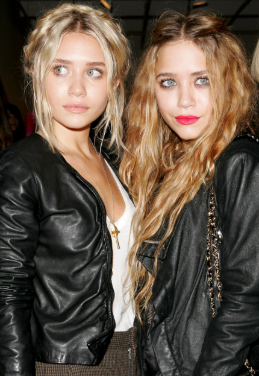
The Hamptons Chapter: What the East End Recognized Immediately
The Row’s Upper East Side flagship is not an accident of real estate. The Upper East Side is the social geography that connects Manhattan’s old-money establishment to the Hamptons summer circuit. The women who buy The Row — and the men who buy it for them — summer on the East End, primarily in East Hampton and Southampton. The Row’s price points, its aesthetic register, and its studied refusal to explain itself all speak the precise language of East End social capital.
The East End as Natural Market and Mirror
The Hamptons understands The Row the way it understands everything genuinely exclusive: not through advertising but through recognition. You either know why a $1,450 cashmere knit justifies its price, or you don’t. The Row does not explain it. The explanation is the disqualification. At events like Polo Hamptons, where the East End’s financial and social infrastructure reconvenes each summer, the women wearing The Row are identifiable not by a logo but by a particular quality of understatement — the expensive version of not trying, which requires more effort than almost anything else in fashion.
Mary-Kate and Ashley have summered in the Hamptons orbit throughout their adult lives. Their social world — New York-based, fashion-adjacent, deliberately low-profile — maps directly onto the East End’s summer circuit. However, they move through it the way they move through everything: present but not performing, visible but not available. The Hamptons respects that register deeply. It is, in fact, how the East End’s most established families have always operated.
The September 2025 NYFW Appearance and What It Signaled
In September 2025, Mary-Kate and Ashley made their first joint public appearance in three years — at a Friday evening party hosted by Bloomingdale’s and W Magazine during New York Fashion Week. Both had changed their hair to long brunette waves. The internet reacted as if a sighting had occurred. In a sense, it had. The scarcity they have maintained around their public presence means that each appearance functions as a cultural event rather than a routine PR exercise. That scarcity is not accidental. It is managed with the same precision they apply to The Row’s distribution strategy. Consequently, a single appearance generates more press than most celebrities produce in a year of constant availability.
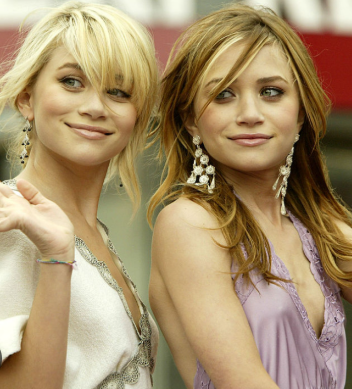
What Mary-Kate and Ashley Olsen Built: The Wealth Audit
According to Celebrity Net Worth, Mary-Kate and Ashley Olsen’s combined net worth stands at $1 billion as of 2025 — $500 million each. However, the composition of that number is more interesting than the headline. Furthermore, the trajectory is sharply upward, not static.
The Childhood Earnings Foundation
Full House salaries, scaled to $80,000 per episode by the end of the run, established an early capital base. The Dualstar direct-to-video empire — estimated at dozens of titles across the 1990s and early 2000s — generated a parallel revenue stream from licensing, merchandise, and distribution. The Walmart fashion line added retail income. By the time they enrolled at NYU in 2004, the twins had already built a self-sustaining financial foundation that required no further entertainment income to maintain. That financial independence is the precondition for everything that followed. You cannot afford to say no to Fuller House unless you genuinely do not need Fuller House. They did not need it.
The Row: From Seven Pieces to $1 Billion
The Row’s revenue range of $100–200 million annually, per Bloomberg’s luxury sector analysis, places it in a peer group that includes Loro Piana and Phoebe Philo-era Céline — both cited as direct comparables by fashion critics. As majority stakeholders following the September 2024 sale, the twins retain the controlling interest in a brand now valued at $1 billion. The Wertheimer and Bettencourt Meyers investment validates that valuation with the specific credibility that only the Chanel and L’Oréal dynasties can provide. Meanwhile, The Row operates five monobrand stores — Los Angeles, New York Upper East Side, New York Tribeca, London Mayfair, and Paris — each generating premium per-square-foot revenue consistent with top-tier luxury retail.
Real Estate and Private Wealth Infrastructure
The twins’ New York real estate history includes a $7.3 million penthouse in Morton Square purchased in 2004 and sold for $7.7 million in 2010 — a modest gain reflecting the holding period. Both maintain private residences appropriate to $500 million net worths. Ashley married artist Louis Eisner in December 2022 and had a son in 2023. Meanwhile, Mary-Kate finalized her divorce from Olivier Sarkozy — half-brother of former French president Nicolas Sarkozy — in January 2021. Neither relationship generated a single planned press moment. That restraint, applied consistently to their personal lives, mirrors the strategy that built The Row. Everything is architecture. Nothing is accidental.
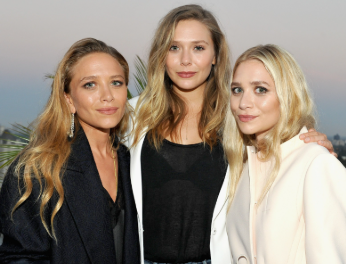
The Elizabeth and James Layer and the Licensing Decisions
Beyond The Row, the twins launched Elizabeth and James — a more accessible contemporary label — alongside Olsenboye for the mass market. Both represented deliberate market segmentation rather than brand dilution. According to The Wall Street Journal’s analysis of celebrity brand portfolios, maintaining clear price-tier separation between luxury and contemporary lines is among the most difficult structural challenges in fashion. The Row has never been compromised by its sister labels. That separation, sustained over fifteen years, is itself a competitive achievement.
Where Mary-Kate and Ashley Olsen Are Now
The Studio at 609 Greenwich, and What Tuesday Looks Like
On a Tuesday morning in Tribeca in early 2026, the twins are working. The studio at 609 Greenwich Street is not a celebrity-adjacent vanity project. Instead, it is a functioning design operation — sampling rooms, fitting models, fabric sourcing, production oversight. The twins conduct the work themselves. Ashley drives the design. Mary-Kate manages the business architecture. The division of labor has remained consistent since 2006 and has not required a press release to function effectively.
Neither twin maintains a public social media presence in any meaningful sense. Their brand does not run on personal visibility. The Row’s Instagram — when it posts — shows clothes, spaces, and occasional editorial imagery. Behind-the-scenes content is absent. Personal moments don’t exist on the feed. Algorithm-chasing is not part of the vocabulary. The account functions as a mood board, not a marketing channel. Luxury customers do not need to feel close to the designers. Instead, they need to feel that the clothes are worth the price. The clothes are worth the price.
The Move Nobody Will Copy
Mary-Kate and Ashley Olsen built a billion-dollar fashion brand by systematically refusing every strategy that conventional celebrity wisdom recommends. Social media leverage — passed. Nostalgia activation — declined. Personal brand extension — not applicable. Accessible entry-point products — irrelevant. Press strategy — unnecessary. Just the work, the silence around it, and the specific confidence of two people who understood that the most valuable position in any market is the one everyone wants access to and nobody gets easily.
The East End understands this better than anywhere. Restraint is not modesty. In fact, it is the most aggressive positioning available. For more on the women who defined this era, explore our It Girls of the Early 2000s hub. For the luxury landscape they inhabit each summer, read our Hamptons Real Estate Guide and our East End Dining Guide.
Feature your brand: Contact Social Life Magazine — we connect luxury properties with the audiences that close.
The East End’s premier sporting event: Polo Hamptons — sponsorships, VIP access, and brand activations where the Hamptons actually convenes.
Get the Hamptons insider list: Subscribe to Social Life Magazine — 23 years of the East End, delivered to your door.
Support independent Hamptons journalism: Donate $10
Related:
Paris Hilton Net Worth: Dubai Fixed What Hollywood Broke
Carolyn Bessette-Kennedy: More Famous Dead Than Alive
Author

Written by
Recent Posts
Smart Cooking and Simple Party Planning for Home Bakers
The Benefits of Using an AI Speech Generator for Special Occasions
7 Best Custom DTF Transfer Suppliers in 2026
Protected: Exit Money vs. Inherited Money: Why Hamptons’ Wealthiest Handle Them Completely Differently
Protected: MASQUERADE: The Immersive Phantom NYC Is Obsessed With