

Every entertainment database will tell you Barbra Streisand’s net worth sits around $400 million. What none of them will tell you is how little of that number came from doing what anyone asked her to do. The records sold. The films won Oscars. The tours shattered price ceilings decades apart. However, the fortune was never built on compliance. It was built on refusal — a systematic, lifelong pattern of saying no to the version of herself the industry preferred and building something more durable instead.
Understanding the Barbra Streisand net worth requires understanding one thing first: she was never supposed to have this kind of leverage. The industry that would eventually bend to her terms spent years telling her she wasn’t pretty enough, wasn’t commercial enough, wasn’t the right type. By contrast, the woman who emerged from those years became the only recording artist in history to achieve number-one albums across six consecutive decades.
That’s not a comeback story. That’s a business model.

A Flatbush Apartment With No Piano
Barbara Joan Streisand was born on April 24, 1942, in Williamsburg, Brooklyn — not the Williamsburg of artisan coffee and curated record stores. This was the Williamsburg of working-class Jewish families in walk-up apartments, of fathers who taught school and mothers who stretched every dollar. Her father, Emanuel Streisand, was an educator and a scholar. He died of a cerebral hemorrhage when Barbra was fifteen months old.
That loss shaped everything. Her mother Diana remarried a man named Louis Kind, who brought indifference and eventually a second family into the household. Consequently, the apartment shifted to Flatbush. Money was tight. Warmth was even tighter. Meanwhile, Diana told Barbra plainly, and more than once, that she was not pretty enough for show business — that something realistic was the smarter path.
There was no piano in the apartment. Nor were there any performing arts programs nearby. What there was: a transistor radio and a record collection that Barbra memorized with the focus of someone who understood, even at eleven, that this was not casual listening. Meanwhile, school offered its own version of the same message. Her ambition didn’t fit the template of what a girl from Flatbush was supposed to want.
The Detail Most Profiles Skip
Emanuel Streisand, the father who died before his daughter turned two, was a gifted academic. His graduate thesis examined the psychology of educating gifted children. Remarkably, that daughter never read a word of it. She never knew him. However, the thesis exists — and its subject, in retrospect, reads like a document written about her. The intelligence that would make her impossible to contain was already, genetically, in the room before she arrived.
The Night She Changed the Spelling
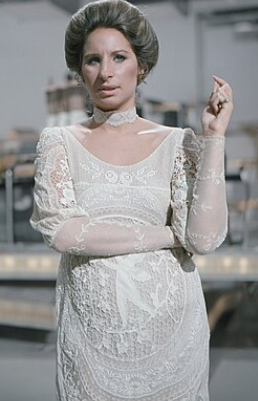
In 1959, Barbra Streisand arrived in Manhattan at eighteen years old with $116 in her pocket. Before she unpacked, she made one decision: she dropped the middle “a” from Barbara. Not Barbara. Barbra. The spelling change was deliberate and completely dismissed at the time as an affectation.
It was not an affectation. It was the announcement of an operating principle she would hold for the next sixty-five years. If a standard existed, she would find the place where it bent. The name was the first bend. The career was sixty years of additional proof.
She found a room in Hell’s Kitchen for $18 a week and began making calls. By 1960, she was performing at a Greenwich Village club called The Lion for $50 a week and free meals. Audiences noticed immediately. The industry took a few more months. Eventually, it noticed too.
What She Built Before Anyone Was Watching
By 1961, she had graduated to the Bon Soir in the Village — a proper showcase where industry people sat in the back booths. Her sets ran long because she refused to cut material she believed in. Bookers called it a problem. Audiences called it an event.
In 1962, she took a supporting role in “I Can Get It for You Wholesale” on Broadway. The part was comic relief. She stopped the show every night. A Tony nomination followed. So did a recording contract — all from a role the lead never wanted to lose scenes to.
The Gap Nobody Covered
She auditioned for that Broadway show as an actress. The producers wanted the voice. She wanted the role. That gap — between what the industry saw and what she was building — became the permanent engine of her career leverage. She understood, earlier than almost any performer of her generation, that the goal was not to be cast. Ultimately, the goal was to be irreplaceable. Consequently, she spent the next decade making herself impossible to replace in every medium at once.
“Funny Girl” ran on Broadway for 1,348 performances starting in 1964. The 1968 film earned her the Academy Award for Best Actress — shared, in an unprecedented tie, with Katharine Hepburn. The move from stage to screen was not a pivot. It was an expansion. Meanwhile, her albums were charting simultaneously on pop, adult contemporary, and cast recording charts — a commercial cross-section no label had planned for and every label was grateful for.
The Life That $400 Million Built (and What It Couldn’t)
The House That Is Also a Town
Barbra Streisand’s Malibu compound is, by most accounts, not a house. It is a campus — a collection of structures across several acres of California coastline that includes a main residence, guest quarters, a converted barn screening room, and, in the basement of the main house, a fully operational indoor shopping mall. This is not a metaphor. The mall contains a yogurt shop, a vintage clothing boutique, a doll museum, and a gift shop stocked with her memorabilia. She shops there on days she prefers not to leave the property.
Ultimately, the instinct behind the mall is the same instinct that built the career. Why negotiate with the outside world’s terms when you can build the outside world inside your own? According to Architectural Digest, the compound also includes a historic church she had physically relocated onto the property. Additionally, she spent years in horticultural consultation to achieve the garden she wanted. The woman who arrived in Manhattan with $116 now maintains a private village designed entirely around her own specifications.
This is either the most complete expression of autonomy in American celebrity history or the most expensive coping mechanism ever constructed. Possibly both. She would not disagree with either reading.
The Stage Fright That Accidentally Rewrote the Business Plan
In June 1967, Streisand performed a free concert in Central Park for an audience of approximately 135,000 people. Midway through the set, she forgot the lyrics to one of her songs. By the standards of live performance, it was a minor incident. However, she did not file it away as a minor incident. She let it rewrite her relationship to live performance entirely.
She did not tour for twenty-seven years.
Consider what that means economically. From 1967 to 1994, during what should have been her peak touring decades, she left the most reliable income stream in the music business largely untouched. Instead, she made records. From there, she directed films. Producing came next — all of it building equity that touring would have spent. When she finally returned to the stage in 1994, her concert series became one of the highest-grossing tours in history to that point, as reported by Billboard. By refusing to tour, she had inadvertently made her live performances rare enough to command prices no performer had asked for before.
You have crippling stage fright and you haven’t performed live in nearly three decades. Then you step out in front of twenty thousand people and the cheapest ticket cost $350. That’s not a comeback. That’s an asset that appreciated because you were too afraid to liquidate it.
There is something Streisand-specific in this pattern: her limitations became her leverage. The refusal that looked like weakness from outside turned out to be the structural condition of her entire pricing architecture. Other celebrities who built fortunes on their own terms understand this dynamic intuitively. Very few executed it across six decades.
Breaking Down the Barbra Streisand Net Worth: Where $400 Million Comes From
The Barbra Streisand net worth estimate of approximately $400 million reflects a fortune built across multiple structural layers. Breaking it down reveals something more interesting than a single dominant income source.
Music Catalog and Royalty Income
Streisand has sold an estimated 72 million albums worldwide. That figure makes her one of the best-selling recording artists in history. Her catalog spans more than sixty years across Columbia Records. In fact, that label relationship stands as one of the longest in major-label history.
Additionally, she controls publishing rights on significant portions of her recorded output. This negotiating position was secured early and protected fiercely. In an era before most artists understood publishing as an asset class, she understood it as a compounding income stream. According to Forbes, her catalog royalties alone represent a substantial recurring revenue base that requires nothing from her going forward.
Film, Directing, and Producing Revenue
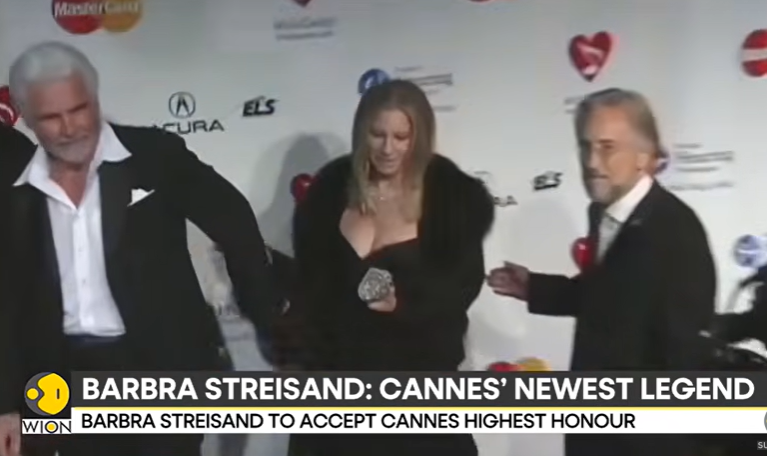
Notably, her film income spans not just acting but directing, producing, and soundtrack licensing. “Yentl” (1983), which she directed, produced, co-wrote, and starred in, generated income across multiple categories simultaneously. It is also the body of work at the center of her 2026 honorary Palme d’Or from Cannes — making her the first musician in the award’s history to receive it. Her producing credits on Broadway and in film extend her revenue well beyond the projects she appeared in personally. Her 1994 concert tour alone grossed over $100 million, a figure that reset the pricing architecture for live music events globally.
Real Estate Holdings
Her Malibu compound represents significant appreciated value on some of California’s most constrained coastal property. Additionally, she has sold portions of the property over the years, with reported transactions reaching into the eight-figure range. Her broader California portfolio, while less publicly documented than her entertainment holdings, is consistently factored into the overall Barbra Streisand net worth calculation by industry analysts.
The Memoir That Reactivated Everything
In 2023, Streisand published “My Name Is Barbra” — 970 pages, one of the longest celebrity autobiographies ever published. It debuted at number one on the New York Times bestseller list and generated substantial advance and royalty income. More strategically, it reactivated her catalog commercially in a way no greatest hits package could replicate. The book is the capstone of a six-decade estate-building strategy. Ultimately, that distinction from a vanity project matters — and it matters to the balance sheet.
What the Fortune Looks Like From Inside It
The Daily Life Nobody Photographs
Streisand is in her early eighties. She lives in Malibu with her husband, the actor James Brolin, whom she married in 1998. Her days involve gardening, cooking, watching her dog, and working. She is always working.
The dog is a Coton de Tulear named Fig — a breed she arrived at after having her beloved previous dog, Samantha, cloned twice, producing Miss Violet and Miss Scarlett. This is the detail that lands differently the longer you sit with it. She had enough money to clone her dog — and did it twice. One of them she named Miss Scarlett. The instinct for specificity, for getting the exact thing she wanted rather than an approximation, ran from her vocal arrangements all the way to her pet acquisition strategy.
Her friends describe a woman who is simultaneously one of the most accomplished people alive and genuinely, specifically interested in whether you think the tomatoes she grew this summer came out right. That specificity is the tell. Four hundred million dollars did not resolve the thing the drive was originally trying to solve. It gave the drive a larger garden to work in. The work continues regardless.
What the Barbra Streisand Net Worth Actually Represents
Streisand is one of a small number of performers to have won an Oscar, a Tony, multiple Emmys, and multiple Grammys. She is also the only recording artist to achieve number-one albums in six consecutive decades. Those facts appear in every profile. However, they don’t quite capture what the career actually represents.
What it represents is this: a woman from a Flatbush apartment with no piano and a mother who told her she wasn’t pretty enough built a $400 million enterprise on one premise. She believed her own judgment was correct. About her voice, she was right. About her films, equally so. Her instinct on publishing rights held for sixty years. She was right about touring scarcity. The memoir followed the same pattern. And the tomatoes — almost certainly those too.
The Barbra Streisand net worth is not the scoreboard. It’s what happens when you’re right for sixty-five years and refuse to be anything else. Now, at 83, Cannes has arrived to formally say so — the honorary Palme d’Or she receives in May 2026 is the room finally deciding to stand up. She built everything she built without it. She will hold it anyway. Explore more stories like this in our celebrity profiles hub — and find out what brings these fortunes to the East End’s most coveted addresses.
Feature your brand: Contact Social Life Magazine — we connect luxury brands with the audiences that close.
The East End’s premier sporting event: Polo Hamptons — sponsorships, VIP access, and brand activations where the Hamptons actually convenes.
Get the Hamptons insider list: Subscribe to Social Life Magazine — 23 years of the East End, delivered to your door.
Support independent Hamptons journalism: Donate $10
Keep reading:
The Blog, The Brand, The Divorce: Tinsley Mortimer’s $35M Net Worth
It Girls of the Early 2000s: Where They Are Now
Author

Written by
Recent Posts
Sectional Sofa vs. Regular Sofa: Which One is Best for You?

Sober and Injured: How to Manage Pain Treatment After a Massachusetts Slip and Fall
Flexible Liquidity Options Are Reshaping How Modern Professionals Handle Unexpected Expenses
5 Best At-Home Teeth Whitening Kits for a Brighter Smile in 2026

From Spa Retreats to Aesthetic Care, the Luxury Travel Itinerary Is Changing
Categories
- Art
- Articles
- Business of Luxury
- Celebrities
- Culture
- Entertainment
- Events
- Faces of Summer 2026
- Fashion
- Fashion & Style
- Featured
- Finance
- Food, Spirits, Wine
- Hamptons
- Hamptons Celebrities
- Health
- Health & Beauty
- Lifestyle
- Luxury Lifestyle
- Press
- Profiles
- Real Estate
- Technology
- The Chronicles
- Travel
- Uncategorized
- Weddings