
The Platform Nobody Took Seriously
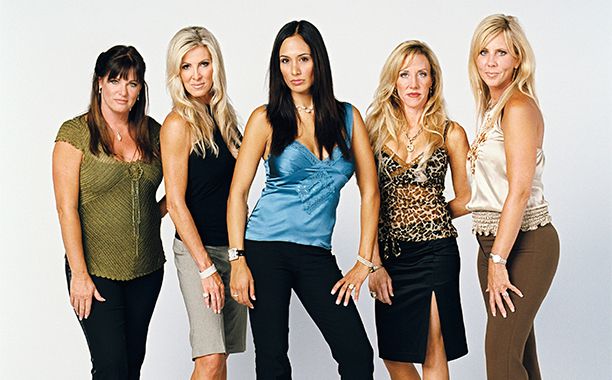
In 2006, when Bravo launched The Real Housewives of Orange County, the television industry filed it under guilty pleasure. Critics dismissed it. Business analysts ignored it. Meanwhile, the women on camera were doing something no media strategist anticipated: building consumer brands, negotiating equity positions, and converting sustained audience attention into investable capital. The show’s social utility — its gossip, its drama, its impossible dynamics — was never the product. It was the advertisement.
That realization arrived at different speeds for different women. The ones who got there first got rich. Late arrivals got a podcast. Those who never arrived at all became warning labels.
The Contract Clause That Changed Everything
One sentence in a Bravo contract reset the ceiling for The Real Housewives’ net worth. Bethenny Frankel — broke, coming off a failed bakery, filming Season 1 of RHONY for $7,250 total — negotiated a clause retaining ownership of anything she created off-camera. Other Housewives did not. According to Harvard Business Review’s creator economy research, retained IP generates four to seven times more long-term value than platform income alone. Frankel figured that out in 2008 with a single sentence. Everything after was execution.
Bethenny Frankel — The Winner Who Wrote the Rulebook

No entry in The Real Housewives net worth universe starts with less and ends with more. Frankel joined RHONY with maxed-out credit cards and a failed business. She left — twice — with an estimated $80 million, a brand licensing playbook, and a business school case study that professors still assign. The mechanism was straightforward. The execution required a specific kind of discipline most people don’t have: treating every camera appearance as a marketing event rather than a paycheck.
She launched Skinnygirl Margarita during Season 1. She sold it to Beam Global in 2011 for approximately $100 million. Then she did something even sharper.
Skinnygirl, Ownership, and the $80M Exit
Frankel retained the Skinnygirl trademark for non-alcoholic products when she sold the cocktail brand. That distinction let her simultaneously collect the acquisition check and expand into shapewear, popcorn, and supplements under the same name. Additionally, she negotiated equity in Cameo instead of appearance fees, and exited at a reported seven-figure profit when the platform hit a $1 billion valuation. Both moves followed identical logic: own the asset, monetize the attention, and never mistake the television show for the business. Her Bridgehampton presence anchors the Hamptons chapter of an empire built on knowing which sentence matters in a contract. Read the full Bethenny Frankel net worth breakdown.
Teresa Giudice — When Survival Becomes the Brand

Teresa Giudice is not a success story in the conventional sense. However, her chapter of the real housewives net worth record is something more complicated and, in its own way, more instructive: a woman whose net worth survived federal prison, eleven million dollars in bankruptcy debt, and a public divorce — while her reputation did not. That survival is its own data point worth examining carefully.
Her RHONJ salary reached $1.1 million per season. Then came the 2009 bankruptcy filing, the 2013 federal indictment on 39 counts of fraud, and eleven months at FCI Danbury. By conventional accounting, the financial story should have closed there.
The Franchise That Survived Federal Prison
It didn’t close. Bravo kept filming. The audience kept watching. Her memoir Turning the Tables became a New York Times bestseller while she was still incarcerated. Subsequently, she returned to RHONJ, competed on Dancing with the Stars, and rebuilt a podcast following estimated at hundreds of thousands of weekly listeners. Her current net worth — approximately $500,000, a fraction of what the salary figures imply — reflects the devastation of legal fees and settlements. Nevertheless, the brand endured. Bravo’s audience forgives almost anything except irrelevance. Giudice remained relevant by making irrelevance structurally impossible. The lesson is not inspiring. It is instructive. Read the full Teresa Giudice net worth profile.
Kandi Burruss — The Songwriter Who Built an Empire
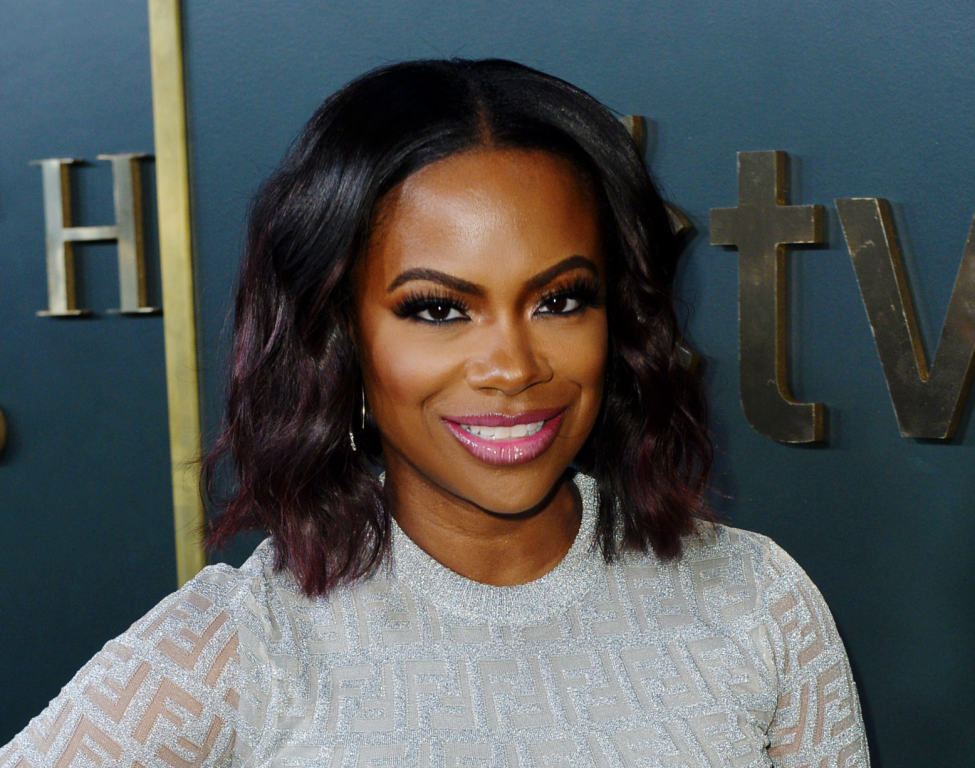
Kandi Burruss arrived at The Real Housewives of Atlanta in 2009 with a credential most Housewives didn’t carry: she had already written a song worth $100 million. “No Scrubs” by TLC. “Waterfalls.” Her publishing royalties were already compounding before a single Bravo camera pointed at her. What the show provided was something more valuable than fame — it provided a hospitality launchpad with a built-in audience already spending money on Bravo-adjacent brands.
While other RHOA cast members chased endorsement deals and performance bookings, Burruss built physical infrastructure. That distinction defines the pivot.
OLG Restaurant Group and the Quiet Pivot
Her OLG Restaurant Group now operates multiple Old Lady Gang locations across Atlanta’s entertainment district, anchored in Southern cuisine with name recognition that predates the restaurants themselves. Additionally, she expanded into Blaze, a bar concept, and continued collecting songwriting royalties documented by Billboard throughout the hospitality build. Consequently, her estimated $30 million net worth does not require a Bravo renewal. The publishing catalog runs whether or not production orders another season. The restaurants operate whether or not she films a single scene. That independence — built quietly, without drama, while other cast members generated the drama — is the pivot. She came in a songwriter. She left a restaurateur. Both income streams kept compounding. Read the full Kandi Burruss net worth profile.
NeNe Leakes — The Peak That Became a Warning

The decision made complete sense on paper. She had NBC momentum. She had crossover heat. The Bravo universe was starting to feel small relative to her trajectory. In practice, it was the most expensive exit in RHOA history.
Why Leaving Early Costs More Than Staying
The NBC projects stalled. The crossover didn’t hold at scale. By the time she returned to RHOA in 2018, the cultural window had shifted, other cast members had built businesses during her absence, and the leverage she left with had depreciated significantly. Her estimated $14 million net worth represents genuine achievement — and a substantial gap between what the trajectory implied and what the exit actually produced. Furthermore, Forbes research on personal brand leverage confirms the pattern: peak platform visibility windows average 18 to 24 months before meaningful depreciation begins. Leakes exited at the peak. The platform didn’t pause. The lesson for every Real Housewives net worth calculation is permanent: the crossover market is almost always smaller than the Bravo audience. Read the full NeNe Leakes net worth profile.
Kyle Richards — The Dark Horse Running the Longest Play
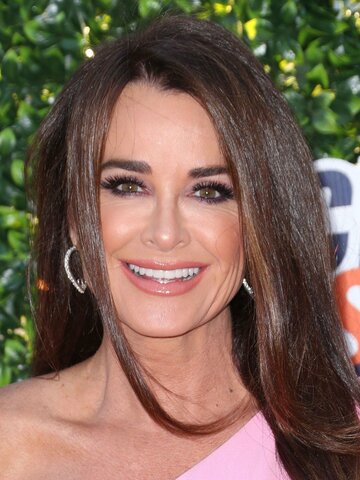
Kyle Richards is the most underestimated entry in the Real Housewives net worth conversation, and the underestimation is entirely the point. She joined The Real Housewives of Beverly Hills in 2010 as a former child actress with a Halloween franchise credit and a real estate developer husband. Fourteen seasons later, she carries an estimated $100 million net worth and a search volume trajectory that accelerated during the last two years — not despite the personal difficulty of that period, but because of it.
The math on this is not comfortable to observe. However, the data is unambiguous.
How a Divorce Arc Became a Search Volume Event
The public Umansky separation, which emerged in 2023, generated sustained media coverage that no advertising budget could replicate. Her search volume increased an estimated 400 percent during the divorce arc. Meanwhile, Mauricio Umansky’s firm The Agency expanded to forty-plus global offices, and Richards maintained personal brand partnerships and her clothing line Kyle by Alene Too throughout. Consequently, the most painful chapter of her personal life was simultaneously the most commercially productive chapter of her public career. That is not a strategy anyone would design deliberately. However, it is The Real Housewives’ net worth pattern at its most concentrated: personal narrative converting directly and immediately to commercial attention. The dark horse won by staying on the track long enough for the race to reorganize around her. Read the full Kyle Richards net worth profile.
Tinsley Mortimer — The Ghost Who Still Draws Traffic
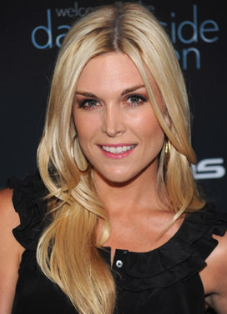
Tinsley Mortimer arrived on RHONY in Season 9 as a specific type of character: the fallen socialite attempting a second act. She left in Season 12 for a relationship in Columbus, Ohio. The relationship ended. The show moved on. The search traffic did not, because the story that makes Tinsley interesting predates Bravo by a decade and continues generating interest independent of any network contract.
Her socialite credentials were established through Lawrenceville, Columbia University, a Vogue internship, and a Samantha Thavasa handbag deal that made her the first Western face of a Japanese luxury brand. RHONY added search volume to an already-documented life.
What Leaving the Platform Actually Costs
The Tinsley chapter illustrates a different exit calculus than Leakes or Frankel. She didn’t leave at peak leverage to pursue a crossover. She left for personal reasons, which is the only exit that carries no strategic lesson — only a human one. Her documented net worth and ongoing social presence continue generating traffic through the It Girls framework, the RHONY archive, and the broader Hamptons social narrative she occupied for years. Additionally, her story connects this hub directly to adjacent content already live on the site. She is, in the hub’s architecture, the internal link. For the full origin story, the Samantha Thavasa chapter, and the Hamptons years, read the Tinsley Mortimer net worth profile — and the It Girls of the Early 2000s hub that places her in full context.
The Bravo Formula — Five Moves That Real Housewives Net Worth Winners Made First
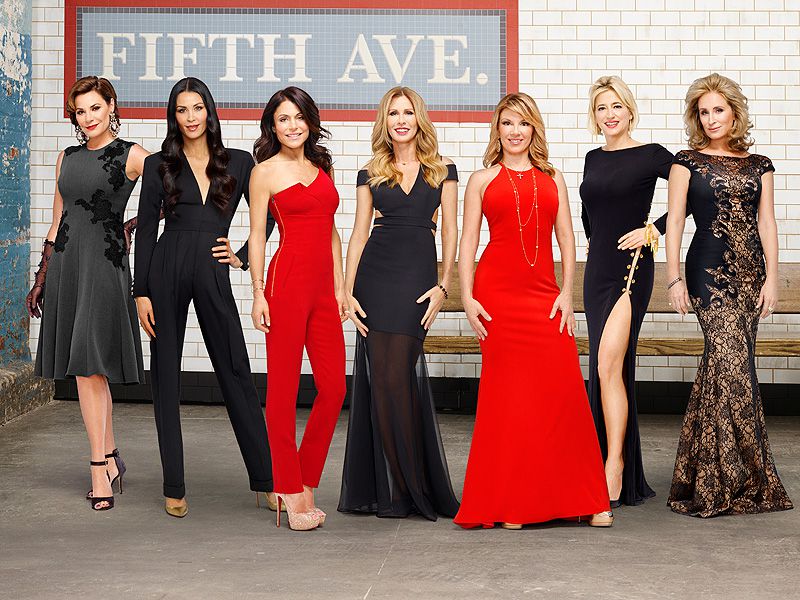
Twenty years of Housewives franchises generate a dataset most business schools haven’t bothered to analyze. However, the pattern inside that data is not ambiguous. The women who compounded money made five structural decisions. Talent does not appear on this list. Neither does charisma, screen time, or willingness to flip a table at a dinner party.
What Every Smart Housewife Did Differently
First: they negotiated ownership before salary. Frankel’s contract clause is proof of concept. Second: they built the business before the show peaked — not after. Burruss had publishing royalties. Vanderpump had twenty-six London restaurants. Neither one needed Bravo to ratify what they were building. Third: they directed audience attention toward owned assets rather than collecting appearance fees, which depreciate with visibility. Fourth: they stayed on the platform long enough to depreciate gracefully instead of exiting at peak and discovering the crossover market was smaller than the Bravo audience. Fifth — and this is where the Hamptons infrastructure becomes relevant — they understood that the charity circuit, the Hamptons dining scene, and the East End social season are where the relationships that fund the next chapter actually form. Not on set.
The Women Who Got Eich Used Television
They earned the right to be in those rooms. Then they made the rooms do the work. For the full rankings across every franchise, the Reality TV Stars Net Worth 2026 guide breaks down every tier. And every July, the same reality TV stars net worth conversation continues in person — at Polo Hamptons, where the money that built these empires shows up in the same place at the same time.
Bravo never intended to build a venture fund. It intended to build ratings. What it built instead — across twenty years and nine franchises — was a documented record of what happens when consumer attention meets the right contract clause. The reality TV stars net worth split between winner and warning is not random. It is the same split that appears in every business category: the ones who owned the asset compounded. The ones who rented the platform depreciated with it. The cameras were always the advertisement. The question was always what you were advertising.

There is a particular quality of attention that separates the people in this story from the people watching it. Not intelligence. Not luck. Something quieter and harder to name — the capacity to notice, while still inside a moment, that the moment is also a market. Bethenny Frankel had it in 2008 filming a reality show for $7,250. Kandi Burruss had it the day she walked onto a Bravo set already holding a $100 million song catalog. Most people watch a room. Some people read it. The ones who get rich build something inside it before anyone else notices the room exists. If you are reading this article with that second kind of attention — the kind that sees the ecosystem underneath the entertainment — then the conversation probably shouldn’t stop here.
Social Life Magazine has covered this geography for twenty-three years.
The Hamptons. The people who summer here. The brands they build, spend, and occasionally lose. What we do — if you are a brand, a founder, a family office, or someone who has built something real and wants the right room to know about it — is place you inside that conversation with precision. A feature in our pages is not advertising. It is positioning. It is the difference between being known and being understood by the people who write the checks, attend the galas, and sit in the cabanas at Polo Hamptons watching the same summer happen at a different altitude. If that distinction matters to you, the conversation starts here.
Alternatively: you may simply want to stay informed. Eighty-two thousand readers receive our editorial — the net worth breakdowns, the Hamptons intelligence, the business stories that the general press files under “lifestyle” and we file under “strategy.” The people on that list are not passive consumers of luxury content. They are operators, inheritors, founders, and the occasional person who just closed something significant and wants to understand the room they just walked into. The list is free. The access it represents is not.
Every July, A Convergence Happens On The East End
No amount of digital reach can fully replicate what happens Out East. The money is there in person. The relationships that move markets form at specific tables, at specific events, in the particular social atmosphere that only exists between Memorial Day and Labor Day across twelve miles of Atlantic coastline. Polo Hamptons is one of those events — the one Social Life Magazine has co-produced for years, where the guest demographic averages a $3.62 million net worth and 51 percent arrive by private aircraft. If the women in this article used television to earn entry into rooms like this, the rooms themselves still exist, still matter, and still produce outcomes that no platform presence can manufacture remotely. The 2026 season is booking now.
Finally — and this is the only ask in this piece that requires nothing in return — Social Life Magazine is an independent publication. No parent company, no algorithmic mandate and no advertiser telling us which stories matter. Twenty-three years of covering this world on our own terms is, in the vocabulary of this article, an ownership story. We built the asset, we retained the brand, and we are, in the most literal sense, still here. If that kind of longevity means something to you, a print subscription to Further Lane is the most direct way to say so. And if a subscription feels like more than the moment calls for, five dollars keeps the lights on and the coverage honest. Either way — you’ve read this far. That already means something.
Author

Written by
Recent Posts

Why the Supplement Market Is Shifting From More Products to Smarter Choices
5 Ways Engraved Custom Trophies Boost Employee Engagement
Creating Beautiful Mix-and-Match Tablescapes for Any Occasion
Is It Cheaper to Drive or Ship Your Car? We Ran the Numbers
Dear Margo: Restaurateur Dean Pashilis’ Tribute to Family, Food and Hospitality
Categories
- Art
- Articles
- Business of Luxury
- Celebrities
- Culture
- Entertainment
- Events
- Faces of Summer 2026
- Fashion
- Fashion & Style
- Featured
- Finance
- Food, Spirits, Wine
- Hamptons
- Hamptons Celebrities
- Health
- Health & Beauty
- Lifestyle
- Luxury Lifestyle
- Press
- Profiles
- Real Estate
- Technology
- The Chronicles
- Travel
- Uncategorized
- Weddings