
The Before: Little Italy, Asthma, and the Failed Priest
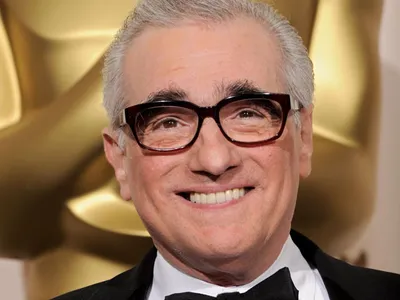
Notably, martin Charles Scorsese could not breathe properly for most of his childhood. In fact, born on November 17, 1942, in Queens, New York, and raised in a cold-water tenement on Elizabeth Street in Little Italy, the boy who would become the most important American filmmaker of the twentieth century spent his formative years wheezing through an asthma condition severe enough to keep him off the street and out of the games that other kids played. Subsequently, his father, Charles, pressed clothes in the Garment District. His mother, Catherine, worked as a seamstress. Both were Sicilian-American. Meanwhile, both would later appear in their son’s films — Catherine most memorably cooking a midnight meal in Goodfellas, a scene so natural that audiences assumed she was a professional actress. She was not. Indeed, she was a mother who understood that the best performance is the one that doesn’t look like performing.
Ultimately, the neighborhood outside the tenement window was a film school. Little Italy in the 1940s and 1950s was a compressed ecosystem of loyalty, violence, Catholic guilt, and the unspoken understanding that certain men on certain corners operated by rules that existed alongside the law but never inside it. Young Martin absorbed this grammar the way other children absorbed sports: through observation from the window, because his lungs wouldn’t let him participate in anything else. His parents took him to the movies instead. The Rialto. The Loews. He watched everything. Westerns, musicals, Italian neorealism. By the time he was twelve, he was drawing storyboards of films he wanted to make. He was also considering becoming a priest.
The Turning Point
Scorsese enrolled in a preparatory seminary. He lasted one year. He has never fully explained the failure, though he has spent six decades making films about men torn between devotion and destruction, which suggests the seminary didn’t fail him so much as give him his subject. Even so, he enrolled at NYU’s Washington Square College, earned a bachelor’s in English in 1964, and then an MFA in film from what would become the Tisch School of the Arts in 1968. During those years he directed short films that already contained the signature: the restless camera, the Catholic anxiety, the violence that erupts because the characters have no other language for what they feel.
The Pivot Moment: Mean Streets, Taxi Driver, and Learning to Die
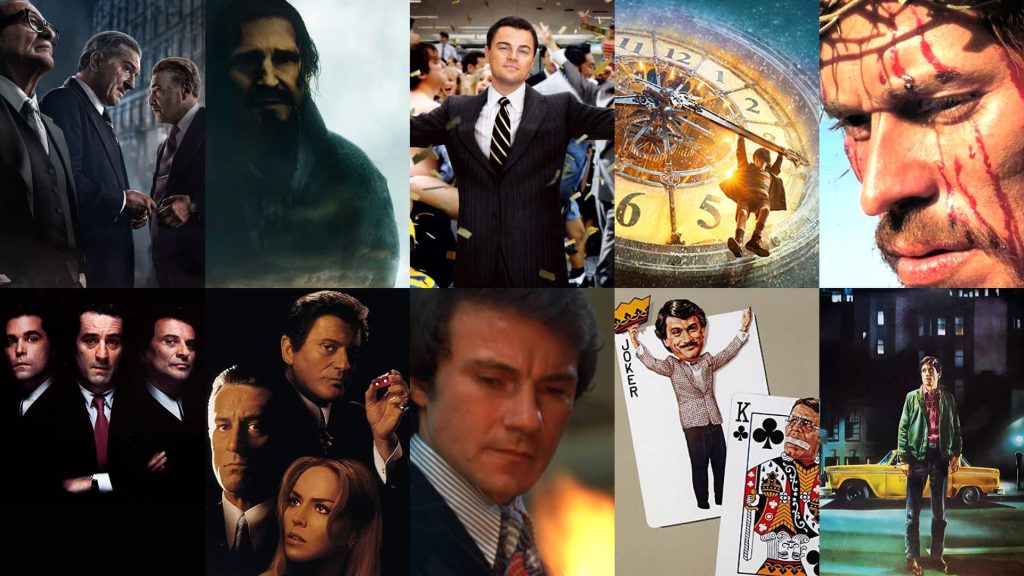
Mean Streets (1973) was semi-autobiographical and essentially unsellable. A film about low-level criminals in Little Italy with no stars, no plot structure recognizable to studio executives, and a soundtrack that used pop songs as narrative counterpoint — a technique so radical at the time that it became the most imitated innovation in American cinema for the next fifty years. Harvey Keitel starred. Robert De Niro played Johnny Boy, a role so volatile it launched one of the most significant actor-director partnerships in film history. The film cost $500,000 and returned modest box office, but it premiered at the New York Film Festival and announced Scorsese as a filmmaker who would never make anything safe.
Taxi Driver (1976) confirmed it. Written by Paul Schrader, starring De Niro as Travis Bickle — a man so isolated by the city that he decides to save it through violence — the film won the Palme d’Or at Cannes and earned four Academy Award nominations. Scorsese was 33. He was also developing a cocaine habit that would nearly kill him. By the late 1970s, the addiction had consumed his personal life and was threatening his career. He has described the period with the clinical honesty of a man who survived it: the paranoia, the creative paralysis, the hospitalization. De Niro intervened.
Still, he brought Scorsese the story of Jake LaMotta, the middleweight boxer who destroyed everything he touched. Raging Bull (1980) was the result. Eight Oscar nominations. De Niro won Best Actor. Scorsese got sober. The film is now considered one of the greatest ever made. It was also a commercial disappointment. The pattern — masterpiece, financial struggle, survival — took root and would repeat for decades.
The Climb: Two Eras, Two Leading Men, One Oscar
Meanwhile, the first era belonged to Robert De Niro. Mean Streets, Taxi Driver, Raging Bull, The King of Comedy, Goodfellas, Cape Fear, Casino. Nine films spanning twenty-two years. The collaboration produced some of the most acclaimed American cinema of the century, but it also produced commercial misfires that kept Scorsese perpetually one bad weekend away from losing his ability to get films financed. The King of Comedy (1982) flopped. That said, the Last Temptation of Christ (1988) sparked boycotts from religious groups who never saw the film. New York, New York (1977) lost money. Scorsese survived each setback the same way: by making the next film better than the last and trusting that the culture would eventually catch up.
Goodfellas (1990) was the commercial breakthrough that critics had been predicting for seventeen years. The film earned $46 million domestically against a $25 million budget, won Joe Pesci an Oscar, and permanently entered the American vernacular. Casino (1995) extended the run. But the Academy Award for Best Director — the one prize that would validate decades of work — kept eluding him. He earned a nomination for Raging Bull. For The Last Temptation of Christ. For Goodfellas. Additionally, for Gangs of New York. For The Aviator. Five nominations. Five losses. The running joke became its own form of cultural commentary: the greatest living American director couldn’t win the award that the industry uses to define greatness.
Behind the Numbers
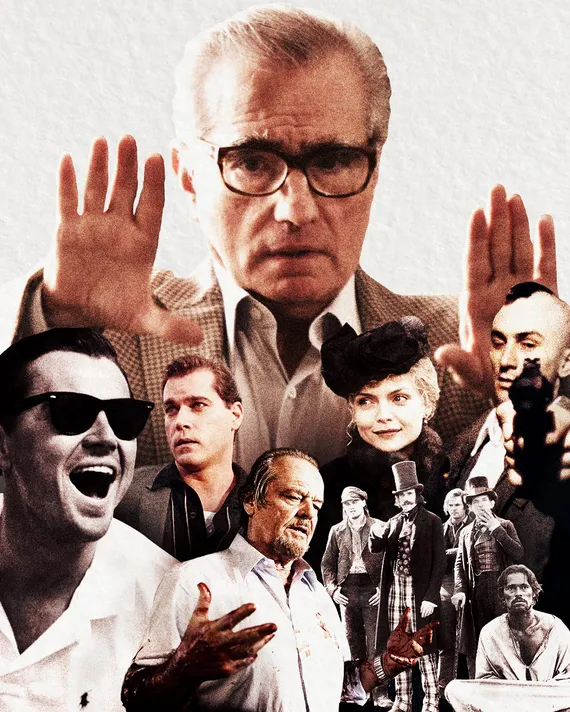
The second era belonged to Leonardo DiCaprio. Beginning with Gangs of New York (2002), Scorsese found in DiCaprio a collaborator whose intensity matched De Niro’s but whose box office appeal exceeded it. The Aviator (2004) grossed $213 million worldwide. The Wolf of Wall Street (2013) grossed $392 million — Scorsese’s highest-grossing film ever. Furthermore, the Departed (2006), sandwiched between them, finally delivered the Oscar. When the envelope was opened, Scorsese asked the audience, “Could you double-check the envelope?” The line was funny because it was honest. He had waited so long that disbelief was the only rational response. Francis Ford Coppola, George Lucas, and Steven Spielberg presented the award together. The gesture was deliberate: three peers acknowledging that the fourth member of their generation had been undervalued for too long.
The Hamptons Chapter: $200 Million and the Architecture of Permanence
Martin Scorsese’s net worth stands at approximately at $200 million. The number rests on on a filmography that has grossed over $2 billion worldwide, directing fees that climbed from nothing (Mean Streets) to $10 million (Hugo), producer credits on television projects including Boardwalk Empire and Vinyl, and a production company — Sikelia Productions — that generates revenue from producing fees, profit participation, distribution deals, and syndication. His Apple TV+ first-look deal, secured in the wake of Killers of the Flower Moon, provides upfront payments and executive-level backend for every project the platform approves. The deal represents the streaming era’s validation of Scorsese’s thesis: that prestige content, properly made, is worth more than algorithm-driven volume.
Scorsese’s real estate holdings are modest by Hollywood standards and anchored in New York. He has maintained a primary residence in Manhattan for decades. The choice is consistent with his identity: he is a New York filmmaker in the most literal sense. He was born in Queens, raised in Little Italy, educated at NYU, and has set the majority of his films in the city’s streets, apartments, and social clubs. The $200 million fortune exists within a life that has never left its original geography. While he does not maintain a Hamptons presence, his cultural influence saturates the East End’s social architecture. The collectors who hang contemporary art in their Sagaponack living rooms, the hedge fund managers who screen Goodfellas in their private theaters, the publishers who bid on film rights at dinner parties in Bridgehampton — they are all operating inside a visual and narrative language that Scorsese invented.
What He Built: The Film Foundation, Five Marriages, and Movies at 83
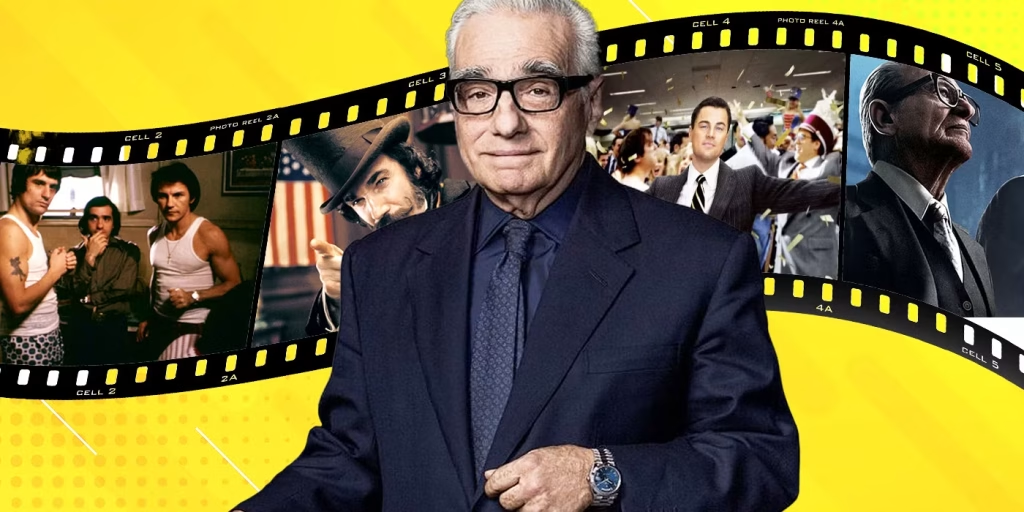
In 1990, Scorsese founded The Film Foundation, a nonprofit dedicated to preserving and restoring classic films. The founding board included Woody Allen, Francis Ford Coppola, Clint Eastwood, Stanley Kubrick, George Lucas, Sydney Pollack, Robert Redford, and Steven Spielberg. The organization has since helped restore over 950 films from more than 60 countries. Moreover, the foundation is not a vanity project. It is a structural intervention in the economics of film history. Without it, thousands of prints would have deteriorated beyond recovery. The financial investment is modest relative to Scorsese’s net worth. The cultural return is incalculable.
His personal life has been as turbulent as his filmography. Five marriages: Laraine Brennan (1965-1971), writer Julia Cameron (1976-1977), actress Isabella Rossellini (1979-1983), producer Barbara De Fina (1985-1991), and Helen Morris (1999-present). Three daughters: Catherine, Domenica Cameron-Scorsese, and Francesca. Cameron later dramatized their brief, acrimonious marriage in her own directorial debut. Rossellini remained a friend. De Fina continued producing. The marriages track the same pattern as the films: intensity, collapse, reinvention, and the refusal to stop trying because the previous attempt failed.
At 83, Scorsese is not slowing down. His production slate as of 2026 includes multiple films in various stages of development: a Hawaii-set mob film described as a cross between Goodfellas and The Departed, starring Dwayne Johnson, Leonardo DiCaprio, and Emily Blunt; an adaptation of Peter Cameron’s novel What Happens at Night with DiCaprio and Jennifer Lawrence; an adaptation of Marilynne Robinson’s Home for Apple TV+; and a Grateful Dead biopic starring Jonah Hill as Jerry Garcia. The volume is staggering for a director of any age. For a man in his ninth decade who nearly died of cocaine addiction in his thirties, it represents something closer to defiance.
The Soft Landing: The Kid From the Window
There is a scene that Scorsese has described in multiple interviews but never filmed. He is seven or eight years old, standing at the window of the Elizabeth Street tenement, watching the street below. He can hear the sounds but cannot participate because his lungs won’t allow it. Consequently, he watches the men on the corner conduct business. He watches the women carry groceries. He watches the arguments, the embraces, the transactions that happen in the space between what is legal and what is understood. However, he is learning to see. He does not know yet that this is what a director does — stand at the window and watch until the watching becomes its own form of understanding.
Martin Scorsese’s $200 million net worth is the financial expression of that watching. Twenty-seven narrative features. Sixteen documentaries. Nine Best Director nominations — the most by any living director. One win. Films that have been inducted into the Library of Congress. A foundation that has saved 950 movies from disappearing. A body of work that taught three generations of filmmakers how to move a camera, cut a scene, and use a pop song to break your heart. The asthmatic altar boy who failed out of seminary built a cathedral anyway. He just used celluloid instead of stone.
The Outcome
His collaboration with DiCaprio has now produced seven films across twenty-four years. The Wolf of Wall Street remains their most commercially successful, and arguably their most morally complex — a film that refuses to judge its subject and thereby forces the audience to judge themselves. Margot Robbie, Jonah Hill, and Matthew McConaughey each delivered career-defining performances under his direction in that single film. He paid Hill $60,000. He let McConaughey improvise. Nevertheless, he kept Robbie’s slap. He shot for 119 days. The film is three hours long and does not contain a single wasted frame. That is what $200 million looks like when the person who earned it never stopped standing at the window.
Related: Wolf of Wall Street True Story: How Jordan Belfort Built and Lost a $200 Million Fraud Empire · Leonardo DiCaprio Net Worth: How a Kid From “Scumsville” Built a $300 Million Empire · Margot Robbie Net Worth: From Queensland Farm Girl to $80 Million Power Broker · Jonah Hill Net Worth: The $60,000 Gamble That Built an $80 Million Empire · Matthew McConaughey Net Worth: The $14.5 Million He Turned Down That Made Him $160 Million · The Wall Street Movies That Rewired How America Thinks About Money
If you understand that the most valuable thing in any room is the person who sees what everyone else misses — then you already know why Social Life Magazine has been covering the intersection of culture and capital for 23 years. Reach out to our editorial team to be featured.
Want to position your brand where taste meets influence? Submit a Paid Feature and let our editors build something worth reading.
What the Record Shows
Join 82,000+ subscribers who get our take on luxury, culture, and the Hamptons scene before anyone else. Subscribe to our email list.
Experience the intersection of sport, style, and status at Polo Hamptons — Bridgehampton’s premier luxury polo event, now in its seventh year with BMW as title sponsor.
Never miss a print issue. Subscribe to Social Life Magazine and get five summer issues delivered from Memorial Day to Labor Day.
Love what we do? Support Social Life Magazine and help us keep covering the culture that matters.
Author

Written by
Recent Posts

The First Decision After a Collision Can Be the Most Important One
Two Weeks in Rome and Beyond: Turkish Airlines Itineraries from Boston, Chicago and Onward to India

Top 10 Hair Transplant Clinics in Turkey 2026

Artist Alley to Online Store: How Convention Artists Can Keep Selling After the Event
When an 18-Wheeler Crash Leaves Lasting Consequences
Categories
- Art
- Articles
- Business of Luxury
- Celebrities
- Culture
- Entertainment
- Events
- Faces of Summer 2026
- Fashion
- Fashion & Style
- Featured
- Finance
- Food, Spirits, Wine
- Hamptons
- Hamptons Celebrities
- Health
- Health & Beauty
- Lifestyle
- Luxury Lifestyle
- Press
- Profiles
- Real Estate
- Technology
- The Chronicles
- Travel
- Uncategorized
- Weddings