
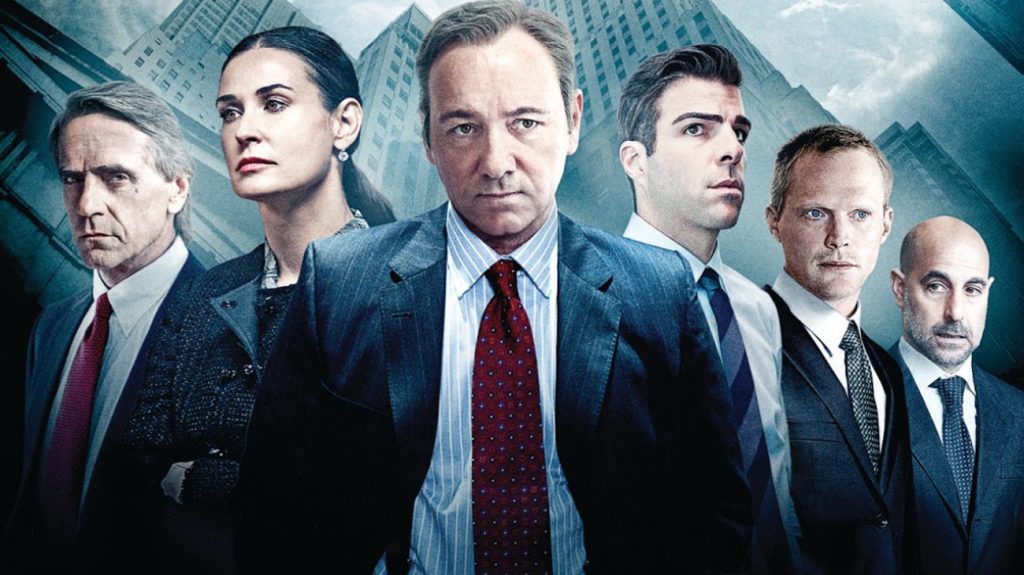
The most honest scene in any Wall Street film lasts about ninety seconds. Jeremy Irons, playing a CEO named John Tuld, sits at the head of a conference table at 2 a.m. He asks a junior risk analyst to explain the crisis in plain English. “Speak as you might to a young child,” he says, “or a golden retriever.”
Then the analyst explains. The CEO nods. Then he orders his traders to sell every toxic asset on the firm’s books before the market opens. They will knowingly dump worthless securities on clients, counterparties, and pension funds. The decision will save the firm. It will also help destroy the global economy. Tuld does not hesitate. The year is 2008. The firm is fictional. Everything else is real.
J.C. Chandor’s Margin Call, released in 2011, is the Wall Street film that nobody saw and everybody should have. Made for $3.5 million with a cast worth fifty times that amount, it tells the story of one night at one investment bank during the opening hours of the financial crisis. No heroes. No villains. Just a building full of smart people making rational decisions that will collectively destroy eight million American homes.
The Director: J.C. Chandor and the Script Written in Grief
Chandor wrote the screenplay in the days immediately following Lehman Brothers’ bankruptcy filing on September 15, 2008. At $639 billion in assets, it remains the largest bankruptcy in American history. The urgency behind the script was personal. After all, his father had spent his career at Merrill Lynch. Consequently, Chandor grew up surrounded by the culture the film would dissect: the dress codes, the hierarchy, the casual sociopathy of compensation structures that reward short-term risk.
The Black List and the Unnamed Bank
Chandor wrote the script fast, and it landed on the 2009 Black List — Hollywood’s annual survey of best unproduced screenplays. The logline summarized the concept as “the last 24 hours of Lehman Brothers.” However, Chandor has since clarified that the firm in the film is deliberately unnamed and deliberately composite: parts Goldman Sachs, parts Lehman, parts Merrill Lynch, parts Bear Stearns. By refusing to name the bank, he argued that the behavior was systemic rather than institutional. Any bank could have been this bank. Most of them were.
The Real Firms: Goldman, Lehman, and the Advantage of Moving First
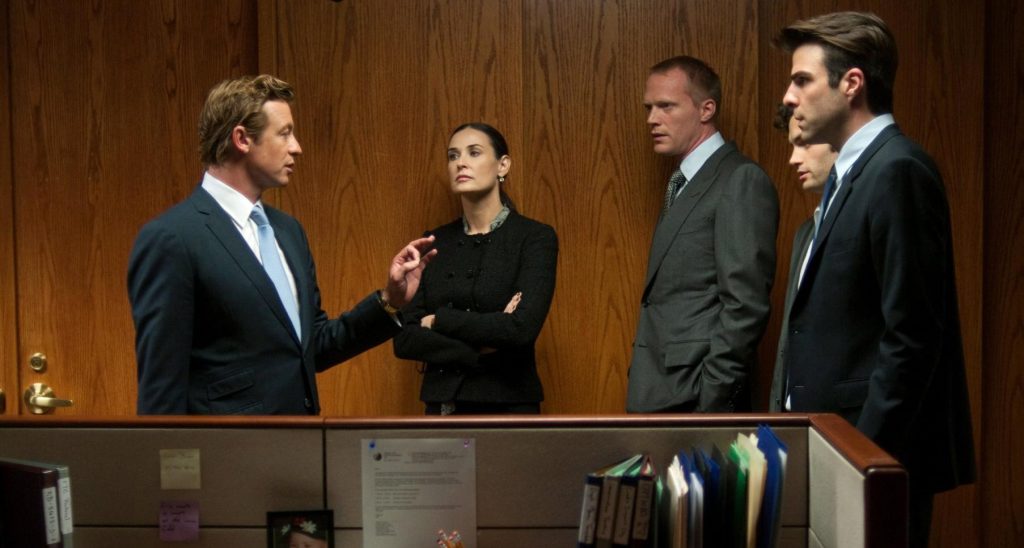
The plot hinges on a single strategic principle: in a collapsing market, the firm that sells first survives. Meanwhile, the firm that sells second goes bankrupt. This is not fiction. Goldman Sachs, at the urging of employees who recognized the firm’s overexposure to mortgage-backed securities, moved early to hedge its position. The trades drew controversy — Goldman simultaneously sold CDOs to clients while betting against those same instruments. Nevertheless, the strategy worked. As a result, Goldman survived and posted a profit in 2009 while the rest of Wall Street hemorrhaged.
The Firms That Moved Too Late
Lehman Brothers moved second. Despite repeated warnings, Dick Fuld, the CEO, had received alerts about the firm’s exposure from multiple internal voices. Chief risk officer Madelyn Antoncic later wrote in a New York Times op-ed that she had alerted leadership about risk missteps and found herself dismissed. CFO Erin Callan, promoted in 2007, spent 2008 defending the company against short sellers before leaving the firm and then the industry entirely.
Meanwhile, Bear Stearns had already collapsed in March 2008. Consequently, JPMorgan Chase acquired it for $2 per share in a Federal Reserve-brokered deal — a number so insulting that regulators later raised it to $10. Bank of America swallowed Merrill Lynch in a shotgun transaction that saved the firm but destroyed its independence. The competitive advantage of moving first, which John Tuld articulates as moral philosophy in the film, proved to be the mechanism that separated the survivors from the dead.
The Characters: Real Executives Behind Fictional Names
Chandor encoded real identities into the film’s character names with the subtlety of a man who knew the lawyers would watch. John Tuld — the CEO who arrives by helicopter, speaks in aphorisms, and orders the fire sale — blends John Thain of Merrill Lynch with Dick Fuld of Lehman. Indeed, the name is the giveaway: Thain’s first name, Fuld’s last, compressed into a single character.
Irons, Moore, and the Women Who Warned First
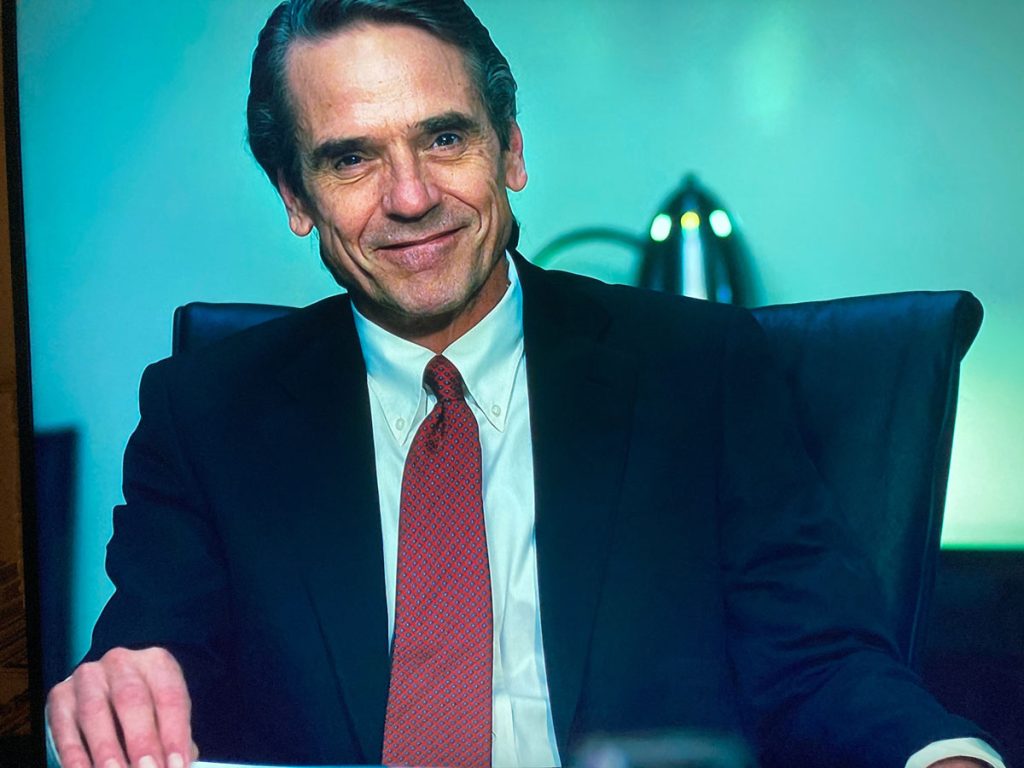
Jeremy Irons plays Tuld with the silkiness of a man who views catastrophe primarily as an opportunity for repositioning. “It’s just money,” he says near the end. “It’s made up.” Of course, that line lands differently when you remember that eight million families lost their homes because of what the real Tulds decided.
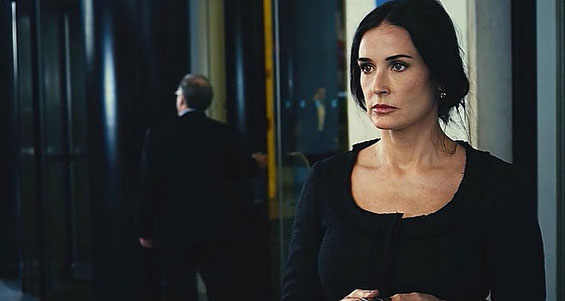
Demi Moore’s Sarah Robertson — the chief risk officer who warned leadership about exposure and then took the blame for failing to prevent the crisis she predicted — maps onto two real women. Antoncic at Lehman expressed concerns with what she later called “insufficient urgency.” Similarly, Callan the CFO rose too late and fell too early. Robertson’s fate — forced resignation, stripped of influence, offered up as the public explanation for systemic failure — dramatizes precisely what happened to the women closest to the problem and furthest from the decision to ignore it.
Rogers, Dale, and Emerson: The Men Who Stayed
Kevin Spacey’s Sam Rogers, the head of trading who has spent thirty-four years at the firm while his dog dies at home, represents the institutional memory that every bank discards during a crisis. Stanley Tucci’s Eric Dale — the fired risk management head who had nearly finished the model that would have predicted the collapse — embodies the cost-cutting logic that eliminates the people who see the problem coming.
Additionally, Paul Bettany’s Will Emerson delivers the film’s most quietly devastating monologue. He lists exactly how he spent his $2.5 million bonus. Every line item adds up to a life so expensive that walking away becomes functionally impossible. Golden handcuffs, explained in receipts.
The Night: 24 Hours of Rational Destruction
Margin Call takes place over approximately 24 hours. Chandor has acknowledged that real events unfolded over months, not hours. But the compression isolates the decision-making process and forces the audience to watch intelligent people choose destruction because every alternative is worse for them personally.
The Information Climbs the Ladder
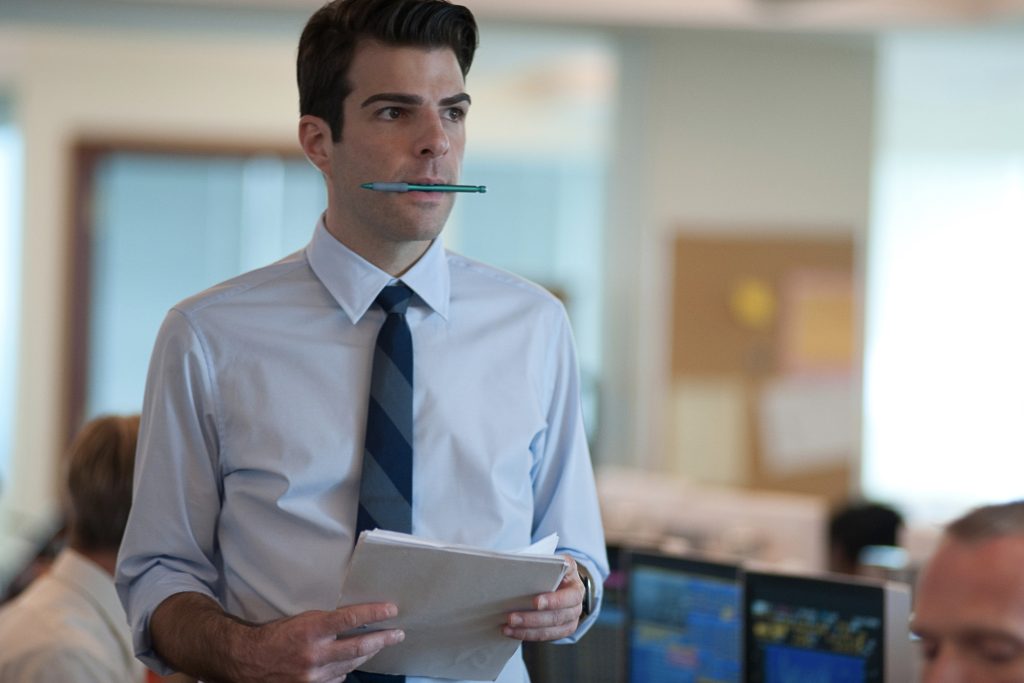
Specifically, junior analyst Peter Sullivan, played by Zachary Quinto, discovers the problem by completing his fired boss’s unfinished model. From there, the information travels upward through the hierarchy — Sullivan to Emerson to Rogers to Cohen to Robertson to Tuld. Yet at each level, the response is identical: this is bad, but the goal is not to fix it. The goal is to survive it.
Notably, nobody in the film is stupid. Nobody misunderstands the consequences. In fact, every person in the building knows exactly what dumping the toxic assets will do to the market and to clients who purchase them. They proceed anyway, because the incentive structure rewards self-preservation and punishes honesty. When Rogers objects on moral grounds, Tuld responds by listing every financial crisis since 1637 — the Dutch tulip mania, the South Sea Bubble, the railroad crashes, the Great Depression. He concludes that the cycle is permanent. “We can’t help ourselves,” he says. Chandor presents the statement as both explanation and indictment, and he gives the audience no exit.
The Details That Proved It Was Real
The Financial Times arranged a private screening for two anonymous Wall Street professionals — identified only as IB (investment banker) and SCS (structured credit salesman). Furthermore, their assessment confirmed what Chandor had suspected: the film achieved near-forensic accuracy. In particular, the bankers noted that the dress code matched Lehman Brothers 2008. The equation the analysts discuss is the Gaussian copula model — the formula that priced CDO tranches and whose correlation assumptions proved catastrophically wrong.
A $3.5 Million Film That Beat the Industry
The film cost $3.5 million and grossed $19.5 million worldwide. In effect, that ratio is itself a metaphor: a small investment in telling the truth about a system that generated trillions in fraud. A.O. Scott of the New York Times called it “downright awe inspiring.” Chandor earned an Academy Award nomination for Best Original Screenplay — his first nomination for his first film. Ultimately, a debut feature about the most complex financial crisis in modern history, made for less than a Marvel film’s catering budget, received the industry’s highest recognition for writing.
The Cast: Why They Worked for Scale
Jeremy Irons, an Academy Award winner whose typical fee would exceed the entire production budget, worked for a fraction of his market rate. He said afterward that the film “clarifies what a lot of us sort of thought might have been happening.” Spacey, Bettany, Moore, Tucci, and Quinto all accepted similar terms. Their combined net worth exceeded half a billion dollars. The film they made together cost less than a two-bedroom apartment in the neighborhoods where their characters work.
Six Actors, Six Showcase Scenes
Notably, working for scale was not philanthropy. It was recognition that the material was exceptional. Chandor’s script gave every actor at least one standalone showcase: Irons’s helicopter arrival, Spacey’s speech to the trading floor, Bettany’s bonus breakdown, Tucci’s firing, Moore’s scapegoating, Quinto’s discovery. The film functions like a play, with each character entering and exiting around a single dramatic question: what do you do when you discover that the thing you’ve built will collapse? The actors answered by building something that could not — a film so structurally sound that its $3.5 million budget became irrelevant to its permanence.
Why Margin Call Is the Most Important Film in the Canon
Wolf of Wall Street is the most entertaining. The Big Short is the most educational. Wall Street is the most iconic. But Margin Call is the most important film in the Wall Street cinema canon because it refuses to give the audience moral superiority. There is no Gordon Gekko to condemn, no Jordan Belfort to enjoy and then regret, no Michael Burry to admire for being right. Instead, there is only a building full of people doing exactly what the system designed them to do — with full awareness and no hesitation.
The Grave and the Lawn
The film’s final image shows Kevin Spacey digging a grave for his dog in his ex-wife’s yard at three in the morning. Trading floor carnage is behind him. A suburban lawn stretches dark and quiet ahead. It is the most emotionally precise ending in any finance film because it grasps something the others don’t: the people who run these institutions are not monsters. These are people who love their dogs, miss their marriages, and know that today’s decisions will hurt strangers they will never meet.
The Real Margin Call
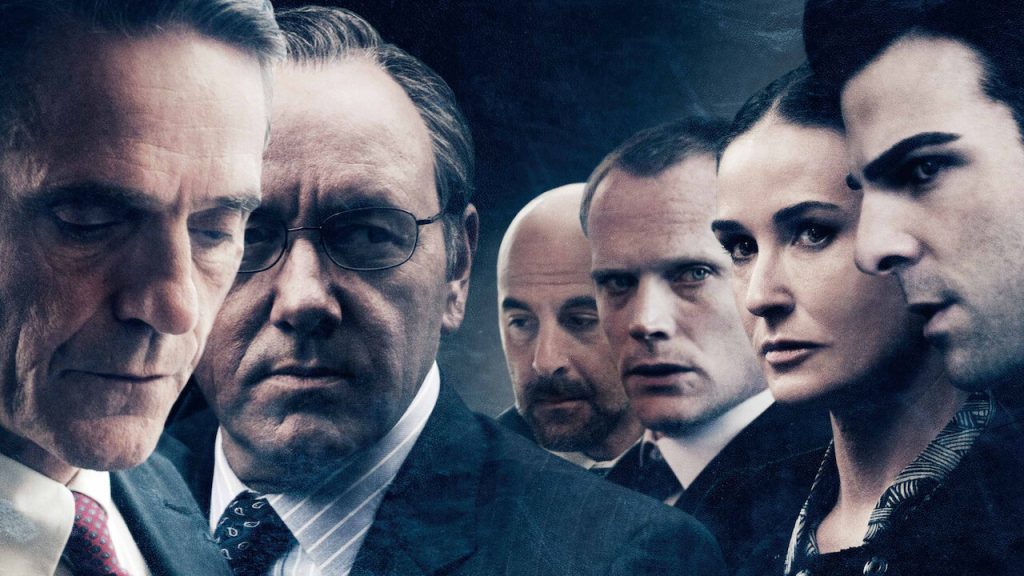
Yet they did it because the alternative — losing their position, their compensation, their identity — frightened them more than the harm. The system doesn’t need monsters. It needs people who are afraid. That’s the real margin call true story: the moment when the cost of staying honest exceeds the cost of staying employed. In 2008, every bank in America answered it the same way.
If you’ve ever stood in a room where everyone knew the truth and nobody said it — and you were the one who finally did — then you already understand why Social Life Magazine exists. We cover the people who see clearly and act accordingly. Reach out to our editorial team to be featured.
Want to position your brand alongside the culture that values substance over spectacle? Submit a Paid Feature and let our editors build something worth reading.
Join 82,000+ subscribers who get our take on luxury, culture, and the Hamptons scene before anyone else. Subscribe to our email list.
Experience the intersection of sport, style, and status at Polo Hamptons — Bridgehampton’s premier luxury polo event, now in its seventh year with BMW as title sponsor.
Never miss a print issue. Subscribe to Social Life Magazine and get five summer issues delivered from Memorial Day to Labor Day.
Love what we do? Support Social Life Magazine and help us keep covering the culture that matters.
Author

Written by
Recent Posts

The First Decision After a Collision Can Be the Most Important One
Two Weeks in Rome and Beyond: Turkish Airlines Itineraries from Boston, Chicago and Onward to India

Top 10 Hair Transplant Clinics in Turkey 2026

Artist Alley to Online Store: How Convention Artists Can Keep Selling After the Event
When an 18-Wheeler Crash Leaves Lasting Consequences
Categories
- Art
- Articles
- Business of Luxury
- Celebrities
- Culture
- Entertainment
- Events
- Faces of Summer 2026
- Fashion
- Fashion & Style
- Featured
- Finance
- Food, Spirits, Wine
- Hamptons
- Hamptons Celebrities
- Health
- Health & Beauty
- Lifestyle
- Luxury Lifestyle
- Press
- Profiles
- Real Estate
- Technology
- The Chronicles
- Travel
- Uncategorized
- Weddings