
The Before: Pittsburgh, a Barber’s Death, and Imaginary Worlds
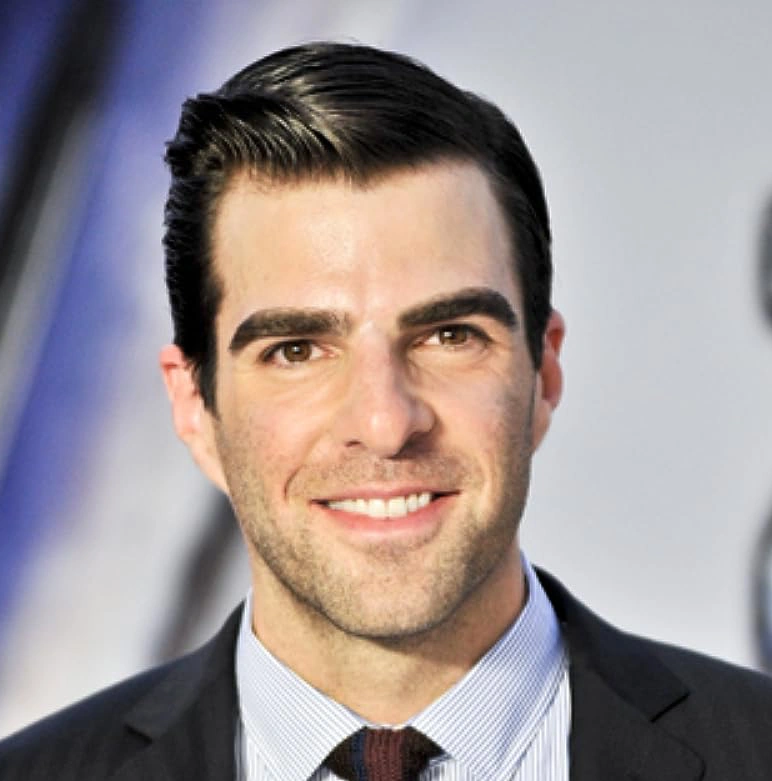
Specifically, zachary John Quinto was born on June 2, 1977, in Pittsburgh, Pennsylvania — a steel city that was rapidly running out of steel and learning to become something else. As a result, his father, Joseph John Quinto, was a barber of Italian descent. Similarly, his mother, Margaret, who went by Margo, was Irish-American and worked at an investment firm. Despite this, the detail about his mother’s career is worth holding: the son of a woman who worked in finance would grow up to produce the most acclaimed film ever made about the financial system’s collapse. The connection was not intentional. Meanwhile, the best ones never are.
In turn, Joseph Quinto died of cancer when Zachary was seven years old. The loss reshaped the household immediately and permanently. Regardless, Zachary’s older brother Joe, still a child himself, assumed responsibilities no boy his age should carry. Margo became the sole earner.
The Turning Point
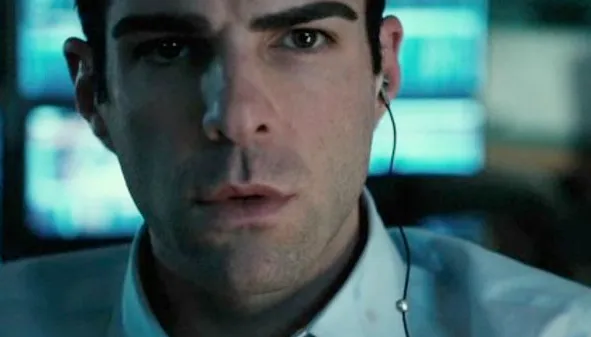
In fact, young Zachary, by his own account, became unbearably lonely. Still, he compensated by inventing imaginary worlds — a habit that sounds like escapism until you realize it was rehearsal. Even so, the child who created fictional realities to survive the loss of his father would eventually play a serial killer who steals other people’s identities (Heroes), a half-human logician who suppresses emotion as a survival mechanism (Star Trek), and a junior risk analyst who discovers the financial system is about to collapse and has approximately twelve hours to decide what that means (Margin Call). That said, every role tracks back to the same origin: a boy alone in a room, building a world that makes more sense than the one outside.
Additionally, Margo was devoutly Catholic and enrolled Zachary at Saints Simon and Jude Catholic School, then Central Catholic High School — an all-boys institution in Pittsburgh, where he participated in musicals and won the Gene Kelly Award for Best Supporting Actor. Furthermore, the award is named for Pittsburgh’s most famous performer. Quinto would eventually become its second. He enrolled at Carnegie Mellon University’s School of Drama, one of the top conservatory programs in the country, and graduated with a BFA in 1999. He moved to Los Angeles with no connections, no money, and the conviction that the imaginary worlds he’d been building since he was seven were finally ready for an audience.
The Pivot Moment: Sylar, Spock, and Two Franchises That Built a Career
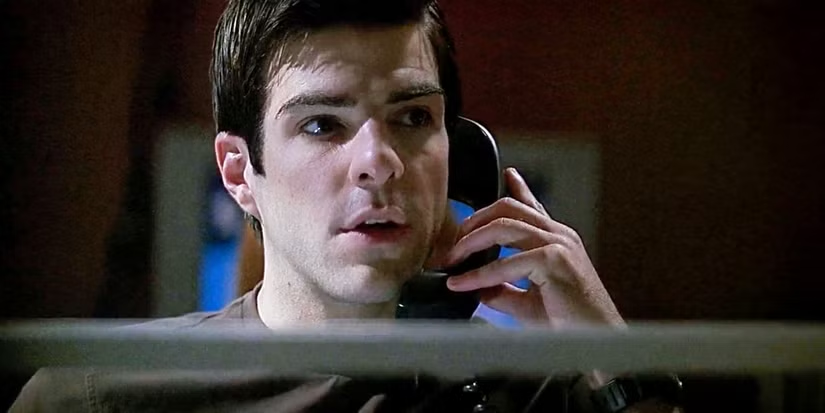
The first five years in Los Angeles were the kind of grind that destroys most people. Guest spots on Touched by an Angel. A walk-on in Lizzie McGuire. Background work on CSI and Charmed. A recurring role as a computer expert on season three of 24 — twenty-three episodes of steady work that paid the rent but didn’t change the trajectory. Then VH1 cast him as Tori Spelling’s haughty, bisexual Iranian-American best friend on So Notorious, a sitcom that lasted one season and was watched by almost no one. The role was absurd. Quinto played it with such committed sincerity that casting directors began to understand what they had: an actor who could make any premise credible by refusing to acknowledge its absurdity.
Heroes arrived in 2006. NBC’s superhero drama cast Quinto as Gabriel Gray, better known as Sylar — a serial killer who acquires superpowers by cutting open his victims’ skulls and examining their brains. The show was a cultural phenomenon in its first season, drawing over 14 million viewers per episode. Quinto’s Sylar was the engine: quiet, intelligent, terrifying, and possessed of an intimacy with his victims that made the violence feel personal rather than spectacular. The role ran four seasons until the show’s cancellation in 2010 and established Quinto as an actor whose presence could anchor a franchise.
Behind the Numbers

J.J. Abrams noticed. In 2009, he cast Quinto as the young Spock in his rebooted Star Trek — a role that required embodying one of the most iconic characters in science fiction history while making him feel new. Abrams later said that Quinto brought “a gravity and an incredible sense of humor” that made Spock “deceivingly complicated.” The film grossed $385 million worldwide. The sequels — Into Darkness (2013) and Beyond (2016) — added another $862 million. Quinto’s combined Star Trek earnings, while not publicly disclosed, positioned him in the upper tier of franchise actors and gave him something more valuable than any salary: the leverage to make the films he actually wanted to make.
The Climb: Before the Door Pictures and the Decision to Produce Margin Call
In 2008, while the financial system was collapsing in real time, Zachary Quinto co-founded Before the Door Pictures with Corey Moosa and Neal Dodson. The production company was not a vanity label. It was a strategic instrument designed to give Quinto control over the projects he appeared in and, more importantly, the projects he believed should exist regardless of whether he appeared in them. The first major production was Margin Call.
J.C. Chandor’s script had appeared on the 2009 Black List. It was brilliant, topical, and nearly impossible to finance. The subject — a single night at an investment bank during the opening hours of the 2008 crisis — was not the kind of material that attracted traditional studio money. The budget was $3.5 million. Before the Door Pictures co-produced the film, and Quinto served as executive producer while also starring as Peter Sullivan, the junior risk analyst who completes his fired boss’s model and discovers the bomb buried in the firm’s balance sheet. The dual credit — actor and producer — is the key to understanding Quinto’s career.
Subsequently, he was not simply cast in Margin Call. He helped assemble the financing, attract the cast, and shepherd the project from script to screen. Jeremy Irons, Kevin Spacey, Paul Bettany, Demi Moore, and Stanley Tucci all worked for scale because the script was exceptional and someone had the conviction to put the package together. Quinto was that someone. The film earned an Academy Award nomination for Best Original Screenplay. Quinto went on to executive-produce Chandor’s next film, All Is Lost, starring Robert Redford as the sole cast member. Before the Door had established itself as a company that made serious, commercially modest, permanently important films.
The Hamptons Chapter: Broadway, Coming Out, and the Architecture of Authenticity
In October 2011, Zachary Quinto came out publicly as gay. He was thirty-four years old, at the peak of his career, and playing Spock — one of the most recognizable characters in global popular culture. The timing was deliberate. A young man named Jamey Rodemeyer had recently died by suicide after being bullied for his sexuality. Quinto had already recorded a video for the It Gets Better Project, but Rodemeyer’s death moved him to go further. “I felt a responsibility to do something larger,” he told New York Magazine. The coming out was not a confession. It was a strategic act of visibility from an actor powerful enough to absorb the professional consequences and prominent enough to make the statement matter.
The consequences were minimal. The career continued. Star Trek Into Darkness grossed $467 million. American Horror Story: Asylum earned him a Primetime Emmy nomination for playing Dr. Oliver Thredson, a serial killer whose monstrousness is concealed by professional credentials and institutional authority — a character Quinto played with the same quiet menace he’d brought to Sylar, refined now by a decade of craft. He appeared on Broadway in The Glass Menagerie opposite Cherry Jones and in a celebrated Off-Broadway revival of Tony Kushner’s Angels in America at the Signature Theatre. The stage work is not an afterthought. It is the center of gravity. Quinto trained as a theater actor, performs as a theater actor, and views film and television as extensions of the discipline rather than replacements for it. The Carnegie Mellon BFA still runs the show.
What the Record Shows
He dated Jonathan Groff for three years — a relationship between two of the most visible openly gay actors in Hollywood that was conducted with the kind of privacy that suggests both men understood the difference between representation and spectacle. He later dated model Miles McMillan, whom Vogue described alongside Quinto as “a power couple whose domain extends across the film, fashion, and art scene.” That relationship ended in 2019. Quinto does not discuss his personal life in detail. The restraint is consistent with everything else: the man who came out to make a political statement does not treat his relationships as content.
What He Built: Brilliant Minds and the Producer’s Legacy
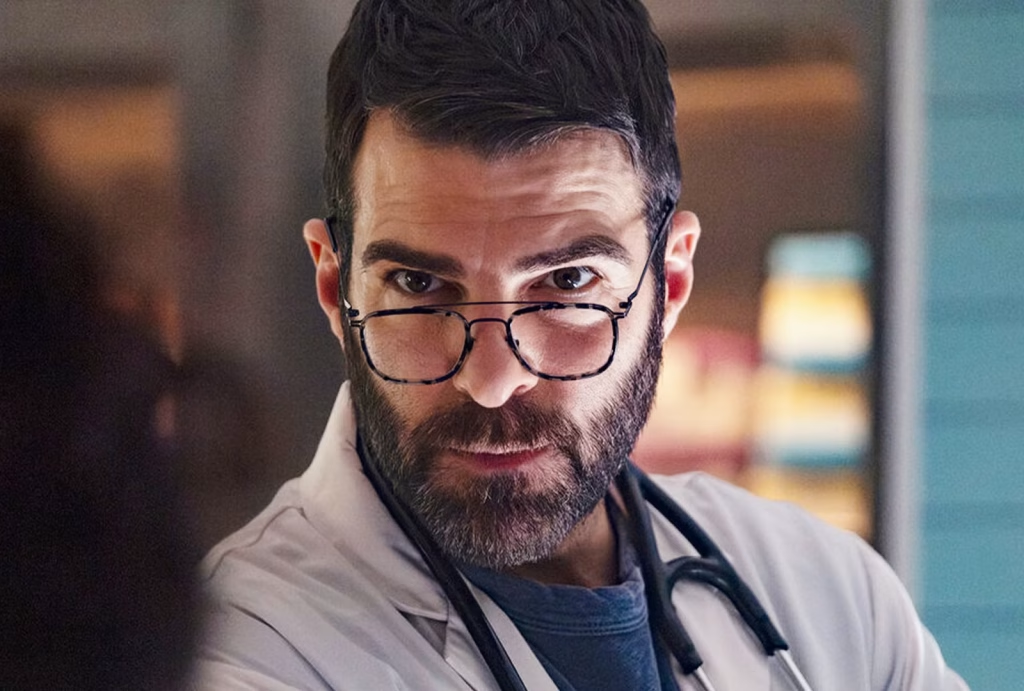
Quinto’s most recent major project is Brilliant Minds, an NBC medical drama that he both stars in and produces. The show extends the model he established with Before the Door Pictures: find material that interests him, attach himself as a producer to ensure creative control, and perform in a way that services the project rather than his own visibility. The approach has kept his filmography unusually coherent for an actor who has appeared in superhero shows, Star Trek blockbusters, indie financial thrillers, Broadway revivals, and Ryan Murphy anthology series. Indeed, the thread connecting all of it is not genre or scale. It is Quinto’s insistence on playing characters whose intelligence is both their greatest asset and their most isolating quality. Sylar. Spock. Peter Sullivan. Dr. Thredson. Tom Wingfield. Each one is the smartest person in the room. Each one is alone in a way the room cannot see.
Before the Door Pictures has produced multiple projects across film, television, graphic novels, and new media. Quinto’s producing credits include the Margin Call franchise of relationships — Chandor went on to direct A Most Violent Year and Triple Frontier — and a pipeline of independent projects that function as calling cards for filmmakers the studio system has not yet discovered. The company represents something increasingly rare: a production entity founded by an actor who is genuinely interested in the work rather than in the branding opportunity the work provides.
The Soft Landing: $20 Million and the Smallest Fortune That Built the Biggest Film
Zachary Quinto’s net worth stands at approximately at $20 million. It is the smallest fortune in the Margin Call ensemble — less than Irons, less than Bettany, less than Tucci, and a tenth of Demi Moore’s $200 million. The disparity is instructive. The actors who appeared in Margin Call were all richer than the producer who made it possible. Ultimately, the film exists because Quinto’s company assembled the financing, attracted the talent, and believed that a $3.5 million movie about one night at an investment bank could matter. It did. It earned an Oscar nomination. By contrast, it launched J.C. Chandor’s career. It became the most forensically accurate portrayal of the 2008 crisis ever committed to film. And it paid its producer-star less than most Marvel actors earn for a single day of ADR work.
The $20 million rests on on Star Trek franchise earnings, Heroes television salary across four seasons, a decade of supporting film roles, producing fees, Broadway and Off-Broadway work, and the NBC Brilliant Minds deal. It is a working actor’s fortune — substantial by civilian standards, modest by Hollywood standards, and entirely consistent with a career optimized for quality over volume. The barber’s son from Pittsburgh who lost his father at seven and compensated by building imaginary worlds has spent twenty-five years building real ones: production companies, franchise performances, Broadway runs, and a film about the financial crisis that his mother’s industry participated in. He did not plan the symmetry. The symmetry planned itself.
The Deeper Story
Peter Sullivan, his character in Margin Call, is the person who finds the problem. Not the person who created it, not the person who profits from it, not the person who covers it up. The person who sits alone at a desk after hours, finishes the work nobody else wanted to finish, and discovers that the foundation is cracked. Quinto played that character. He also was that character — the person who sat alone with a script nobody else would finance and built the foundation anyway. The $3.5 million film. The Oscar nomination. In particular, the ensemble that worked for scale. The career built on the conviction that the smartest person in the room is usually the loneliest one, and that the loneliness is the price of seeing clearly.
Related: Margin Call True Story: The Night Wall Street Decided to Burn It All Down · Jeremy Irons Net Worth: The $25 Million Castle Dweller · Demi Moore Net Worth: The $200 Million Comeback · Paul Bettany Net Worth: From Busker to Avenger · Stanley Tucci Net Worth: From Katonah to CNN · The Wall Street Movies That Rewired How America Thinks About Money
If you’ve ever been the person who saw the problem before anyone else in the room — and built the solution instead of waiting for permission — then you already know why Social Life Magazine exists. We cover the people who make things happen. Reach out to our editorial team to be featured.
Want to position your brand alongside the culture that rewards vision over visibility? Submit a Paid Feature and let our editors build something worth reading.
The Deeper Story
Join 82,000+ subscribers who get our take on luxury, culture, and the Hamptons scene before anyone else. Subscribe to our email list.
Experience the intersection of sport, style, and status at Polo Hamptons — Bridgehampton’s premier luxury polo event, now in its seventh year with BMW as title sponsor.
Never miss a print issue. Subscribe to Social Life Magazine and get five summer issues delivered from Memorial Day to Labor Day.
Love what we do? Support Social Life Magazine and help us keep covering the culture that matters.
Author

Written by
Recent Posts

The First Decision After a Collision Can Be the Most Important One
Two Weeks in Rome and Beyond: Turkish Airlines Itineraries from Boston, Chicago and Onward to India

Top 10 Hair Transplant Clinics in Turkey 2026

Artist Alley to Online Store: How Convention Artists Can Keep Selling After the Event
When an 18-Wheeler Crash Leaves Lasting Consequences
Categories
- Art
- Articles
- Business of Luxury
- Celebrities
- Culture
- Entertainment
- Events
- Faces of Summer 2026
- Fashion
- Fashion & Style
- Featured
- Finance
- Food, Spirits, Wine
- Hamptons
- Hamptons Celebrities
- Health
- Health & Beauty
- Lifestyle
- Luxury Lifestyle
- Press
- Profiles
- Real Estate
- Technology
- The Chronicles
- Travel
- Uncategorized
- Weddings