

The Before
Emma Watson was born in Paris in 1990 to English lawyers who divorced when she was five, a biographical detail that sounds unremarkable until you consider that it placed a future billionaire-franchise star in the specific cultural ecosystem of Oxford, England, where ambition is measured in academic credentials and intellectual accomplishment and the idea of becoming a globally famous actress is about as conventional as becoming an astronaut or a professional wrestler. She attended the Dragon School, which is an elite preparatory school whose name sounds like it was invented by J.K. Rowling, which it was not, though the coincidence is the kind of thing that makes you wonder whether the universe has a sense of humor about these things.
At nine years old, she auditioned for the role of Hermione Granger. She had no professional acting experience. She had been in school plays. Her drama teacher recommended her. The casting directors saw roughly 4,000 girls, which means that the probability of Watson being selected was 0.025 percent, a number that any actuarial scientist would classify as statistically negligible and that any believer in fate would classify as destiny.
The Pivot Moment

The Harry Potter franchise ran from 2001 to 2011. Ten years. Eight films. Watson grew from a ten-year-old with bushy hair and perfect diction to a young woman who was simultaneously one of the most recognizable people on the planet and a student at Brown University trying to attend seminars without being photographed by other students who were, in theory, too sophisticated for celebrity worship but in practice were not.
The Compensation Trajectory
Her compensation trajectory across the franchise tells the story of leverage accumulating in real time, like watching compound interest work but with the added variable of a child growing up on camera in front of an audience measured in billions. The first film reportedly paid her around $250,000. By the later installments, she was earning an estimated $15 million to $20 million per film, plus backend participation on a franchise whose total box office exceeded $7.7 billion. Her cumulative Potter earnings are estimated at $60 million to $70 million before taxes and representation, which is enough money to retire at 21 with the kind of financial independence that most people spend their entire careers pursuing and never achieve.
The pivot was not leaving Harry Potter. The franchise ended whether she wanted it to or not. The pivot was deciding what to do with the freedom that $70 million provides to a 21-year-old who is smart enough to know that most child stars self-destruct and disciplined enough to be terrified of becoming one of them.
The Climb
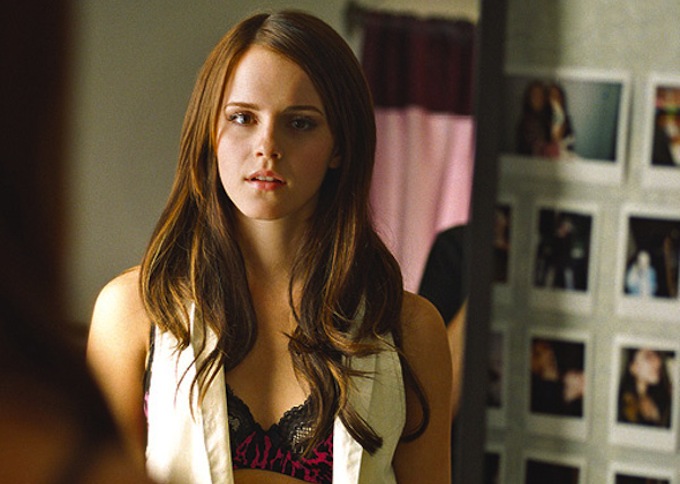
Watson’s post-Potter career is a masterclass in brand management over revenue maximization, which is to say she made exactly the choices that a business school professor would recommend and that a talent agent would privately weep over. The Perks of Being a Wallflower proved she could act outside a franchise. The Bling Ring with A24 and Sofia Coppola proved she could play against type so aggressively that audiences who only knew her as Hermione experienced a form of cognitive displacement usually associated with optical illusions.
The Beauty and the Beast Payoff

Then came Beauty and the Beast in 2017. Disney reportedly paid Watson $15 million upfront plus backend points on a film that grossed $1.26 billion worldwide. Her total earnings from that single project likely exceeded $30 million. It was the strategic equivalent of a value investor sitting in cash for five years and then deploying everything into one perfect position at exactly the right moment, except that the position was wearing a yellow ball gown and singing to a CGI buffalo.
Her brand partnerships with Lancôme, Burberry, and other luxury houses paid premium rates for association with someone whose public image combined intellectual credibility with mass-market appeal. The UN Women Goodwill Ambassador role, launched in 2014 with the HeForShe campaign, generates no financial income but produces brand equity that money literally cannot buy, which is why every luxury brand wants to work with her and why her endorsement rates are higher than those of actresses with larger filmographies.
What She Built
Emma Watson net worth at $85 million represents something unusual in Hollywood economics. It is almost entirely derived from two franchises and the brand infrastructure built around them. She has not done the volume of work that most actors require to reach that figure. She has done the right work at the right scale at the right moments, which is a strategy that requires either extraordinary judgment or extraordinary luck, and in Watson’s case appears to be a combination of both in proportions that are impossible to determine from the outside.
The Restraint Premium
Watson’s approach to wealth mirrors her approach to fame: controlled, intentional, and slightly allergic to excess. There are no tabloid stories about extravagant spending. No failed business ventures. No messy financial entanglements. In an industry that rewards conspicuous consumption, her restraint is itself a form of luxury, the most expensive kind, the kind that only someone with $85 million can afford to practice without anyone mistaking it for poverty.
Her investment approach reflects the same precision that characterizes her career choices. Reports indicate she maintains a diversified portfolio managed through her UK-based company, with real estate holdings in London and New York that have appreciated significantly over the past decade. The London property market, despite its volatility, has rewarded long-term holders with returns that outperform most alternative investments, and Watson’s early entry into the market, funded by Potter earnings that arrived before she was old enough to sign a lease without parental co-signature, means her real estate portfolio has had over fifteen years of appreciation working in her favor. The compound returns on early wealth, invested conservatively and allowed to grow without the withdrawals that plague entertainers who spend at the rate they earn, are the invisible engine that transforms a large fortune into a durable one.
The Soft Landing

Emma Watson has stepped back from acting in recent years, and the financial freedom to do so is perhaps the most significant thing her net worth represents. She does not need to work. Every role she takes from this point forward is a genuine artistic choice, unburdened by economic necessity, which means the work she eventually does will likely be her most interesting.
The Economics of Enough
The deeper story is about the economics of enough. Watson reached financial independence before she turned 25. Everything since then has been an exercise in deciding what money is actually for when you have more than you need, which is a question that most people never get to ask and that the people who do get to ask rarely answer well. Her answer appears to be: freedom, purpose, and the luxury of saying no, which is the only luxury that actually appreciates in value the more you use it.
The Deeper Math
Read more about The Bling Ring’s wealthy cast in our Bling Ring A24 Cast Net Worth hub, or explore the full A24 Movies and Actors Net Worth pillar.
What It Means Now
Her investment approach reflects the same precision that characterizes her career choices. Reports indicate she maintains a diversified portfolio managed through her UK-based company, with real estate holdings in London and New York that have appreciated significantly over the past decade. The London property market has rewarded long-term holders with returns that outperform most alternative investments, and Watson’s early entry, funded by Potter earnings that arrived before she was old enough to sign a lease without parental co-signature, means her real estate portfolio has had over fifteen years of appreciation working in its favor.
The Longer Arc
The Perks of Being a Wallflower, released the same year as The Bling Ring, provided a different kind of recalibration. If the Coppola film proved Watson could play vapid, the Perks role proved she could play damaged, and the combination expanded her casting range more dramatically than either performance could have accomplished alone. The financial returns on both films were modest, but the career capital generated by the pair was immense, because casting directors make decisions based on perceived range, and Watson’s range after 2013 extended from Hogwarts to Harmony Korine to coming-of-age drama, a spectrum wide enough to accommodate virtually any role a screenwriter could imagine.
In Perspective
You are reading this because you already understand something most people scroll right past. The intersection of culture, money, and taste is not a Venn diagram. It is a mirror. Social Life Magazine has spent 23 years holding that mirror up to the people who shape the Hamptons, Manhattan, and the corridors between them. If you see yourself in these pages, we should talk. Reach out at sociallifemagazine.com/contact.
The Takeaway
If your brand, your launch, or your personal story belongs in front of 82,000 affluent readers and a digital audience that keeps growing, our editorial features are built for exactly that moment. Learn more at Submit a Paid Feature.
Our email list reaches 82,000 subscribers who actually open, read, and act. If your audience is high-net-worth, culturally engaged, and based between Park Avenue and Montauk, you are already in the right place. Join the list.
Polo Hamptons returns to Bridgehampton this July with 1,200 guests, Getty Images coverage, and seven years of BMW title sponsorship behind it. If your brand belongs in that conversation, visit polohamptons.com.
A print subscription to Social Life Magazine puts 25,000 copies per issue into the boutiques, lobbies, and living rooms where decisions get made, from Westhampton to Montauk every summer and Upper East Side doorman buildings for Fall and Winter. Subscribe at sociallifemagazine.com/subscription.
If this publication has added value to your world and you want to support independent luxury journalism, you can contribute directly at our donation page.
Author

Written by
Recent Posts
hiTechMODA Season 16
How to Keep Your Personal Number Private When Booking Events, Rentals and Services
Understanding Compensatory Damages in a Personal Injury Case

When Online Family Therapy Makes Sense for Modern Families

Carrier Oils, Essential Oils, and Oil Blends: What Beauty Brands Need to Know
Categories
- Art
- Articles
- Business of Luxury
- Celebrities
- Culture
- Entertainment
- Events
- Faces of Summer 2026
- Fashion
- Fashion & Style
- Featured
- Finance
- Food, Spirits, Wine
- Hamptons
- Hamptons Celebrities
- Health
- Health & Beauty
- Lifestyle
- Luxury Lifestyle
- Press
- Profiles
- Real Estate
- Technology
- The Chronicles
- Travel
- Uncategorized
- Weddings