

The Before
The Stephanie Hsu net worth story begins where all good origin stories begin: before anyone was paying attention.
Stephanie Hsu arrived in Torrance in 1990, California, to Chinese immigrant parents. And grew up in the kind of Southern California suburb where the entertainment industry is simultaneously everywhere and nowhere. Visible on every billboard and audible in every conversation but accessible only to the people who know which doors to knock on and who have the specific combination of talent. Persistence, and financial runway required to keep knocking until someone answers. Her parents did not work in entertainment. The path from Torrance to an Oscar nomination was not marked with signage.
The Deeper Math
She attended NYU’s Tisch School of the Arts. This is the drama school that produces either Broadway performers or unemployed people with excellent diction. And graduated into the New York theater ecosystem with the training, the talent. The absolute absence of the connections that would have made the subsequent decade of her career less arduous. She joined the original off-Broadway production of Be More Chill. First as the standby for Christine Canigula and later as the principal when the show transferred to Broadway. She appeared in The Path on Hulu. She did the work that working actors do. This is to say she worked constantly and well without anyone outside the New York theater community having any idea she existed.
What It Means Now
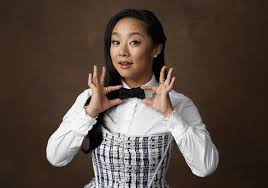
The economics of the New York theater pipeline deserve examination. The reason is that they explain why Hsu’s pre-Everything Everywhere net worth was so modest despite years of professional work. A Broadway standby earns approximately $2,000 to $3,000 per week. This sounds reasonable until you calculate the cost of living in Manhattan, the unpaid rehearsal hours. The audition days that generate no income.
The specific financial anxiety that characterizes an industry where your employment depends on whether someone else calls in sick. Being a standby is the theater equivalent of being an on-call surgeon except that the surgeon gets paid whether they operate or not and the standby gets paid only when the principal cannot perform. The financial model is designed to produce excellent performers, not financial security. And Hsu navigated it for years with the discipline of someone who valued craft over compensation. The reason is that she had no other option.
Her transition from Be More Chill standby to principal when the show transferred to Broadway was the kind of incremental career advance that goes unnoticed outside the theater community but that represents. For the person experiencing it, the difference between being invisible and being seen. The principal role pays better, gets reviewed. And builds the reputation that eventually reaches the casting directors who make film decisions. Without that transfer, without that upgrade from standby to principal. Hsu’s name might never have appeared on the list that the Daniels consulted when casting Everything Everywhere. The entire trajectory of her career, the Oscar nomination, the Wicked casting, every project that followed. Traces back to a Broadway transfer that most people outside the industry would not recognize as significant.
The Pivot Moment

The Daniels were looking for someone to play Jobu Tupaki. The nihilistic villain of Everything Everywhere All at Once who has experienced every possible version of existence and concluded that none of them matter. And they needed an actress who could make interdimensional nihilism feel not just scary but heartbreaking. The reason: the villain’s nihilism is not philosophical posturing but the genuine emotional response of someone who has seen too much and felt too much and concluded that the only rational response to infinite possibility is infinite despair. They found Hsu.
The Audition That Changed Everything
Her audition reportedly convinced the Daniels that they had found someone capable of holding the screen against Michelle Yeoh. This is the acting equivalent of convincing a track coach that you can keep pace with Usain Bolt. She could. She did. And the performance she delivered, oscillating between terrifying and vulnerable with the speed of a strobe light. Earned her an Oscar nomination for Best Supporting Actress that transformed her from a Broadway actress known primarily to theater subscribers into a Hollywood talent known to everyone who watches the Academy Awards. This is approximately 18 million people.
The Climb

The post-Oscar nomination trajectory has been steep and swift. Her role as Joy Wang in the Wicked film adaptation put her in another massive ensemble alongside Ariana Grande and Cynthia Erivo. Television roles have multiplied. The asking price that an Oscar-nominated actress commands is categorically different from the asking price of a Broadway standby. The gap between those two price points. Applied across every project she takes for the next twenty years. Represents the financial impact of a single A24 film on a single career.
The Broadway Foundation

Her theater background gives her a competitive advantage that most film actresses lack: the ability to perform live. Without retakes, without safety nets, with an audience breathing six feet away. That training shows in every frame of Everything Everywhere. Where her physical control and emotional precision operate with the reliability of someone who has performed eight shows a week and knows that consistency is not the opposite of spontaneity but its prerequisite.
The Deeper Math
The Wicked casting is particularly significant for Hsu’s financial trajectory. The reason is that it represents the transition from A24-scale compensation to studio-scale compensation. Everything Everywhere paid modestly because A24 pays modestly. Wicked is a Universal Pictures production with a budget exceeding $150 million. A marketing campaign designed to reach every human being on earth who has ever hummed “Defying Gravity.” The compensation for a supporting role in a film of that scale is categorically different from the compensation for a lead role in an A24 film. The difference. Applied across the multiple franchise installments that Wicked’s two-part structure implies. Represents a financial escalation that would have been inconceivable to the woman earning standby wages on Broadway five years earlier.
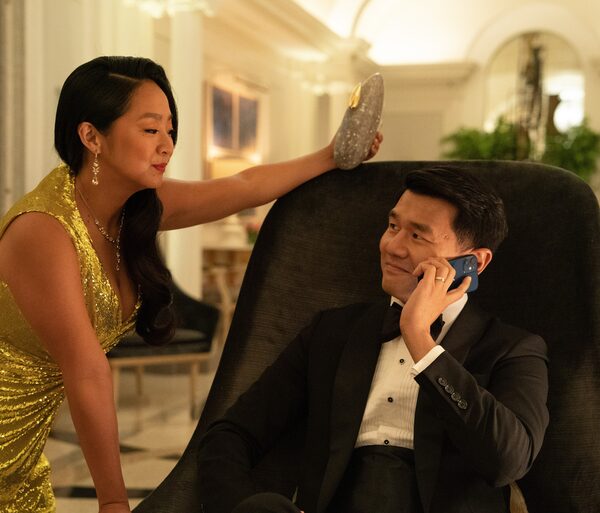
Her career also benefits from a structural shift in the industry that happened to coincide with her emergence. Hollywood’s increased appetite for Asian American talent. Catalyzed by Crazy Rich Asians in 2018 and supercharged by Everything Everywhere’s Oscar sweep in 2023. Means that the pipeline of available roles is wider now than it was when Hsu was grinding through the theater ecosystem. She arrived at the right moment with the right credential. The compound effect of timing plus talent plus an Oscar nomination is producing career opportunities at a velocity that her earlier career could not have predicted.
What She Built
Stephanie Hsu net worth at $2 million is the earliest-stage valuation in this entire pillar. It reflects Broadway salaries, which typically range from $2,000 to $5,000 per week for ensemble and standby roles. Television guest appearances. The initial compensation from Everything Everywhere and Wicked. The number is small. That trajectory is not. An Oscar nomination at 32 positions her for a career arc that will generate returns for decades. The $2 million starting point will look like a footnote when the compound interest of prestige. Opportunity, and escalating fees does its work.
The Soft Landing
Stephanie Hsu is 35 years old and has been famous for approximately three years. This means her net worth story is in its opening paragraph. The Broadway years were the prologue. Everything Everywhere was the inciting incident. Everything that follows is the main narrative. The main narrative of an Oscar-nominated actress in her mid-thirties typically involves a dramatic escalation in both the quality of material offered and the compensation attached to it.
The Jobu Tupaki Paradox
The paradox of her breakout role is that she played a character who believes nothing matters. Each performance mattered so much that it restructured her entire career. Jobu Tupaki saw every universe and found them all empty. Stephanie Hsu saw one opportunity and found it full of everything she had been working toward since Torrance. The $2 million net worth is the seed. The harvest has not yet arrived. But every indicator suggests it will arrive with the abundance of someone whose patience has been rewarded and whose talent has been. At last, correctly priced.
The Deeper Math
Read more about the cast that made Everything Everywhere a cultural earthquake in our Everything Everywhere All at Once A24 Cast Net Worth hub, or explore the full A24 Genre Stars Net Worth pillar.
You are reading this because you already understand something most people scroll right past. The intersection of culture, money, and taste is not a Venn diagram. It is a mirror. Social Life Magazine has spent 23 years holding that mirror up to the people who shape the Hamptons, Manhattan, and the corridors between them. If you see yourself in these pages, we should talk. Reach out at sociallifemagazine.com/contact.
If your brand, your launch, or your personal story belongs in front of 82,000 affluent readers and a digital audience that keeps growing, our editorial features are built for exactly that moment. Learn more at Submit a Paid Feature.
Our email list reaches 82,000 subscribers who actually open, read, and act. If your audience is high-net-worth, culturally engaged, and based between Park Avenue and Montauk, you are already in the right place. Join the list.
Polo Hamptons returns to Bridgehampton this July with 1,200 guests, Getty Images coverage, and seven years of BMW title sponsorship behind it. If your brand belongs in that conversation, visit polohamptons.com.
A print subscription to Social Life Magazine puts 25,000 copies per issue into the boutiques, lobbies, and living rooms where decisions get made, from Westhampton to Montauk every summer and Upper East Side doorman buildings for Fall and Winter. Subscribe at sociallifemagazine.com/subscription.
If this publication has added value to your world and you want to support independent luxury journalism, you can contribute directly at our donation page.
Author

Written by
Recent Posts

AI for personal finance: where PennyGuard fits

How to Pick a Homecoming Dress for Your Body Type (and Feel Amazing in It)

World Cup Injury Attorney for Vancouver Events
What a 3-Carat Engagement Ring Actually Costs in 2026: The Real Numbers
The Skincare Habits That Make a Real Difference Over Time
Categories
- Art
- Articles
- Business of Luxury
- Celebrities
- Culture
- Entertainment
- Events
- Faces of Summer 2026
- Fashion
- Fashion & Style
- Featured
- Finance
- Food, Spirits, Wine
- Hamptons
- Hamptons Celebrities
- Health
- Health & Beauty
- Lifestyle
- Luxury Lifestyle
- Press
- Profiles
- Real Estate
- Technology
- The Chronicles
- Travel
- Uncategorized
- Weddings