

Ken Leung net worth is estimated at $2 million. That number, on its surface, feels modest for an actor whose filmography includes Rush Hour, Lost, Star Wars: The Force Awakens, Saw, Inside Man, The Sopranos, and four seasons of HBO’s Industry. But the Ken Leung net worth story is really the story of the character actor — the performer who makes everyone else on screen look better while never quite receiving the billing or the paycheck that reflects his contribution.
His Industry creators put it simply: “He’s one of the great actors of his generation, 100%. He’s out of this world.”
Two Bridges to NYU: The Physical Therapist Who Found Acting
Kenneth Leung was born on January 21, 1970, in New York City to Chinese immigrant parents. His family initially lived in the Two Bridges section of Manhattan’s Lower East Side — one of the oldest Chinese-American neighborhoods in the city. They later moved to Midwood, Brooklyn, and then to Old Bridge, New Jersey, where Leung finished high school.
He enrolled at New York University to study physical therapy. Acting was not the plan. Not even close. Then, during his junior year, a speech class skit changed everything. The reaction from classmates and professors revealed something he hadn’t considered: he could hold a room. He began studying acting with Catherine Russell and Nan Smithner, then briefly with Anne Jackson at the legendary HB Studio in Greenwich Village.
The Downtown Theater Years
Leung emerged from Manhattan’s downtown theater scene in the 1990s. He performed with Ma-Yi Theater Company, New Perspectives, and STAR, a traveling troupe of actor-educators based at Mount Sinai Hospital. These were small stages, black box theaters, productions that paid in experience rather than money. He appeared in Jeff Weiss’s Hot Keys and Terrence McNally’s passion play Corpus Christi in 1998.
In 2002, he made his Broadway debut in the Tony Award-winning musical Thoroughly Modern Millie, playing the Chinese immigrant Ching Ho. He appeared on the cast recording. The Broadway credit opened doors. But the doors opened slowly, and Leung learned to be patient in a business that doesn’t reward patience.
He later told IMDb: “I haven’t been in a position to have the luxury to pick roles for most of my career. Usually, when you want to be an actor, you take whatever comes along.” That philosophy — take what comes, make it memorable, wait for the next call — defines the Ken Leung net worth trajectory as much as any individual role does.
Sang, Spielberg, and the Franchise Years
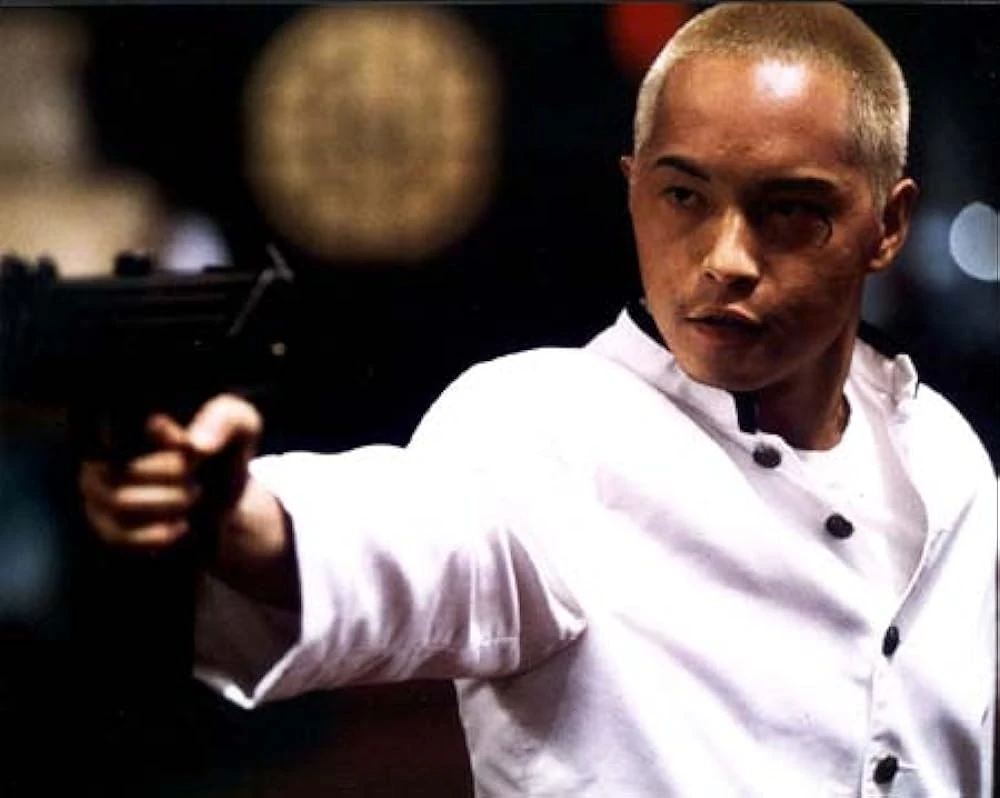
Brett Ratner changed Leung’s career by casting him as the villainous henchman Sang in 1998’s Rush Hour. The film grossed $244 million worldwide. Leung’s performance impressed Ratner enough to bring him back for Red Dragon (2002), The Family Man (2000), and X-Men: The Last Stand (2006).
The Ratner relationship established a pattern that would define Leung’s career. Directors who worked with him once wanted him again. Edward Norton cast him in Keeping the Faith (2000) and later said Leung turned a tiny role into one of the movie’s most hilarious moments — so much so that the filmmakers expanded the scene because audiences laughed too hard. Steven Spielberg cast him in A.I. Artificial Intelligence (2001). Spike Lee used him twice, in Inside Man (2006) and another project.
The Genre Range
Leung’s filmography defies categorization. Horror: Detective Stephen Sing in Saw (2004). Family drama: The Squid and the Whale (2005). Action blockbuster: Admiral Statura in Star Wars: The Force Awakens (2015). Psychological thriller: M. Night Shyamalan’s Old (2021). DC Comics: Dr. Victor Liu in Joker: Folie à Deux (2024). Each role demonstrates the kind of range that leading men rarely develop because they never need to. Character actors develop it because survival demands it.
The Representation Question
Leung’s career also carries significance within the Asian American acting community. When he began working in the 1990s, roles for Asian American men in Hollywood fell into narrow categories: martial artist, tech worker, foreign villain. Leung navigated this landscape by choosing roles that resisted those stereotypes. Sang in Rush Hour was a villain, yes, but a villain with intelligence and menace that went beyond caricature. Miles Straume on Lost was a fully realized person whose ethnicity informed his character without defining it. Eric Tao on Industry operates at the highest levels of London finance with an authority that no previous Asian American character on prestige television has wielded.
Leung has never positioned himself as an activist for representation. He’s positioned himself as an actor who takes whatever comes along and makes it undeniable. The representation happens through the quality of the work, not through press statements about the importance of diversity. That approach carries its own kind of power — quieter than a manifesto, but potentially more durable.
The Ken Leung net worth figure of $2 million reflects the economic reality of the character actor’s career. Supporting roles in major franchises pay well but not spectacularly. Lead roles in smaller projects pay modestly. The aggregate over three decades produces stability but not wealth by Hollywood standards. It produces something the industry values more than money in the long run: a body of work that directors, critics, and fellow actors respect deeply.
Lost, Miles Straume, and the Role That Changed Everything

In 2007, Leung guest-starred in the final season of The Sopranos as Carter Chong, a mental patient in a psychiatric facility alongside Tony Soprano. The performance made an impression far beyond its single episode. Showrunners Damon Lindelof and Carlton Cuse watched it and created a role specifically for him on Lost. That kind of thing doesn’t happen in television. Directors don’t invent characters for actors they’ve never met. Lindelof and Cuse did.
Miles Straume arrived in Lost‘s fourth season — a sarcastic, ghost-whispering con man with the ability to communicate with the dead. Leung played Miles for 45 episodes across three seasons, from 2008 to 2010. The character became a fan favorite almost immediately. Dropping a new personality into an established ensemble that included Matthew Fox, Josh Holloway, Evangeline Lilly, and Michael Emerson is a high-wire act. Making that personality indispensable is something else entirely. Leung pulled it off through the same quality he brings to every role: absolute specificity. Miles didn’t feel like a late-season addition. He felt like he’d always been there.
Lost remains one of the most successful television dramas of the 21st century. It continues to stream globally. The residuals from 45 episodes of a show with that kind of longevity contribute meaningfully to the Ken Leung net worth figure, generating passive income more than fifteen years after the finale aired.
The Personal Cost
In 2013, Leung’s brother Kevin drowned while vacationing in Thailand. The loss profoundly shaped his outlook on life and work. Leung has never discussed it publicly in detail, maintaining the same fierce privacy that characterizes his entire public presence. He has no social media accounts, gives few interviews, and lets the work speak.
His marriage to Nancy Bulalacao — a curator for public programs serving Asian American and Pacific Islander communities — reflects a life built on substance rather than spectacle. They live in Brooklyn with their son. The family’s lifestyle sits at the opposite end of the spectrum from the characters Leung plays on Industry, where wealth corrodes everything it touches. The irony may not be accidental.
“I Have to Let You Go”

In 2020, Mickey Down and Konrad Kay cast Leung as Eric Tao in Industry — the fiery Managing Director of Cross Product Sales at Pierpoint & Co. Eric became Harper Stern’s mentor, protector, and eventually her most painful betrayer. The Eric-Harper relationship is the emotional spine of the entire series.
Eric operates in the space between loyalty and self-preservation. He sees Harper’s talent, champions her when nobody else will. Then he covers for her forged transcript, pays for her hotel room during lockdown, and then, in the Season 2 finale, he turns on her. He reports the forged transcript to HR and watches as she’s fired. And he delivers the line that may be the single most devastating moment in the show’s history: “I have to let you go.”
The Line That Broke the Show
The line is standard corporate language. HR says it every day in offices around the world. But in Ken Leung’s delivery, it becomes something else entirely. It sounds less like a termination and more like a breakup. Eric isn’t just firing Harper. He’s severing the closest thing either of them has to a genuine human relationship. The mentor who found a kid worth believing in has decided that believing in her will cost him his own career. So he cuts her loose. And both of them know they’ll never recover from it.
Leung’s performance across four seasons earned the kind of critical praise that doesn’t always translate into awards recognition but earns something equally valuable: the respect of every actor who shares a scene with him. Vox and The New Yorker both singled out his commanding presence in Season 3. He operates at a frequency where less is more — a flicker of expression communicates what other actors need a monologue to convey.
Avatar, Project Hail Mary, and the Current Chapter
Leung’s recent work demonstrates no intention of slowing down at 56. In 2024, he played Commander Zhao in Netflix’s live-action adaptation of Avatar: The Last Airbender, appearing in six episodes. The series introduced him to a generation of viewers who knew neither Lost nor Rush Hour. Commander Zhao required a specific kind of villainy — controlled, strategic, military — that differs sharply from Eric Tao’s emotional volatility. Leung delivered both registers in the same year.
In 2026, he appeared in Project Hail Mary, the Ryan Gosling-led sci-fi film based on Andy Weir’s bestselling novel. The film holds a 94% on Rotten Tomatoes and a 96% audience score. Another genre. Another director who recognized that Ken Leung elevates every project he joins. The film’s success adds another franchise-adjacent credit to a career that already includes Star Wars, X-Men, and the Marvel Cinematic Universe via Inhumans.
He also appeared in Last Days (2025) and Joker: Folie à Deux (2024). And Industry Season 5, filming in August 2026, will likely bring him back for the final chapter of the Eric Tao story. Eric exited before the Season 4 finale, but the Harper-Eric relationship remains the show’s most unresolved emotional thread. A final season without Eric Tao would leave a wound that the audience wouldn’t forgive. The creators built five seasons of television on that relationship. They know better than to leave it unfinished.
Ken Leung Net Worth: The Character Actor’s Economy
Celebrity Net Worth estimates Ken Leung net worth at $2 million. The figure reflects three decades of consistent work across film, television, theater, and voice acting. It also reflects the structural economics of the character actor’s career.
How Character Actors Build Wealth Differently
Leading men and women negotiate deals based on marquee value. Their names sell tickets. Their faces sell streaming subscriptions. Character actors negotiate based on availability and role significance. The pay scale differs dramatically. A lead actor on an HBO drama might earn $300,000 or more per episode. A supporting actor — even one as essential as Leung — typically earns a fraction of that amount.
What character actors gain instead is longevity. Leading men flame out. Character actors work forever. Leung has maintained continuous employment since 1995 — over thirty years without a significant gap. The Ken Leung net worth of $2 million represents not a single windfall but the steady accumulation of hundreds of paychecks from projects that range from indie theater to Star Wars.
The Revenue Streams
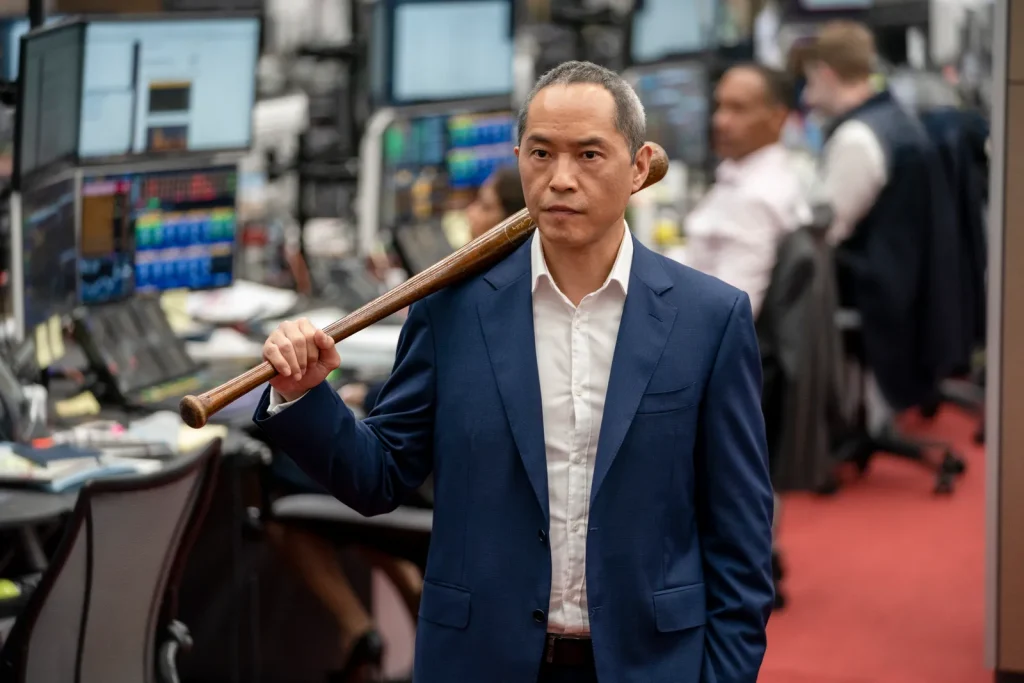
Leung’s income derives from several categories. Television provides the most consistent revenue: 45 episodes of Lost, 32+ episodes of Industry, multi-episode arcs on Person of Interest, The Night Shift, Inhumans, and Avatar: The Last Airbender. Film work spans nearly 30 titles across three decades. Theater and voice acting (including animated series Pantheon and Velma) add additional income streams. Residuals from Lost, which continues to stream globally, generate passive income years after the show ended.
Leung lives in Brooklyn with his wife, Nancy Bulalacao, a curator for public programs for Asian American and Pacific Islander communities, and their son. He maintains no public social media accounts. The privacy reflects a philosophy that aligns with his approach to acting: do the work, skip the performance of celebrity, let the roles speak.
The Quiet Fortune of a Character Actor
The Ken Leung net worth conversation misses the point if it focuses only on the number. Two million dollars after thirty years of continuous work sounds modest. But consider what the number represents: a career built entirely on talent, without a single role that required him to open a movie or carry a series as the above-the-title name. He earned every dollar by walking into rooms and making them better.
His Industry creators called him one of the great actors of his generation. Audiences who watched Eric Tao deliver that line — “I have to let you go” — know exactly what they mean. The Ken Leung net worth figure measures the financial output of a career. It doesn’t measure the artistic output. If it did, the number would look very different.
Related Articles
Industry HBO: The Complete Guide to TV’s Most Dangerous Finance Drama
Myha’la Net Worth: The Girl Who Faked It Until She Made It
Marisa Abela Net Worth: The Civil Rights Lawyer Who Became Amy Winehouse
Industry Season 5: Everything We Know About the Final Season
Kit Harington Net Worth: Life After Game of Thrones
Stay Connected
If you searched for Ken Leung net worth and found a story about a physical therapy student who became one of the most respected actors in Hollywood, that’s what Social Life Magazine does. We tell the stories behind the status. The ones where the number is the least interesting part.
Feature your brand in Social Life Magazine — contact us at sociallifemagazine.com/contact.
Guaranteed digital placement starts at $975 via our Submit A Paid Feature page.
Join 82,000+ readers at sociallifemagazine.com.
Polo Hamptons returns July 18 and 25, 2026. BMW title sponsor.
Print subscriptions at sociallifemagazine.com/subscription. Every Ken Leung net worth search leads to a deeper story.
Support independent publishing: donate here.
Author

Written by
Recent Posts

How to Choose Useful Tech Gifts for Employees and Clients in 2026
The Garage Question: Which Car Goes South for the Season?

VandS Clinic Review Treatment: How Seoul Injectable and Laser Options Compare for US Patients
Before Buying a View Home: What a Sloped Lot Means for the Purchase

Powerful Strategies to Stay Ahead in a Fast-Moving Real Estate Market
Categories
- Art
- Articles
- Business of Luxury
- Celebrities
- Culture
- Entertainment
- Events
- Faces of Summer 2026
- Fashion
- Fashion & Style
- Featured
- Finance
- Food, Spirits, Wine
- Hamptons
- Hamptons Celebrities
- Health
- Health & Beauty
- Lifestyle
- Luxury Lifestyle
- Press
- Profiles
- Real Estate
- Technology
- The Chronicles
- Travel
- Uncategorized
- Weddings