
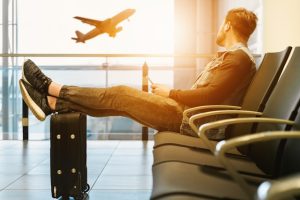
Travel isn’t always smooth or exciting. Sometimes it’s exhausting, confusing, lonely, and unexpectedly stressful.
You might find yourself standing in the middle of a crowded street in a foreign city, feeling completely out of place instead of inspired. Or you might be sitting in a beautiful café, wondering why you don’t feel as happy as you thought you would. These moments can be disorienting because they clash with the idealized version of travel we’ve been conditioned to expect.
But here’s the thing. These hidden realities don’t make travel worse. They make it real. They strip away the fantasy and replace it with something more grounded, more human. Travel isn’t just about the highlights. It’s about the in-between moments, the challenges, and even the discomfort. In this article, we will explore the hidden realities of travel that no one talks about.
Social Media’s Filtered Illusion
Scroll through Instagram for just a few minutes, and travel can feel like a never-ending highlight reel. However, this polished portrayal often represents only a small, carefully curated slice of reality.
In truth, every “effortless” travel photo usually comes with a series of unseen moments. There are multiple retakes, long waits, crowded locations, and occasional frustration. That peaceful beach image may have required waking up before sunrise, dealing with crowds, or dealing with unexpected disruptions.
What social media rarely shows are the exhausting travel days, or missed connections that can happen just before the perfect shot is captured. This gap between perception and reality doesn’t just shape expectations. It can also influence how people feel about their own travel experiences.
A study published in ScienceDirect highlights this phenomenon. The study shows that exposure to idealized travel content can lead to what researchers call “social media–induced travel anxiety.”
Through a mixed-methods approach, the study found that curated posts and information overload can trigger feelings of inadequacy or unease. This was particularly significant among individuals who are more sensitive to social comparison.
The research further explains that when people constantly compare their real experiences to these polished portrayals, it can reduce their overall travel satisfaction.
Health Risks and Emergencies
When you’re far from home, even a minor issue can quickly turn into something overwhelming. A simple food poisoning incident, a sudden fever, or even a twisted ankle while exploring can disrupt your entire trip.
Beyond minor health concerns, there are more serious situations that travelers often underestimate. Road accidents, for example, are one of the leading causes of injury worldwide, and being in an unfamiliar place only increases the vulnerability.
Take this case that happened in Atlanta recently, for example. Police investigated a deadly two-vehicle crash that shut down a road in southwest Atlanta in January 2026. One person was pronounced dead at the scene. Meanwhile, two others were rushed to the hospital in critical condition, according to 11ALIVE.com. Stories like this remind us that accidents don’t wait for the “right time,” and they don’t care whether you’re a local or a traveler.
When something like this happens, the aftermath can be just as challenging as the incident itself. That is why getting professional help becomes essential. In cases like the one above, reaching out to local Atlanta personal injury attorneys can be helpful.
Atlanta Personal Injury Law Firm notes that such lawyers can guide you through the legal process and help you pursue the compensation you deserve. They understand the weight of what you’re dealing with and work to ease that burden through personalized support and direct access.
There’s also the mental and emotional side of emergencies that rarely gets discussed. An incident during travel can shake your confidence, leaving you anxious even after the situation is resolved. You may find yourself replaying the moment, becoming more cautious, or even hesitant to continue your trip.
Travel Fatigue Is Real
Travel is often portrayed as pure freedom. But in reality, it can feel more like a marathon with no clear finish line. Early flights, long hours on your feet, unfamiliar beds, and constantly changing environments can quietly wear down your body. While these physical strains are easy to notice, their cumulative impact is often underestimated.
This physical fatigue is closely tied to disruptions in your internal clock. A study published in ScienceDirect highlights how social jetlag significantly affects how you experience a trip. It is the mismatch between your natural circadian rhythm and rigid travel schedules.
When your body is out of sync, energy levels drop, and your willingness to participate in activities decreases. The study also found that this effect varies by chronotype, i.e., morning-oriented travelers tend to avoid late-night plans. Meanwhile, evening types often skip early activities, ultimately limiting overall engagement.
As a result, fatigue doesn’t just make you tired. It changes your behavior. Instead of exploring, you may find yourself choosing rest over experiences, conserving energy rather than seeking adventure. Interestingly, unlike in everyday life, where tiredness can increase impulsivity, travel fatigue tends to reduce it. This makes you less likely to take part in spontaneous activities.
Scams and Tourist Traps
Being in unfamiliar surroundings, navigating directions, and soaking in new experiences can make even the most cautious traveler more vulnerable than usual. It’s this combination that makes tourists prime targets for scams and cleverly disguised tourist traps.
Many of these scams seem obvious in hindsight, yet they can be surprisingly convincing in the moment. From manipulated taxi meters to subtle overcharging by street vendors or distraction-based pickpocketing, these situations are more common than most people admit.
What makes these incidents particularly tricky is how normal they feel at the time. In many cases, travelers don’t even realize they’ve been misled until much later, when there’s little they can do about it.
Moreover, insights shared on CNBC’s Squawk Box Asia, based on Mastercard data, reveal that the type and frequency of fraud can vary significantly by destination. Some cities, like San Francisco, Dublin, Seoul, Budapest, and Edinburgh, report relatively low levels of tourist fraud.
In contrast, travelers in destinations such as Cancún, Hanoi, Dhaka, and Bangkok have reported higher instances. The nature of scams also differs widely. For example, taxi and car rental fraud accounts for a sharp rise to 66% in Jakarta.
While the financial loss can be frustrating, the emotional impact is often even more significant. Being taken advantage of can leave you feeling uneasy, especially when you’re trying to relax and enjoy your trip. It can shift your mindset, making you more cautious, skeptical, and even anxious in subsequent interactions.
FAQs
What is overtourism, and why is it a problem?
Overtourism happens when too many visitors crowd a destination beyond its capacity. This leads to environmental damage, pressure on infrastructure, rising living costs, and reduced quality of life for residents. It can also diminish the travel experience and erode local culture, making destinations less sustainable over time.
What is post-trip depression?
Post-trip depression, often called post-vacation blues, is a temporary emotional low after returning from travel. It may involve sadness, fatigue, or irritability caused by the shift from exciting experiences back to routine life. While usually short-term, it can last longer depending on stress levels and lifestyle changes.
How does one handle cultural shock when travelling?
To manage culture shock, stay open-minded and embrace differences rather than resisting them. Engage with local customs, learn basic language phrases, and be patient with yourself. Staying curious, building routines, and connecting with locals or fellow travelers can ease the transition and make the experience more rewarding.
Travel is often sold as a seamless upgrade to your life. But the truth is messier. It includes the anxious days, the physical exhaustion, the emotional aftershocks, and the moments when you feel lost instead of inspired. Maybe that’s why travel can be so powerful. It pushes you to handle reality, not just fantasy.
So the next time your trip doesn’t match the version you imagined, don’t treat it like a failure. Treat it like a real experience. One that teaches resilience, humility, and a deeper kind of confidence you can’t get from a perfect photo.
Author

Written by
Recent Posts
The First Decision After a Collision Can Be the Most Important One
Two Weeks in Rome and Beyond: Turkish Airlines Itineraries from Boston, Chicago and Onward to India
Top 10 Hair Transplant Clinics in Turkey 2026

Artist Alley to Online Store: How Convention Artists Can Keep Selling After the Event
When an 18-Wheeler Crash Leaves Lasting Consequences
Categories
- Art
- Articles
- Business of Luxury
- Celebrities
- Culture
- Entertainment
- Events
- Faces of Summer 2026
- Fashion
- Fashion & Style
- Featured
- Finance
- Food, Spirits, Wine
- Hamptons
- Hamptons Celebrities
- Health
- Health & Beauty
- Lifestyle
- Luxury Lifestyle
- Press
- Profiles
- Real Estate
- Technology
- The Chronicles
- Travel
- Uncategorized
- Weddings