
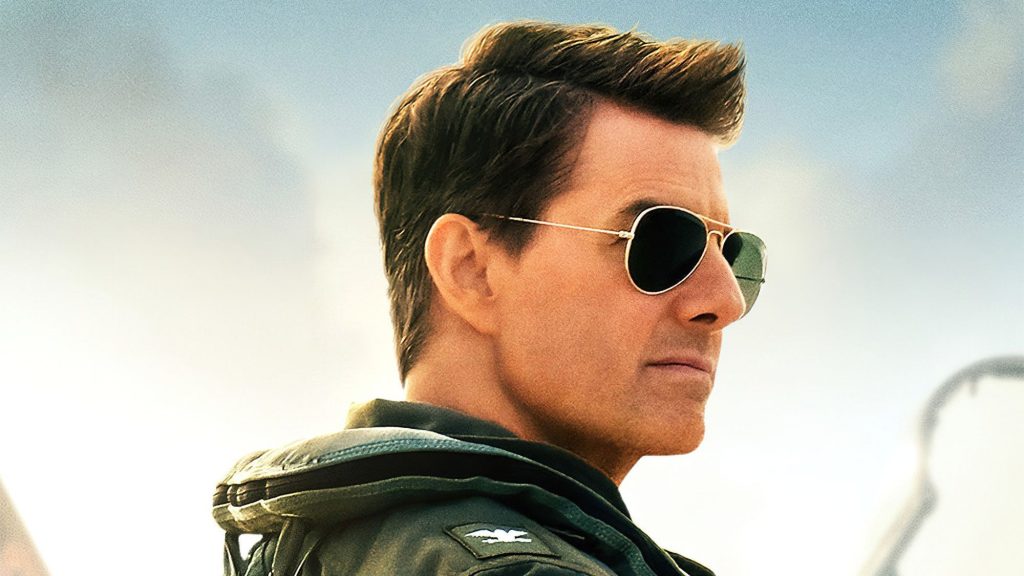
The ballroom at Ovation Hollywood was quiet when Alejandro Iñárritu stepped to the podium. It was November 16, 2025. Tom Cruise stood behind him in a tuxedo, waiting, hands folded. Forty-five years of work. Forty-five films. Notably, four competitive Oscar nominations had come and gone, three for acting (Born on the Fourth of July, Jerry Maguire, Magnolia) and one as producer of Top Gun: Maverick for Best Picture. Four losses. Bridesmaid, never bride. Ultimately, the Honorary Academy Award in his hands was the Oscar he was never supposed to need.
Iñárritu, the Mexican auteur directing Cruise in his first original film in nearly a decade, said the line everyone quoted the next morning. “This may be his first Oscar, but from what I have seen and experienced, it will not be his last.” Meanwhile, the audience at the Governors Awards rose. Cruise smiled the way he has smiled at cameras since he was nineteen. Controlled. Measured. Grateful in the precise way a CEO is grateful at a shareholder meeting.
Tom Cruise has made more money than any living actor. Additionally, he has survived more career-ending scandals than any modern star. He has done more of his own stunts than anyone in the history of cinema. However, until that Sunday night in November, he had never held an Academy Award. What follows is every Tom Cruise movies ranked list you will need, organized across the six distinct eras of a career that somehow produced both Risky Business and Top Gun: Maverick, both Magnolia and Mission: Impossible – The Final Reckoning, both the Oprah couch jump and the Honorary Oscar. Forty-five films. Forty-five years. One night. One Oscar. Ultimately, the complete ranking of the career that built the longest-running movie star franchise in Hollywood: the actor himself.
The Tom Cruise Thesis
To understand why Tom Cruise movies ranked works differently than ranking any other actor’s catalog, you have to understand that Tom Cruise is not an actor. Indeed, Tom Cruise is a studio.
He has never taken a traditional upfront salary on a major film since the late 1990s. Instead, he takes profit participation, which means he makes nothing if a film flops and everything if it succeeds. Top Gun: Maverick earned him a reported $100 million in its first year. Every Mission: Impossible film has been produced through his own shingle with Christopher McQuarrie. Furthermore, he does not star in franchises. He owns them. By contrast, most A-list actors work for studios. Studios work for his company, and the deal memos read like merger agreements.
His stunt insistence is not vanity. It is brand architecture. Consider the Burj Khalifa climb, the Airbus ascent, the HALO jump, the motorcycle cliff, the biplane hang. Each one is a content asset that travels through trailers and talk shows and behind-the-scenes featurettes for eighteen months before release. Other actors have publicists. Meanwhile, Tom Cruise has a marketing flywheel, and he is both the engine and the fuel.
The thesis, then: every film in his catalog is simultaneously a performance and a business decision. Consequently, ranking them without accounting for that dual mandate produces a list that misses the point. A Tom Cruise movie is an artifact of a forty-five-year experiment in self-governance, conducted in public, with no board of directors and no off-switch. Here is how that experiment went, year by year, decade by decade, Oscar nomination by Oscar nomination.
How We Ranked Every Tom Cruise Movie
Four criteria, each scored out of ten. Forty-point scale per film.
Box office impact measures cultural-moment status, not raw gross. For instance, Top Gun scores higher than War of the Worlds despite lower unadjusted numbers because Top Gun changed Navy recruitment for a generation. Cultural significance measures whether the film is still quoted, referenced, or parodied. Jerry Maguire, notably, scores high on this metric because “show me the money” entered the language. Lions for Lambs does not. Performance quality measures what the work does as acting, setting aside commerce. Magnolia, for example, scores higher than Mission: Impossible II on this metric, and the gap is not close. Stunt legacy measures the physical impossibility of what was accomplished onscreen. Consequently, the Burj Khalifa climb scores a ten. Cocktail scores a zero.
Rankings below are within each era. The cross-era Top 10 appears near the end. Links throughout connect to the hub dedicated to each period.
Era 1: The Pretty Boy Era (1981-1985) Ranked
Thomas Cruise Mapother IV arrived in Los Angeles in 1980 with a ninth-grade reading level, severe undiagnosed dyslexia, and a mother who had just left his abusive father. He was nineteen. Within eighteen months he would have his first film credit. Subsequently, within four years he would become the most photographed twenty-two-year-old in America. The Pretty Boy Era is short and uneven, but notably, the films inside it contain every muscle he would later develop.
The Breakouts
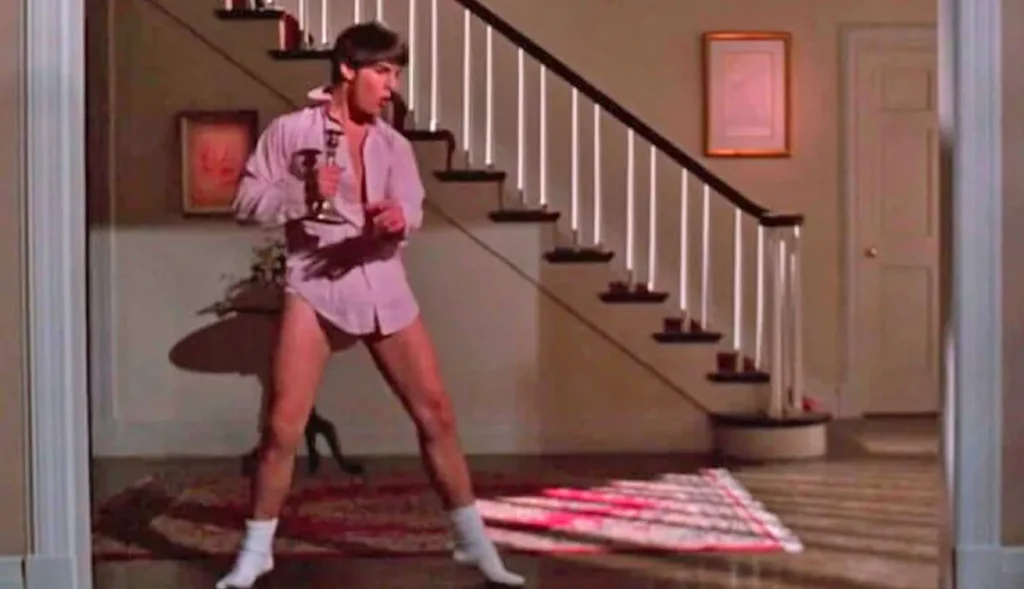
1. Risky Business (1983). The film that made him. Paul Brickman’s suburban erotic thriller with the Bob Seger sock-slide sequence. Box office $63 million on a $6 million budget. Notably, Cruise was twenty-one. The sunglasses alone built a career.
2. The Outsiders (1983). Francis Ford Coppola’s S.E. Hinton adaptation. Cruise played Steve Randle in an ensemble that included Patrick Swayze, Rob Lowe, Matt Dillon, Emilio Estevez, Ralph Macchio, and C. Thomas Howell. Although he was paid a reported $5,000, he was also the one who showed up early, stayed late, and asked for notes.
3. All the Right Moves (1983). The Pennsylvania football movie nobody remembers but that earned Cruise his first $1 million paycheck. Again, he was twenty-one.
The Deep Cuts
4. Taps (1981). His second film. Cruise lobbied for the role of the unhinged cadet, lost it to Sean Penn, and took a smaller part. Ultimately, the loss taught him a lesson about casting politics he would never forget.
5. Legend (1985). Ridley Scott’s fantasy opus. $24 million. Disaster. Notably, the one Pretty Boy Era film Cruise reportedly wishes he could undo.
6. Endless Love (1981). Four seconds of screen time. His debut. Although a blink-and-miss cameo, it launched everything.
7. Losin’ It (1983). The Tijuana teen sex comedy Curtis Hanson directed years before L.A. Confidential. Forgotten, however, for good reason.
The full breakdown of all seven films lives in the complete guide to Tom Cruise’s early movies, including how he convinced Francis Ford Coppola to keep him in The Outsiders after the original shoot was cut in half.
Era 2: The Movie Star Era (1986-1990) Ranked
Five years. Six films. Two Oscar nominations. Notably, the coronation happened faster than Hollywood had coronated anyone since the studio system dissolved. Ultimately, by 1990, Cruise was the highest-paid actor in the world and married to Nicole Kidman, who he had met on the set of Days of Thunder.
The Prestige Plays
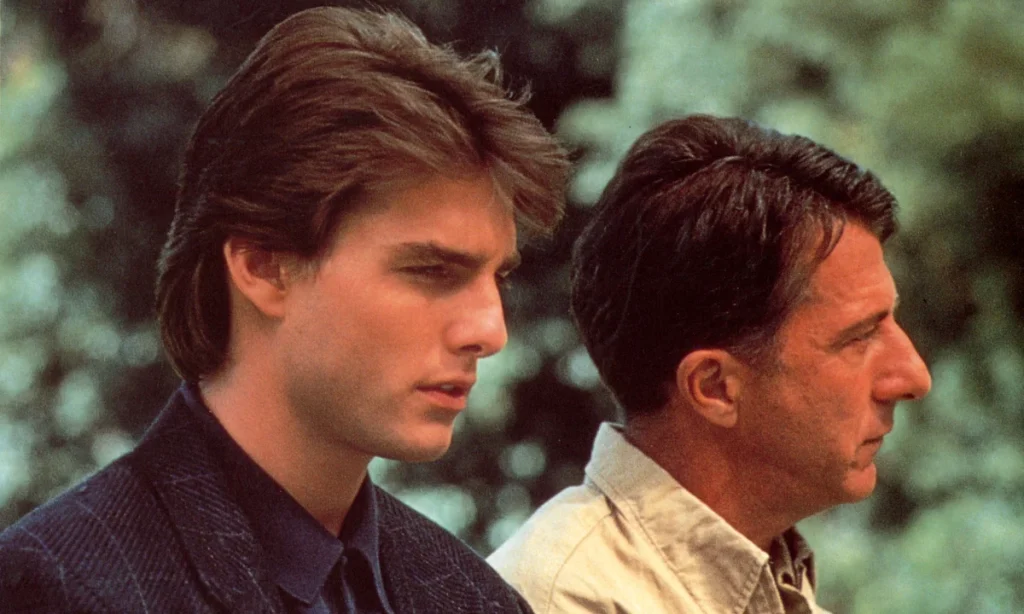
1. Rain Man (1988). Barry Levinson’s road movie swept the 1989 Oscars, winning Best Picture, Best Director, Best Actor (Dustin Hoffman), and Best Original Screenplay. Cruise took second billing and, according to Hoffman’s later interviews, held the movie together scene by scene. The performance is underrated because it had to be. Furthermore, Hoffman needed the stillness to play against, and Cruise provided it.
2. Born on the Fourth of July (1989). Oliver Stone’s Ron Kovic biopic earned Cruise his first Academy Award nomination at twenty-seven. However, he lost to Daniel Day-Lewis in My Left Foot. The wheelchair performance is still the single most committed physical transformation of his career, and it predates his Scientology visibility by enough years that it reads without the culture-war overlay that would distort his later dramatic work.
The Commercial Hits
3. Top Gun (1986). $357 million global gross. The Navy recruited a generation off the back of it. Notably, Cruise turned the role down three times before Jerry Bruckheimer and the late Tony Scott wore him down. The sequel would eventually earn him more money than any single film of his career, but the original made him Tom Cruise.
4. The Color of Money (1986). Martin Scorsese’s sequel to The Hustler. Paul Newman won his Oscar. Meanwhile, Cruise got the apprenticeship of a lifetime. He has repeated for decades that watching Newman work reshaped his understanding of what a film career could be.
5. Days of Thunder (1990). The NASCAR melodrama Bruckheimer intended as Top Gun on wheels. $157 million worldwide. Critical disaster, commercial hit, and the set where Cruise met Kidman. Ultimately, the marriage produced eleven years and two adopted children.
6. Cocktail (1988). $171 million on a $20 million budget. Critics called it a commercial. Indeed, they were correct. Audiences did not care.
The full coronation story is in the companion guide to Tom Cruise’s 80s movies.
Era 3: The Serious Actor Era (1991-1999) Ranked
The decade of reinvention. Cruise decided somewhere around 1991 that he was not going to be a pretty face who grew old gracefully. Instead, he was going to be a craftsman. Kubrick got a call. So did Paul Thomas Anderson, Neil Jordan, Sydney Pollack, and Cameron Crowe. Consequently, the decade produced three Oscar nominations and the most commercially durable franchise in modern Hollywood. Additionally, in 1996, Cruise bought the film rights to Mission: Impossible through his own production company and built the infrastructure that would define the next thirty years of his career.
The Auteur Collaborations
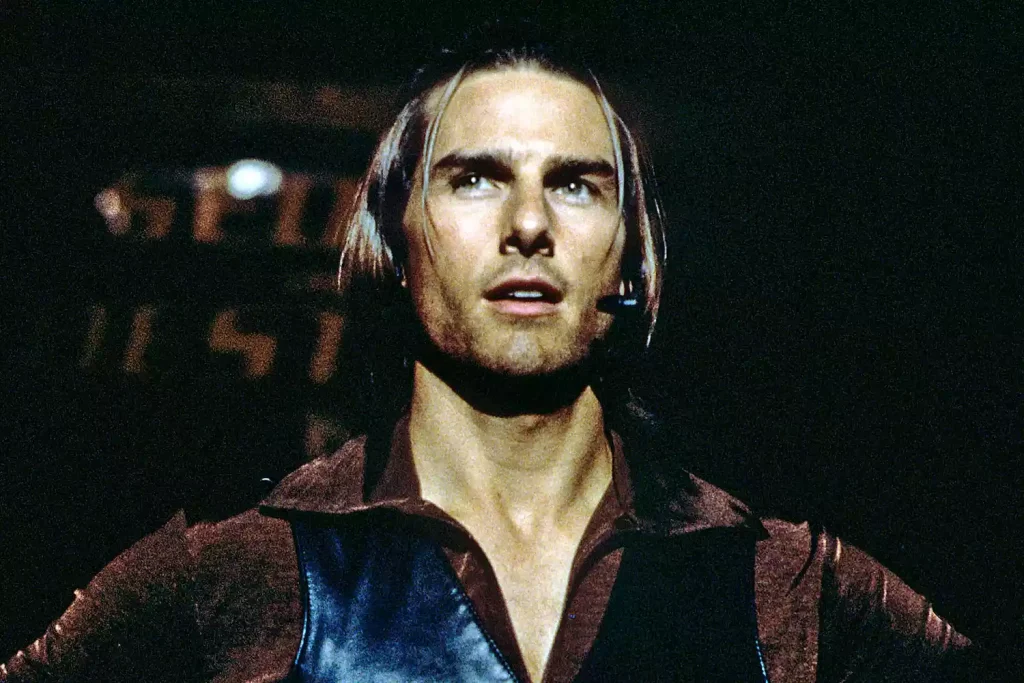
1. Magnolia (1999). Paul Thomas Anderson’s ensemble masterpiece. Cruise played Frank T.J. Mackey, a seduction guru delivering the now-legendary “respect the cock, tame the cunt” lecture. His third Oscar nomination. However, he lost to Michael Caine for The Cider House Rules. The performance remains the one critics cite when arguing that Cruise never got the serious dramatic recognition he deserved.
2. Jerry Maguire (1996). Cameron Crowe’s sports agent romantic comedy grossed $273 million. Cruise earned his second Oscar nomination and lost to Geoffrey Rush for Shine. Notably, “You complete me” and “show me the money” entered the language permanently. Meanwhile, Cuba Gooding Jr. won Best Supporting Actor off the strength of scenes Cruise set up and served.
The Commercial Thrillers
3. A Few Good Men (1992). Aaron Sorkin’s courtroom drama, directed by Rob Reiner. Cruise took $12.5 million and held his own opposite Jack Nicholson in the “you can’t handle the truth” scene. The film grossed $243 million. Notably, the scene still plays in law school classrooms.
4. Mission: Impossible (1996). Brian De Palma’s reinvention of the television series. $457 million worldwide. Cruise produced. Ultimately, the franchise he would eventually control began here, with a Prague vault sequence that has been parodied more times than any single shot he has ever filmed.
5. The Firm (1993). Sydney Pollack’s John Grisham adaptation. $270 million. Still the highest-grossing Grisham adaptation of the 1990s. Indeed, Cruise at his smartest, most recognizably human.
6. Eyes Wide Shut (1999). Stanley Kubrick’s final film. Notably, the 400-day shoot in London reportedly cracked the foundation of the Kidman marriage, which ended within eighteen months of the premiere. The film itself is a Kubrick masterwork that critics have only recently begun to appreciate properly. Cruise, moreover, gave a quieter performance than he has ever given before or since.
7. Interview with the Vampire (1994). Anne Rice publicly opposed his casting, then took out full-page ads apologizing after seeing the film. $224 million global. Ultimately, his Lestat is still the definitive cinematic version.
8. Far and Away (1992). Ron Howard’s Irish-American immigrant epic. $137 million. The film that started the Cruise-Kidman love story onscreen and off. However, the Irish accents have not aged well.
Every casting decision, every paycheck, every auteur collaboration is broken out in the guide to Tom Cruise’s 90s movies.
Era 4: The Franchise Era (2000-2010) Ranked
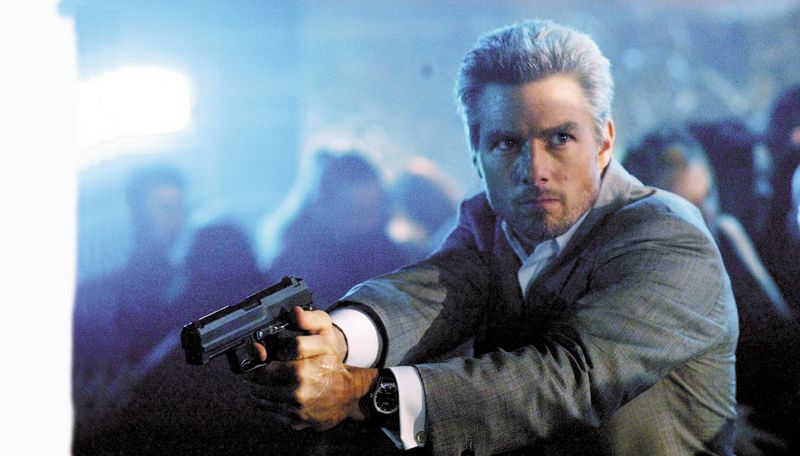
The decade he conquered the box office and almost lost the public. Spielberg twice. Michael Mann. Cameron Crowe. A $600 million alien invasion epic. Furthermore, the single afternoon on Oprah’s couch cost him his Paramount deal, his Paramount office, and, temporarily, his career.
The Critical Peaks
1. Collateral (2004). Michael Mann’s digital-shot Los Angeles noir. Cruise played Vincent, a contract killer with silver hair and a closed expression, opposite Jamie Foxx as the cab driver carrying him between jobs. $220 million. Notably, one of the two or three best performances he has ever given, and indeed the only time he has convincingly played a sociopath.
2. Minority Report (2002). Steven Spielberg’s Philip K. Dick adaptation. $358 million. Notably, the film predicted touch-screen interfaces, targeted advertising, and predictive policing about fifteen years before they became real.
3. War of the Worlds (2005). Spielberg again. $603 million. Notably, the film premiered weeks after the Oprah couch incident and still earned its budget back twelve times over. Practical-effects tripods have aged better than most CGI of the era.
The Post-Couch Recovery
4. Tropic Thunder (2008). Ben Stiller’s showbiz satire. Notably, Cruise’s ninety-second Les Grossman cameo, bald and dancing, is the single funniest moment of his career and indeed the exact instant his post-couch rehabilitation began.
5. Mission: Impossible III (2006). J.J. Abrams’ directorial debut. $398 million. Ultimately, Philip Seymour Hoffman’s Owen Davian remains the franchise’s best villain.
6. The Last Samurai (2003). Edward Zwick’s Meiji-era epic. $456 million. Four Oscar nominations. However, none for Cruise.
7. Vanilla Sky (2001). Cameron Crowe’s Penélope Cruz reunion with the Spanish original Abre los Ojos. $203 million. Notably, the film where Cruise met Cruz, who he would date for three years.
8. Mission: Impossible II (2000). John Woo’s stylized follow-up. $546 million. Indeed, the highest-grossing film of 2000. However, widely considered the worst film in the franchise.
9. Valkyrie (2008). Bryan Singer’s Hitler assassination drama. $201 million. Notably, Germany initially blocked filming at the historic sites. Ultimately, the production powered through.
10. Knight and Day (2010). James Mangold’s action-comedy with Cameron Diaz. $262 million global. Underperformed at home. However, it worked everywhere else.
11. Lions for Lambs (2007). Robert Redford directing. $63 million. Flop. Ultimately, the film that quietly ended United Artists’ Cruise-era reboot.
Every decision that led to and from the couch is in Tom Cruise’s 2000s movies, including the full timeline of how Sumner Redstone ended Paramount’s production deal over Scientology exposure.
Era 5: The Stunt God Era (2011-2025) Ranked

Fourteen years. Thirteen films. Zero serious injuries until the one that stopped production on Mission: Impossible – Fallout for nine weeks. Ultimately, this was the period when Cruise stopped acting in the traditional sense and started doing what no other actor in the world would do, and doing it for a camera that never looked away.
The Mission: Impossible Era
1. Top Gun: Maverick (2022). $1.495 billion global gross. The sequel that saved Hollywood after the pandemic. Cruise earned a reported $100 million from profit participation. The film became the highest-grossing of his career and proved definitively that analog stunt craft and IMAX-native cinematography could still beat algorithmic content in the attention economy. It also earned a Best Picture nomination at the 2023 Oscars. The supporting cast included Miles Teller as Rooster and Jennifer Connelly as Penny Benjamin, marking her return to major studio filmmaking after nearly two decades. Whether Maverick saved the movie star species or simply conducted its most spectacular autopsy is explored at length in Top Gun Maverick and the extinction of the movie star.
2. Mission: Impossible – Fallout (2018). Christopher McQuarrie directing. $791 million. Notably, the HALO jump took 106 takes. Cruise broke his ankle during a rooftop-to-rooftop leap in London and finished the shot on the broken ankle. Subsequently, production paused for nine weeks while he healed. Ultimately, the film is widely regarded as the franchise’s peak.
3. Edge of Tomorrow (2014). Doug Liman’s time-loop science fiction. $370 million. Critical darling. Indeed, a cult classic. However, the sequel Warner Bros. keeps delaying.
The Ghost Protocol Reboot
4. Mission: Impossible – Ghost Protocol (2011). Brad Bird’s live-action debut. $694 million. The Burj Khalifa sequence was shot with Cruise actually climbing the exterior of the world’s tallest building at forty-nine years old. It remains one of the three most technically ambitious stunts in film history.
5. Mission: Impossible – Rogue Nation (2015). McQuarrie’s franchise debut. $682 million. Notably, the Airbus A400M ascent was shot with Cruise hanging from the exterior of a cargo plane taking off at 5,000 feet. Eight takes. Furthermore, Rogue Nation introduced Ilsa Faust, played by Rebecca Ferguson, who would become the franchise’s most durable supporting figure across three films.
6. Mission: Impossible – Dead Reckoning (2023). $571 million. Notably, the motorcycle cliff jump required 13,000 hours of skydiving training and six takes on the first day of principal photography.
7. Mission: Impossible – The Final Reckoning (2025). $580 million. Cruise’s final turn as Ethan Hunt. Ultimately, the biplane wing-walking sequence above South Africa is the last great stunt of the franchise.
The Non-Franchise Films
8. Jack Reacher (2012). $218 million. Notably, Lee Child’s 6’5″ character played by 5’7″ Cruise. Fans revolted. However, Child defended the casting publicly for a decade.
9. American Made (2017). $135 million. The Barry Seal biopic during which two stunt pilots died in a production plane crash. Indeed, the film is still Cruise’s most morally ambiguous work of the decade.
10. Oblivion (2013). $286 million. Joseph Kosinski’s science-fiction debut. Visually arresting. However, narratively inert.
11. The Mummy (2017). $410 million global. Universal’s Dark Universe launch. Ultimately, the cinematic universe died in the crib.
12. Jack Reacher: Never Go Back (2016). $162 million. Indeed, the sequel that killed the franchise.
13. Rock of Ages (2012). $59 million. A heavy metal jukebox musical starring Tom Cruise as a rock god. Notably, every note is his voice. However, the film does not work, but the commitment is total.
The complete stunt-by-stunt breakdown, injury report, and training regimen is in Tom Cruise’s stunts.
Era 6: The Legacy Era (2026 and Beyond)
Five projects. One Oscar already in hand. A sixty-fourth birthday in July of 2026. Meanwhile, the specific question of whether the man who has made more money than any actor alive can still surprise anyone remains open.
The untitled Alejandro Iñárritu film, currently shooting, will be Cruise’s first original concept in nearly a decade. Notably, Iñárritu has won five Oscars across four films and famously works his actors to the edge of collapse. The casting reads as a serious-actor reboot timed to the end of the Mission: Impossible era. Deeper, Doug Liman’s underwater action thriller with Ana de Armas, has been in development since 2020 and is now reportedly pre-production. Furthermore, reports suggest Top Gun 3 is being written and that Chloe Zhao has been approached about writing and directing Mission: Impossible 9, although Cruise’s involvement in any ninth entry is uncertain.
The pattern is legible. Cruise is building a late-career catalog that looks less like an action star winding down and more like a producer-actor positioning for the competitive Oscar he has never won. Iñárritu first. Liman second. Whatever comes after.
The complete 2026-and-beyond project map is in the guide to Tom Cruise’s new movies in 2026, including every reported casting, every rumored project, and the business architecture behind each one.
The Top 10 Tom Cruise Movies of All Time
Cross-era, all-time ranking. Scored across box office, cultural significance, performance quality, and stunt legacy.
- Top Gun: Maverick (2022). Notably, the film that ended the argument about whether Cruise could still open a movie. 39/40.
- Magnolia (1999). Indeed, the best acting he has ever done. 37/40.
- Mission: Impossible – Fallout (2018). Ultimately, the franchise’s apex. 37/40.
- Jerry Maguire (1996). Notably, the rom-com that will outlive its stars. 36/40.
- Collateral (2004). Indeed, the villain turn nobody thought he could pull off. 36/40.
- Rain Man (1988). However, the performance that got overshadowed by the one beside it. 35/40.
- Top Gun (1986). Ultimately, the cultural artifact that made the rest possible. 35/40.
- Minority Report (2002). Notably, the Spielberg prediction engine. 34/40.
- Born on the Fourth of July (1989). Indeed, the first Oscar nomination and the most physically transformative role of his early career. 34/40.
- A Few Good Men (1992). However, the courtroom drama that still holds up. 33/40.
Contenders that missed the top ten: Eyes Wide Shut, The Color of Money, Edge of Tomorrow, Mission: Impossible (1996), Mission: Impossible – Rogue Nation, and The Final Reckoning. Arguments for any of them remain reasonable. However, the case against is simply that the ten above scored higher.
The Net Worth and the Empire
Tom Cruise’s net worth sits at an estimated $600 million as of 2026, placing him comfortably in the top three highest-earning actors alive. The number is a floor, not a ceiling. It does not count the value of his ongoing profit-participation positions in the Mission: Impossible and Top Gun franchises, which continue to earn him royalties whenever either film streams, airs, or licenses abroad. It does not count the Paramount-era real estate. Nor does the figure account for the Gulfstream IV, the P-51 Mustang, or the helicopter he pilots himself. Ultimately, the number ranks him in the top tier of the Hollywood actor net worth rankings, behind only Tyler Perry, Jerry Seinfeld, and a handful of others who own studios outright.
What the number does count is the result of a specific business philosophy that almost no other actor has been disciplined enough to execute. Notably, Cruise does not take salaries. Cruise takes points. He did this first on Mission: Impossible in 1996 and he has done it on every major release since. When a film underperforms, he makes less. Conversely, when it overperforms, he makes an unreasonable amount. Top Gun: Maverick reportedly paid him somewhere between $100 million and $120 million. That is not a salary. Instead, that is equity.
The empire includes his production company, his real estate, his aviation fleet, and his longstanding business partnership with Christopher McQuarrie, which may be the most durable director-actor collaboration currently operating in Hollywood. Furthermore, the full financial architecture, including the Scientology-adjacent property holdings that have drawn scrutiny for years, lives in Tom Cruise’s net worth. For context on how his fortune compares to peers of the same generation, see the living legends net worth guide covering Hanks, Streep, Washington, and Ford.
East End Verdict
The Hamptons reader does not look at Tom Cruise and see an actor. Instead, the Hamptons reader sees the playbook. First, own the upside. Second, take no salary. Next, build the IP. Then control the distribution. Moreover, train harder than anyone expects you to train. Above all, refuse to be embarrassed. Survive the one afternoon that was supposed to end everything. Meanwhile, stay in motion. Ultimately, wait out the decade when the culture turns against you, and come back with a sequel that earns $1.5 billion.
Every Hamptons founder, fund manager, and brand owner who has ever negotiated for a percentage instead of a fee is running a version of the Cruise deal. Similarly, every operator who has ever insisted on being the one holding the camera rather than the one in front of it is running a version of the Cruise deal. Furthermore, the fifty-year-old who refuses to slow down, refuses to soften, refuses to accept that the best years are behind them, is running a version of the Cruise deal.
The honorary Oscar was the first. Forty-five years in. However, it will not be the last. Notably, the Tom Cruise movies ranked list you just read is only the first half of the career. Meanwhile, the second half is already shooting.
The Hamptons Crowd Reads This First
Social Life Magazine has covered the East End’s luxury lifestyle for 23 years. Join 82,000+ subscribers who receive insider coverage of the season before anyone else.
→ Polo Hamptons tickets and sponsorships — July 18 and 25, Bridgehampton, BMW title sponsor for seven consecutive years.
→ Submit a paid feature for your brand.
By Cass Almendral, Head of Business Development, Social Life Magazine. Cofounder, Polo Hamptons.
Author

Written by
Recent Posts

How to Choose Useful Tech Gifts for Employees and Clients in 2026
The Garage Question: Which Car Goes South for the Season?

VandS Clinic Review Treatment: How Seoul Injectable and Laser Options Compare for US Patients
Before Buying a View Home: What a Sloped Lot Means for the Purchase

Powerful Strategies to Stay Ahead in a Fast-Moving Real Estate Market
Categories
- Art
- Articles
- Business of Luxury
- Celebrities
- Culture
- Entertainment
- Events
- Faces of Summer 2026
- Fashion
- Fashion & Style
- Featured
- Finance
- Food, Spirits, Wine
- Hamptons
- Hamptons Celebrities
- Health
- Health & Beauty
- Lifestyle
- Luxury Lifestyle
- Press
- Profiles
- Real Estate
- Technology
- The Chronicles
- Travel
- Uncategorized
- Weddings