
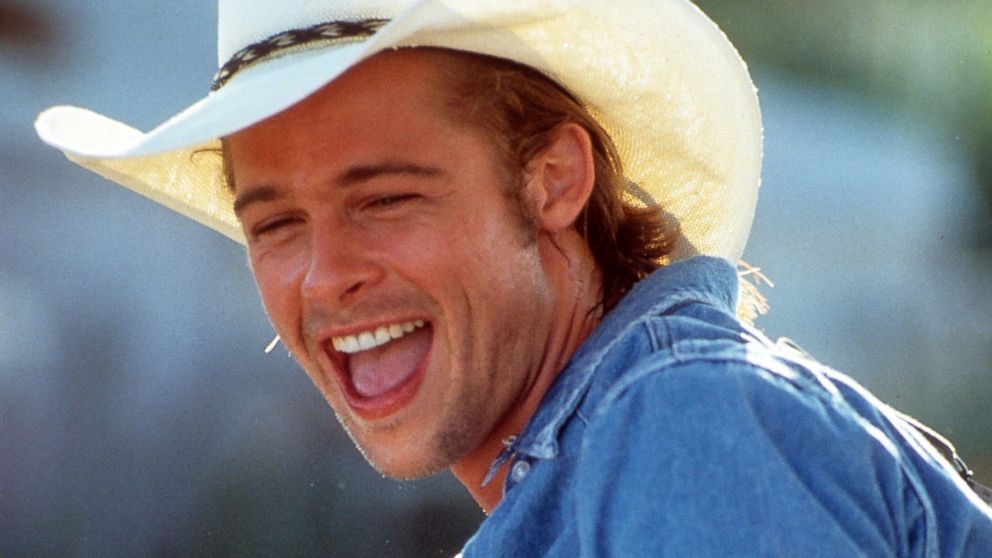
He had $325 in his pocket, a Datsun that barely turned over in the morning, and two credits short of a journalism degree he never finished. Four years later he was on the cover of every magazine on earth. This is how the first $6,000 became $400 million.
Brad Pitt early career is arguably the most studied “outsider arrives in Los Angeles” story in modern Hollywood, and almost every telling of it gets one structural detail wrong. Specifically, Pitt did not become famous the way most actors become famous. Rather, he detonated once in a supporting role that paid him $6,000, and the detonation was so culturally complete that the rest of the industry spent the next four years trying to figure out how to monetize it. Consequently, the gap between his $6,000 Thelma & Louise paycheck in 1991 and his $30 million F1 paycheck in 2025 represents a 500,000 percent career salary increase, which is the largest documented earnings trajectory in modern A-list cinema.
This is the outsider chapter that made every subsequent chapter possible.
The Backstory: Springfield, Missouri to Los Angeles
William Bradley Pitt was born on December 18, 1963, in Shawnee, Oklahoma. Specifically, his family relocated to Springfield, Missouri before he could remember the move. Furthermore, his father, Bill Pitt, managed a trucking company. His mother, Jane Pitt, worked as a school counselor. Additionally, the household was devoutly Southern Baptist, structured around church on Sundays, Boy Scout meetings, and the quiet Midwestern expectation that success meant stability.
The University of Missouri Decision
Pitt enrolled at the University of Missouri in 1982 to study journalism with a focus on advertising. Specifically, he joined the Sigma Chi fraternity and participated in fraternity shows. Moreover, he was two credits short of graduation in the spring of 1986 when he made the decision that defined his entire adult life. Rather than completing the degree, he packed a Datsun 210 and drove west. Consequently, his family was bewildered. Additionally, he had no professional contacts in Los Angeles, no casting agent, no representation, and no structural plan for how to become an actor. He simply understood that movies were not made in Missouri.
The $325 Arrival
Pitt arrived in Los Angeles in early 1986 with approximately $325 in his pocket. Some later accounts have placed the figure closer to $275. Nevertheless, every version of the story agrees that he had roughly three weeks of runway before he needed to find work. Consequently, he took the jobs available to aspiring actors in 1986 Los Angeles. Specifically, he drove limousines for strippers. Additionally, he moved refrigerators for a furniture company. Moreover, he wore a giant chicken suit for El Pollo Loco on Sunset Boulevard, a detail that has become the single most-cited line in Brad Pitt’s biographical mythology.
The Pre-Breakthrough Years: 1987 to 1990
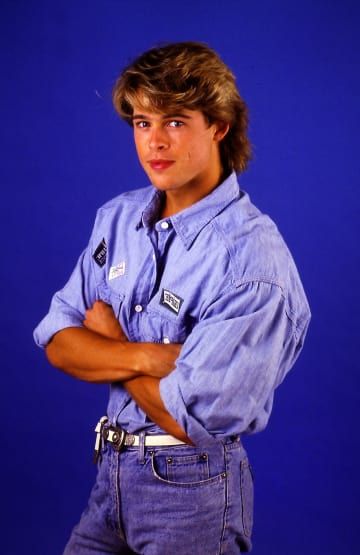
Pitt’s first professional acting work came in 1987. Specifically, he landed uncredited bit parts in Ridley Scott’s No Way Out, Less Than Zero, and No Man’s Land. Furthermore, television offered slightly more traction. Additionally, he appeared in episodes of Another World and Dallas, where he dated co-star Shalane McCall. Moreover, he guest-starred on Head of the Class, where he dated Robin Givens. Consequently, the pattern of dating co-stars became its own industry-recognized career signal. Specifically, Pitt was visibly charismatic on set, the camera loved him, and casting directors began quietly taking meetings.
The Acting Training Under Roy London
Throughout the late 1980s, Pitt studied acting with Roy London, one of the most respected acting coaches in Hollywood. Specifically, London’s students included Sharon Stone, Geena Davis, Michelle Pfeiffer, and many other actors who went on to A-list careers. Furthermore, London’s teaching method emphasized emotional authenticity and physical specificity in a way that separated actors who had genuine craft from actors who merely photographed well. Consequently, the Roy London training is the hidden variable in Pitt’s eventual breakthrough. Specifically, he was not a pretty face who got lucky. Rather, he was a trained actor whose technique happened to be wrapped in a photogenic package that the industry took three years to fully notice.
The Early Girlfriends as Industry Mapping
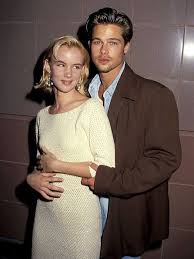
Pitt’s relationships with co-stars during the Brad Pitt early career period functioned as a rough map of his industry positioning. Specifically, he dated McCall on Dallas, Givens on Head of the Class, Jill Schoelen on Cutting Class in 1989, and subsequently Juliette Lewis after meeting her on Too Young to Die? in 1990. Moreover, he and Lewis continued dating through the filming of Dominic Sena’s Kalifornia in 1993. Additionally, the pattern is consistent with what industry observers call the “sets are the network” dynamic. Consequently, Pitt was building relationships with writers, directors, and other actors through every project, which was the structural infrastructure that produced the 1991 breakthrough.
The Thelma & Louise Audition: April 1990
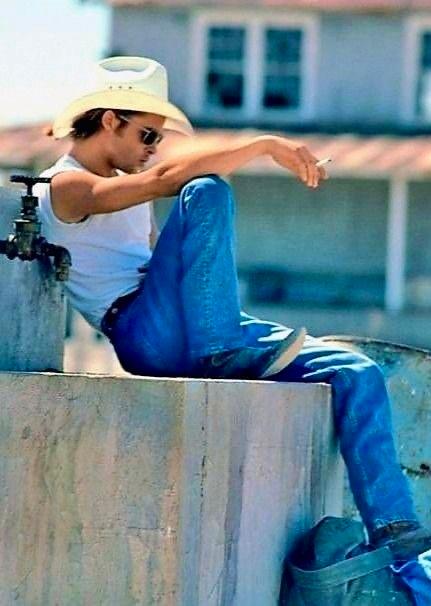
In early 1990, Ridley Scott was casting his adaptation of Callie Khouri’s screenplay Thelma & Louise. Specifically, the J.D. role was a supporting character, a young cowboy-hitchhiker who seduces Thelma (Geena Davis) during the women’s road trip. Furthermore, the J.D. scene is approximately 14 minutes of total screen time in a 130-minute film. Nevertheless, the character’s function within the story was disproportionately important. Specifically, J.D. is the character who permanently tips the narrative from feminist comedy toward full-scale crime drama.
The Casting Dispute: Geena Davis vs Ridley Scott
Two different accounts exist of how Pitt was cast. Specifically, Geena Davis has said in multiple interviews, including a 2020 appearance on The Graham Norton Show, that she personally advocated for Pitt after he “screwed up” his audition because she found him too charismatic to focus. Nevertheless, Ridley Scott told GQ in 2024 that Davis’s memory is incomplete. Specifically, Scott stated: “I lost the Brad I cast about 10 days out. He took another film. I had to look fast. I got two guys, Brad and another guy. Equally kind of attractive. And I said to Geena, ‘Okay, I’ve got two guys. You’re going to read with both.’ She went, ‘This guy, Brad Pitt.’ She thinks she cast him. She didn’t. I already cast him.” Consequently, the casting decision was structurally Scott’s, with Davis providing confirmation rather than selection. Moreover, the distinction matters because the myth of “Geena Davis discovered Brad Pitt” obscures the more accurate reading, which is that Ridley Scott, one of the most technically precise directors in Hollywood, recognized Pitt’s commercial potential before anyone else in the industry did.
The $6,000 Paycheck
Pitt was paid $6,000 for his role in Thelma & Louise. Specifically, that figure reflects his non-star status at the time of casting. Furthermore, the film’s total production budget was $16.5 million, which placed Pitt’s salary at approximately 0.036 percent of total production costs. Consequently, the $6,000 number is less a salary than a procedural formality. Moreover, the actual compensation for the role was not monetary. Rather, it was the four-minute love scene with Davis that became one of the most-discussed sequences in 1990s American cinema.
The Scene That Changed Everything
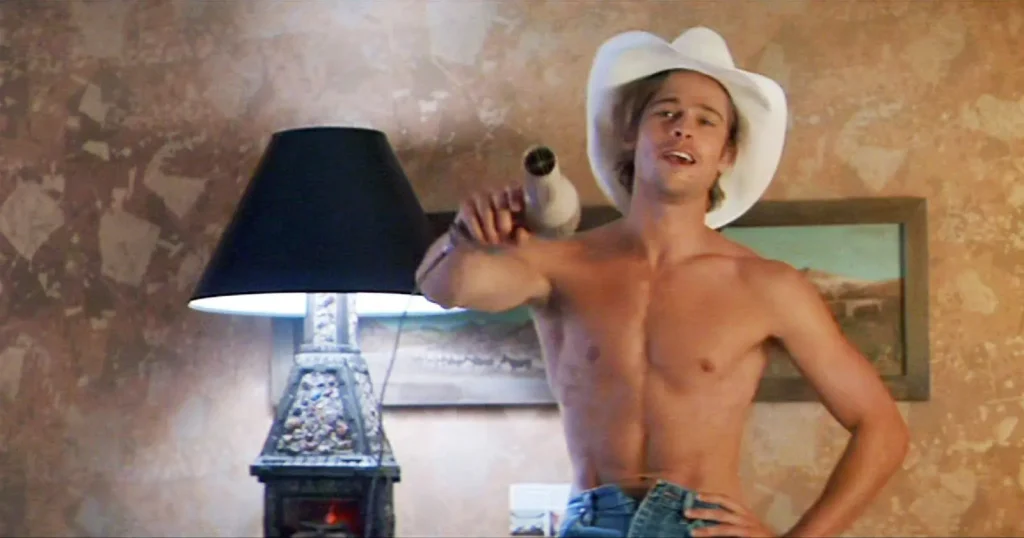
The J.D. and Thelma love scene in Thelma & Louise was shot on a single afternoon in 1990. Specifically, it runs approximately four minutes, shows Pitt shirtless and tan in a motel room, and includes dialogue in which Pitt’s character explains his method for armed robbery with playful, flirtatious specificity. Furthermore, the scene’s immediate cultural impact was not controlled by Ridley Scott, Callie Khouri, or 20th Century Fox. Rather, it was controlled by the audience response, which was seismic. Consequently, by the time Thelma & Louise opened in North American theaters on May 24, 1991, Pitt was no longer a supporting actor. He was a phenomenon that the industry did not yet know how to commercially categorize.
The 1991 Post-Release Fallout
Thelma & Louise grossed $45 million globally against its $16.5 million budget. Specifically, the film earned six Academy Award nominations including Best Director and Best Original Screenplay. Moreover, Callie Khouri won the Best Original Screenplay Oscar. Furthermore, the film is now widely credited with rewriting the rules of the American road movie and contributing to national conversations about sexism and women’s representation in Hollywood.
What Happened to Pitt Immediately After
The 1991 post-release period for Pitt was structurally different from what most outsider breakthroughs produce. Specifically, his next two films after Thelma & Louise were Johnny Suede, a low-budget film about an aspiring rock star, and Cool World in 1992, a live-action and animated fantasy. Additionally, both films received poor reviews and performed weakly at the box office. Nevertheless, the failures did not damage Pitt’s industry positioning. Consequently, the Thelma & Louise momentum was strong enough that two commercial misses could not derail it. Specifically, Robert Redford cast him in A River Runs Through It, which opened in October 1992 and grossed $43 million. Moreover, Redford’s direction extracted a performance from Pitt that People magazine described as “career-making” because it proved he could be more than “a cowboy-hatted hunk.”
Kalifornia and True Romance: The 1993 Pivot
In 1993, Pitt made two films that defined his approach to the subsequent rebellion era. Specifically, Dominic Sena’s Kalifornia cast him as a serial killer drifter opposite Juliette Lewis. Additionally, Tony Scott’s True Romance, written by Quentin Tarantino, gave Pitt a three-minute supporting role as a stoned couch dweller named Floyd. Furthermore, the Floyd scene became one of the most-quoted cameos of the 1990s despite its brief screen time. Consequently, by the end of 1993, Pitt had quietly demonstrated range across dramatic romance, serial killer darkness, and stoner comedy, all within two years of his breakthrough.
The 1994 Consolidation: Interview and Legends
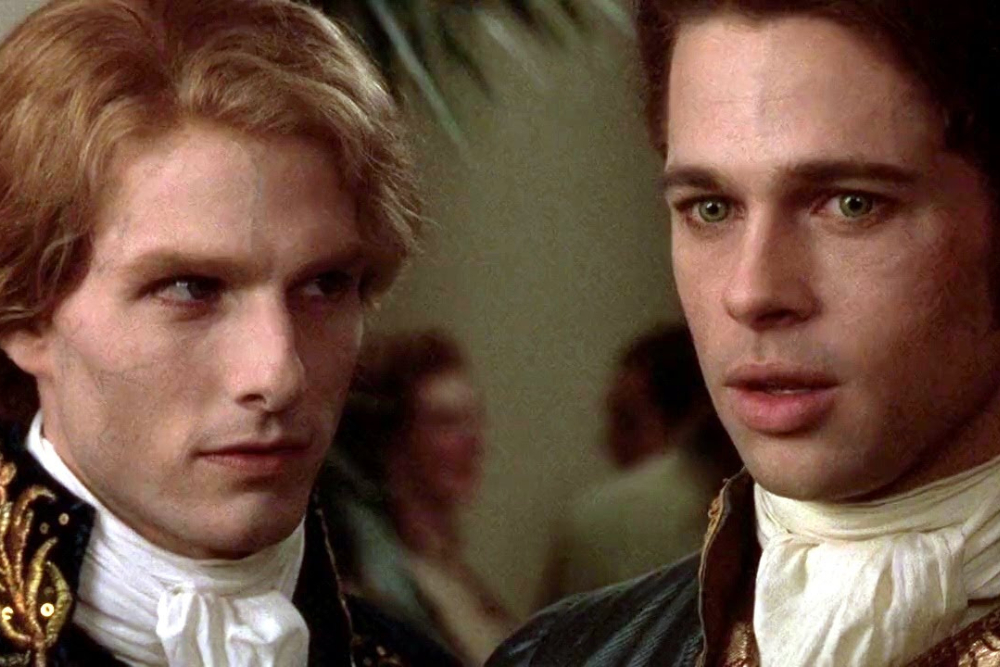
In 1994, Pitt finalized his arrival as a commercial star with two back-to-back successes. Specifically, Neil Jordan’s Interview with the Vampire cast him as Louis de Pointe du Lac opposite Tom Cruise, generating $223 million in global box office against a $60 million budget. Furthermore, Edward Zwick’s Legends of the Fall opened in December 1994 and grossed $160 million globally. Moreover, Legends earned Pitt his first Golden Globe nomination and confirmed his positioning as a romantic leading man with $8 to $10 million commercial quotes.
For the arc of how Pitt subsequently blew up that romantic-lead positioning on purpose, the Brad Pitt Fight Club era deep-dive tracks the deliberate rebellion phase that followed Legends of the Fall and culminated in the 1999 Tyler Durden detonation. Additionally, for the full five-era context, the Brad Pitt net worth pillar treats Era 1 as the detonation phase that preceded everything structural.
The Money: What Era 1 Actually Paid
The Brad Pitt early career salary trajectory from 1987 to 1994 is one of the steepest documented climbs in Hollywood history. Specifically, his pre-Thelma television work paid approximately $500 to $2,000 per episode depending on the series. Furthermore, his Thelma & Louise salary was $6,000. Additionally, Johnny Suede paid him approximately $50,000. Moreover, A River Runs Through It paid him approximately $500,000. Specifically, Interview with the Vampire paid him approximately $3 million, and Legends of the Fall paid him approximately $5 million.
The Cumulative Era 1 Earnings
Across all films and television work from 1987 through 1994, Pitt’s gross pre-tax earnings during the outsider era totaled approximately $12 to $15 million. Consequently, that figure is small relative to his subsequent earning power. Nevertheless, it is a significant sum relative to the $325 he arrived in Los Angeles with in 1986. Moreover, the eight-year climb from $325 to $5 million per film represents an earnings multiple of over 15,000 times his starting capital. Furthermore, the rate of increase was faster than any equivalent A-list earnings climb in the same decade.
The 500,000 Percent Salary Increase: 1991 to 2025
Brad Pitt early career salary of $6,000 for Thelma & Louise in 1991 represents the baseline against which every subsequent Pitt payday can be measured. Specifically, his $30 million salary for F1 in 2025, documented in the Brad Pitt F1 salary deep-dive, represents a 500,000 percent increase from his breakthrough paycheck. Additionally, the exact math is 499,900 percent. Nevertheless, the cleaner 500,000 percent figure is widely cited in industry profiles and functions as useful shorthand for the scale of the career trajectory.
What 500,000 Percent Actually Means
A 500,000 percent salary increase over 34 years is structurally unusual even in Hollywood. Specifically, most A-list actors peak commercially between their tenth and twentieth years of steady work, then plateau or decline. Furthermore, Pitt is one of very few actors whose commercial peak arrived in his early 60s rather than his 30s or 40s. Moreover, the structural reason for the late peak is the operator arc. Specifically, the Plan B Entertainment acquisition and the F1 producer participation together pushed his effective compensation beyond anything he could have earned as a pure actor. For the complete operator breakdown, the Brad Pitt Plan B Entertainment deep-dive walks through the $300 million Mediawan transaction that converted a movie star into a structural equity holder.
Why the Outsider Story Matters
The Brad Pitt early career origin story is not just biographical trivia. Rather, it is the structural foundation that made everything else in his career psychologically possible. Specifically, an actor who arrived in Los Angeles with $325 understands money differently than an actor who inherited connections. Furthermore, an actor who wore a chicken suit on Sunset Boulevard at 23 understands commercial pressure differently than an actor who skipped directly to trained success. Moreover, an actor who was booed at Venice in 1999 and kept going understands career risk differently than an actor who played only the safe choices.
Consequently, the outsider era produced the specific psychological architecture that enabled the rebellion era (which the Fight Club deep-dive tracks), the infrastructure era (the Brangelina power couple deep-dive covers), the operator era (the Plan B deep-dive details), and the late-stage legend era (the sobriety rebuild deep-dive documents). Specifically, each subsequent era built on the Era 1 decision to leave Missouri with $325 and three weeks of runway.
The Comparison: Outsider Arcs in the Same Era
Several A-list peers executed similar outsider arrivals in Hollywood during the same late-1980s window. Specifically, Keanu Reeves arrived in 1986 from Toronto with a beat-up Volvo and no high school diploma. Furthermore, Matthew McConaughey arrived in Austin from his father’s oil pipe business in 1993. Moreover, Johnny Depp arrived in the mid-1980s from Kentucky after dropping out of high school. For the Reeves arc, the Keanu Reeves $380 million net worth story details how a completely different emotional register produced a comparable fortune from a similar outsider starting point.
Why Pitt’s Version Compounded Faster
Reeves’s fortune grew through franchise salaries plus notable generosity. Specifically, Matthew McConaughey’s fortune grew through selective rom-com dominance followed by the McConaissance reinvention. Furthermore, Pitt’s fortune grew differently because he started building production equity in 2001 rather than pursuing pure acting income. Consequently, the Era 1 detonation produced the cultural credibility that made Plan B a legitimate enterprise from founding, which made the 2022 Mediawan sale possible, which produced the $120 to $150 million personal consideration that anchors his current $400 million net worth.
What the $6,000 Actually Bought
Brad Pitt early career’s defining paycheck of $6,000 for Thelma & Louise was never really a salary. Rather, it was an option premium. Specifically, the $6,000 bought Pitt a four-minute scene with Geena Davis that functioned as a nationwide audition tape. Furthermore, the option’s strike price was Pitt’s subsequent career. Moreover, the option’s expiration was never set, which meant the $6,000 continued generating returns for 34 years and counting.
The Missouri kid who arrived in Los Angeles with $325 understood something about Hollywood that most aspiring actors never figure out. Specifically, the first breakthrough does not need to pay. Rather, it needs to detonate. Consequently, Pitt detonated in 14 minutes of screen time on a Ridley Scott film in 1991, and the detonation’s downstream value now approaches half a billion dollars when Château Miraval is included in the aggregate. For the full context of the Miraval asset and the February 2027 trial that could unlock that additional equity, the Brad Pitt Chateau Miraval deep-dive covers the complete business history.
The $325 multiplied by 1.2 million. The Datsun is long gone. However, the outsider who showed up with three weeks of runway and a chicken suit is still compounding the 1991 detonation, decade after decade. Specifically, that is what Era 1 actually built.
Everything else is arithmetic.
The Social Life Reader Chapter
If you read this far, you are the kind of person who understands that the most valuable moments in any career are almost always the ones that pay the least in the room. That is the water you are already swimming in. Most readers scroll. However, you stayed. That is the only actual difference between audiences and the people they read about.
Social Life Magazine covers the kind of stories most outlets miss or sanitize. If your brand, firm, or startup sits at the intersection of ambition, reinvention, or outsider-to-insider trajectories, our editorial team takes direct submissions for feature coverage. Reach out here to start the conversation.
For brands that want to move faster, our Submit A Paid Feature program offers three production tiers at $975, $3,200, and $6,500. Each tier includes editorial development, SEO-optimized placement, and distribution through the full Social Life network.
Our email list reaches 82,000 subscribers who actually open, read, and act. If your audience sits between Park Avenue and Montauk, join the list here.
Polo Hamptons returns to Bridgehampton in July 2026 with 1,200 guests, Getty Images coverage, and seven years of BMW title sponsorship behind it. Sponsorships, cabanas, and activation slots are available now at polohamptons.com.
The print edition of Social Life Magazine delivers 25,000 copies per issue to the boutiques, lobbies, and living rooms where Hamptons decisions actually get made from Westhampton to Montauk each summer, and to Upper East Side doorman buildings each fall and winter. Subscribe here.
If this publication has added value to your week and you want to support independent luxury journalism that does not answer to algorithms, contribute directly at our donation page.
Read Next
- Brad Pitt Net Worth 2026: The Five Lives of a Movie Star
- Brad Pitt Fight Club: The Rebellion Era That Killed Pretty Boy
- Brad Pitt Angelina Jolie: The Power Couple That Became Infrastructure
- Brad Pitt Plan B Entertainment: The $300M Operator Play
- Brad Pitt Sobriety: The $400M Rebuild After Rock Bottom
- Brad Pitt F1 Salary: The $30M Payday That Grossed $631M
- Brad Pitt Chateau Miraval: Inside the $164M Wine War
- Keanu Reeves Net Worth: The $380M Kindness Economy
Author

Written by
Recent Posts

AI for personal finance: where PennyGuard fits

How to Pick a Homecoming Dress for Your Body Type (and Feel Amazing in It)

World Cup Injury Attorney for Vancouver Events
What a 3-Carat Engagement Ring Actually Costs in 2026: The Real Numbers
The Skincare Habits That Make a Real Difference Over Time
Categories
- Art
- Articles
- Business of Luxury
- Celebrities
- Culture
- Entertainment
- Events
- Faces of Summer 2026
- Fashion
- Fashion & Style
- Featured
- Finance
- Food, Spirits, Wine
- Hamptons
- Hamptons Celebrities
- Health
- Health & Beauty
- Lifestyle
- Luxury Lifestyle
- Press
- Profiles
- Real Estate
- Technology
- The Chronicles
- Travel
- Uncategorized
- Weddings