
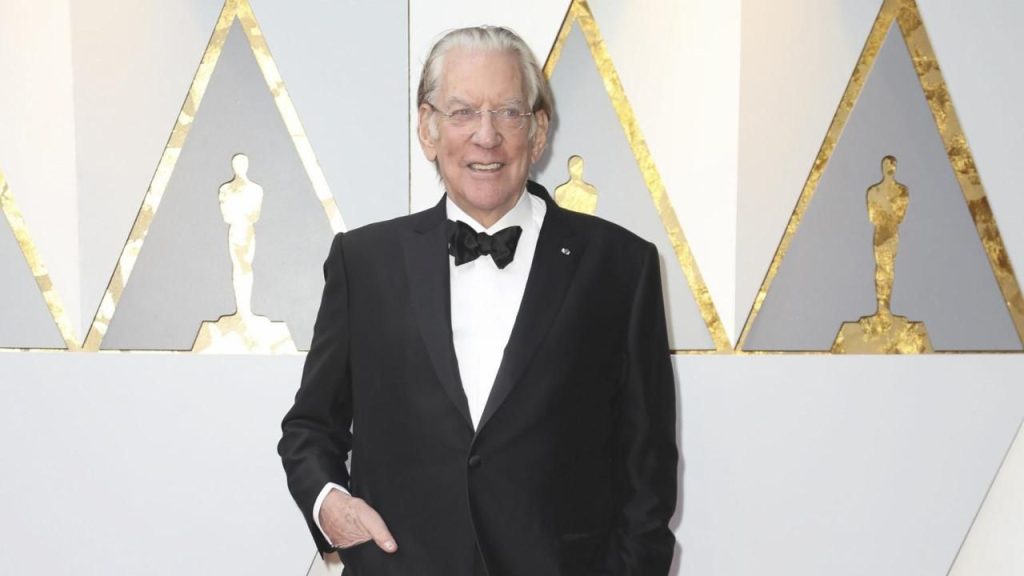
The producer told him exactly why he was wrong for the part. Donald Sutherland recalled the conversation his entire life, repeating it in interviews across six decades. A guy-next-door type was what the role required. After watching the audition tape, the producer had decided that Sutherland did not look like he had ever lived next door to anybody. The Donald Sutherland net worth conversation begins in that humiliation, because Sutherland never forgot the line and never forgave it, and the entire architecture of his subsequent career was built on the proposition that the guy-next-door was the most overrated commodity in American cinema.
He was 6’4″, with the kind of long-jawed face that broke conventional Hollywood casting algorithms in 1962. The studios wanted Tab Hunter clones. Sutherland looked like a Dutch master had painted him in three days and then died of exhaustion. The combination of physical eccentricity and classical training would later become his entire commercial advantage, but in his late twenties, sitting in London after graduating from the London Academy of Music and Dramatic Art, the eccentricity read only as a problem.
By the time he died on June 20, 2024 at age 88, the Donald Sutherland net worth had compounded to approximately $60 million per Celebrity Net Worth, anchored across four properties on three continents and a 200-credit catalog that continues generating residual income across his estate. He never won a competitive Academy Award. He received an honorary Oscar in 2017. The discrepancy between the catalog and the trophy case is the entire story.
The Saint John Kid Who Survived Three Diseases Before Twelve
Donald McNichol Sutherland was born July 17, 1935 in Saint John, New Brunswick. His father Frederick worked as a salesman of gas, electricity, and a few other commodities that small-town Canadian commerce required in the late 1930s. His mother Dorothy taught math. The family architecture was unremarkable until the medical record began accumulating.
By age twelve, Sutherland had survived infantile paralysis (polio), rheumatic fever, and spinal meningitis. The combination should have killed him. Spinal meningitis alone carried roughly 50% mortality in the pre-antibiotic 1940s. Sutherland recovered from all three and emerged with a constitution that doctors described as anomalously resilient. The diseases left him with chronic respiratory vulnerability that would later contribute to the chronic obstructive pulmonary disease that ended his life.
The childhood medical record is not biographical filler. It is the foundation of how Sutherland approached his career across the next seventy years. An actor who survived three potentially fatal childhood illnesses develops a specific relationship to the question of what work is worth doing. Sutherland’s later willingness to take supporting roles for filmmakers he respected, regardless of compensation, traces directly to the lesson three diseases had taught him before he hit puberty. Time was the only asset that could not be recovered.
His family moved to Bridgewater, Nova Scotia when Donald was nine, and his early adolescence ran through small-town Maritime Canada with the kind of cultural specificity that would later distinguish him from his American peers across the entire 1960s leading-man cohort. He worked as a corresponding teenage news commentator on radio station CKBW in Bridgewater. The voice was already the asset.
The Engineering Degree He Almost Got Instead
Sutherland enrolled at Victoria College, University of Toronto in 1952 with a double major in engineering and drama. Engineering was the practical track. His father wanted him to have a respectable Canadian profession. Drama was the actual interest. Across four years he tilted gradually toward drama, performed in student productions, and graduated in 1958 having decided definitively that he would not be an engineer.
The detail matters for understanding the Donald Sutherland net worth architecture later. Most actors of his generation who came from working-class or lower-middle-class backgrounds arrived in the profession with no fallback plan and no analytical training. Sutherland arrived with both. The engineering coursework had given him a structural understanding of how complex systems decompose into manageable parts, and that habit of analysis would later define how he approached scripts, careers, and contract negotiations. He read film projects the way an engineer reads a blueprint, looking for load-bearing elements rather than aesthetic flourishes.
He left Toronto for England in 1957, before completing his Toronto degree, and enrolled at the London Academy of Music and Dramatic Art. LAMDA was, and remains, one of the serious British conservatories. It produced classically-trained actors rather than celebrities. Sutherland graduated in 1959 having absorbed the classical foundation that would later distinguish him from American-trained peers across the entirety of his career.
He spent a year at the Perth Repertory Theatre in Scotland before relocating to London for the BBC television work that would constitute his apprenticeship.
The Dirty Dozen And The Lee Marvin Education
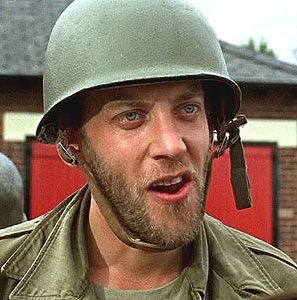
Robert Aldrich cast Sutherland as Vernon Pinkley in The Dirty Dozen in 1967. The film was a Lee Marvin vehicle assembled around a star-packed ensemble that included Charles Bronson, George Kennedy, Telly Savalas, and Ernest Borgnine. Sutherland’s role was the smallest of the named principals, but his single comedic scene impersonating a general during the inspection sequence became the moment audiences remembered.
The film grossed $45 million worldwide on a $5 million budget. Aldrich had assembled it as a cynical commercial exercise, banking that Lee Marvin’s post-Cat Ballou box office heat would carry the project. The casting director’s decision to fill the supporting bench with character actors rather than emerging leading men gave Sutherland his first major American screen credit. He was 32 years old. The Donald Sutherland net worth at this point was effectively zero, anchored only by the residual rights to BBC television work that would never accrue significant licensing value.
What The Dirty Dozen taught him was the lesson he would build the rest of his career around. Lee Marvin operated on set with a specific philosophy about supporting roles: the smaller the part, the more the audience would notice the actor who actually did something with it. Sutherland watched Marvin negotiate his contracts, watched him manage his presence on the call sheet, and watched him consolidate ensemble screen time around his character through quiet on-set politics rather than explicit power moves. The lesson would compound across the next sixty years.
M*A*S*H, Klute, And The 1970 Breakthrough Year
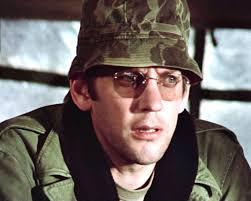
Robert Altman cast Sutherland as Hawkeye Pierce in M*A*S*H in 1969. The film opened in January 1970 and grossed $81 million domestically on a $3.5 million budget. Altman’s directorial approach was the antithesis of the studio professionalism Sutherland had absorbed under Aldrich. Cameras ran continuously. Actors overlapped dialogue. Improvisation was encouraged. Sutherland and his co-star Elliott Gould initially considered Altman incompetent and tried to have him fired. They were wrong, and the film made all three of their careers.
Within the same calendar year, Sutherland appeared in Brian G. Hutton’s Kelly’s Heroes as the anachronistic hippie tank commander Oddball, and Alan J. Pakula’s Klute opposite Jane Fonda. Klute was the prestige inflection point. Pakula’s psychological thriller earned Fonda the Best Actress Oscar and established Sutherland as a leading man capable of carrying serious dramatic material opposite Academy-tier scene partners.
The Donald Sutherland net worth in 1970 cleared seven figures for the first time. His M*A*S*H compensation alone reached approximately $75,000 in 1970 dollars, a figure that would equal roughly $625,000 in 2026 purchasing power. The Klute fee was higher. Kelly’s Heroes was higher still because of the foreign distribution structure MGM had built around the project.
What 1970 established was the pattern that would define his subsequent fifty years. Sutherland could move between commercial action work, Altman-style ensemble experimentation, and Pakula-tier prestige drama without losing credibility in any register. The flexibility was the asset.
Don’t Look Now And The Method He Refused
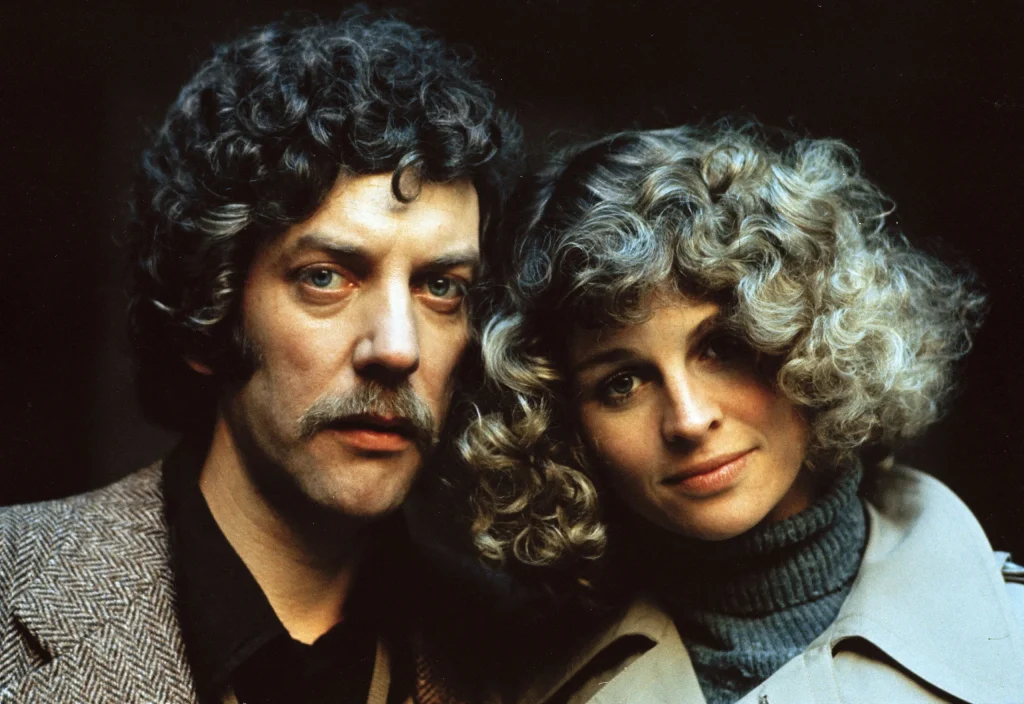
Nicolas Roeg cast Sutherland and Julie Christie in Don’t Look Now in 1973. The film required something neither actor had previously done: a sex scene whose technical specificity made every other 1970s simulated-sex sequence look amateur. Roeg shot the scene across two days and edited it across the central marital trauma that drives the entire film’s psychological architecture.
The film grossed $4 million domestically on a $1.1 million budget, modest commercial returns that did not capture the cultural impact. Don’t Look Now became the canonical British psychological horror film of the 1970s, and Sutherland’s performance as the grieving architect father has been studied in every serious film school for fifty years.
What Roeg’s direction extracted from Sutherland was the willingness to act with his entire body rather than his face alone. The methodology ran counter to the American Method tradition that dominated 1970s leading-man performance, and Sutherland would later describe his anti-Method philosophy in interviews as a deliberate rejection of the navel-gazing style that had defined his generation. He preferred to construct characters from external observation rather than internal excavation. That engineering training had not left him.
His 1900 production with Bernardo Bertolucci followed in 1976, alongside Robert De Niro and Gérard Depardieu. The film ran 317 minutes in its uncut version. Sutherland’s compensation was approximately $300,000 plus a back-end share that never materialized commercially because the film’s commercial release was so heavily compromised by Bertolucci’s running-time conflicts with Paramount.
The Animal House Negotiation That Cost Him $18 Million
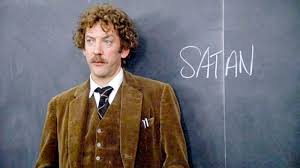
John Landis approached Sutherland in 1978 to play Professor Dave Jennings in National Lampoon’s Animal House. The casting was a personal favor. Landis had babysat Sutherland’s son Kiefer in earlier years, and the friendship was the access point. The studio negotiation that followed has become Hollywood lore, repeated in every business-of-Hollywood book published in the past four decades.
Universal Pictures initially offered Sutherland $35,000 plus 2.5% of net profits to take the role. Sutherland declined. Universal raised the offer to $35,000 plus 15% of gross earnings. Sutherland declined again. He told Landis he would only take the role if Universal paid him a flat upfront fee with no profit participation, because he did not believe the film would generate revenue worth participating in. Universal accepted the proposal. Sutherland received approximately $35,000 to $50,000 for two days of work, depending on which subsequent retelling you trust, and walked off the set having successfully negotiated himself out of one of the most consequential profit-participation deals in modern Hollywood history.
Animal House grossed $141 million worldwide on a $3 million budget
Had Sutherland accepted the 15% gross-earnings deal, his Donald Sutherland net worth would have increased by approximately $18 million in 1978 dollars from that single negotiation. His estate would have inherited the position. The catalog residuals would have continued compounding for decades.
He told the story publicly across the rest of his life with the kind of self-aware humor that distinguished him from actors who refused to acknowledge their financial mistakes. The negotiation became, retrospectively, one of the few signature anti-Costner moments in his career. Where Kevin Costner spent forty years building catalog ownership, Sutherland spent the same forty years cheerfully recounting the day he had refused exactly the kind of structure Costner would later make his career thesis. Two opposite philosophies, two opposite outcomes.
Ordinary People And The Award He Should Have Won
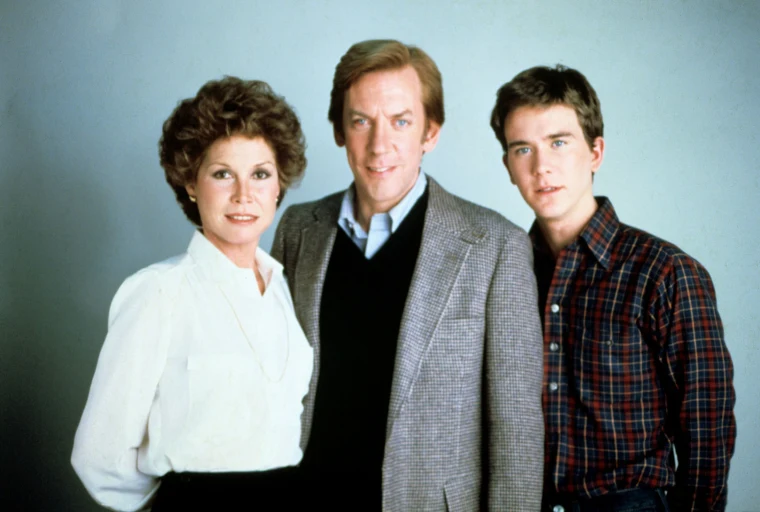
Robert Redford cast Sutherland as Calvin Jarrett in Ordinary People in 1980. The film was Redford’s directorial debut. It would win Best Picture, Best Director, Best Adapted Screenplay, and Best Supporting Actor (for Timothy Hutton) at the 53rd Academy Awards. Sutherland was not nominated.
The Academy Award snub became one of the most discussed casting-vs-recognition gaps in modern Oscar history. Sutherland’s performance as the emotionally repressed father whose family fractures after his son’s brother dies in a sailing accident is widely considered the finest of his career. Roger Ebert, in his original 1980 review, described Sutherland’s work as a model of how restraint could carry more dramatic weight than overt performance. The Academy disagreed. The historical record subsequently sided with Ebert.
What Ordinary People established was the structural pattern that would define the rest of Sutherland’s relationship with awards bodies. He would do prestige work. Critical recognition would follow. Competitive Oscars would consistently go to other actors. That pattern would repeat through Eye of the Needle (1981), A Dry White Season (1989), Oliver Stone’s JFK in 1991 where his 16-minute “X” monologue was a masterclass, and Six Degrees of Separation (1993).
His balance sheet continued compounding throughout this period despite the absence of statuettes. His Ordinary People fee was approximately $500,000. Eye of the Needle paid $1 million. JFK compensation, despite being for only two days of work, ran approximately $400,000 because Stone needed his presence to anchor the film’s central exposition.
The Quebec Compound And The Mortgages He Could Not Stop Mentioning
Sutherland purchased a property in Georgeville, Quebec in 1977. The village sits on the eastern shore of Lake Memphremagog in the Eastern Townships, approximately 90 minutes southeast of Montreal. He referred to the property in interviews as his emotional home and occupied it during summer months for nearly five decades. The property was never publicly listed, and its valuation has not been reported, though comparable Eastern Townships lakefront estates trade in the $4 million to $8 million range as of 2026.
Sutherland’s real estate architecture extended across four properties on three continents. The Georgeville compound anchored Quebec. A Santa Monica beach house, which he had personally designed and lived in for thirty years, was listed in January 2024 for $3.676 million. His Paris apartment served as the European base across his Bertolucci-era European production work. Meanwhile, a Miami condominium served as his medical-care base across the final years of his life, and was the location where he died in June 2024.
The Mortgages-To-The-Armpit Disclosure
He told The Guardian in multiple interviews across the 2010s that he carried significant mortgage debt across his property portfolio. “I have mortgages up to my armpit, though” became one of his most-quoted self-deprecating lines about his finances. The disclosure was both honest and strategically positioned. By publicly acknowledging his real estate leverage, Sutherland defused the kind of net worth speculation that would otherwise have inflated public estimates of his liquid wealth.
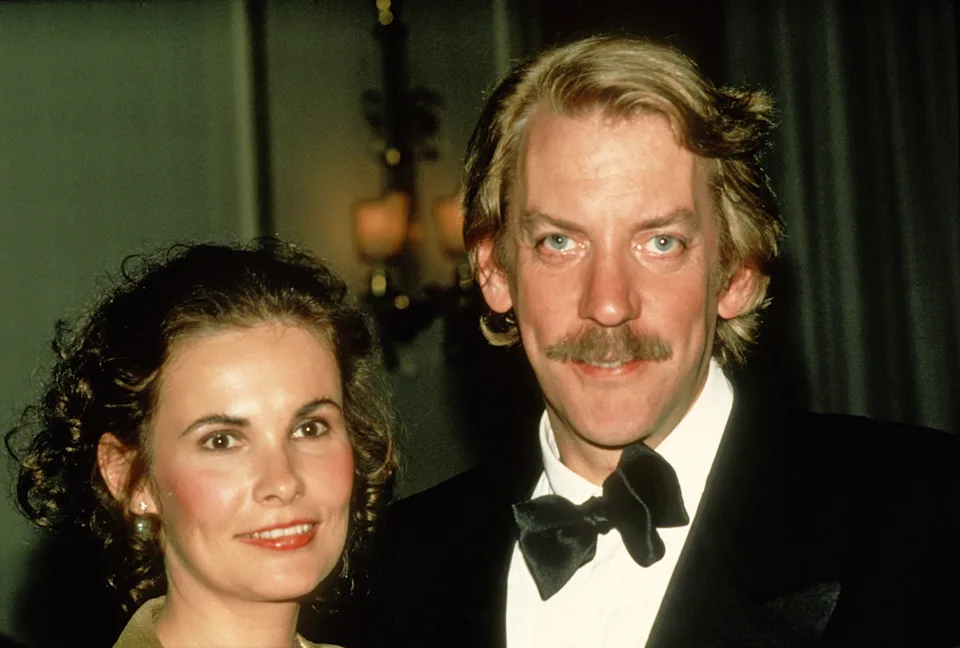
His marriage to Francine Racette, a French-Canadian actress he met during 1972 production work and married that same year, anchored the personal architecture for fifty-two years. Racette outlived him. That marriage produced three sons (Roeg, Rossif, and Angus), all of whom worked across various branches of the entertainment industry, joining Sutherland’s elder children Kiefer (from his second marriage to Shirley Douglas) and Rachel (Kiefer’s twin) in what became one of the most extensively-acting Canadian family dynasties of the modern era.
The Hunger Games Late-Career Renaissance
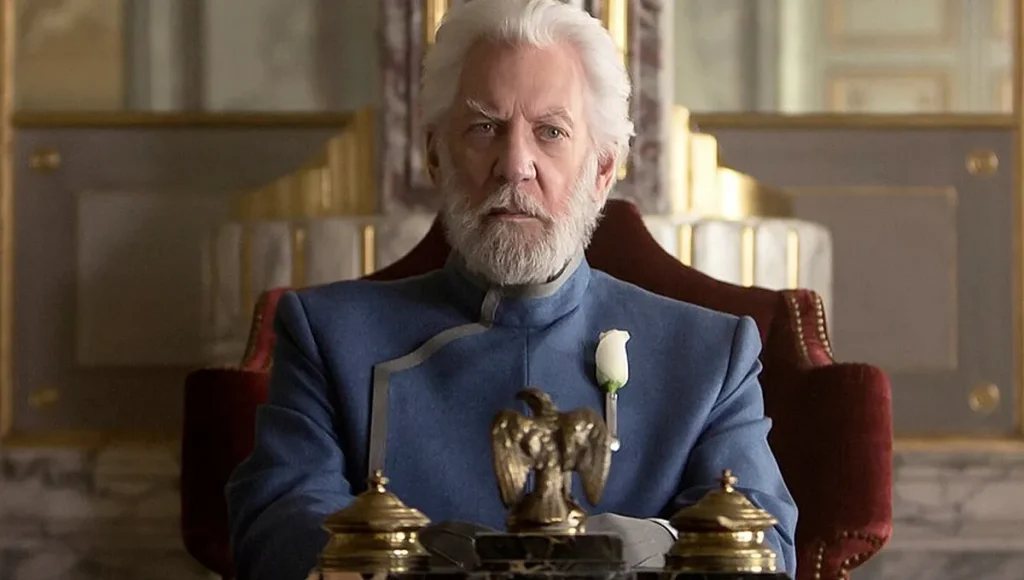
Gary Ross cast Sutherland as President Coriolanus Snow in The Hunger Games in 2011. That role required something the 76-year-old Sutherland had not previously delivered at scale: a villain whose menace was entirely contained in stillness rather than action. Sutherland built President Snow as a horticulturalist who happened to govern a dystopia, and the casting choice paid off across four films and approximately $3 billion in cumulative worldwide gross.
His compensation across the Hunger Games franchise has been variously reported between $1 million and $5 million per film. Industry estimates suggest the cumulative four-film payout reached approximately $10 to $15 million across 2012-2015, plus participation rights on certain ancillary streams. The role introduced Sutherland to a generation of audiences born after his Ordinary People performance, and the cultural permanence of President Snow has compounded across streaming licensing in the decade since the franchise wrapped.
The trajectory of his late career echoes the structural pattern documented in Brian Cox’s Succession-era renaissance, where four decades of classical stage and screen work compound into late-career marquee status when the right material arrives. Cox hit that inflection point at 75 with Logan Roy. Sutherland hit it at 76 with President Snow. Both actors had been famous for forty years before mass audiences finally noticed them.
His subsequent work in The Undoing (HBO, 2020) and Trust (FX, 2018) added prestige limited-series compensation to the late-career architecture. Total post-2010 contribution to his fortune conservatively reached $25 to $30 million across the final fourteen years of his life.
The Honorary Oscar And The Memoir That Got Blocked
Academy of Motion Picture Arts and Sciences awarded Sutherland an Honorary Oscar at the 2017 Governors Awards. That statuette was the Academy’s institutional acknowledgment that he had been one of the most accomplished American screen actors of the late 20th century without ever receiving a competitive nomination across his six-decade career. His acceptance speech ran approximately three minutes, and concluded with the line that became his most-quoted public statement: “I wish I could say thank you to all of the characters that I’ve played, and thank them for using their lives to inform my life.”
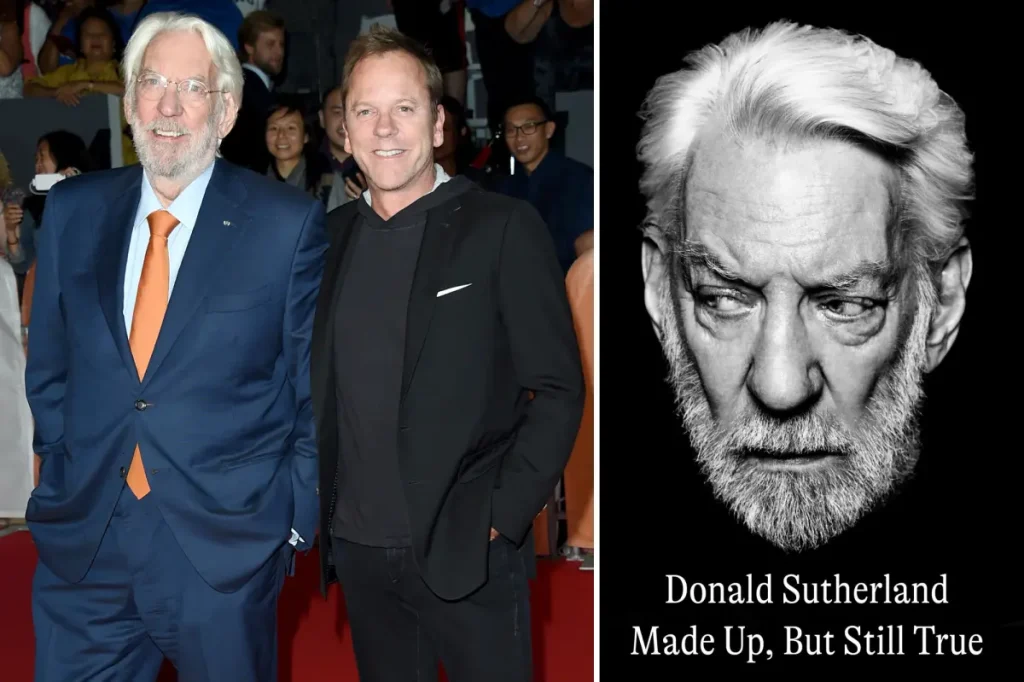
Sutherland completed work on his memoir Made Up, But Still True in 2024, with original publication scheduled for November 12, 2024 through Viking Canada and Penguin Random House’s Crown imprint in the United States. The publication was rescheduled to February 2026 following his death. In October 2025, Penguin Random House sued the Sutherland estate over the manuscript, alleging that his family had deliberately blocked the book’s release and seeking the return of a $400,000 advance.
Memoir litigation as of early 2026 remains unresolved. The lawsuit is unusual in publishing because most posthumous celebrity memoirs proceed to publication regardless of family disputes, and the specific allegations against the Sutherland estate suggest internal disagreements about which biographical material should be made public.
The Real Donald Sutherland Net Worth Math At Death
Celebrity Net Worth lists the Donald Sutherland net worth at $60 million as of his death on June 20, 2024. That figure reflects liquid plus moderately liquid assets and is the most conservative public estimate available. Aggressive valuations including the four-property real estate portfolio, the back-catalog residual rights, and the Hunger Games participation positions push the total estate value closer to $80 to $90 million.
The compositional breakdown looks roughly like this. Real estate represents approximately $20 to $25 million across the Georgeville, Santa Monica, Paris, and Miami properties, less reported mortgages. Back-catalog residuals from the 200-credit filmography generate ongoing income that continues compounding for the estate. The Hunger Games franchise alone produced an estimated $10 to $15 million across the four films, plus subsequent streaming and licensing.
His honorary Oscar carried zero financial value. The career it acknowledged carried significant ongoing value. That distinction, between recognition and compensation, is the architecture of how Sutherland built his fortune across sixty years of consistently saying yes to filmmakers he respected and consistently not winning competitive awards.
The Donald Sutherland net worth structure echoes the patterns documented in the Social Life Magazine celebrity net worth rankings 2026. His holdings were diversified across geography rather than concentrated, oriented toward long-term family use rather than financial optimization, and dependent on continuous working compensation rather than ownership leverage. The structure was the choice. The choice was the man.
What He Built That No Animal House Negotiation Could Take Back
The 200-credit catalog will outlast every Oscar ceremony, every studio regime change, every streaming platform consolidation, and every memoir litigation. M*A*S*H will play forever. Klute will play forever. Don’t Look Now will play forever. Ordinary People will play forever. JFK will play forever. The Hunger Games will play forever. Animal House will play forever, even though Sutherland negotiated himself out of the gross participation.
His willingness to do supporting work for filmmakers he respected, regardless of compensation, became the Sutherland signature across six decades. He took the Animal House flat fee. The JFK day rate was small. Smaller percentages were fine because the directors and the projects mattered more than the math. The cumulative consequence of those choices was a career that earned him the honorary Oscar he had clearly deserved competitively but never won.
Most actors at 88 are managing decline. Sutherland at 88 was finishing his memoir, completing The Hunger Games of Mexico project for Lionsgate, and giving his final interviews about the half-century of work he was genuinely proud of having done. The Donald Sutherland net worth at $60 million on the public ledger and $80 to $90 million on the actual ledger represents only the financial residue of a career that mattered to American cinema in ways the Academy could not measure until 2017.
The CassWorld Take
For Brands Reading Between The Lines
A fish does not notice the water. A reader does not notice the architecture. That is the entire point. Furthermore, it is the entire opportunity for the brand founder, fund manager, or fashion house creative director who has just read this far and is, without having fully realized it yet, about to scroll down and click one of the following links.
If you are a brand, a founder, a creative director, or an in-house marketing lead who has read this far and would like to be considered for an editorial feature in Social Life Magazine’s print or digital ecosystem, the editorial team reviews brand submissions year-round. Reach out via the Social Life editorial contact page.
Submit A Paid Feature
For Canadian luxury brands, prestige spirits portfolios, and the kind of legacy publishing partners that recognize a 60-year career arc when they see one, the Submit A Paid Feature page is the fastest entry point. Our editors build the placement to fit your audience, not ours.
The 82,000-Reader Email List
Join the 82,000+ readers who receive the Social Life Magazine email digest weekly. The list reaches the affluent New York and Out East audience that drives luxury brand purchase decisions across beauty, spirits, hospitality, finance, and fashion. Sign up via the Social Life Magazine email signup form.
Polo Hamptons 2026
For brands ready to be present in front of the demographic that quotes President Snow’s Hunger Games speeches at dinner parties and considers Ordinary People a foundational Connecticut text, Polo Hamptons 2026 is the marquee summer activation. Title sponsor BMW returns for its eighth consecutive year. Tickets, cabanas, and remaining sponsorship packages are available now.
Print Subscription
Subscribe to the print edition of from Social Life Magazine and hold 23 years of Out East cultural authority in your hands. Five summer issues are delivered Memorial Day through Labor Day. Plus the Fall and Winter editions reaching Upper East Side doorman buildings. Print subscriptions are available at the Social Life subscription page.
Support Independent Journalism
If this article sharpened your thinking, consider supporting independent luxury journalism. Donate $5 and keep the signal clean. Buy us a coffee here.
The Donald Sutherland net worth story is a rare 60-year career. He survived three childhood diseases, refused $18 million on Animal House, and never won a competitive Oscar. He did quietly built a $60 million estate across four properties on three continents. That proves the catalog is the asset, and the trophy case is the noise. Print the architecture. Bookmark this page.
Written by CassWorld. Cass Almendral is Head of Business Development at Social Life Magazine and Co-Founder of Polo Hamptons. Reach editorial at [email protected].
Author

Written by
Recent Posts
Get Panama Residency in 30 Days — A Simple Look at Mercan’s Easy Program Process
How to Choose a Stay for a Multigenerational Resort Trip
How Family Property Disputes Can Affect Relationships and Long-Term Plans

Choosing a Reformer for the Life You Already Have

Artful Living: Unique Gifts With A Creative Edge
Categories
- Art
- Articles
- Business of Luxury
- Celebrities
- Culture
- Entertainment
- Events
- Faces of Summer 2026
- Fashion
- Fashion & Style
- Featured
- Finance
- Food, Spirits, Wine
- Hamptons
- Hamptons Celebrities
- Health
- Health & Beauty
- Lifestyle
- Luxury Lifestyle
- Press
- Profiles
- Real Estate
- Technology
- The Chronicles
- Travel
- Uncategorized
- Weddings