
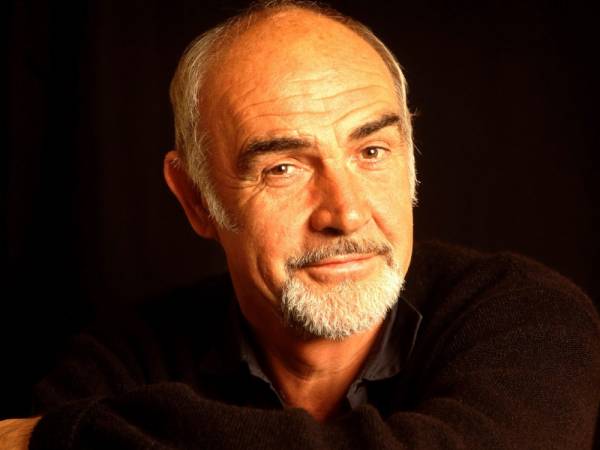
The producers wanted Cary Grant. Cary Grant turned them down. The Sean Connery net worth story begins in that rejection. Albert R. Broccoli and Harry Saltzman, the two men who had purchased the screen rights to Ian Fleming’s James Bond novels in 1961, then offered the role to Patrick McGoohan, who refused on moral grounds. They considered Roger Moore, who was unavailable. They considered James Mason, who passed. By the time Connery walked into the Eon Productions office on London’s South Audley Street in autumn 1961, the casting search had been running for nearly a year, and Broccoli’s wife Dana had to convince her husband that the unrefined 31-year-old Edinburgh actor with the unfashionable working-class accent could plausibly play a Cambridge-educated Royal Navy commander who drank vodka martinis stirred and not shaken.
The Sean Connery net worth conversation begins in that meeting. He was paid $16,000 for Dr. No. The 1962 production grossed $59 million worldwide on a $1.1 million budget. By the time Connery filmed his final official Bond performance in Diamonds Are Forever in 1971, his per-picture rate had climbed to $1.25 million plus 12.5% of gross receipts. The escalation curve from $16,000 to $1.25 million plus participation across nine years remains one of the steepest negotiating arcs in modern Hollywood history.
By the time he died on October 31, 2020 at age 90, the Sean Connery net worth had compounded to approximately $350 million per Celebrity Net Worth, anchored across Lyford Cay in the Bahamas and a 70-credit catalog that continues generating residual income across his estate. He turned down Gandalf in The Lord of the Rings because he did not understand the script, walking away from a $10 million per film salary plus 15% of gross receipts that would have generated approximately $450 million in additional career earnings. That single negotiation defines the rest of his story.
The Edinburgh Milkman Who Posed Nude For Art Students
Thomas Sean Connery was born August 25, 1930 in Fountainbridge, Edinburgh. His father Joseph worked as a truck driver and factory worker. His mother Euphemia worked as a laundress. The family lived in a tenement flat without indoor plumbing for the first decade of Connery’s life, and the working-class Edinburgh neighborhood that produced him remained the cultural anchor he carried into every subsequent role.
He left school at 13 and took the first of what would become a sequence of working-class jobs that defined his pre-acting decade. Milkman in Edinburgh. Lorry driver. Lifeguard. Coal shoveler. Brick layer. Coffin polisher. Each job paid scale wages, and each one taught Connery a specific lesson about manual labor that he would later draw on across his entire screen career when playing characters who had survived hard physical work before climbing into prestige roles.
At 16 he joined the Royal Navy. The service lasted three years before stomach ulcers forced his medical discharge at 19. Most accounts of Connery’s biography skip this period quickly, but the Navy years are structurally consequential. The discipline taught him how to carry himself with the kind of military bearing that James Bond would later require, and the medical discharge taught him that his body was the asset he could not insure. Every subsequent fitness regimen across his sixty-year career traced back to the lesson the Navy ulcers had taught him at 19.
The Mr. Universe Years
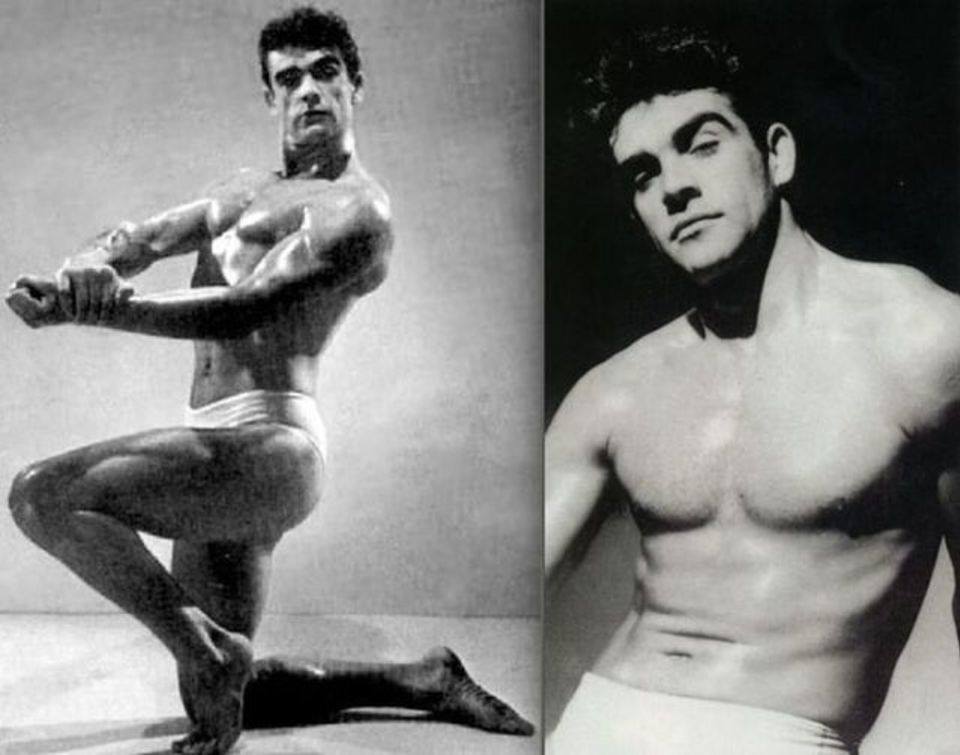
He returned to Edinburgh and worked at the Edinburgh Art School as a nude model for aspiring painters. The work paid hourly and required him to hold poses for ninety-minute stretches. Most actors who later achieved his stature would have buried this detail. Connery told the story publicly across his entire life, because the Sean Connery net worth philosophy he later developed depended on the proposition that any honest work was worth doing. He competed in the Mr. Universe contest in 1953 and finished third in the tall man’s division. Bodybuilding training had become routine.
The Six Years Before Bond That Almost Broke Him
Connery joined the South Pacific touring company in 1953 and spent two years performing on stage across the United Kingdom. That work paid scale wages and required relentless travel. By 1956 he had landed his first television role in a BBC episode of Dixon of Dock Green, followed by a starring turn in the BBC’s 1957 production of Requiem for a Heavyweight as Mountain McLintock, the broken boxer whose career-ending injury forces him into the ring as a wrestler.
The Requiem for a Heavyweight performance ran 90 minutes live on British television. Connery was 26. Critics praised the work. Casting directors noticed. The film offers that followed across 1957 and 1958 included Another Time, Another Place opposite Lana Turner, and Walt Disney’s Darby O’Gill and the Little People in 1959. Neither film generated commercial heat.
What the pre-Bond years taught him was the lesson that would later distinguish his negotiating posture from every other working-class British actor of his cohort. Acting paid less reliably than Edinburgh manual labor. The career was structurally precarious. Connery responded by treating every contract as a final opportunity to consolidate financial security, which is why the Bond negotiation in 1961 produced a deal weighted heavily toward upfront cash rather than backend participation. He did not yet trust the Bond franchise to compound, and the Sean Connery net worth structure during those early years reflected the working-class skepticism that defined his entire generation.
The Cary Grant rejection mattered structurally. By the time Eon Productions reached Connery, the role had already been offered to and declined by half a dozen actors with stronger screen credentials. He arrived as the bargain-bin choice, and the contract Broccoli and Saltzman extended reflected that positioning.
Dr. No And The $16,000 That Built A Franchise
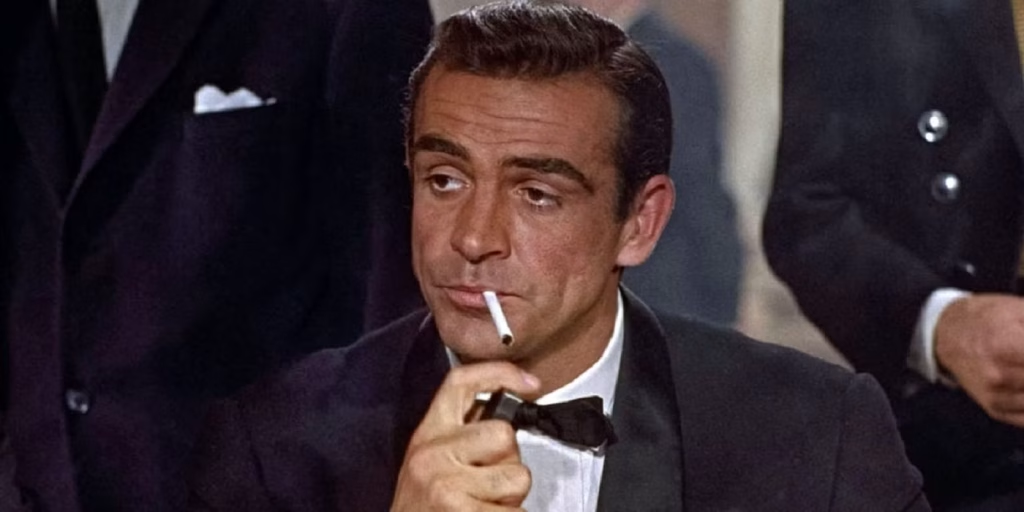
Terence Young directed Dr. No on location in Jamaica and at Pinewood Studios across early 1962. The budget was $1.1 million, modest even for British production standards of the era. Connery’s $16,000 fee equaled approximately $165,000 in 2026 purchasing power, the kind of compensation that signaled to the industry that Eon Productions did not believe their unknown lead could carry the picture commercially.
Dr. No grossed $59 million worldwide. The film opened in the United States in May 1963 and became the unlikely cultural phenomenon of the year. President John F. Kennedy, who had publicly named Ian Fleming’s From Russia, with Love as one of his ten favorite books in 1961, attended a private screening at the White House. The cultural endorsement compounded.
From Russia with Love followed in 1963. Goldfinger in 1964. Thunderball in 1965. You Only Live Twice in 1967. Connery’s per-picture compensation escalated across each successive Bond film as the franchise grosses climbed past $300 million cumulatively. By Thunderball his fee had reached $750,000 plus 5% of profits. By You Only Live Twice the structure had grown to $750,000 plus a percentage of the merchandise revenue that the Bond franchise had begun generating across its branded products.
What the early Bond years established was the financial architecture that would define the rest of Connery’s career. He had learned, by his fourth Bond film, that backend participation was the asset salary could not match. The lesson he extracted from Dr. No would later become the lesson Kevin Costner extracted from The Untouchables in 1987, when Connery’s Untouchables Oscar performance taught the next generation of Hollywood leads exactly how to negotiate against studios that did not yet recognize their value.
Diamonds Are Forever And The First $1 Million Bond Deal
Connery walked away from Bond in 1967 after You Only Live Twice. The decision was financial as much as creative. Broccoli and Saltzman had refused to renegotiate his compensation upward despite the franchise’s commercial dominance, and Connery had grown frustrated with the typecasting that Bond had produced across his other film offers. George Lazenby took over for On Her Majesty’s Secret Service in 1969, and the Bond franchise lost approximately $40 million in domestic box office relative to Connery’s previous installment.
United Artists came back to Connery in 1971 with the kind of offer the franchise had refused him three years earlier. Connery accepted Diamonds Are Forever at $1.25 million plus 12.5% of gross receipts plus a guaranteed $145,000 per week if production ran over schedule. The Sean Connery net worth from Diamonds Are Forever alone reached approximately $7 million across the film’s full lifecycle when factoring in his backend participation against worldwide gross of $116 million.
The Diamonds Are Forever Negotiating Template
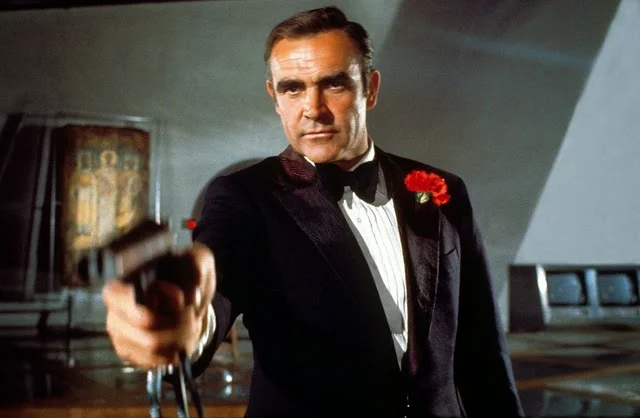
What Diamonds Are Forever proved was that Connery’s market value, after seven years of franchise work, was now structurally independent of the Bond character. He could renegotiate from a position of leverage. Walking away was an option. Returning on his own terms was always available. The negotiating template he established with United Artists in 1971 became the template every subsequent franchise lead would attempt to replicate, and few would execute as cleanly as Connery had done at 41.
He donated the entire $1.25 million Diamonds Are Forever fee to the Scottish International Educational Trust, the foundation he had co-founded in 1970 to support working-class Scottish students pursuing higher education. The gesture was simultaneously sincere and strategically brilliant. Connery had positioned himself in the British press as the working-class kid from Edinburgh who had returned his Bond fortune to the next generation of Edinburgh kids, and the political capital that gesture generated would later support his Scottish independence advocacy across the next forty years.
Never Say Never Again And The Final Bond Payout
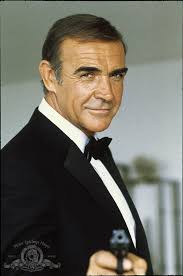
Connery returned to Bond one final time in 1983 for Never Say Never Again, the unofficial production that emerged from the protracted legal dispute between the Eon Productions Bond rights and the separate Thunderball remake rights that producer Kevin McClory had retained from the original 1965 production. The film operated outside the official Bond franchise but starred Connery as Bond at age 53, opposite a younger Roger Moore who was simultaneously starring in the official Bond Octopussy that same year.
His compensation reached $3 million plus backend participation. Never Say Never Again grossed $160 million worldwide on a $36 million budget. The film performed roughly equivalently to Octopussy at the box office, and the simultaneous release of two competing Bond films in the same calendar year became one of the most unusual production curiosities in franchise history.
Connery used the Never Say Never Again earnings to consolidate his real estate position. He purchased property at Lyford Cay in the Bahamas, the gated luxury community on the western tip of New Providence Island that had originally been developed in the 1950s by Canadian financier Edmund Lynch. The Lyford Cay estate would become his primary residence for the next thirty-seven years, and his Bahamian tax residency would later become a politically contentious detail of his Scottish independence advocacy.
What Never Say Never Again established was the financial architecture that would carry Connery through his late career. He had paid himself the equivalent of a comfortable retirement from the Bond franchise alone. Every subsequent role would now be additive rather than necessary. The Sean Connery net worth structure post-1983 was, for the first time in his career, structurally bulletproof.
The Untouchables Oscar That Restored His Market Value
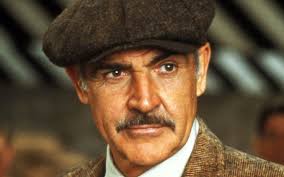
Brian De Palma cast Connery as Officer Jim Malone in The Untouchables in 1986. Connery was 56. He had spent the post-Bond decade taking character roles in films like The Man Who Would Be King and Outland that earned him respect without restoring his marquee status. The Untouchables was the role that brought him back into the leading-man tier through a paradoxical mechanism: he won the Best Supporting Actor Oscar by playing the most memorable supporting role in a film that grossed $106 million on a $25 million budget.
His preparation became Hollywood lore. Connery accepted the role only on the condition that Malone’s death scene would be the longest sustained set piece in the picture. De Palma honored the request. The Malone apartment ambush runs nearly six minutes of screen time, and Connery dragged himself across an apartment floor through the entire sequence without a stunt double on the wide shots. The complete production architecture of that performance is documented in the Untouchables Cast hub.
His Irish accent slipped through every Untouchables scene. The Scottish vowels remained stubbornly audible, and a 2003 Empire magazine readers’ poll voted his Untouchables performance the worst film accent of all time. None of that mattered to the Academy. Connery won the Oscar for Best Supporting Actor at the 60th ceremony in April 1988, which became the only Academy Award of his career.
The $10M-Per-Picture Premium
The Untouchables Oscar restored his market value. Connery commanded approximately $10 million per picture for the next decade, reflecting the post-Untouchables premium. His subsequent work in Indiana Jones and the Last Crusade in 1989, The Hunt for Red October in 1990, The Russia House in 1990, Rising Sun in 1993, The Rock in 1996, and Entrapment in 1999 all benefited directly from the Oscar’s institutional validation. His earnings across this decade compounded faster than during any equivalent period of his Bond era.
The $450 Million Lord Of The Rings Decision
New Line Cinema offered Connery the role of Gandalf in The Lord of the Rings in 1999. That trilogy was preparing to film back-to-back in New Zealand under director Peter Jackson, and the studio considered the casting of a marquee leading man essential to mitigate what they viewed as significant commercial risk on a $281 million combined production budget. New Line offered Connery $10 million per film plus 15% of worldwide box office across all three pictures.
Connery declined. He told The Guardian in subsequent interviews that he did not understand the script, despite reading it multiple times across the negotiation period. The decision became the most consequential financial mistake of his career. The Lord of the Rings trilogy grossed approximately $3 billion worldwide. His 15% backend participation would have generated approximately $450 million in additional earnings, more than his entire Bond-era compensation combined and roughly equal to his total estate at death.
Ian McKellen took the role and delivered the performance that became one of the most celebrated supporting characterizations of the 21st century. Connery never publicly expressed regret about the decision in his rare interviews following his 2003 retirement, though the Guardian conversation suggested that he understood, retrospectively, the magnitude of the missed opportunity.
What the Gandalf decision proved structurally was the same lesson Donald Sutherland’s Animal House negotiation had proven a generation earlier: Sutherland walked away from $18 million on Animal House because he did not believe the film would generate revenue worth participating in. Connery walked away from $450 million on Lord of the Rings for similar reasons. Both actors had built fortunes on the proposition that they could read scripts and predict commercial outcomes. Both actors were wrong about specific projects in ways that cost their estates significant nine-figure sums.
The Lyford Cay Compound And The Bahamian Tax Architecture
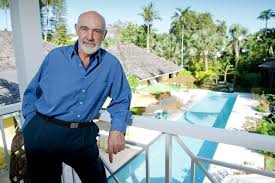
Connery purchased his Lyford Cay estate in 1983 using proceeds from Never Say Never Again. The gated community on New Providence Island had been developed in the 1950s by Edmund Lynch as a tax-advantaged residential haven for North American and British wealth seeking Caribbean exposure. Connery’s purchase placed him alongside an exclusive social network of finance executives, oil heirs, and entertainment figures who had made similar Bahamian tax decisions.
His Bahamian residency carried significant political consequences across the next thirty-seven years. Connery was an outspoken Scottish independence advocate who supported the Scottish National Party financially and through public appearances until 2001, when UK parliamentary rules banned overseas funding for political activities. The contradiction between his political advocacy for Scotland and his personal tax residency in the Bahamas became one of the most-debated aspects of his public life across the 2000s and 2010s.
His real estate architecture extended beyond Lyford Cay across his peak earning years. He owned property in Marbella, Spain, which he sold in 1999 for €6.4 million after the local development that followed the sale prompted a Spanish tax fraud investigation. His wife Micheline Roquebrune was charged in connection with the Marbella property transactions. Connery was cleared of wrongdoing personally. He owned a French Riviera mansion known informally as the Bond Villa that was listed in 2024 for $33.9 million. Additional properties existed in New York and Greece.
The Marriage Architecture
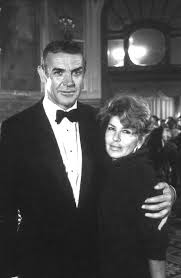
His marriage to Roquebrune anchored the personal architecture for forty-five years. Connery had married French-Moroccan painter Roquebrune in 1975 after meeting her at a celebrity golf tournament in Morocco the previous year. The marriage produced no biological children, though Roquebrune brought three children from a previous marriage who became Connery’s stepchildren. His only biological son Jason Connery, an actor and director, came from his first marriage to Australian actress Diane Cilento, which had ended in divorce in 1973.
The Real Sean Connery Net Worth Math At Death
Celebrity Net Worth listed the Sean Connery net worth at $350 million at the time of his death on October 31, 2020. The figure reflected liquid plus moderately liquid assets and represented the most conservative public estimate available. Aggressive valuations including the four-property real estate portfolio, the Bond-era backend royalties, and his Taliafilm production company holdings push the total estate value closer to $400 to $500 million.
The compositional breakdown looks roughly like this. Real estate represented approximately $80 to $100 million across the Lyford Cay, French Riviera, New York, and Greek properties at the time of death. Bond franchise residuals continue generating estimated income of $5 to $10 million annually for the estate through merchandise licensing, broadcast rights, and streaming platform deals. Post-Untouchables film catalog generates additional residual income that compounds whenever Indiana Jones and the Last Crusade, The Hunt for Red October, or The Rock receive renewed streaming distribution.
His Taliafilm production company, which he co-founded in the late 1980s, produced the 1998 stage play Art that won the Tony Award for Best Play and generated significant Broadway run revenue across the late 1990s. The company also held production interests in select Connery film projects across his post-Untouchables decade.
The Sean Connery net worth structure echoes the patterns documented in Social Life Magazine’s analysis of celebrity wealth versus dynasty wealth. His holdings concentrated heavily in international real estate, with significant intellectual property positions in the Bond catalog, and were structured through an elaborate trust system that his attorneys established years before his death. Trust contents remain protected information under Bahamian law, and the specific allocations to his wife Micheline, his son Jason, and his stepchildren have never been publicly disclosed.
The Knighthood And The Scottish Independence Politics
Queen Elizabeth II knighted Connery at Holyrood Palace in Edinburgh on July 5, 2000. That honor came after years of speculation about whether his political advocacy for Scottish independence would prevent the British honors system from formally recognizing his contributions to cinema. A 1998 honor list had reportedly included Connery’s name before being withdrawn following objections from Labour government ministers, and the eventual 2000 knighthood arrived only after a sustained lobbying effort by Connery’s supporters.
His Scottish independence advocacy continued through his 2003 retirement and into his Bahamian residency years. Connery had himself filmed wearing a Scottish independence button during a brief appearance in The League of Extraordinary Gentlemen in 2003, his final on-screen role. The film paid him $17 million for what amounted to four months of work, and he used the production to make his most extended public political statement about Scottish independence.
The contradiction between his Scottish nationalism and his Bahamian tax residency was the central political vulnerability he carried across his final two decades. His critics argued that an actor who refused to pay UK taxes lost the moral standing to advocate for Scottish constitutional change. His supporters argued that his lifetime contributions to Scottish cultural philanthropy through the Scottish International Educational Trust offset the tax-residency arbitrage. The argument was never resolved, and Connery remained polarizing in Scottish political discourse until his death.
He was named Scotland’s Greatest Living National Treasure in a 2004 public poll. The honorific was simultaneously sincere and politically loaded, given the ongoing tax residency debate. Connery received the recognition with the kind of dry humor that had defined his public persona since the Bond era.
What He Built That No Lord Of The Rings Decision Could Take Back
The 70-credit catalog will outlast every Bond reboot, every Lord of the Rings retrospective, every Scottish independence referendum, and every estate-planning law firm that handled his trust structures. Dr. No will play forever. From Russia with Love will play forever. Goldfinger will play forever. The Untouchables will play forever. Indiana Jones and the Last Crusade will play forever. The Hunt for Red October will play forever. The Rock will play forever.
His willingness to walk away from projects he did not understand, regardless of the financial implications, became the Connery signature across six decades. He left Bond in 1967 because the producers refused to renegotiate. He turned down Gandalf in 1999 because he did not understand the script. The cumulative consequence of those decisions was a career that earned him roughly $350 million while leaving approximately $450 million more on the table that he chose, deliberately, not to pursue.
Most actors at 90 are managing decline. Connery at 90 was at home in Lyford Cay with his wife of forty-five years, having retired definitively in 2003 and refused every subsequent role offer. His son Jason maintained a separate acting career. His stepchildren managed inherited financial positions. The Sean Connery net worth at $350 million on the public ledger and $400 to $500 million on the actual ledger represents only the financial residue of a career that mattered to global cinema in ways the Lyford Cay accountants could not measure.
The CassWorld Take
For Brands Reading Between The Lines
A fish does not notice the water. A reader does not notice the architecture. That is the entire point. Furthermore, it is the entire opportunity for the brand founder, fund manager, or fashion house creative director who has just read this far and is, without having fully realized it yet, about to scroll down and click one of the following links.
If you are a brand, a founder, a creative director, or an in-house marketing lead who has read this far and would like to be considered for an editorial feature in Social Life Magazine’s print or digital ecosystem, the editorial team reviews brand submissions year-round. Reach out via the Social Life editorial contact page.
Submit A Paid Feature
For prestige Scotch whisky portfolios, Bahamian luxury hospitality brands, and the kind of legacy menswear houses that recognize a Bond-era aesthetic when they see one, the Submit A Paid Feature page is the fastest entry point. Our editors build the placement to fit your audience, not ours.
The 82,000-Reader Email List
Join the 82,000+ readers who receive the Social Life Magazine email digest weekly. The list reaches the affluent New York and Out East audience that drives luxury brand purchase decisions across beauty, spirits, hospitality, finance, and fashion. Sign up via the Social Life Magazine email signup form.
Polo Hamptons 2026
For brands ready to be present in front of the demographic that quotes Connery’s Untouchables Chicago Way speech in their group chats and considers Goldfinger a foundational text of cinematic masculinity, Polo Hamptons 2026 is the marquee summer activation. Title sponsor BMW returns for its eighth consecutive year. Tickets, cabanas, and remaining sponsorship packages are available now.
Print Subscription
Subscribe to the print edition of Social Life Magazine and hold 23 years of Out East cultural authority in your hands. Five summer issues delivered Memorial Day through Labor Day, plus the Fall and Winter editions reaching Upper East Side doorman buildings. Print subscriptions are available at the Social Life subscription page.
Support Independent Journalism
If this article sharpened your thinking, consider supporting independent luxury journalism. Donate $5 and keep the signal clean. Buy us a coffee here.
The Sean Connery net worth story is the rare 60-year career document where the Edinburgh milkman who survived stomach ulcers in the Royal Navy. At 19, he took $16,000 to play James Bond in 1962, walked away from $450 million by declining Gandalf in 1999. He quietly built a $350 million estate across Lyford Cay and the Côte d’Azur proves that the catalog is the asset and the missed opportunities are the lessons. Print the architecture. Bookmark this page.
Written by CassWorld. Cass Almendral is Head of Business Development at Social Life Magazine and Co-Founder of Polo Hamptons. Reach editorial at [email protected].
Author

Written by
Recent Posts
Victoria Justice Kicks Off Halloween Early with Love Zombie Bash in Hollywood

Planning an Arizona Road Trip? Practical Details to Handle Before You Leave
Short Homecoming Dresses That Feel Polished, Not Overdone
Men’s Health After 40: Important Changes to Pay Attention To
What You Need to Know About Spray Tanning
Categories
- Art
- Articles
- Business of Luxury
- Celebrities
- Culture
- Entertainment
- Events
- Faces of Summer 2026
- Fashion
- Fashion & Style
- Featured
- Finance
- Food, Spirits, Wine
- Hamptons
- Hamptons Celebrities
- Health
- Health & Beauty
- Lifestyle
- Luxury Lifestyle
- Press
- Profiles
- Real Estate
- Technology
- The Chronicles
- Travel
- Uncategorized
- Weddings