
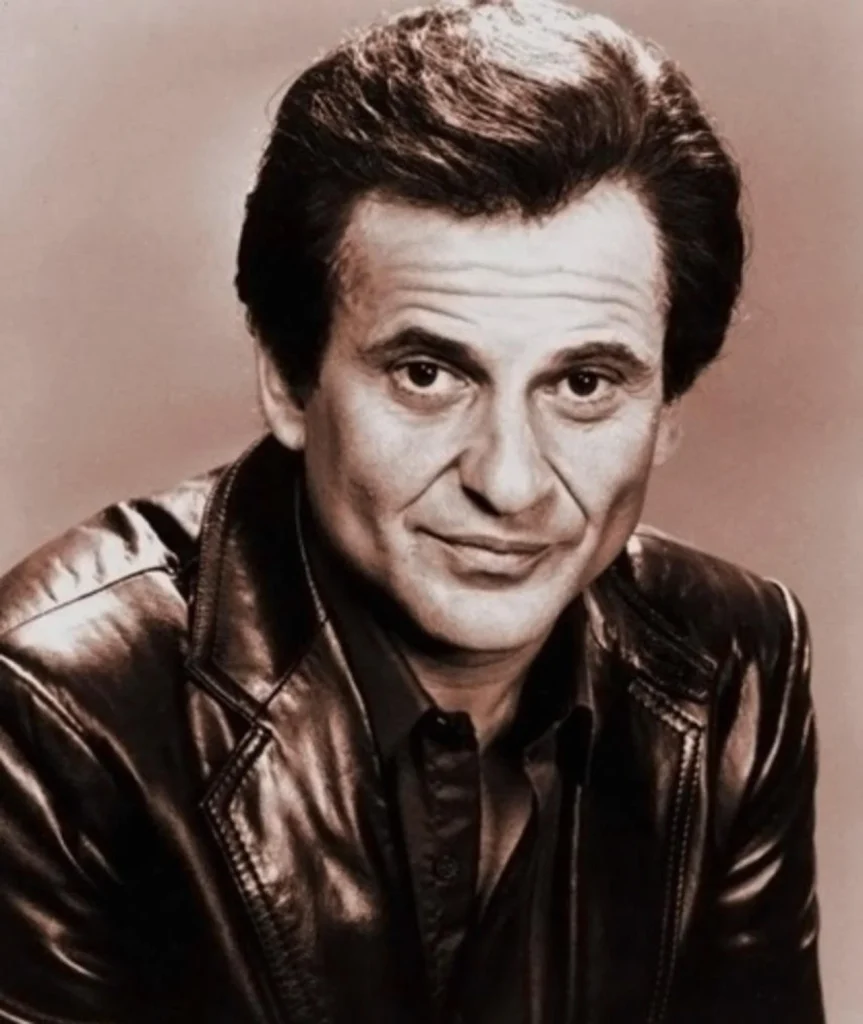
Martin Scorsese asked him fifty times. Joe Pesci said no for the first forty-nine. By the time the director finally convinced him to play Russell Bufalino in The Irishman in 2017, Pesci had been retired from acting for nearly two decades, had released a doo-wop album under an assumed name to keep his music career separate from his Oscar reputation, and had specifically told Scorsese in their early meetings that he was not interested in doing the gangster thing again. The Joe Pesci net worth conversation begins in that refusal, because the patience required to say no forty-nine times to one of the greatest American directors of the last fifty years is the same patience that built a $50 million fortune across a career most working actors would have leveraged ten times harder.
He was 5’4″ with a Newark accent that no dialect coach had ever softened. The studios in 1976 had no template for his physical type. Pesci spent the entire decade between his cinematic debut in The Death Collector and his Oscar-nominated breakthrough in Raging Bull at scale-tier compensation that barely covered his New York rent. The combination of physical eccentricity and methodical character work would later become his entire commercial advantage, but in his early thirties, watching his peers sign network television contracts, the eccentricity read only as a problem.
The $50M Architecture Built On Refusal
By early 2026, the Joe Pesci net worth had compounded to approximately $50 million per Celebrity Net Worth, anchored across decades of catalog residuals from films that include Goodfellas, Casino, Home Alone, the Lethal Weapon franchise, and The Irishman. He earned the Best Supporting Actor Oscar in 1990 for Tommy DeVito. He returned in 2019 to earn an Oscar nomination for Russell Bufalino. The thirty-year gap between those two Scorsese performances is the entire architecture of how the most committed character actor of his generation built one of the quietest fortunes in modern Hollywood.
The Newark Kid Who Started Performing At Four Years Old
Joseph Frank Pesci was born February 9, 1943 in Newark, New Jersey. His father Angelo worked as a forklift operator and bartender. His mother Mary worked as a part-time barber. The family moved to Belleville, New Jersey across his early childhood, and the working-class North Jersey neighborhood that produced him remained the cultural anchor he carried into every subsequent role.
He began performing at four years old. The early work ran through Newark-area radio shows where his mother would bring him in for child-actor auditions. Pesci’s early-childhood entertainment career was the consequence of an Italian-American household that valued musical and theatrical performance as cultural capital, and the discipline he absorbed before age six would later define his approach to screen work across the next seventy years.
His adolescence ran through the same New York entertainment ecosystem that produced his entire generation of New Jersey performers. He performed in Broadway productions as a child actor across the early 1950s. Small television roles followed. The comic timing that would later anchor his Lethal Weapon and Home Alone characters across the late 1980s and early 1990s developed during this period. The entire pre-fame architecture was assembled by age 18.
What the Newark childhood taught him was the lesson that would later distinguish his negotiating posture from every other working-class East Coast actor of his generation. Performing was a job. The job paid intermittently. The performer’s responsibility was to keep working regardless of whether the project would succeed commercially. Pesci responded to that lesson by treating his entire career as a sequence of professional obligations rather than artistic statements, which is why the Joe Pesci net worth structure during his peak earning years reflected such methodical financial decisions across what would otherwise have been chaotic creative work.
The Joey Dee And The Starliters Years
Pesci joined Joey Dee and the Starliters in the early 1960s as a guitarist. That band had recorded the 1961 hit “Peppermint Twist” before Pesci joined, and his role across his tenure was that of professional rhythm guitarist supporting an established act. Scale wages plus minor royalty participation followed standard nightclub-circuit norms. Pesci traveled with the band across the East Coast nightclub circuit through the mid-1960s.
The Joey Dee era produced two consequential developments in his career architecture. He met Frankie Valli, Tommy DeVito, and the other members of The Four Seasons through the New Jersey music scene. The Tommy DeVito connection would later become significant in popular accounting of his Goodfellas character, though contrary to widespread reporting, the naming of the Goodfellas character was based on the real-life mobster Thomas DeSimone rather than on the Four Seasons guitarist. The coincidence has compounded across thirty-five years of fan speculation.
His debut album Little Joe Sure Can Sing! released in 1968 under the stage name Joe Ritchie. A Brunswick Records production, the doo-wop and standards collection reflected Pesci’s vocal range without leveraging his Italian-American identity for marketing purposes. Album sales came in modestly. The work confirmed for Pesci that his musical instincts were stronger than the era’s commercial ear could absorb, and he stepped back from recording across the next thirty years before releasing Vincent LaGuardia Gambini Sings Just for You in 1998.
What the Joey Dee years prepared him for was the patience that would later define his working-actor decade. Pesci understood, by his late twenties, that creative careers compounded slowly and required tolerance for years of obscurity between commercial inflection points. That patience would prove essential when he spent the entire 1970s performing in Bronx restaurants and small Off-Off-Broadway productions before De Niro discovered him in 1976.
The Death Collector And The De Niro Discovery
Robert De Niro saw Pesci in The Death Collector in 1976. A low-budget independent film had cast Pesci as Joey, a small-time New Jersey loan shark. Production paid scale wages. The film grossed almost nothing commercially and disappeared from theatrical distribution within weeks of its limited release. De Niro happened to see it during one of his research phases for an upcoming role, and the performance stuck with him.
De Niro recommended Pesci to Martin Scorsese in 1979, when Scorsese was preparing Raging Bull and looking for an actor who could play Joey LaMotta opposite De Niro’s Jake LaMotta. The casting was the result of De Niro’s specific advocacy rather than Pesci’s representation, agency contacts, or previous Hollywood relationships. The Joe Pesci net worth architecture from this point forward traces directly to that single recommendation, because every subsequent commercially significant role he booked across the next forty years emerged from the Scorsese-De Niro creative ecosystem that Raging Bull established.
Pesci broke a rib during Raging Bull production. The injury occurred during one of the boxing-corner sequences that required physical contact with De Niro’s stunt double. The same rib would later break again during Casino production fifteen years later, a coincidence that Pesci has discussed in interviews as evidence of how thoroughly he committed to his Scorsese performances.
Raging Bull earned Pesci a BAFTA Award for Best Newcomer and an Academy Award nomination for Best Supporting Actor. The film grossed $23 million on an $18 million budget, modest commercial returns that did not capture the long-term cultural impact. Raging Bull has been studied across film schools for forty-five years, and Pesci’s performance as Joey LaMotta is widely considered the foundation of his entire subsequent career.
Goodfellas And The Tommy DeVito Oscar
Scorsese cast Pesci as Tommy DeVito in Goodfellas in 1989. The role was based on real-life mobster Thomas DeSimone, the Lucchese crime family associate whose violent unpredictability had defined the social architecture of the Henry Hill memoir that Scorsese was adapting. Pesci had grown up adjacent to similar New Jersey criminal social networks across his Newark and Belleville childhood, and the role required him to draw on first-hand observational material rather than imaginative construction.
The “Funny how? I mean funny like I’m a clown? I amuse you?” sequence became one of the most-quoted improvised moments in modern American cinema. Pesci had developed the scene from a real-life encounter with a New Jersey wiseguy who had questioned his comedic delivery during a young-actor apprenticeship period. Scorsese filmed the scene in two takes. The improvised dialogue stayed in the final cut almost verbatim.
His compensation for Goodfellas was approximately $1 million, reflecting his post-Raging Bull market value plus a meaningful uplift for the leading-supporting role the film required. Goodfellas grossed $46 million domestically on a $25 million budget, and the cumulative thirty-five-year licensing tail across home video, cable broadcast, and streaming distribution has compounded the original payout into estimated total earnings of $5 to $8 million from the single performance. The Joe Pesci net worth from Goodfellas alone represents one of the most efficient supporting-role payoffs in modern Hollywood history.
The Five-Second Acceptance Speech
The Academy nominated Pesci for Best Supporting Actor at the 63rd ceremony in March 1991. He won. His acceptance speech ran approximately five seconds. “It’s my privilege. Thank you,” he said, before leaving the podium. The brevity was both sincere and strategically positioned. By refusing to convert his Oscar moment into a career-marketing platform, Pesci protected the artistic credibility that would later define his selective working pattern across the next thirty years.
The Home Alone Inflection And The Comic Side
Chris Columbus cast Pesci as Harry Lyme in Home Alone in 1990. The role required something the post-Goodfellas Pesci had not previously demonstrated at scale: physical comedy delivered through prolonged sequences of slapstick injury without verbal dialogue. Pesci built Harry as a permanently exasperated career criminal whose competence was always undermined by the eight-year-old protagonist’s traps.
His compensation for Home Alone was approximately $1 million, comparable to his Goodfellas fee from the same year. The film grossed $476 million worldwide on an $18 million budget. Pesci’s backend participation, while not publicly disclosed, generated estimated total earnings of $3 to $5 million from the single performance. Home Alone became the highest-grossing live-action comedy in cinema history at the time of its release, and the cultural permanence of the Wet Bandits has compounded across thirty-five years of holiday-season broadcast rotation.
The Home Alone arc placed Pesci in the same conversation as Steve Carell’s later genre-flexibility achievement, where character actors used a single major comedic performance to establish range that subsequent dramatic work could not have generated through dramatic credits alone. Carell built his net worth through The 40-Year-Old Virgin to The Office to Foxcatcher. Pesci built his through Goodfellas to Home Alone to My Cousin Vinny. The architecture is the same. The director-actor friendship is the asset.
Home Alone 2 followed in 1992. The sequel paid Pesci approximately $1.5 million plus participation. The film grossed $359 million worldwide. By 1992, Pesci was earning seven-figure compensation per picture across both the dramatic and comedic registers, a flexibility that few of his peers could match across either category alone.
JFK And The Wall Street Cinema Cross-Bridge
Oliver Stone cast Pesci as David Ferrie in JFK in 1991. The full production architecture of that performance is documented in the JFK Cast hub. Pesci’s compensation for one week of principal photography was approximately $1 million, and his squirming-prosthetic-eyebrows performance became one of the most committed character turns of his career.
JFK marked the structural pivot point that would later define his cross-cluster cultural authority. By 1991, Pesci had built credibility in three distinct genre registers simultaneously. His Scorsese gangster register ran through Raging Bull and Goodfellas. The Columbus comedy register ran through Home Alone. A Stone political-thriller register ran through JFK. Few working actors of his generation operated across three registers at major-studio compensation tiers within any single 18-month window.
The Lethal Weapon franchise added the action-comedy register starting with Lethal Weapon 2 in 1989. His Leo Getz character paid escalating per-picture fees that reached approximately $3 million for Lethal Weapon 4 in 1998. The Joe Pesci net worth contribution from the four Lethal Weapon installments alone reached approximately $7 to $9 million in upfront compensation, plus participation rights that have generated additional residual income across the franchise’s continuing streaming licensing.
What the 1990-1992 period established was the multi-register working pattern that would define his peak earning years. Pesci could move between dramatic-criminal, comedic-criminal, political-thriller, and action-buddy roles within any given 24-month window without losing credibility in any genre. The flexibility was the asset. The Wall Street Cinema cross-cluster connection runs through this architecture, where his subsequent Casino performance would directly anchor the kind of mob-cinema authority that Social Life Magazine has documented across the broader gangster-finance genre cluster.
Casino, A Bronx Tale, And The 1995 Peak
Scorsese cast Pesci as Nicky Santoro in Casino in 1995. The role was based on real-life Mob enforcer Anthony Spilotro and required Pesci to play the Las Vegas-era counterpart to his Tommy DeVito performance from five years earlier. His compensation for Casino reached approximately $3 million plus participation, reflecting the post-Goodfellas Oscar premium that had restructured his entire negotiating position.
Casino grossed $116 million worldwide on a $52 million budget. Pesci broke the same rib during production that he had broken on Raging Bull fifteen years earlier, an injury he later described in interviews as evidence of how completely he committed to Scorsese’s physical-acting requirements. The cornfield-burial sequence at the film’s climax remains one of the most-discussed set pieces in 1990s American cinema.
De Niro directed Pesci in A Bronx Tale in 1993. The film paid Pesci approximately $500,000 for what amounted to a single-scene cameo as Carmine. Both De Niro and screenwriter Chazz Palminteri had personally lobbied Pesci to participate in the production, and his participation reflected the same friendship-as-asset philosophy that had defined his entire Scorsese-De Niro working relationship since 1980. The role placed him in the same room as Robert De Niro’s broader career architecture in a way few of his other 1990s collaborators could match.
By 1995, the Joe Pesci net worth had reached approximately $25 to $30 million in cumulative working-career earnings before catalog residuals, real estate appreciation, and music royalties. His structural position was, for the first time in his career, financially secure enough that subsequent project decisions could be driven entirely by artistic preference rather than financial necessity.
The 1999 Retirement And The Vincent LaGuardia Gambini Album
Pesci retired from acting in 1999 following Lethal Weapon 4. That decision was deliberate. He had earned approximately $30 million across the previous decade of accelerated work, his Jersey Shore property had appreciated significantly, and the constant film-production travel had become incompatible with the personal life he wanted to maintain. The retirement was not a contractual hiatus or strategic absence. He stopped accepting roles.
His 1998 album Vincent LaGuardia Gambini Sings Just for You represented the alternative career he had always wanted to pursue. The Columbia Records production was a vocal-jazz collection released under his My Cousin Vinny character name, allowing the music to reach audiences without leveraging his Goodfellas reputation. The album sold modestly. Critics treated it as a curiosity rather than a serious vocal effort, despite Pesci’s actual technical competence as a singer.
The Joe Pesci net worth across the retirement years grew slowly but consistently through residual income. Goodfellas continued generating cable broadcast residuals. Home Alone continued generating holiday-season licensing fees. The Lethal Weapon catalog continued generating franchise revenue across DVD distribution and subsequent streaming rotation. Pesci’s retirement did not require him to liquidate working capital, because the catalog he had built across the 1980s and 1990s continued compounding without his active participation.
De Niro pulled him out of retirement briefly for The Good Shepherd in 2006. The role paid approximately $500,000 for a single-day cameo that De Niro had personally requested. Pesci accepted because the friendship was the asset. He returned to retirement immediately after wrapping the scene.
The Irishman And The 50-Refusal Comeback
Scorsese began pursuing Pesci for The Irishman in 2014. That casting required Pesci to play Russell Bufalino, the real-life Northeastern Pennsylvania crime boss whose patronage protected Frank Sheeran across decades of teamster-mafia coordination. This role represented exactly the gangster-cinema territory Pesci had specifically retired to avoid revisiting.
Pesci refused the role approximately fifty times across three years. His objections, as he later told The Hollywood Reporter in subsequent interviews, were structural rather than financial. He did not want to do “the gangster thing again”; he had deliberately built the retirement architecture. He had no interest in restarting the production schedule that had defined his peak earning years. Scorsese persisted, eventually convincing Pesci that The Irishman would be different in ways that justified breaking the retirement.
His compensation for The Irishman reached approximately $6 million across the production schedule. Netflix had financed the film at $159 million in production costs, and the cast structure required premium compensation across all four principal performers (Pesci, De Niro, Al Pacino, Robert Aldridge). The Irishman streaming release in November 2019 generated significant viewership for Netflix without the kind of theatrical box-office tracking that would have produced backend participation in the traditional studio model.
Pesci earned an Academy Award nomination for Best Supporting Actor at the 92nd ceremony, his third career nomination in that category across forty years. He did not win, but the recognition restored his industry-standing position to its pre-retirement tier and converted his fifty refusals into one of the most-celebrated comeback narratives of the 2010s. His simultaneous album release Pesci… Still Singing in November 2019, his first studio recording in twenty-one years, completed the comeback architecture across both his acting and music identities.
The Lavallette Mansion And The Real Estate Architecture
Pesci purchased an 8-bedroom Lavallette, New Jersey mansion in 1994 for approximately $850,000. A 7,200 square-foot property sitting on the Jersey Shore with direct ocean access, glass walls overlooking the Atlantic, a spiral staircase, an elevator, and a heated swimming pool that occupied the central deck space. This property anchored his East Coast residential architecture for nearly thirty years.
He listed the Lavallette property in 2019 for $6.5 million. The listing did not produce a buyer at that asking price, and the property remained on the market across multiple price reductions through 2020 and 2021. Pesci eventually sold the mansion in February 2022 for approximately $5 million, generating capital gains of approximately $4 million across the 28-year holding period before tax considerations and improvements.
His real estate architecture beyond the Lavallette property has remained largely private. Industry sources suggest he maintains residences in both New Jersey and Los Angeles, though specific addresses and valuations have not been publicly disclosed. The Joe Pesci net worth real estate concentration has historically run lower than typical Hollywood patterns, reflecting his preference for liquid investments and conservative portfolio diversification rather than the kind of trophy-property concentration that defines his higher-earning peers.
His three marriages have produced one biological daughter, Tiffany, born in 1992 from his second marriage to actress Claudia Haro. The family architecture has remained deliberately private across his entire career, and the inheritance structure of his estate has not been publicly disclosed. Pesci’s approach to family privacy mirrors the patterns documented across Social Life Magazine’s analysis of celebrity wealth versus dynasty wealth, where actors who built fortunes through working-career compensation often maintain inheritance structures designed to protect heirs from public scrutiny rather than generate dynastic visibility.
The Real Joe Pesci Net Worth Math In 2026
Celebrity Net Worth lists the Joe Pesci net worth at $50 million as of early 2026. The figure reflects liquid plus moderately liquid assets and represents the most conservative public estimate available. Aggressive valuations including the catalog residual rights, his music royalty positions, and his ongoing residual income from the Lethal Weapon and Home Alone franchises push the realistic 2026 figure closer to $60 to $70 million when accounting for asset appreciation and ongoing compensation events.
The compositional breakdown looks roughly like this. Working-career compensation across his 1980-1999 peak earning years generated approximately $35 to $40 million in cumulative gross before agent fees, manager fees, and taxes. Post-retirement catalog residuals from Goodfellas, Home Alone, Casino, the Lethal Weapon franchise, and his subsequent return projects generate estimated annual income of $1 to $2 million for ongoing distribution. The Lavallette property sale in February 2022 generated approximately $4 million in capital gains.
His selective post-retirement work added approximately $7 to $10 million to the cumulative total across The Good Shepherd, The Love Ranch, The Irishman, Bupkis, and Day of the Fight. The Irishman compensation alone reached approximately $6 million, the largest single-project payout of his entire career.
The Joe Pesci net worth structure echoes the patterns documented in Social Life Magazine’s celebrity net worth rankings 2026. His holdings concentrate heavily in residual-income positions rather than active working compensation, reflect the conservative portfolio diversification that defined his entire post-retirement architecture, and depend on continuous catalog licensing rather than ongoing project participation.
What He Built That No 50-Refusal Could Take Back
The catalog will outlast every retirement, every comeback, every Lethal Weapon reboot rumor, and every estate-planning consultation. Raging Bull will play forever. Goodfellas will play forever. Home Alone will play forever. JFK will play forever. Casino will play forever. The Irishman will stream forever on Netflix. Pesci’s career across the 1980-1999 peak years produced one of the most concentrated catalog accumulations in modern Hollywood history.
His willingness to retire definitively in 1999, while every comparable peer continued working into their seventies and eighties, became the Pesci signature across the next quarter-century. He left at his peak. Returning only when Scorsese personally requested it became the rule. Refusing projects fifty times before accepting them was the discipline, and the cumulative consequence of those refusals was a career that earned him approximately $50 million while leaving an unknown but significant additional sum on the table that he chose, deliberately, not to pursue.
Most actors at 83 are managing decline. Pesci at 83 is selectively choosing late-career projects, recording occasional music, and maintaining the privacy that has defined his entire post-1999 architecture. The Joe Pesci net worth at $50 million on the public ledger and $60 to $70 million on the actual ledger represents only the financial residue of a career that mattered to American cinema in ways the Lavallette accountants could not measure.
The CassWorld Take
For Brands Reading Between The Lines
A fish does not notice the water. A reader does not notice the architecture. That is the entire point. Furthermore, it is the entire opportunity for the brand founder, fund manager, or fashion house creative director who has just read this far and is, without having fully realized it yet, about to scroll down and click one of the following links.
If you are a brand, a founder, a creative director, or an in-house marketing lead who has read this far and would like to be considered for an editorial feature in Social Life Magazine’s print or digital ecosystem, the editorial team reviews brand submissions year-round. Reach out via the Social Life editorial contact page.
Submit A Paid Feature
For Italian-American luxury brands, prestige New Jersey hospitality portfolios, and the kind of legacy menswear houses that recognize a 1990s cinematic archetype when they see one, the Submit A Paid Feature page is the fastest entry point. Our editors build the placement to fit your audience, not ours.
The 82,000-Reader Email List
Join the 82,000+ readers who receive the Social Life Magazine email digest weekly. The list reaches the affluent New York and Out East audience that drives luxury brand purchase decisions across beauty, spirits, hospitality, finance, and fashion. Sign up via the Social Life Magazine email signup form.
Polo Hamptons 2026
For brands ready to be present in front of the demographic that quotes Tommy DeVito’s “funny how” speech at dinner parties and considers Goodfellas a foundational Italian-American cinematic text, Polo Hamptons 2026 is the marquee summer activation. Title sponsor BMW returns for its eighth consecutive year. Tickets, cabanas, and remaining sponsorship packages are available now.
Print Subscription
Subscribe to the print edition of Social Life Magazine and hold 23 years of Out East cultural authority in your hands. Five summer issues delivered Memorial Day through Labor Day, plus the Fall and Winter editions reaching Upper East Side doorman buildings. Print subscriptions are available at the Social Life subscription page.
Support Independent Journalism
If this article sharpened your thinking, consider supporting independent luxury journalism. Donate $5 and keep the signal clean. Buy us a coffee here.
The Joe Pesci net worth story is the rare 60-year career document where the Newark kid who started performing at four years old, broke the same rib on Raging Bull and Casino fifteen years apart, retired definitively in 1999, refused The Irishman fifty times, and quietly built a $50 million estate across catalog residuals and a Jersey Shore mansion proves that the catalog is the asset and the refusals are the lessons. Print the Joe Pesci net worth architecture. Bookmark this page.
Written by CassWorld. Cass Almendral is Head of Business Development at Social Life Magazine and Co-Founder of Polo Hamptons. Reach editorial at cass.almendral@sociallifemagazine.com.
Author

Written by
Recent Posts

Red, White & Bordeaux: A Founding Fathers’ Guide to Raising a Glass

Youmetalks Reviews Show Why This Platform Is a Game-Changer for Safety
Creating Behind-the-Scenes Content Without Recording New Footage
The Invisible Essential: How Smart Travelers Stay Connected from the Moment They Land in Japan
The Hamptons Longevity Protocol: How to Stay Sharp Through Late Dinners, Early Tee Times, and Beach Weekends
Categories
- Art
- Articles
- Business of Luxury
- Celebrities
- Entertainment
- Events
- Faces of Summer 2026
- Fashion
- Fashion & Style
- Featured
- Finance
- Food, Spirits, Wine
- Hamptons
- Hamptons Celebrities
- Health
- Health & Beauty
- Lifestyle
- Luxury Lifestyle
- Press
- Profiles
- Real Estate
- Technology
- The Chronicles
- Travel
- Uncategorized
- Weddings