
People stopped getting excited about standard desserts a while ago. Sheet cake, same frosting, cut into neat squares, fine, but forgettable. Events changed. Expectations moved. Guests want something that feels like it was made with them in mind, even if it wasn’t really that personal, just looks that way. That’s enough. Personalized desserts sit right in that gap between mass-produced plus custom, they give the impression of attention. That impression matters more than the recipe sometimes.
It’s not just taste. Taste is assumed to be decent. What stands out is recognition, names, colors, and small details that mirror the event theme. A guest sees something tied to them or the brand, they pause. That pause is the whole point.
Visual Impact Hits First
Before anyone takes a bite, they look. Quick scan. Phones come out. Photos happen fast. Personalized desserts are built for that moment, designed to be seen before eaten. Bright icing, precise shapes, messages written in a slightly uneven script, it reads as human, not factory, even when it is a factory.
At corporate events, you’ll see trays where each piece carries some variation, a name, a role, or a small graphic. Not random decoration, it’s targeted. That’s why things like printed logos on cookies keep showing up more often; they’re simple, readable, instantly tied to the brand without needing explanation. People pick one up, and they already know what it connects to. No guesswork.
And the visual layer extends beyond the dessert itself. Packaging too. Boxes with tags, ribbons, sometimes awkwardly tied, add to the sense that effort was made. It doesn’t have to be perfect. Slight imperfections actually help. Too clean looks impersonal.
Memory Sticks to Small Details
Events blur together. Food is part of that blur unless something interrupts it. Personalized desserts interrupt. Not loudly, but enough. A cupcake with your name, slightly off-center, maybe spelled correctly, maybe not, sticks longer than a perfect generic one. People remember being singled out, even if it was automated.
This plays into promotions as well. Brands use these desserts to anchor memory. You taste something decent, you see the brand, and the two link. Later, when you think about the event, the dessert becomes a reference point. It’s not deep psychology, just repetition plus mild novelty.
Short exposure. Long recall.
Flexibility Makes Them Easy to Deploy
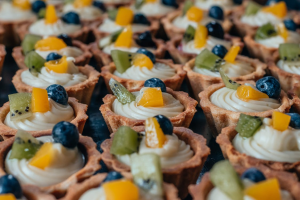
Personalized desserts aren’t limited to one format. Cookies, cupcakes, small tarts, even packaged candies. The base stays simple; customization sits on top. That keeps costs manageable. You don’t need to reinvent the product, just adjust the surface. It scales.
For large events, this matters. You can produce hundreds, thousands, even millions, with minor variations. Names printed, colors switched, messages altered. The process is semi-automated yet appears handcrafted. That balance is useful. Too much automation kills the effect; too little makes it expensive.
And timing works in their favor. They can be prepared ahead of time, stored, and then brought out without much loss in quality. That reliability is part of why planners choose them.
Emotional Response, Even If It’s Small
People react to seeing their name. It’s basic, almost predictable. Still works. You hand someone a dessert with their name on it, they smile, maybe briefly, maybe more. That reaction isn’t deep, but it’s real. It creates a moment.
But it’s not only names. Colors tied to a team, a logo from a company they recognize, a phrase linked to an inside joke. These details signal inclusion. You’re part of this group, this event. The dessert becomes a small marker of that.
Sometimes it misses. Names spelled wrong, colors off, message unclear. That happens. But even those mistakes get noticed, talked about. Not always negatively. It becomes a point of interaction.
Cost Versus Perceived Value
They’re not always cheap, but they don’t need to be expensive to feel valuable. That’s the trick. A basic cookie with a printed design costs more than a plain one, yet the perceived value jumps higher than the price increase. People assign meaning to the customization.
For event planners, this is efficient. You spend a bit more per unit, you get a stronger reaction. Compared to other promotional items, bags, pens, random merchandise, and desserts are consumed, not stored. Immediate use. No clutter left behind.
And waste is lower in a strange way. People are more likely to take and eat something that feels tailored, and less likely to ignore it.
Not Perfect, But That’s Part of It
Personalized desserts aren’t flawless. Designs can smudge, icing can crack, and prints might blur slightly. But those imperfections often read as authenticity. Too perfect feels artificial. Slight errors remind people that there’s a process behind it, even if machines did most of the work.
And sometimes the unevenness creates character. One cookie looks a bit different from the next; that variation reinforces the idea of personalization.
Events evolve, trends shift, yet personalized desserts keep appearing. They solve multiple problems at once: engagement, branding, memory, and cost efficiency. Not in a perfect way, but enough.
Simple concept. Effective result.
And it doesn’t seem to be fading.
Author
Written by
Recent Posts

Trading the Hamptons for Hvar: A Summer on Croatia’s Most Glamorous Island
How to Make Money 3D Printing: A Guide to Models, Costs, Channels, and Licensing
When an Injury Changes Everything: Building a Strong Durham Claim

Jetsetter Style: Castello del Sole
The First Decision After a Collision Can Be the Most Important One
Categories
- Art
- Articles
- Business of Luxury
- Celebrities
- Culture
- Entertainment
- Events
- Faces of Summer 2026
- Fashion
- Fashion & Style
- Featured
- Finance
- Food, Spirits, Wine
- Hamptons
- Hamptons Celebrities
- Health
- Health & Beauty
- Lifestyle
- Luxury Lifestyle
- Press
- Profiles
- Real Estate
- Technology
- The Chronicles
- Travel
- Uncategorized
- Weddings