
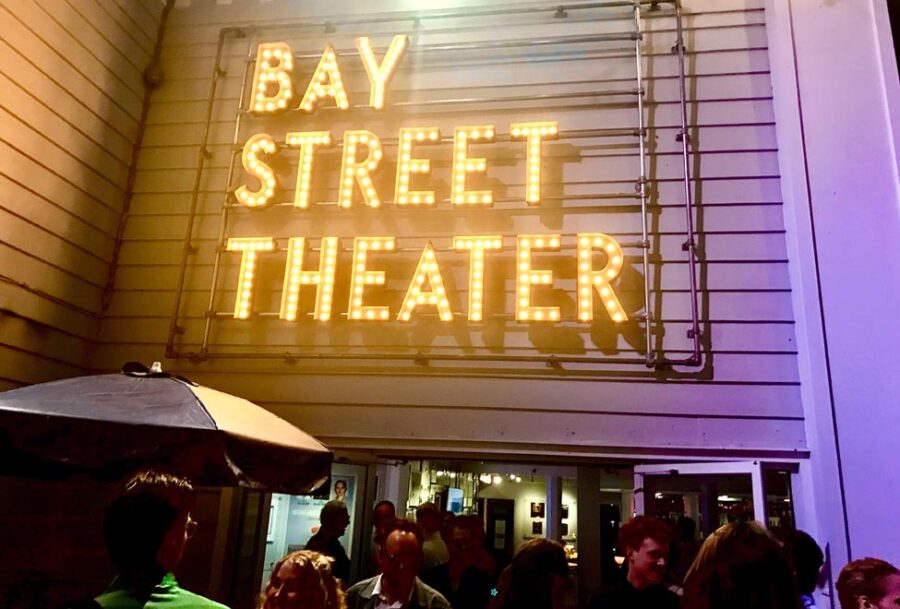
The Founding: A Warehouse, a Welsh Actress, and Julie Andrews’ Daughter
The building at 1 Long Wharf in Sag Harbor has been, in sequence: a warehouse for imported goods. After all, a storage facility for Grumman airplane parts, a restaurant, and a discotheque. However, in 1991 it became a theater, which is the most improbable and correct reinvention in the building’s history. . In addition, this is because a structure that sits on the wharf of a former whaling port, surrounded by water on three sides. Similarly, overlooking the same harbor that Mercator Cooper sailed from in 1843, should obviously contain a stage.
Sybil Christopher saw the building and said, reportedly, that it would make a nice theater. As a result, this is the kind of understatement that either produces nothing or produces an institution. However, in Sybil Christopher’s case it produced the latter. In addition, for instance, christopher was a Welsh actress born in Tylorstown, South Wales, who by her own account saw 52 plays a year between the ages of 15 and 18. As a result, a rate of theatrical consumption that would be clinically concerning in most contexts but that in hers functioned as a vocational education more effective than any program an accredited institution could have provided.
She Co-Founded Bay Street With
She co-founded Bay Street with Emma Walton Hamilton and Stephen Hamilton. Meanwhile, emma Walton Hamilton is Julie Andrews’ daughter. Meanwhile, a biographical detail that this article mentions not for celebrity purposes but because it connects Bay Street to a specific lineage of theatrical seriousness. Similarly, andrews herself made her directorial debut at Bay Street with a production of Sandy Wilson’s The Boy Friend. . This subsequently went on a national tour. In contrast, when Julie Andrews chooses your theater for her first time behind a production. That choice functions as a credential more persuasive than any grant application or critical review.
The First Production Was Joe Pintauro’S
The first production was Joe Pintauro’s Men’s Lives, based on Peter Matthiessen’s book about Long Island fishermen. Consequently, that opening statement of intent, a play about working people performed in a converted warehouse on a working wharf. Established Bay Street’s identity with a precision that most mission statements spend paragraphs failing to achieve. Furthermore, this was a theater that understood where it was and why it was there.
Why 299 Seats Changes Everything
The number 299 appears administrative. In particular, it is not administrative. By contrast, it is architectural, emotional, and social.
She arrives at 7:45 for an 8 PM curtain. After all, the lobby is small enough that she recognizes the woman standing near the bar as the literary agent who represented her colleague’s memoir. In fact, .The man in the linen jacket as someone she sat next to at a Bay Street benefit three years ago, when she was still running the network and attending benefits was part of the job rather than part of the recovery. She nods. He nods. Ultimately, nobody exchanges business cards because Bay Street is the specific kind of social environment where producing a business card would constitute a misreading of the room’s operating system. She takes her seat. Essentially, the stage is fifteen feet from her face. Accordingly, the house lights dim. Moreover, for the next ninety minutes, nobody will ask what she’s working on.
In a 3,000-seat Broadway house, the relationship between actor and audience is broadcast. The actor projects. Nevertheless, the audience receives. Specifically, emotion is transmitted from stage to balcony across a distance that requires amplification. . This means every feeling passes through a microphone and a speaker system before it reaches you. On the other hand, .That mediation, however technically excellent, introduces a layer of processing between the performer’s body and your nervous system.
At Bay Street, The Actor’S Body
At Bay Street, the actor’s body is the medium. However, the ten rows of seating on three sides of the thrust stage create an arrangement where no seat is more than thirty feet from the performance. In addition, at that distance you receive the performance raw: unamplified voice, visible breath. The real-time muscular effort of someone doing something difficult in front of people. As a result, you see the cost of the work. For instance, in a larger house, you see the product of the work. . Meanwhile, this is polished and professional and distant in a way that allows you to evaluate it. Similarly, at Bay Street, evaluation gives way to something closer to participation. In contrast, you are not reviewing. You are present.
For the media executive who spent a decade evaluating content, who developed a professional instinct for assessing quality from a distance, who learned to watch everything with the portion of her brain that asks “does this work”. . Rather than the portion that asks “does this move me,” Bay Street’s 299 seats present a problem. Consequently, the professional distance collapses. Furthermore, the assessment apparatus fails. In particular, she is left with the experience itself, unmediated, unmeasured, unrated. By contrast, .This turns out to be the first time in years that she has encountered a narrative without simultaneously calculating its market value.
The Playwrights Who Lived Down the Street
Bay Street’s early seasons drew on a creative resource that no other theater in the Hamptons could claim: playwrights who were neighbors.
Lanford Wilson lived on Suffolk Street. After all, he was a Pulitzer Prize winner who walked to the theater the way most people walk to the grocery store. . In fact, this meant his involvement in Bay Street’s programming had the casual intimacy of a neighborly conversation. . Rather than the formal distance of a professional engagement. Ultimately, terrence McNally, who won five Tony Awards, was also local. Essentially, joe Pintauro, whose Men’s Lives opened the theater, lived in the community. Accordingly, these were not playwrights who commuted from Manhattan for opening night and took the Jitney home. Moreover, they were residents who encountered the theater’s audience at the coffee shop, the bookstore, the marina. Nevertheless, .Who understood that writing for a 299-seat house in a village of readers and thinkers is a different discipline than writing for a Broadway audience optimized for tourist accessibility.
This Local-Writer Infrastruc
This local-writer infrastructure gave Bay Street its early identity: a theater where the playwrights. . The audience shared the same zip code, the same dinner reservations, the same view of the harbor. Specifically, .The same understanding that storytelling is not a luxury industry but a necessity. A village that had sustained writers from James Fenimore Cooper to John Steinbeck to Spalding Gray was. It turned out, also capable of sustaining a theater. The same cultural DNA that attracted novelists attracted playwrights. .The same audience that read hardcovers at Canio’s Books wanted to sit in the dark at Bay Street and encounter something they couldn’t get from a screen.
Productions Developed At Bay Street Have
Productions developed at Bay Street have transferred to Broadway, Off-Broadway, and regional stages. But the transfers are not the point. The point is that the work begins here, in a room that smells like the harbor. . The harbor is twenty feet away, in front of an audience that includes the people the play might be about. .That this beginning, this specific combination of proximity and intelligence and salt air. Produces work that carries a quality other stages cannot replicate.
The 2026 Season: 35 Years of Sitting Close
Bay Street’s 35th anniversary season, announced by Artistic Director Scott Schwartz. Presents four productions that collectively function as a statement about what this theater believes live performance should do.
The season opens in June with Mister Halston, a world premiere by Raffaele Pacitti. Directed by Michael Wilson, with Matt McGrath starring as fashion designer Halston. Donna Karan serves as executive producer. . This is a detail worth pausing on: the woman who built DKNY, who defined the relationship between fashion and New York identity for a generation. Is producing a play about fashion and identity at a theater that sits on the wharf in Sag Harbor. The costume design is by David C. Woolard. Previews begin June 2. Opening night is June 6. Performances run through June 21.
For the media executive, Mister Halston is not just a play. It is a mirror held at an angle she didn’t expect. Halston was a creative genius who built a brand, lost control of it. .Spent the remainder of his career navigating the distance between what he created and what the market made of his creation. If that narrative sounds familiar, if it resonates with the experience of building something you believed in and watching it become something you didn’t authorize. Then Bay Street’s decision to open with this particular story in this particular summer is either coincidence or the kind of programming intelligence that makes a theater essential rather than entertaining.
In July: A High-Energy
In July: Cagney, a high-energy dance musical about James Cagney, with music and lyrics by Robert Creighton and Christopher McGovern. The score blends original songs with George M. Cohan tunes. Previews begin June 30. Opening night is July 3. Performances run through July 26.
In August: Evan Hansen**, The
In August: Dear Evan Hansen, the Tony Award-winning musical with music and lyrics by Benj Pasek and Justin Paul. Reimagined for Bay Street’s intimate stage. Directed by Scott Schwartz. Previews begin August 4. Opening night is August 8. Performances run through August 29. Seeing a show that won six Tony Awards in a 299-seat theater is a fundamentally different experience than seeing it in a 1,000-seat house. The intimacy doesn’t just scale the production down. It recalibrates the emotional physics. Evan Hansen’s isolation, the thing that drives the entire story. Hits differently when the isolated character is standing fifteen feet from you and you can see his hands shake.
Closing the season in September: Bonkers in the Boroughs, a world premiere comedy written by and starring Joy Behar. Five original short plays inspired by New York City’s boroughs. Behar has been part of the Bay Street community for years. . This means this isn’t a celebrity dropping in for a vanity project. It’s a local making a show for her neighbors. . This is the founding impulse of the theater operating at full strength 35 years later.
Two world premieres and two musicals in one season. That ambition is Bay Street at its most confident.
The Social Architecture of a Theater Night
Here is what a Bay Street evening actually looks like, from the perspective of someone reassembling her identity through cultural consumption. . This is a more common activity on the East End than most people admit and a more effective one than most therapists recommend.
6:30 PM. Dinner at Page or Lulu or wherever the reservation landed. The conversation at the table includes the production you’re about to see. . This means the anticipation has a social dimension: you are not just attending a show, you are participating in a village-wide cultural event that will generate opinions. . This will generate conversations, which will generate the specific form of social currency that Sag Harbor values above all others: the capacity to have noticed something interesting and to articulate why it matters.
7:45 PM. You arrive at the theater. Long Wharf. The harbor is behind you. Similarly, the sun is either setting or recently set, depending on the month. .The quality of light on the water creates an emotional threshold between the outside world. . The theatrical world that functions as effectively as any proscenium arch. You walk through the door. The lobby is small. The bar is operational. You see people you know, people you recognize, people you will know by August.
8:00 PM. The lights dim. For the next ninety minutes to two hours, every person in this room, all 299 of them, is engaged in a collective act of attention that the attention economy has spent twenty years trying to destroy and that Bay Street has spent thirty-five years protecting. Nobody’s phone is out. Nobody is multitasking. Nobody is consuming content. They are in a room with other human beings watching other human beings do something difficult and beautiful and ephemeral. .The ephemerality is the point: this performance will never exist again in exactly this form. . This means your attention is not optional, it is constitutive. Without it, the thing doesn’t happen.
10:00 PM. You walk out into a Sag Harbor night that smells like the ocean. The conversation starts immediately. It starts on the sidewalk and continues into the restaurant and continues into the car and continues, at a lower volume, in the bedroom before sleep. What’s being discussed is not a product review but an experience that is still reverberating in the nervous system. .The person you’re discussing it with was in the same room at the same time and saw the same thing from a different angle. The comparison of those angles produces something that no algorithm can generate: a shared interpretation of a shared reality.
Social Life Magazine is in the lobby. It has been in the lobby for two decades. The magazine covers Bay Street the way it covers every cultural institution on the East End: as an essential part of the community rather than a seasonal attraction. Pick up the current issue. You’ll find coverage of this season, this village, this life you’re building or rebuilding or discovering for the first time.
What Bay Street Offers That Nothing Else Can
This section is for the media executive specifically. . Although it applies to anyone who has spent enough time in the content industry to confuse storytelling with content strategy.
Bay Street Theater offers you an evening where storytelling is not a strategy. It is not optimized for engagement. That is not measured by impressions. It does not have a second-screen experience. The result does not generate shareable clips. It does not exist in a funnel. What emerges is not a top-of-funnel awareness play or a mid-funnel consideration driver or a bottom-funnel conversion event. It is a room where someone tells a story and you listen. The only metric that matters is whether the story changed something in you that needed changing.
.You won’t know the answer to that question until days or weeks later when you catch yourself thinking about a moment from the play. . Meanwhile, standing in line for coffee at Jack’s and you realize the moment has been living in you, quietly, doing whatever it is that good stories do when they’re finished being told and start being remembered.
That is worth $75 and a babysitter.
That is worth more than most content your network ever produced. . This is a thought you can have here because Bay Street is the kind of place where that thought is not professional betrayal but professional clarity.
The Future of Bay Street
Bay Street nearly moved. Five years ago, a proposal to relocate the theater from Long Wharf to a more spectacular site in John Steinbeck Park. A few hundred yards away, failed to materialize. A long lease has since been signed to remain at the current location. . This means the theater will continue to operate from the building that Sybil Christopher looked at thirty-five years ago and correctly identified as a nice place for a theater.
The decision to stay is the decision that defines Bay Street’s future. Other arts organizations on the East End have grown, expanded, built new facilities, professionalized their operations. .In the process lost the specific quality that made them irreplaceable. Bay Street’s irreplaceability is inseparable from its physical limitations: the 299 seats. The thrust stage, the proximity to the harbor, the lobby where you can’t avoid the person you’re avoiding. These constraints are not obstacles to growth. They are the architecture of intimacy. Intimacy is what Bay Street sells, though “sells” is the wrong word for a nonprofit whose mission statement includes the phrase “free from commercial pressures,” a phrase. . The media executive, who spent a decade operating under nothing but commercial pressures, reads with the specific combination of admiration and envy that is itself a form of career therapy.
Where the Conversation Continues
Bay Street Theater has been part of Social Life Magazine’s East End coverage since the magazine’s founding. The relationship between the publication and the theater is not transactional. It is ecological. The same readers who pick up Social Life at Jack’s Stir Brew on Friday morning attend Bay Street on Friday night. A same people photographed at Social Life events appear in the Bay Street audience. The magazine writes about the theater because the theater is essential to the village, and the village is what the magazine covers. .This circularity is not a conflict of interest but a description of how cultural communities actually function.
If your brand, practice, or business serves an audience that reads, that attends live performance, that values intelligence and taste. . The irreplaceable experience of sitting in a room with 298 other people and feeling something together, then Social Life Magazine is where your brand belongs. Not because of reach (though the reach is significant: 25,000 copies per summer issue across the East End). But because of context. Your brand, inside these pages, sits alongside coverage of Bay Street Theater, Sag Harbor restaurants, East End real estate. .The cultural life of a community that treats quality as a baseline expectation. That context is your credential. Explore paid features here.
Polo Hamptons 2026 runs July 18 and 25 at 900 Lumber Lane, Bridgehampton. BMW North America is the title sponsor. If Bay Street is the cultural heart of Sag Harbor’s evening, Polo Hamptons is the social heart of the East End’s summer. Same community. Same audience. Different field. Cabanas, VIP tables, and sponsorship packages are available. Claim your presence at polohamptons.com.
Subscribe to the Social Life Magazine newsletter. Join here.
The Lights Dim In 299
The lights dim in 299 seats. The story begins. You showed up. That’s the whole play.
Author

Written by
Recent Posts

hiTechMODA Season 16
How to Keep Your Personal Number Private When Booking Events, Rentals and Services
Understanding Compensatory Damages in a Personal Injury Case

When Online Family Therapy Makes Sense for Modern Families

Carrier Oils, Essential Oils, and Oil Blends: What Beauty Brands Need to Know
Categories
- Art
- Articles
- Business of Luxury
- Celebrities
- Culture
- Entertainment
- Events
- Faces of Summer 2026
- Fashion
- Fashion & Style
- Featured
- Finance
- Food, Spirits, Wine
- Hamptons
- Hamptons Celebrities
- Health
- Health & Beauty
- Lifestyle
- Luxury Lifestyle
- Press
- Profiles
- Real Estate
- Technology
- The Chronicles
- Travel
- Uncategorized
- Weddings