
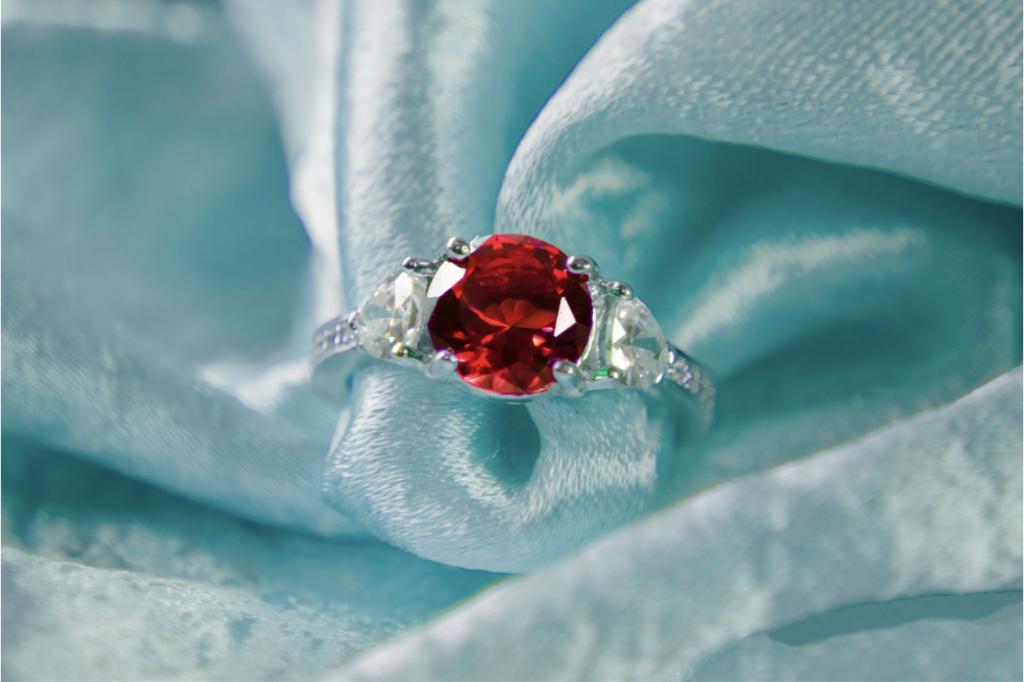
If you ask a high-end bench jeweler and a vintage retailer what elevates a ring (or any jewelry piece, for that matter) to heirloom status, they won’t talk about price tags or brand names. They will talk about engineering, physics, and geology.
An heirloom ring isn’t just beautiful today; it is built to survive centuries of daily abrasion, impact, and chemical exposure. Still, that 100-year-old ring you bought from an antique shop in Prague is not necessarily an heirloom. A vintage, yes, but it takes a bit more than time to be an heirloom.
Today, we’ll take a deep dive into the magic of heirloom jewelry (particularly rings), their features, and their stories.
What Makes a Ring an Heirloom?
True heirloom status requires a perfect intersection of three pillars: material longevity, structural architecture, and emotional provenance.
First, the materials must survive perpetual abrasion. This restricts alloys to high-density platinum or 14k/18k gold, and gems to stones that score 7 or higher on the Mohs scale (like diamonds, rubies, or sapphires) and resist scratching from everyday dust.
Second, the structural engineering must defy mechanical failure. Delicate and dainty jewelry pieces like rings with microscopic settings and fragile, paper-thin bands do not withstand the test of time.
Heirloom pieces have substantial shanks (minimum 1.8mm depth) and heavy claw or bezel settings built to endure generations of resizing and daily wear.
Finally, an old ring is just an antique that makes for a beautiful vintage engagement ring. Nothing else. Heirloom rings have a story. Besides a clear lineage (allowing them to serve as physical vessels of family history across centuries), they also have verifiable provenance, including deep-stamped hallmarks and original gem certificates.
Now that we know, in general, what makes a ring an heirloom, let’s take a closer look at each of the features:
1. The Density of the Alloy
The choice of metal determines the structural lifespan of the piece, which is why almost all heirloom pieces are made of 950 platinum or gold alloys (usually 14k or 18k). Unlike gold, platinum does not lose metal volume when scratched and gains a patina over time. Also, a platinum prong can bend, but it rarely snaps.
The solder used to create the design also affects durability. Unlike mass-produced pieces that use low-karat solder, heirloom rings use hard solder or, in the case of platinum, are laser-welded using the exact same alloy matrix to eliminate weak seams.
2. The 7-Mohs Threshold
The stones are the main attraction of any piece of jewelry, but they play an even bigger role in rings. Think about it: a beautiful diamond or ruby adds elegance and value to a ring. However, since gems usually stick out of the setting, they bear the brunt of wear and tear.
Luckily, stones that are 7+ on the Mohs hardness scale can take it without a hitch. This is why most heirloom rings feature diamonds, sapphires, rubies, or chrysoberyls. Emeralds also have the right hardness (8.5), but have natural internal fractures that make them highly prone to chipping upon impact.
So, if you’re looking to start a tradition for your family’s future generation, you should have a look at Diamondere’s handcrafted ruby rings. While diamonds would indeed be the classical choice, rubies’ vivid color makes the ring more visually appealing.
3. Structural Integrity and Durability
Since we use our hands for everything, rings are the jewelry items that take the most wear. This is why bands snap, prongs bend, and metals change color. But a true heirloom piece doesn’t throw in the towel so easily.
To prevent the ring from warping out of round over 50 years, master craftsmen use thick shanks (a minimum baseline of 1.8mm to 2.0mm in depth and width). They also favor integrated claw prongs or bezel settings over microscopic beads, which look delicate but don’t hold up over time.
Finally, high-end jewelers use high-pressure vacuum casting or hand forging (compressing the metal through rolling and hammering) to ensure maximum grain density.
4. Provenance
For an heirloom piece to retain market value, it needs verified documentation attesting to its origins and identity across generations. Master jewelers and auction houses verify the physical history of a gemstone by either using GIA or AGS certifications (for diamonds) or reputable lab reports (such as SSEF or Gübelin) for major colored stones.
The piece should also have deep, stamped hallmarks indicating the maker’s mark and the purity assay.
In summary, if you pass down a ring with a spectacular red stone, your descendants have a pretty rock. But if you pass down that ring alongside a Gübelin report certifying it as an Unheated Burmese Pigeon’s Blood ruby, you are passing down a documented, globally traded historical asset.
Withstanding the Test of Time
What makes heirloom jewelry so fascinating is its endurance. Because the master craftsman put so much care and effort into creating a long-lasting piece of beauty, you may now be looking at your great-great-grandma’s engagement ruby ring.
Even though you were born more than a century apart, this piece of jewelry managed to reach both of you. And it didn’t lose one ounce of charm and beauty. Now, this is an heirloom!
Author

Written by
Recent Posts

Jetsetter Style: Castello del Sole

The First Decision After a Collision Can Be the Most Important One
Two Weeks in Rome and Beyond: Turkish Airlines Itineraries from Boston, Chicago and Onward to India

Top 10 Hair Transplant Clinics in Turkey 2026
Artist Alley to Online Store: How Convention Artists Can Keep Selling After the Event
Categories
- Art
- Articles
- Business of Luxury
- Celebrities
- Culture
- Entertainment
- Events
- Faces of Summer 2026
- Fashion
- Fashion & Style
- Featured
- Finance
- Food, Spirits, Wine
- Hamptons
- Hamptons Celebrities
- Health
- Health & Beauty
- Lifestyle
- Luxury Lifestyle
- Press
- Profiles
- Real Estate
- Technology
- The Chronicles
- Travel
- Uncategorized
- Weddings