
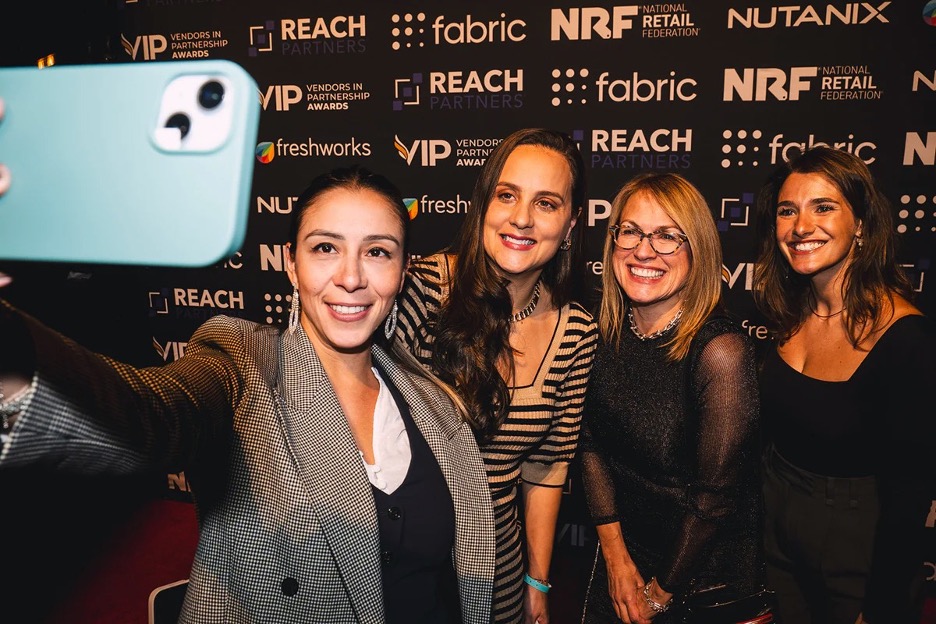
Every red carpet arrival, gala entrance, and launch party in New York shares one piece of infrastructure that almost never gets written about: the backdrop. It’s the last thing anyone at the event notices and the first thing everyone sees afterward, because it’s in every photo that circulates once the night is over. A nyc step and repeat teams choose for a marquee event isn’t an afterthought — it’s the single piece of production that determines how the entire night reads in press coverage the next morning.
Why the Backdrop Outlasts the Event
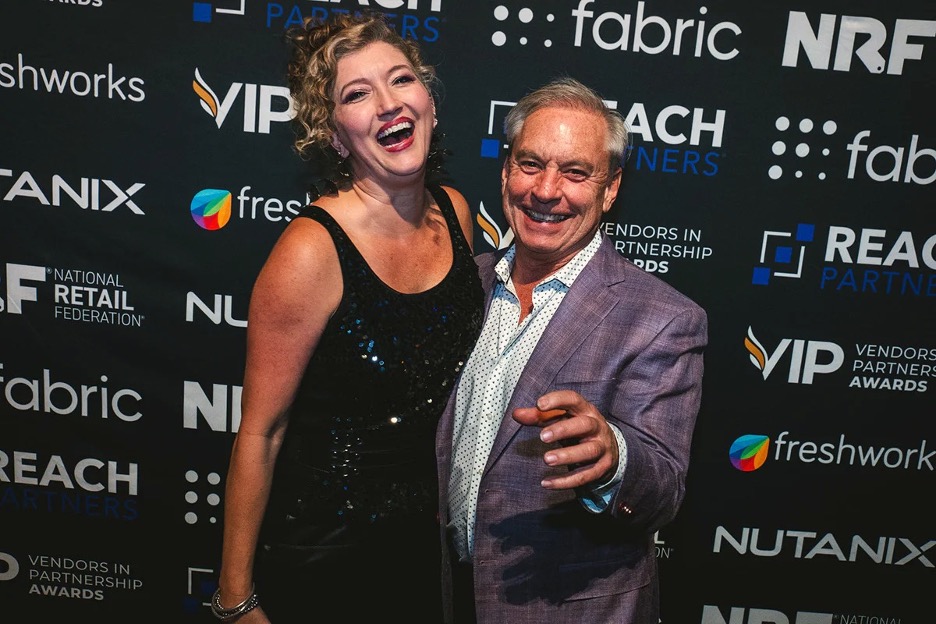
An event lasts a few hours. The photos from it don’t. A step and repeat backdrop is designed around that asymmetry: sponsor logos and event branding repeat across the panel specifically so that no matter where a photographer stands or how a group is framed, the branding survives the crop. According to the Outdoor Advertising Association of America, out-of-home visual media — the category step and repeat backdrops fall under — reaches nearly 90 percent of Americans weekly, and event photography extends that reach well past the room it was shot in, into press wraps, sponsor recaps, and social feeds for weeks afterward.
That’s the actual business case for treating a backdrop as a production priority rather than a formality: it is, in practical terms, the highest-leverage single square footage at any branded event.
Commentary: Most event budgets allocate serious money to venue, catering, and talent, then treat the backdrop as a line item handled the week before doors open. That ordering gets it backwards — the backdrop is the only piece of the event that gets reproduced indefinitely.

What Separates a Clean Backdrop From an Amateur One
Three production details decide whether a step and repeat backdrop reads professionally in every photo or looks off in half of them:
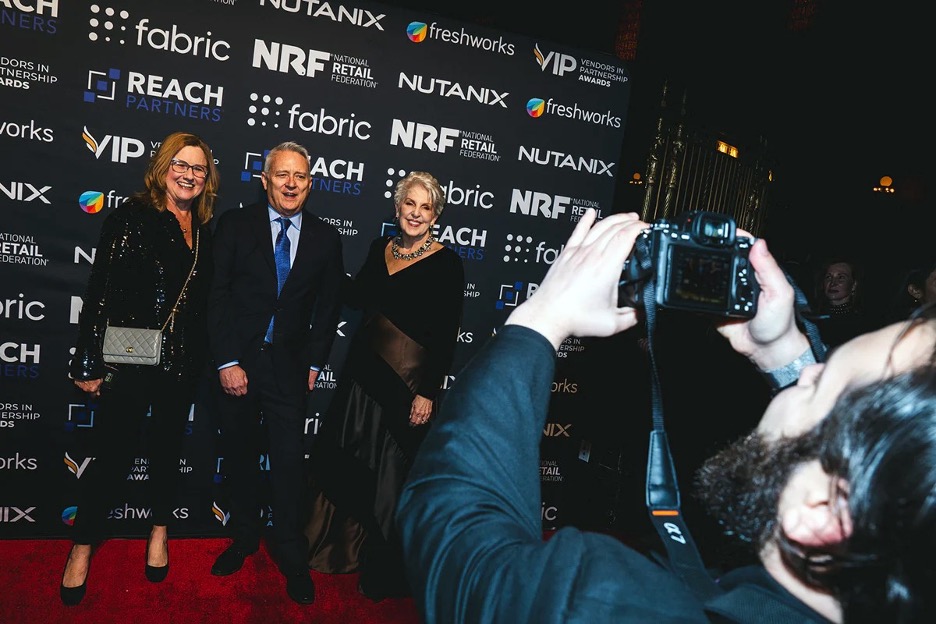
- Repeat interval calibrated to photo distance. A logo pattern that repeats too tightly crowds every frame; too loose, and a couple standing center-panel ends up in dead space instead of branding. This has to be calculated against actual photography distance for the venue, not just reviewed as a flat proof.
- Material tension and finish. Fabric that sags or wrinkles under event lighting reads badly in every photo regardless of design quality. Glossy stocks that look fine in daylight often blow out under flash photography — a mistake that shows up specifically in red carpet arrival shots, where flash is constant.
- Print resolution at scale. Backdrops are printed large and photographed close. A soft or pixelated print is forgiving at a glance and becomes the story the moment a tight crop runs in press coverage.
Commentary: None of this is expensive to get right. It’s a production-partner problem, not a budget problem — the gap between a backdrop event teams are proud of and one nobody photographs well is almost always about whether the print shop has actually built backdrops for photography use before.
Why New York Productions Lean Local
Sponsor logos and guest lists finalize late. Event teams are frequently locking artwork 24 to 48 hours before doors open, which makes turnaround time the binding constraint on almost every step and repeat order in this market — more than budget, more than design complexity. A national vendor with a standard multi-day shipping window can’t absorb that timeline. NYC studios producing Industri Designs‘ step and repeat work exist specifically because press and PR teams need same-day proofing, printing, and delivery when a sponsor confirms final branding the same afternoon the backdrop has to be on-site.
FedEx Office’s research on retail signage found that roughly 76 percent of consumers will enter a business they’ve never visited before based on signage alone — a data point built around storefronts, but the underlying behavior (visual branding driving first impressions before a word is exchanged) is exactly what a step and repeat is doing at the door of an event.
A Short Checklist Before Your Next Backdrop Goes to Print
- Has the repeat pattern been reviewed against actual photo-op distance, not just as a flat design proof?
- Is the material spec matched to the lighting plan — flash-heavy red carpet versus ambient gala lighting need different finishes?
- Is there buffer in the timeline for a same-day reprint if a sponsor logo changes late?
- Is the stand and rigging hardware rated for the venue — outdoor backdrops fail more often from wind than from the print itself.
Conclusion
The large format printing market is projected to exceed 11 billion dollars globally by 2027 according to Statista, and event backdrops are a meaningfully growing share of that spend as brands lean harder into experiential marketing. For event and PR teams in New York, the lesson from a full season of galas and launches is consistent: the backdrop isn’t decoration, it’s the only piece of the event guaranteed to outlive the night. Treating its production with the same seriousness as the venue or the talent is the difference between a backdrop that becomes the event’s most-shared photo and one nobody remembers was there.
Industri Designs, a large-format print studio at 175 Varick St in Manhattan, produces step and repeat backdrops and other event graphics for New York galas, launches, and press events on same-day turnaround.
Author

Written by
Recent Posts
The First Decision After a Collision Can Be the Most Important One
Two Weeks in Rome and Beyond: Turkish Airlines Itineraries from Boston, Chicago and Onward to India
Top 10 Hair Transplant Clinics in Turkey 2026
Artist Alley to Online Store: How Convention Artists Can Keep Selling After the Event
When an 18-Wheeler Crash Leaves Lasting Consequences
Categories
- Art
- Articles
- Business of Luxury
- Celebrities
- Culture
- Entertainment
- Events
- Faces of Summer 2026
- Fashion
- Fashion & Style
- Featured
- Finance
- Food, Spirits, Wine
- Hamptons
- Hamptons Celebrities
- Health
- Health & Beauty
- Lifestyle
- Luxury Lifestyle
- Press
- Profiles
- Real Estate
- Technology
- The Chronicles
- Travel
- Uncategorized
- Weddings