
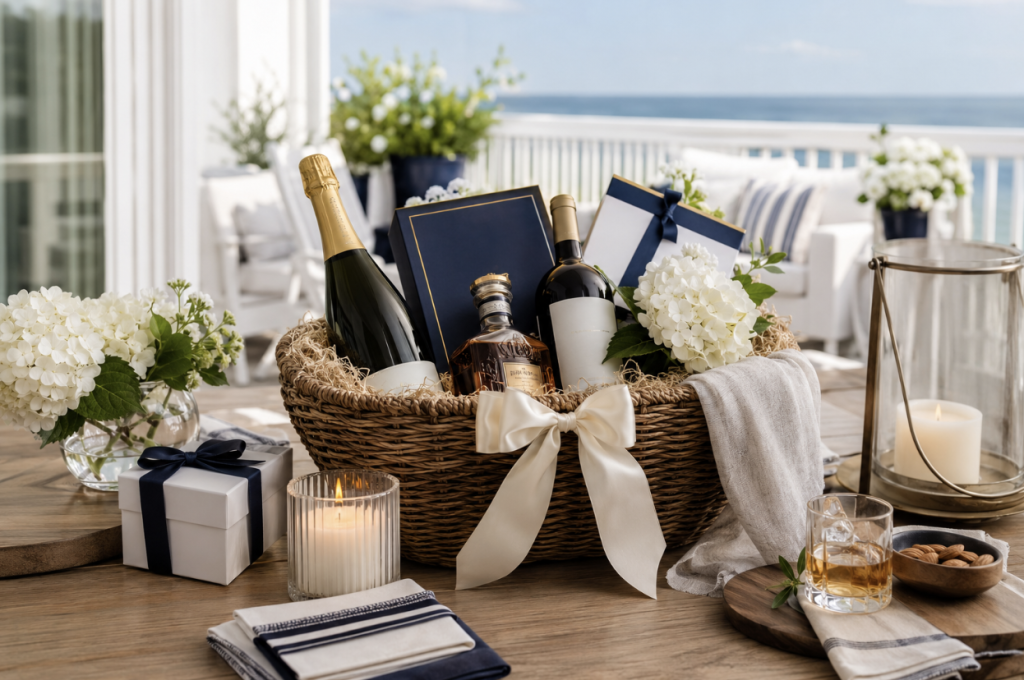
Summer in the Hamptons runs on invitations: a raw bar lunch in Sag Harbor, golden-hour cocktails overlooking Georgica Pond, a last-minute dinner at a friend’s rental in Amagansett. And with every invitation comes an unspoken question: what do you bring? For years, the safe answer was a decent bottle of something and an apology for not having more time to shop. That era is quietly ending. Host and hostess gifts have become a small but telling form of self-expression, and the guests who get it right understand that a bottle isn’t just alcohol; it’s a gesture, a compliment, and occasionally a conversation starter. Here’s how to think about wine, champagne, and bourbon gifting the way experienced hosts and guests do.
Why the Humble Bottle Isn’t Enough Anymore
A generic bottle grabbed on the way to a party used to be perfectly acceptable. It still won’t get you uninvited. But as entertaining across the East End has become more curated—think tablescapes, signature cocktails, and menus built around a specific vineyard or region—guests have started matching that effort. Hosts notice. A bottle chosen with even a little intention signals that you paid attention to who they are, not just that you stopped somewhere on the way over.
This doesn’t mean every gift needs to be extravagant. It means the presentation, the pairing, and the story behind the bottle now do more work than the price tag alone.
Reading the Room: Matching the Gift to the Occasion
Not every gathering calls for the same gift, and misjudging the occasion is the most common gifting mistake.
Weekend Stays and Dinner Parties
For a weekend house stay, bring something the host can open that night, plus something they can save. A well-chosen bottle of champagne for a celebratory toast, paired with a bottle meant for a quieter evening later in the week, covers both bases without overthinking it.
Weddings, Showers, and Milestone Celebrations
Hamptons wedding season seems to stretch from Memorial Day straight through Labor Day, and the gifting stakes rise accordingly. For engagement parties, showers, and rehearsal dinners, personalized or engraved bottles tend to outperform anything generic; they photograph well, they feel intentional, and they become part of the memory of the day rather than just another gift on the table.
Corporate and Client Gifting
Real estate closings, brokerage thank-yous, and end-of-season client appreciation are their own category entirely;y these gifts need to read as polished and a little formal, nothing too playful, nothing that requires explanation. A well-aged bourbon set or an engraved bottle of champagne tends to work best here, since it reads as thoughtful without being personal enough to feel out of place in a professional relationship. Skip anything overly trendy or quirky; client and closing gifts age better when they lean classic, since they’re often displayed in an office or kept long after the occasion itself.
What Actually Makes a Wine or Champagne Gift Feel Curated
A handful of details separate a forgettable bottle from a gift someone remembers:
- The story behind the label: A small-production vineyard or a champagne house with real history gives the recipient something to talk about, not just drink.
- Thoughtful pairing: Bottles presented alongside artisan cheese, charcuterie, or chocolate read as considered rather than last-minute.
- Presentation: Wooden gift boxes, ribbon, and proper wrapping do more for perceived value than most people realize.
- Personalization: An engraved bottle or a handwritten note attached to the gift turns a purchase into something that feels made for the occasion.
Gift retailers built specifically around this kind of curation, like Wine & Champagne Gifts, have leaned into exactly this shift by pairing bottles with accessories, chocolates, and personalization options so the gift doesn’t need to be assembled by hand at the last minute.
The Quiet Rise of Bourbon and Whisky as a Host Gift
Wine and champagne still dominate warm-weather gifting, but bourbon and whisky have become a legitimate alternative, particularly for hosts, dads, and clients who lean toward spirits over wine. A well-chosen bourbon gift basket signals the same level of thought as a bottle of champagne, without assuming the recipient’s taste in wine.
It also solves a real gifting problem: bourbon ages well on a shelf and doesn’t need to be consumed immediately, which makes it a low-pressure gift for someone you don’t know that well yet. Specialty shops such as Bourbon & Whisky have built entire catalogs around this exact use case: pre-assembled gift sets that take the guesswork out of buying spirits for someone whose preferences you’re still learning.
Where to Source Something Better Than the Corner Store
The biggest gifting upgrade most people can make isn’t spending more; it’s shopping somewhere built for gifting rather than for grocery runs. A dedicated wine and spirits retailer typically offers curated selections, gift-ready packaging, and delivery timed to the event, which is nearly impossible to replicate with a rushed stop at a liquor store on the way to dinner. Shops like
DC Wine & Spirits specialize in exactly this kind of last-minute-but-still-impressive gifting, with wine and champagne baskets built to arrive ready to hand over, no assembly required.
Gifting Etiquette: The Dos and Don’ts
A few guidelines worth keeping in mind before you show up empty-handed or overthink it entirely:
- Do bring a gift even for a casual dinner; it doesn’t need to be elaborate, but arriving with nothing reads as an oversight.
- Do check dietary or drinking preferences when you know the host well enough to ask.
- Don’t expect your host to open your bottle that night; many hosts already have the evening’s wine planned.
- Don’t regift something visibly discounted or clearance-tagged; presentation matters more than people admit.
- Do attach a short handwritten note; it’s a small detail that hosts consistently remember.
FAQ: Wine, Champagne, and Bourbon Gifting
How much should I spend on a hostess gift in the Hamptons?
There’s no fixed rule, but $40–$100 is a reasonable range for a dinner party or weekend stay, with weddings and corporate gifts trending higher. Presentation and thoughtfulness typically matter more than the exact price.
Is champagne always a safe gift?
It’s close to it. Champagne works for celebrations, hostess gifts, and thank-yous alike, and it doesn’t require knowing much about the recipient’s specific taste in wine.
What if my host doesn’t drink alcohol?
Non-alcoholic sparkling wines, gourmet food baskets, or spa-themed gift sets are widely available and make thoughtful substitutes that don’t sacrifice presentation.
Should I bring a gift even if the host says “don’t bring anything”?
Yes, generally. Hosts often say this out of politeness. A small, easy-to-set-aside gift, rather than something that needs immediate attention, respects both the offer and the gesture.
The Takeaway
Gifting a bottle of wine, champagne, or bourbon will always be a simple gesture at its core. What’s changed is how much thought guests now put into making that gesture meaningful. As this summer’s entertaining calendar fills up with dinners, showers, and closings, the guests who stand out won’t necessarily be the ones who spent the most; they’ll be the ones who picked something that actually fit the occasion, the host, and the moment.
Author

Written by
Recent Posts
The First Decision After a Collision Can Be the Most Important One
Two Weeks in Rome and Beyond: Turkish Airlines Itineraries from Boston, Chicago and Onward to India

Top 10 Hair Transplant Clinics in Turkey 2026
Artist Alley to Online Store: How Convention Artists Can Keep Selling After the Event
When an 18-Wheeler Crash Leaves Lasting Consequences
Categories
- Art
- Articles
- Business of Luxury
- Celebrities
- Culture
- Entertainment
- Events
- Faces of Summer 2026
- Fashion
- Fashion & Style
- Featured
- Finance
- Food, Spirits, Wine
- Hamptons
- Hamptons Celebrities
- Health
- Health & Beauty
- Lifestyle
- Luxury Lifestyle
- Press
- Profiles
- Real Estate
- Technology
- The Chronicles
- Travel
- Uncategorized
- Weddings