
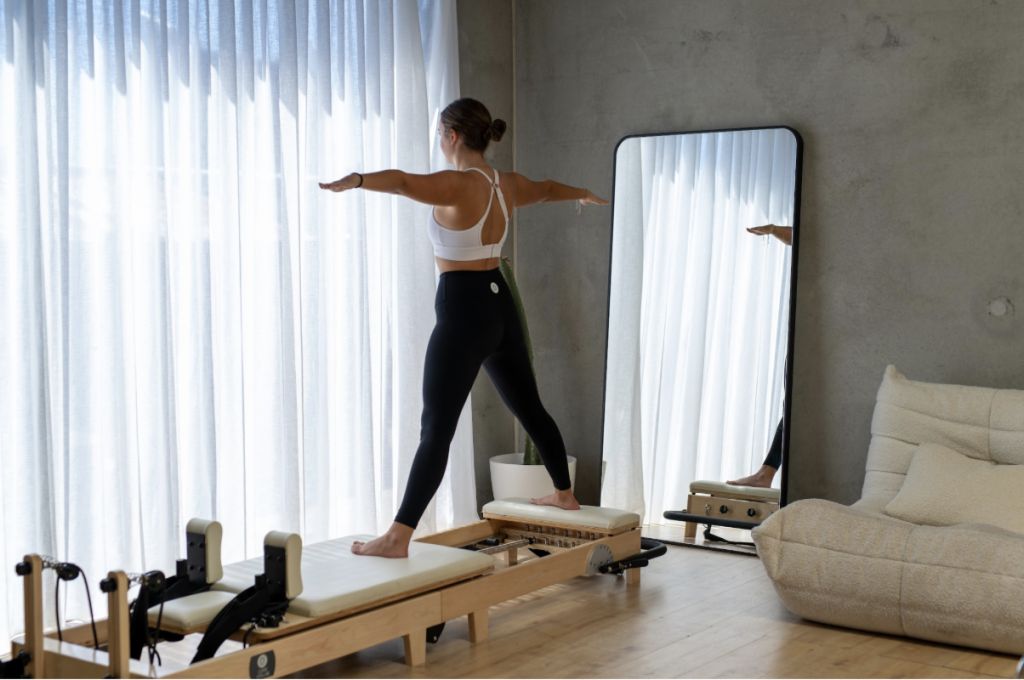
The reformer once looked slightly misplaced at home. It belonged in a bright studio beside several matching machines. Put one beside a linen sofa or oak cabinet, and the room could feel unfinished.
In the right setting, that is no longer the case. A reformer can sit in a guest suite, pool house, or calm corner near the garden. The change is not only about exercise. It also reflects how wellness can fit into daily home life.
The Room Still Has to Look Like a Room
A wellness space should not feel like a storage area with a mirror. The reformer may be the largest item, but everything around it shapes the room.
Flooring matters first. Pale timber feels warmer than black rubber tiles. A woven rug can soften the space, but it must stay clear of moving parts. Curtains help with glare and make morning sessions feel more private.
ABC has also explored the connection between home design and wellbeing, including how thoughtful interiors can help a space feel calmer and more restorative.
The smaller details matter too. Towels need a shelf. Straps should not hang from a door handle. Grip socks, cleaning cloths, and water bottles need somewhere to go. The room feels better when those things disappear after use.
A Reformer Is Easier to Place Than Most Gym Equipment
A reformer has a long, low shape. It can sit below windows without blocking the view. It also feels less bulky than tall machines with screens, cables, and heavy frames.
Materials make a difference. Timber frames sit well beside oak, walnut, stone, and warm plaster walls. Darker frames suit bronze details, smoked glass, or deeper wall colors.
The mistake is choosing the machine without thinking about the room. Its length, color upholstery, and clearance all matter. Even a beautiful reformer feels awkward when it blocks a cupboard or cuts across a doorway.
Measure the floor with drawers and doors open. Leave room to stand, kneel, and move around the carriage. Delivery day is too late to discover that a cabinet cannot open.
The Smaller Pieces Need a Proper Home
The reformer is only one part of the setup. A box left near the wall can make the room feel messy. A bright wedge or loose pole can pull attention from everything else.
A shallow cabinet works well for smaller pieces. Open shelves suit items with similar colors and shapes. When the pieces do not match, closed doors are usually kinder.
Rooms with soft colors need smaller pieces that feel considered. Well-chosen reformer Pilates accessories for a polished setup may include mats, poles, boxes, and support pieces. Choose the items used often, then give each one a clear place.
Light Can Make the Room Feel Calm or Clinical
A reformer near a large window looks appealing, but direct sun can become uncomfortable. Morning light may feel lovely. Strong afternoon light can heat the room and create harsh reflections.
Sheer curtains soften the view without making the room dark. Timber screens add privacy and warmth. In a garden room, planting outside the window can filter the light naturally.
One hard ceiling fixture often makes the room feel clinical. Wall lights and a dimmable ceiling light give more control. A session before dinner needs a different light from one at seven in the morning.
The Best Spaces Leave Something Out
A reformer, a bench, and one storage wall may be enough. Filling every corner with weights, rollers, mirrors, and screens can make the room feel busy. It also creates more cleaning and more visual noise.
One open patch of floor is useful. It leaves space for stretching, standing work, or a trainer. It also stops the reformer from looking squeezed into the room.
Mirrors need some restraint. A full mirrored wall can make a room feel larger, but it may also resemble a commercial studio. One tall mirror often does the job without taking over.
The Room May Still Need Another Purpose
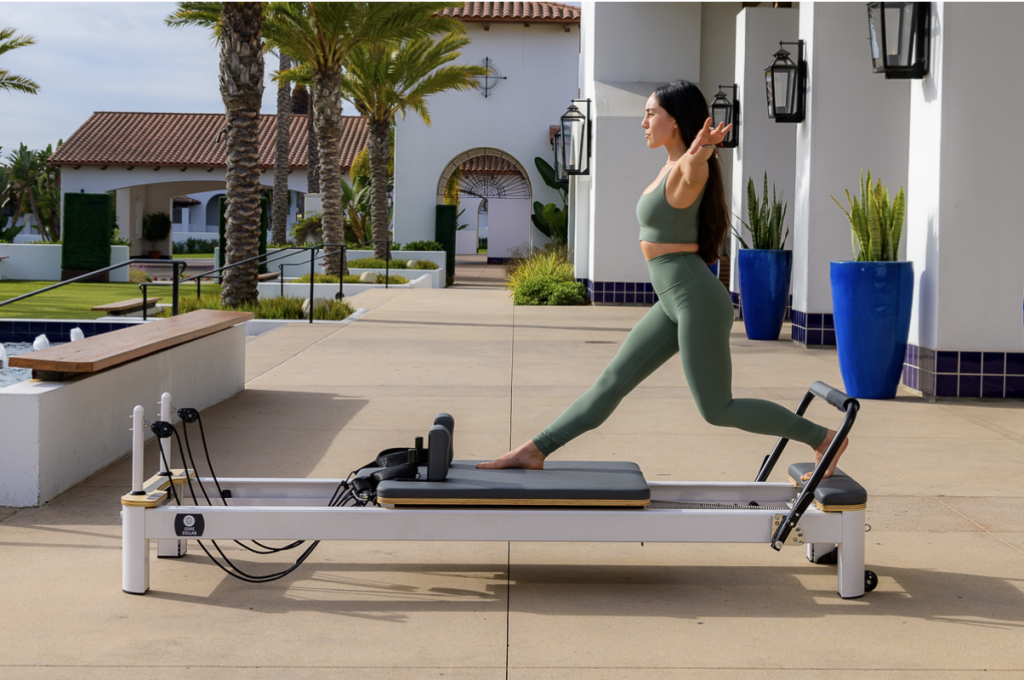
Not every home needs a room used only for Pilates. A guest suite can hold a reformer along one wall. A study can change once the desk chair moves aside. A pool house can handle morning sessions before towels and guests arrive.
Architectural Digest’s look at designer-approved wellness spaces shows how a dedicated room or quiet corner can support exercise without losing its connection to the rest of the home.
The change should feel easy. Heavy furniture should not need moving, and storage should close quickly. The machine should never sit in a nighttime walkway.
A room with two uses must still look good between sessions. Fewer loose pieces and a clear path make that possible.
Sound Changes the Feel of the Space
A beautiful room can still feel wrong if every movement echoes. Timber floors, stone walls, and large windows may look elegant, but they can make springs and carriage wheels sound much louder.
Soft curtains help more than expected. So does a fabric bench, an upholstered chair, or a thick mat placed nearby. The aim is not total silence. The room should simply feel calm enough for an early session without waking the rest of the house.
The View Matters More Than Another Screen
Many home gyms are built around a television. Pilates rooms often work better with something quieter to look at.
A window facing trees, a courtyard, or a pool can change the mood of the whole session. Even a narrow garden view feels better than staring at storage doors.
When the view is limited, artwork can help. One large piece usually feels more considered than several small prints. The wall should still have room to breathe.
It Feels Personal Rather Than Showy
Rows of gym machines can feel too heavy for a carefully planned interior. A smaller space built around one useful routine often feels more personal.
Pilates suits that kind of room. The equipment sits low, the movements are controlled, and the space does not need to shout. A reformer can live beside art, soft curtains, or garden views without making the room feel less considered.
That is why Pilates feels natural in design-conscious homes. The room can still be beautiful, calm, and useful. It simply has another job now.
Author

Written by
Recent Posts

The Greek Islands, the Luxurious Way: Villa Escapes for Couples

Where Golf Meets the Good Life: Scotland’s Most Exclusive Golf Escapes

Luxury in the French Alps: Family Ski Resorts Worth the Journey
How to Improve Security at Large Social Events

Examining Truck Position After a Crash
Categories
- Art
- Articles
- Business of Luxury
- Celebrities
- Culture
- Entertainment
- Events
- Faces of Summer 2026
- Fashion
- Fashion & Style
- Featured
- Finance
- Food, Spirits, Wine
- Hamptons
- Hamptons Celebrities
- Health
- Health & Beauty
- Lifestyle
- Luxury Lifestyle
- Press
- Profiles
- Real Estate
- Technology
- The Chronicles
- Travel
- Uncategorized
- Weddings