
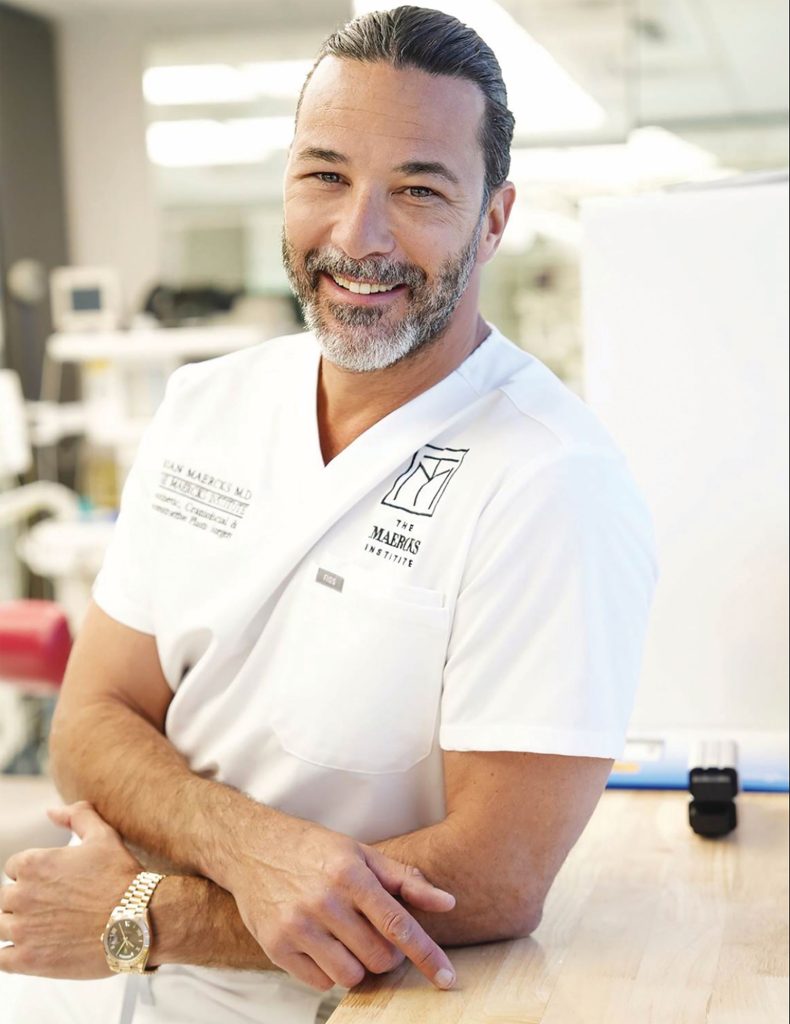
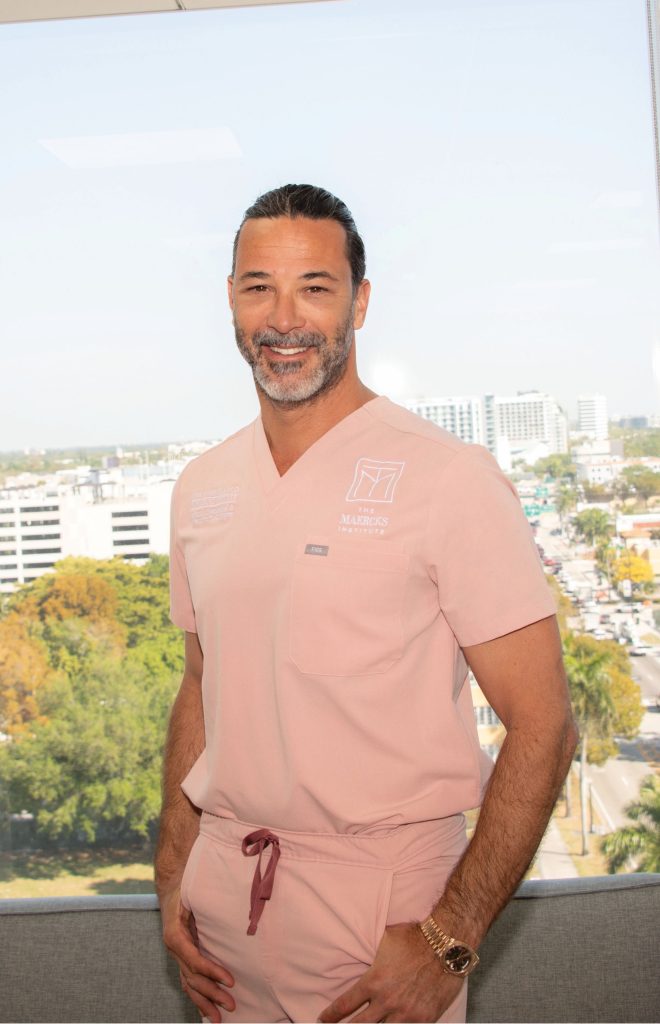
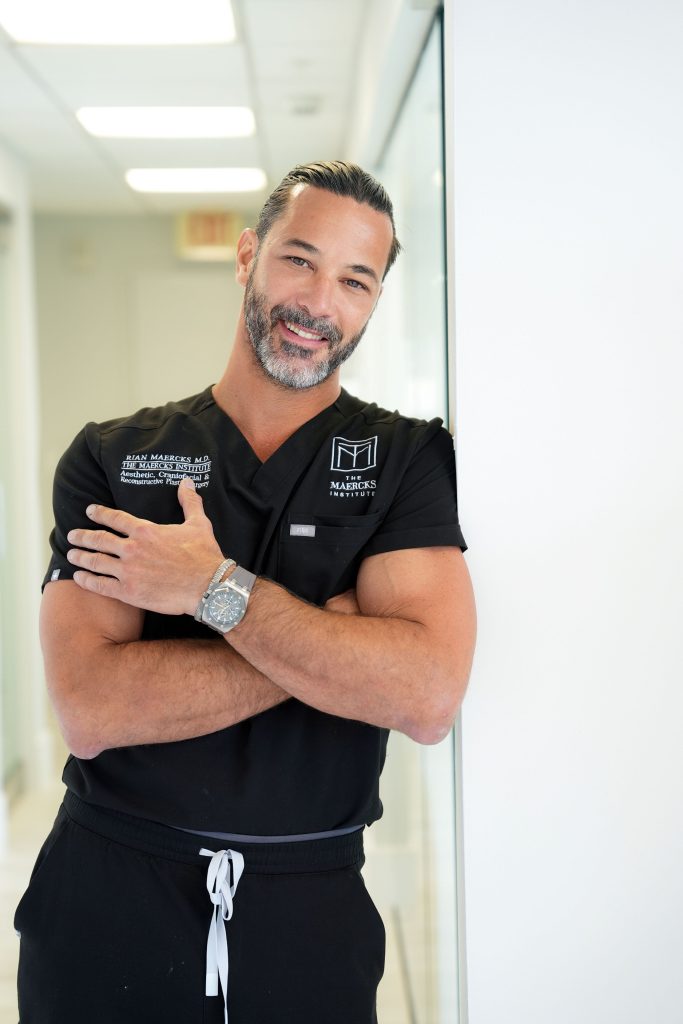
At a moment when faces can be filtered, filled, tightened, and transformed in an afternoon, individuality has become a luxury. The most sophisticated aesthetic choice may be the one no one can quite detect. For Dr. Rian A. Maercks, the Miami- and East Hampton–based plastic surgeon whose international clientele travels to him from the world’s cities, the true measure of a successful procedure is not whether it attracts attention. It is whether the patient still looks unmistakably like herself.
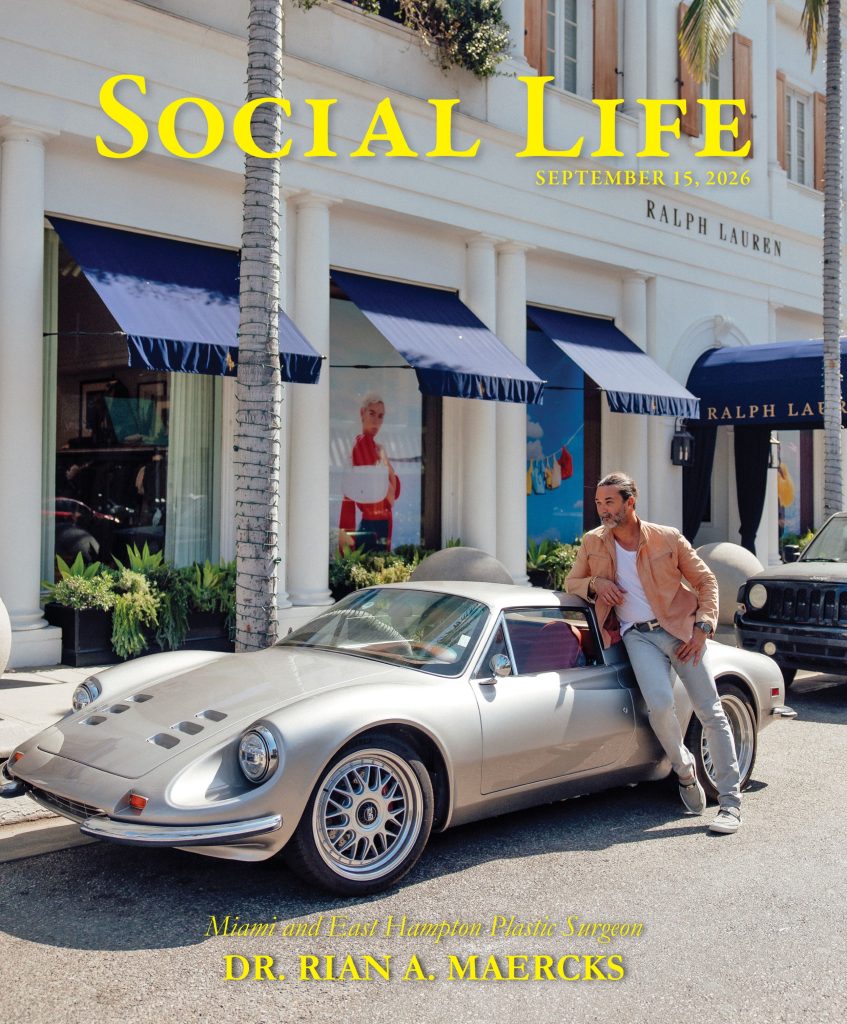
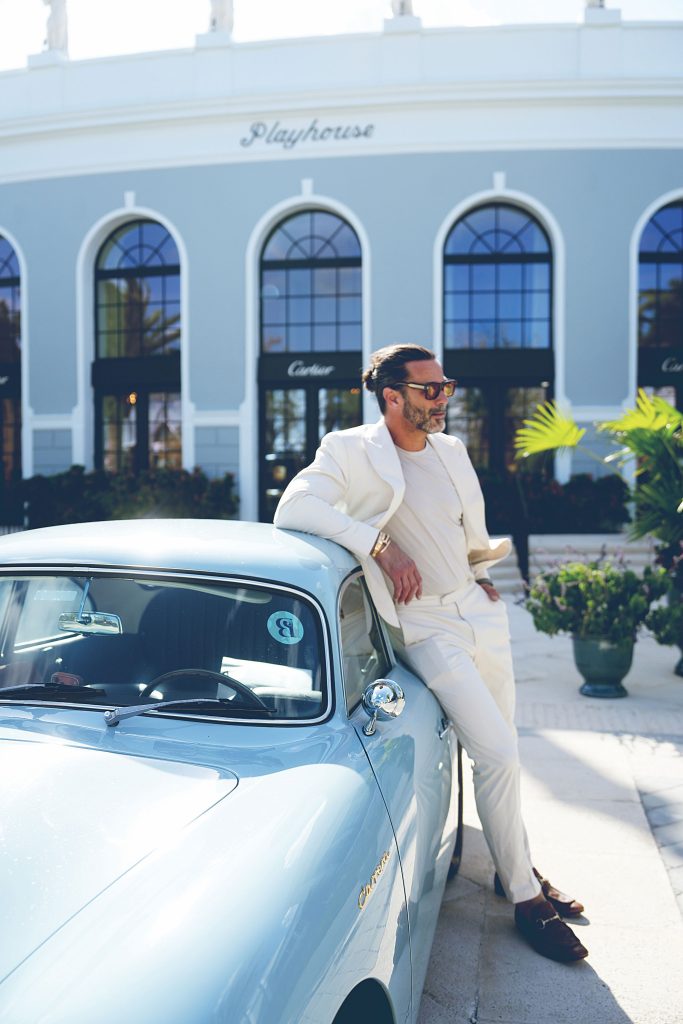
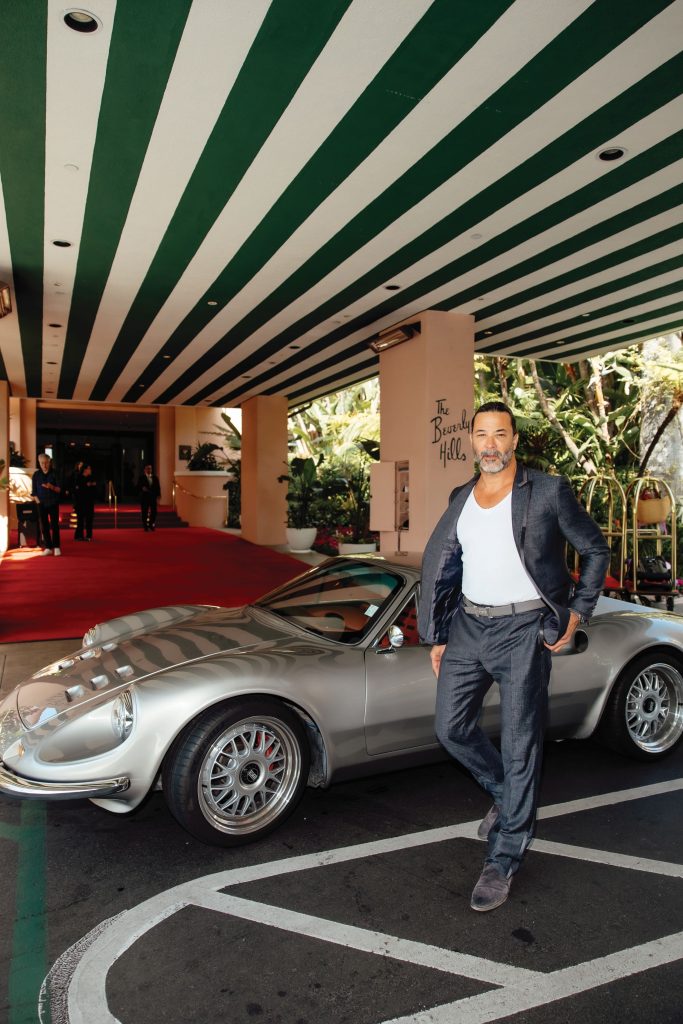
Dr. Rian A. Maercks appears on the cover of Social Life Magazine’s mid-September issue, released for The Bridge car show weekend. A passionate car collector himself, Maercks will show his Ascari F/GT at The Bridge on Saturday—an extension of his appreciation for structure, precision, and exceptional design.
That principle of restoration rather than reinvention has shaped The Maercks Institute since its founding in 2009. Patients do not arrive asking to become someone else. They want to recover the vitality, balance, and ease that time has altered without surrendering the features that carry their identity. In Maercks’s hands, facial rejuvenation is less about imposing an ideal than uncovering what is already there.
“Subtle but profound” is how he describes both his work and its objective: a meaningful transformation that appears to have been made by nature. It is an approach attuned to a new kind of aesthetic patient who is highly informed, discreet, and wary of the telltale signs of intervention. According to the practice, more than 80% of its clientele travels for treatment, drawn by results intended to look less newly created than somehow recovered: beauty that appears “born that way.”
The philosophy reflects Maercks’s uncommon path into medicine. An aesthetic, craniofacial, and reconstructive plastic surgeon with more than 20 years of experience, he is board-certified by the American Board of Plastic Surgery and an active member of the American Society of Plastic Surgeons. He earned his medical degree at Duke University School of Medicine, completed integrated plastic and reconstructive surgery training through Cincinnati Children’s Hospital and the University of Cincinnati Hospital, and pursued advanced fellowships with international leaders in craniofacial and aesthetic surgery. His background in fine art and philosophy informs the way he sees a face: not as isolated features but as a composition of proportion, movement, light, and character.
His guiding concept is Histiocentricity, a term derived from the idea of putting the tissues themselves at the center of surgery. Instead of relying on broad dissection or tension at the skin, the approach emphasizes respect for each patient’s anatomy, minimal disruption, tension-free closure, and carefully directed internal support. It is a technical philosophy but also an aesthetic one. Every plan begins with the individual architecture of the face. There is no universal template and no single signature face stamped across every patient.
That refusal to standardize is particularly resonant now. Social media has made aesthetic procedures more visible while also narrowing the definition of beauty into a handful of recognizable features. Maercks moves in the opposite direction. He considers how a face looked before gravity altered it, how it moves in conversation, and which asymmetries or contours are essential to its character. The consultation becomes an exercise in discernment: identifying what has changed without “correcting” the very details that make the patient distinctive.
There is a seductive simplicity to Maercks’s premise: Do more where the face needs structure and less where intervention might reveal itself. This thinking is expressed most fully in the MAERCKS Lift, his signature composite deep-plane facelift. MAERCKS stands for “Musculo-Aponeurotic Elevation and Retention with Cheek KEDGE-Suspension.” Traditional facelifts can concentrate on tightening what is visible, risking a pulled surface while leaving deeper sources of facial heaviness insufficiently addressed. The MAERCKS Lift is designed to reposition deeper tissues along anatomically appropriate vectors, including the midface, the region whose descent can create heaviness beside the nose and at the corners of the mouth.
The aim is not tightness but support. By working in the deep plane while limiting unnecessary dissection, Maercks seeks to elevate the face from within and allow the skin to settle without strain. The intended effect is softer, stable, and natural: refreshed contours without the flattened, swept, or overly polished appearance that can announce surgery.
Supporting the lift is KEDGE-Suspension, Maercks’s proprietary ligament-based method. The name evokes a nautical maneuver in which a vessel is moved by anchoring ahead and drawing forward. It is a useful metaphor for restoring internal support rather than pulling the skin backward. KEDGE-Suspension is designed to secure facial tissues along customized vectors, giving structure to the rejuvenation while preserving expression and individuality.
For patients beginning to notice change but not yet seeking a comprehensive facelift, the Institute offers MICROLYFT, a limited-incision procedure rooted in the same philosophy. It is designed to address developing structural changes across the neck, jawline, and lower third of the face through focused, histiocentric dissection. MICROLYFT belongs to a continuum of care: intervention calibrated to the patient’s anatomy, age, and goals rather than a dramatic, one-size-fits-all response.
That continuum also includes Aesthetic Facial Balancing, a concept Maercks began advancing years before facial harmonization became an industry catchphrase. Using hyaluronic acid filler or a patient’s own fat, he considers the face globally, restoring proportion instead of treating each line or feature independently. The objective is not conspicuous volume. It is balance.
The same thinking extends beyond the face. Maercks developed Cold-Subfascial Breast Augmentation to create natural cleavage and avoid familiar compromises of conventional augmentation. The technique is designed to reduce implant displacement, “bottoming out,” animation deformity caused by muscle movement, and the widely separated look that can occur with some subpectoral placements. The desired result, as throughout his practice, is an enhancement that belongs to the body rather than appearing attached to it.
Technique, however, is only part of the modern surgical experience. Fear of pain, anesthesia, opioids, and conspicuous recovery can be as influential as fear of an unnatural result. For select patients, Maercks offers Zero Experience, a pathway combining awake local anesthesia, opioid-free pain management, discreet incisions, and little to no social downtime.
A central component is his use of EXPAREL, an FDA-approved liposomal formulation of bupivacaine that releases local anesthetic over approximately 72 hours. Maercks employs it with a tumescent technique across facial, breast, body, and genital procedures. By controlling discomfort locally and reducing reliance on general anesthesia and opioid medication, the protocol is designed to lessen physiologic stress and create a smoother recovery. For executives, public figures, international travelers, and others whose lives demand privacy and limited interruption, that experience can be nearly as important as the procedure itself.
The promise is compelling, but Maercks’s practice is perhaps most distinguished when the starting point is not untouched anatomy. The Maercks Institute has become an international referral center for facelift revision; approximately 60% of the facelifts it performs are revision procedures. Patients arrive with visible scars, distorted features, unnatural tension, imbalance, or animation deformities after prior surgery. These cases require more than repeating a conventional facelift.
Author

Written by
Recent Posts
How to Choose the Right Wall Bed for Your Bedroom

Is It Possible to Travel to Ukraine in 2027? A Practical Guide for International Visitors
Why Are Truck Accident Cases So Difficult? The benefits of working with a truck accident lawyer
Hudson County DUI Attorney: What to Know After a DWI Arrest

What to Do When Your Myrtle Beach Workers’ Compensation Claim Is Denied
Categories
- Art
- Articles
- Business of Luxury
- Celebrities
- Culture
- Entertainment
- Events
- Faces of Summer 2026
- Fashion
- Fashion & Style
- Featured
- Finance
- Food, Spirits, Wine
- Hamptons
- Hamptons Celebrities
- Health
- Health & Beauty
- Lifestyle
- Luxury Lifestyle
- Press
- Profiles
- Real Estate
- Technology
- The Chronicles
- Travel
- Uncategorized
- Weddings