
Budget travellers in Morocco can still experience the vibrant culture of historic medinas and the breathtaking landscapes of desert camps on a modest budget. In 2026, the country remains an exceptionally affordable destination for those who adopt the right strategies. By combining simple medina-based stays, relying on delicious street food, utilizing public transport, and booking Sahara tours directly rather than through packaged hotel add-ons, backpackers are keeping their total trip costs remarkably low.
A typical budget traveler trip style prioritizes these local experiences over luxury, allowing for a comprehensive two-week journey that covers key destinations like Marrakech, Fes, Essaouira, and Merzouga without financial strain. The core pattern for success is simple but highly effective:
- Sleep inside or near the ancient city centers.
- Eat exactly where the locals eat.
- Negotiate directly with service providers.
What is a realistic daily budget for backpackers in Morocco?
In 2026, a low-cost Morocco trip can be managed on a modest daily budget ranging from $30 to $60 per person per day, which translates to roughly 40 to 60 EUR.
- A practical breakdown allocates about $8 to $25 for accommodation in dorms or budget private rooms, with many backpacker guides quoting $15 to $20 as a safe common planning figure.
- Food expenses generally run between $8 and $18 daily if you rely on bustling markets and local cafés.
- Local transport adds another $5 to $10, though this can increase if you rely heavily on taxis instead of walking.
- Finally, medina attractions and daily activities cost about $5 to $15 on average, as many sightseeing days involving exterior architecture and public squares cost little to nothing.
Overall, a two-week budget trip duration has an estimated total cost of $500 to $700 per person, excluding flights, provided that larger excursions like desert trips are budgeted as separate, one-off splurges outside the normal daily spend.
Where can you find authentic yet affordable accommodation inside the medinas?
Inside the historic city centers, hostels and simple riads are the best low-cost accommodation for budget travellers. These medina accommodations typically cost between $10 and $35 per night. Specifically, hostel dorms in popular cities such as Marrakech, Fes, and Chefchaouen are reported to cost about $8 to $12 a night. For those seeking slightly more privacy, budget private rooms in guesthouses or small riads commonly run $12 to $25, and these rates often include a traditional breakfast. Some 2026 budget guides place private riad rooms slightly higher at $15 to $30, which still remains well below mid-range hotel pricing.
The best-value medinas include Chefchaouen, Fes, and Essaouira. Staying in the medina gives the most authentic experience, but it comes with a trade-off of more bargaining pressure and tourist attention. Staying slightly outside the medina, such as in Marrakech’s Gueliz or Fes’s Ville Nouvelle, can occasionally be cheaper for hotels, but travellers lose some of the unique atmosphere and may end up spending more on daily taxis. To maximize savings, travellers often negotiate multi-night stays directly with the riads, which can yield discounts of roughly 10 to 20 percent, especially when traveling in the low season when some rates reportedly fall by 30 to 50 percent.
How do you stay connected in the medinas without paying high roaming fees?
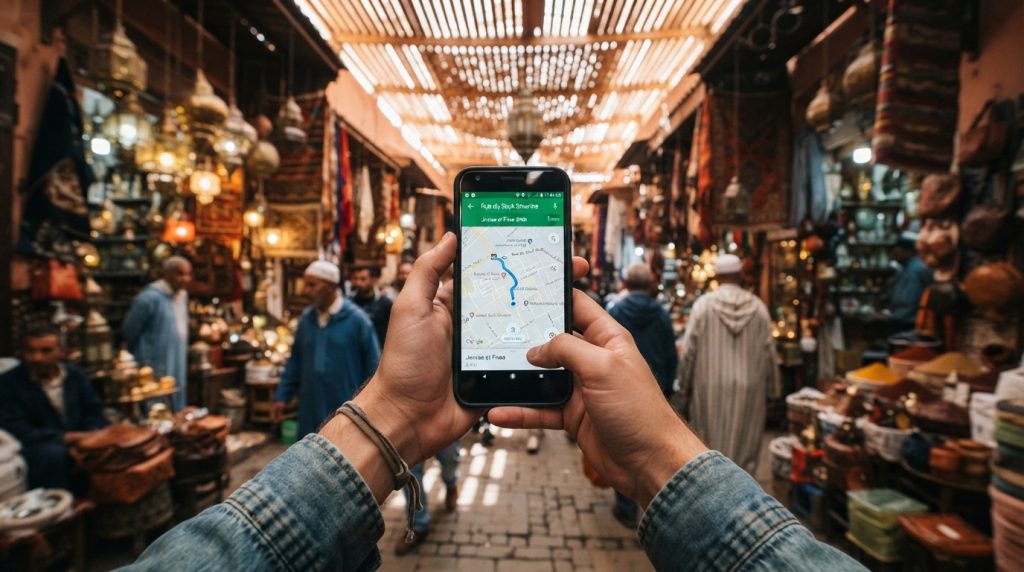
Navigating the labyrinthine alleys of Morocco’s ancient medinas requires reliable mobile internet access, especially to check digital maps and avoid faux guides or persistent touts. However, international data charges can quickly consume a significant portion of a backpacker’s daily allowance.
For instance, solutions like Amigo provide instant digital setup via a QR code sent through email, entirely eliminating the need for a physical SIM card. By utilizing a no roaming fees eSIM in Morocco, travelers can secure affordable mobile data plans that automatically activate upon arrival. This ensures reliable local network connectivity while keeping primary phone numbers and WhatsApp active, allowing budget travellers to safely explore the souks and manage their itineraries without facing unexpected and exorbitant international charges.
What are the best strategies for finding cheap and delicious local food?
Food is one of the easiest areas to save money while actually improving the quality and authenticity of your experience. The best tactic is to eat where the locals eat, which often means walking just two streets away from major tourist hubs.
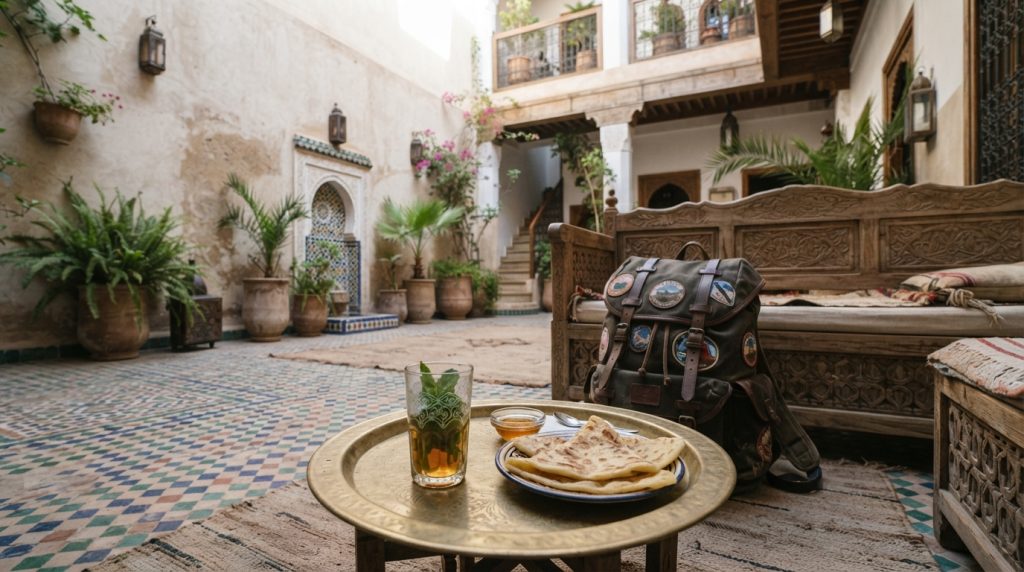
For example, while the famous Jemaa el-Fnaa square in Marrakech is free to enter and explore, dining directly in the main square or at restaurants with multilingual menus and photo boards can be expensive. By venturing into neighboring alleys, travellers can find street stalls, market meals, and neighborhood eateries where the price difference between tourist and local restaurants can be three to five times cheaper. Relying on these local spots keeps daily food costs between $8 and $18, allowing travellers to enjoy hearty tagines, fresh bread, and mint tea without straining their wallets.
How can you book an affordable Sahara desert camp experience?
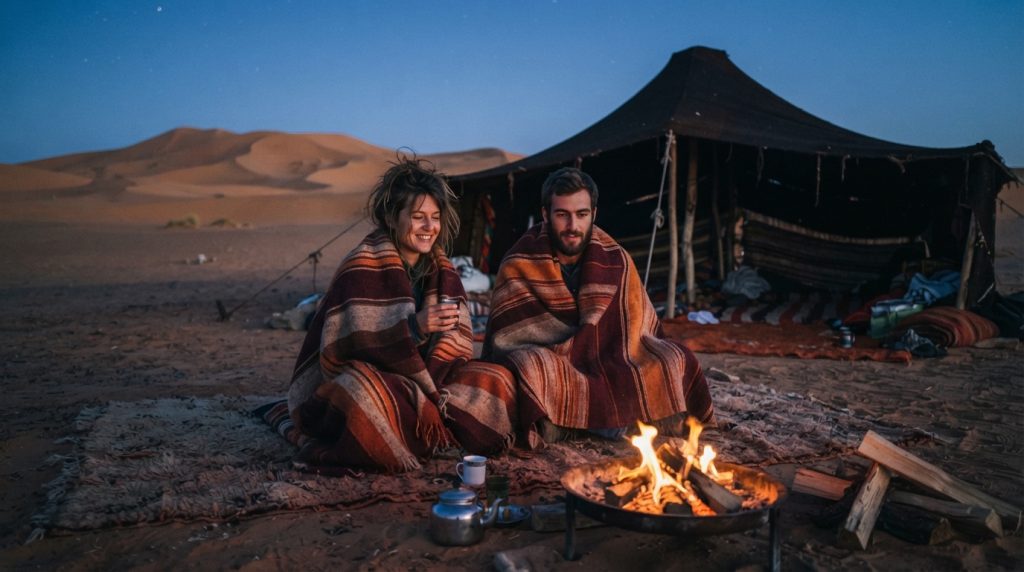
Experiencing the Sahara is a highlight for many visitors, but requires careful planning to remain affordable. Budget travellers often keep their city days very cheap so they can afford this one-off desert splurge. The key to securing a budget desert camp experience is understanding the different tiers of tours and knowing exactly how to book them to avoid hidden fees and unnecessary middleman costs.
Anyone planning Morocco this year can use the code AMIGO-MA-0926 for 15% off any plan at amigosim.com/esim-morocco, with the eSIM ready to activate as soon as you land in Marrakech or Casablanca.
Choosing between shared desert tours and basic camps
When planning the excursion, budget travellers must decide between all-inclusive group packages and independent travel to basic camps. Shared Sahara-style desert tours are one of the best-value ways to experience the dunes on a budget.
- These shared desert tours typically cost $80 to $120 per person and include essential transport, the camp stay, and meals, which significantly reduces extra out-of-pocket spending.
- For those who prefer to arrange their own transport to desert towns like Merzouga, a basic shared-tent desert camp experience with simple facilities costs about $25 to $40 per person.
- A slightly more comprehensive guided Sahara overnight tour, which includes camel travel, camp lodging, dinner, and breakfast, generally costs $40 to $80.
- Meanwhile, standard desert camps that provide a mid-budget option between basic tents and higher-end luxury setups run about 40 to 80 EUR per person.
Avoiding platform markups by booking directly with local operators
The most crucial strategy for keeping the Sahara excursion affordable is to book directly with licensed local operators rather than going through international booking platforms or hotel front desks. Third-party platforms and hotel add-ons often include steep commission fees that inflate the final price. Bypassing these intermediaries and negotiating directly with the local desert camp providers can save travellers 30 to 50 percent on the total cost of the experience. Taking the time to research local companies and contacting them via email or messaging apps ensures that more of your money goes directly to the local economy while securing the best possible rate for your desert adventure.
Which local transport options offer the best value for intercity travel?
Getting around Morocco affordably requires a mix of public and shared transportation. Budget travellers should use ONCF trains, CTM buses, and Supratours for reliable and comfortable intercity travel. Booking intercity bus tickets one to two weeks ahead of time can often yield 10 to 20 percent promotions on certain routes. Additionally, taking overnight buses for long distances is a highly recommended strategy, as it saves the cost of a night’s accommodation.
For routes not covered by major bus lines or trains, shared grand taxis offer excellent value, provided you wait for the vehicle to fill up with other passengers. Within the cities, local transport should cost only about $5 to $10 daily. In places like Marrakech, always insist that petit taxis use the meter, as negotiated flat fares are usually heavily inflated for tourists.
What is the smartest way to manage mobile data as a frequent international traveler?
For backpackers who are extending their journey beyond North Africa to explore other continents, managing internet access at every border crossing can become a logistical headache. Swapping out physical SIM cards in each new country is both tedious and inefficient. The most modern solution is to utilize a reliable global eSIM provider to secure instant, prepaid digital data plans.
This technology offers seamless international mobile connectivity across over 180 destinations worldwide without the threat of expensive roaming fees. Frequent travelers can enjoy instant digital activation on their unlocked smartphones, ensuring they always have the affordable travel internet needed to book buses, find hostels, and stay connected with family, no matter where their global itinerary takes them.
Author

Written by
Recent Posts
House Closing Process: What Sellers Should Expect From Start to Finish
What to Know Before Buying a Home in Brantford
When Does Using a Travel Advisor Make the Biggest Difference
What to Look for When Choosing Your First Red Light Therapy Panel

Experience the luxury of exploring Aruba’s coast by private yacht
Categories
- Art
- Articles
- Business of Luxury
- Celebrities
- Culture
- Entertainment
- Events
- Faces of Summer 2026
- Fashion
- Fashion & Style
- Featured
- Finance
- Food, Spirits, Wine
- Hamptons
- Hamptons Celebrities
- Health
- Health & Beauty
- Lifestyle
- Luxury Lifestyle
- Press
- Profiles
- Real Estate
- Technology
- The Chronicles
- Travel
- Uncategorized
- Weddings