
In a very short time, your house will become dirty due to a drain backup. You could find that water is accumulating in your shower, or that there is black water flowing out of the drain in your basement. Or you could hear more than one toilet bubbling simultaneously. All these signs indicate that the main sewer line is clogged. The use of a plunger and cleaning solution cannot solve the problem.
A skilled technician can quickly find out what is blocking the line. They can prevent bigger problems for your property and also help the water flow again. When you know what steps repair teams use at these times, you can move fast to a plumber near me if you see dirty water come up in your home.
Step 1: Immediate Arrival & Diagnostic Camera Inspection
When a technician comes to your place, they first check what is blocking the way and where it’s at. They do this with no digging needed.
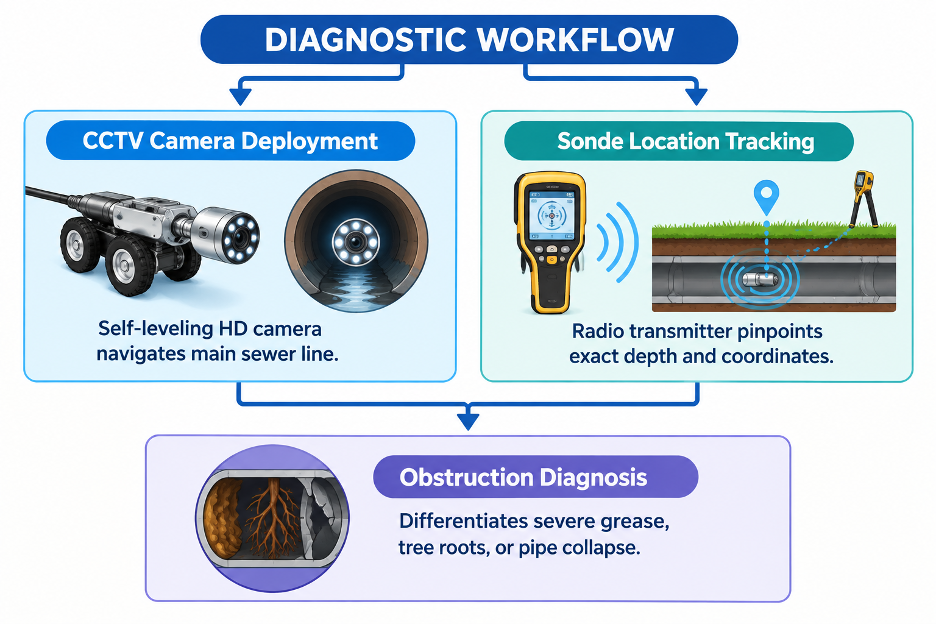
- CCTV Drain Camera Survey: A soft rod with an HD camera goes in the main sewer cleanout. The live video helps find if the clog is from tree roots, grease, or a broken pipe.
- Exact Sonde Tracking: A radio sender inside shows the technician just where the clog is and how deep it is from above. This helps to identify the spot on the pipe easily.
Step 2: Selecting the Correct High-Velocity Removal Method
Drain blockages can be different. Now, how we clear drains depends on what is making the pipe blocked. The tools and ways we use target what is causing the clog.
| Removal Technology | Operational Pressure / Tool | Best Used For | Key Advantage |
| Mechanical Drain Snaking | Heavy-duty rotating steel cables | Solid objects, paper compaction, minor root snags | Punches immediate relief holes to restore basic flow. |
| High-Pressure Hydro-Jetting | 1,500 – 4,000 PSI water streams | Fat, oil, grease, or heavy sludge | Scours interior pipe walls 100% clean |
| Rotary Root Cutters | Specialized spinning blade attachments | Heavy tree root intrusion through pipe joints | Shear-cuts stubborn fibrous root masses blocking main lines. |
Step 3: Mitigation & Preventing Structural Contamination
Stopping the overflow is only part of the job. You have to make sure dirty water does not hurt the home’s foundation or the air in it. This is just as important as stopping the overflow.
- Supply Fixture Shut-Off: Shutting off plumbing fixtures that automatically draw in water without any effort from you, such as a dishwasher, washing machine, and water supply system, prevents more water from flowing into clogged pipes.
- Check Backflow Valve: Examining the backwater valve of the major sewer line will prevent dirty water from flowing back into low-level drains when there are big city surges.
- Post-Clearing Video Check: Using a CCTV camera again will show if the pipe is clear now and if the pipe is in good shape.
Critical Signs of a Main Line Emergency
- Backup with Multiple Fixtures: Water returning to your bath or shower every time you flush your upstairs toilet.
- Odor of Sewage Gas: Foul odor emanating from the floor drain and sink in your basement.
- Gurgling Fixtures: Gurgling and bubbling fixtures whenever water appliances are used.
- Luxuriant Grass: Luxuriant grass patches in your underground sewer line.
Acting fast when the water in your home does not go out right can keep dirty water from hurting your floors and the things under them. It also keeps your wiring safe. Emergency plumbing teams use cameras that do not hurt your home, and they use strong water jets. These tools help them clear big clogs in just a few hours, not days. If you keep the number of a good 24 7 plumber near me in your phone, you will feel better. It is reassuring that, in case a problem arises unexpectedly, it can be dealt with quickly and effectively.
FAQs
- How do emergency plumbers find deep clogs in the sewer line without digging up the yard?
Plumbers put the high-resolution CCTV camera down into your sewer cleanout, which allows them to view in real time what is happening in there. A radio transmitter built into the camera assists in determining the location and depth of the blockage from above.
- What is the main gap between mechanical drain snaking and high-pressure hydro-jetting?
Drain snaking is done using a steel wire rope that rotates inside the pipes to break up any blockage within the line. This improves the flow of water. The hydro jetting involves introducing strong streams of water inside the pipes to remove debris.
- What should I do immediately while waiting for an emergency plumber to arrive during a drain backup?
Stop using taps or other things that use water right now. Turn off dishwashers and washing machines too. This will help stop dirty water from coming back up into your house.
Author

Written by
Recent Posts

Thomas J. Henry and Dr. Elena Alvarez-Henry Join Forces for Cancer Care
How an Emergency 24/7 Plumber Resolves Sudden Drain Backups Fast
Best Free Location Tracking Apps for Everyday Family Safety: iSharing and HeyPolo Compared
How Disney Channel Stars Become Pop Powerhouses: The Sabrina Carpenter Blueprint
What to Look for When Choosing an Online Headshop That Fits Your Lifestyle
Categories
- Art
- Articles
- Business of Luxury
- Celebrities
- Culture
- Entertainment
- Events
- Faces of Summer 2026
- Fashion
- Fashion & Style
- Featured
- Finance
- Food, Spirits, Wine
- Hamptons
- Hamptons Celebrities
- Health
- Health & Beauty
- Lifestyle
- Luxury Lifestyle
- Press
- Profiles
- Real Estate
- Technology
- The Chronicles
- Travel
- Uncategorized
- Weddings