
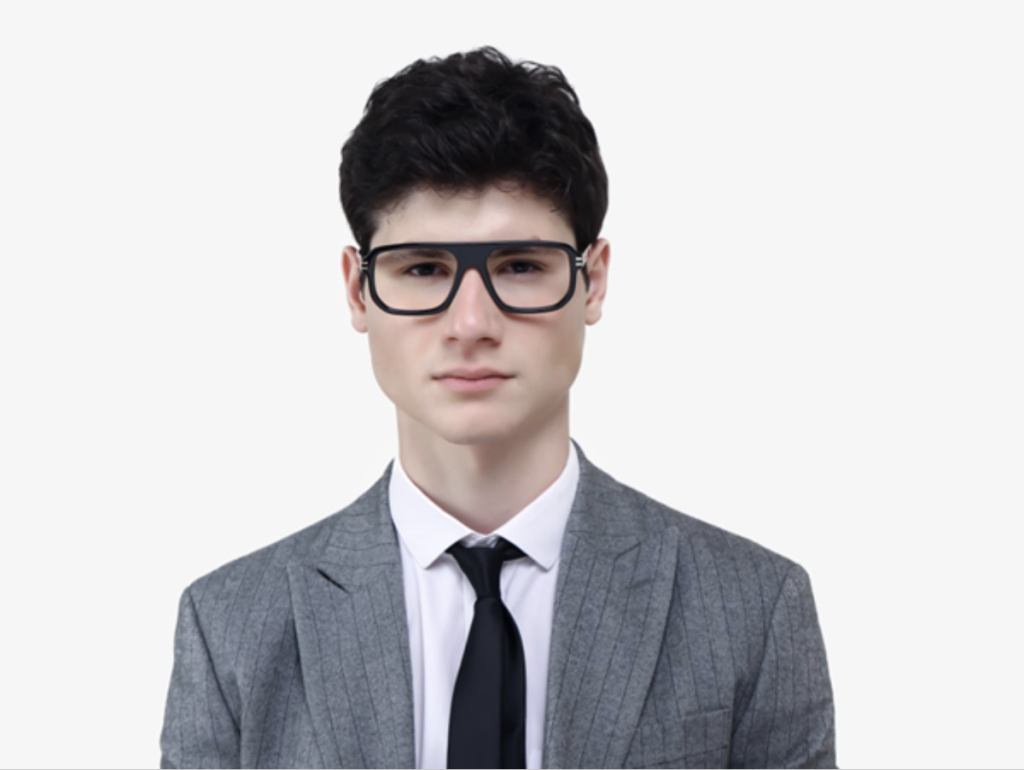
No impeccably dressed person would wear bespoke oxfords to a beach club in Montauk. Nor would he arrive at a Manhattan charity gala carrying the same canvas tote he used for Saturday errands.
Yet there is one accessory that routinely escapes this level of sartorial consideration: the eyeglass frame.
The same pair appears in the boardroom on Madison Avenue, at dinner in East Hampton, over Sunday brunch and, occasionally, at black-tie events. It works, technically. But so does wearing the same navy suit everywhere.
The era of one frame for every day is quietly giving way to something more considered: the eyewear wardrobe. For the modern aesthete, eyewear has become part of the architecture of an outfit, shifting with the setting, the hour and the person one intends to be.
A New Luxury Category
The numbers reflect a broader change in attitude. Mordor Intelligence estimates that the global luxury eyewear market will reach US$56.13 billion in 2026, with demand shaped in part by premium fashion accessories, personal identity and increasingly sophisticated frame materials and design.
The significance is less about the number itself than what it represents. Eyewear sits right on your face, which makes it one of the most immediate visual signals a person can control.
Independent eyewear designers have helped push that shift. Acetate is selected for colour, depth and tactility. Titanium is valued for its lightness and precision. Proportions are obsessively considered. In the best examples, frame design receives the same attention to detail one might associate with a finely made watch: not because the two objects serve the same purpose, but because both reward an appreciation of construction.
The result is a different approach to dressing. One does not need a dozen frames. One needs the right few.
The Power Frame For Boardroom & Business
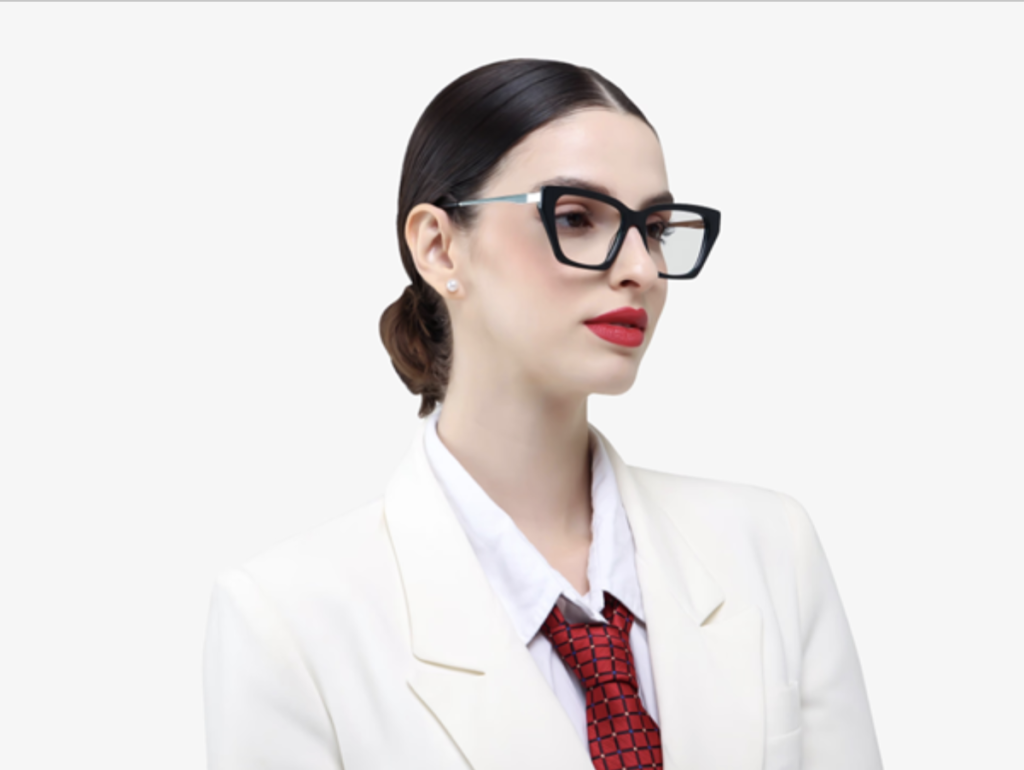
Monday morning calls for clarity. For meetings around Madison Avenue, the Power Frame should have a certain architectural confidence. Angular lines work particularly well here, whether rendered in dark acetate or lightweight titanium. The silhouette should be clean rather than theatrical, with enough structure to sharpen the face without becoming the most memorable thing in the room.
You can go with charcoal tailoring, a crisp shirt, a restrained watch and frames with a strong brow line. It appears decisive without looking aggressively styled. It belongs at the formal lunch, across a polished conference table and in the back seat between meetings. Its language is simple: composed, deliberate, prepared.
The Coastal Classic For Hamptons Weekends & Leisure
Come Friday afternoon, the visual vocabulary changes. Driving east on Montauk Highway calls for something softer. Translucent champagne, honey or olive acetates bring warmth to linen, knitwear and sun-faded denim, while rounded silhouettes can lend a more relaxed character than the severe geometry of a business frame.
For long afternoons outdoors, sunglasses with polarised lenses can also reduce reflected glare from roads and water, making them a practical part of the weekend wardrobe.
The setting matters. A frame that feels too formal beneath the shade of a Manhattan office tower can look entirely at home outside a polo field in Bridgehampton or over lunch in East Hampton.
The Evening Look for Galas & Fine Dining

After dark, restraint becomes more interesting. An evening frame does not necessarily need to be dramatic. Rimless precision can almost disappear beneath formal tailoring, allowing a dinner jacket, jewellery or a particularly good watch to command attention. At the other end of the spectrum, a sharply drawn geometric silhouette can provide just enough tension against evening clothes.
The trick is proportion. Fine eyewear should complement the architecture of evening dress rather than compete with it. A sculptural frame beside a diamond earring or a sharply cut tuxedo can become an elegant counterpoint. The best choice is often the one that looks intentional without appearing to have been chosen for effect. At a gala, subtlety has its own volume.
The Creative Edge At Galleries & Social Evenings
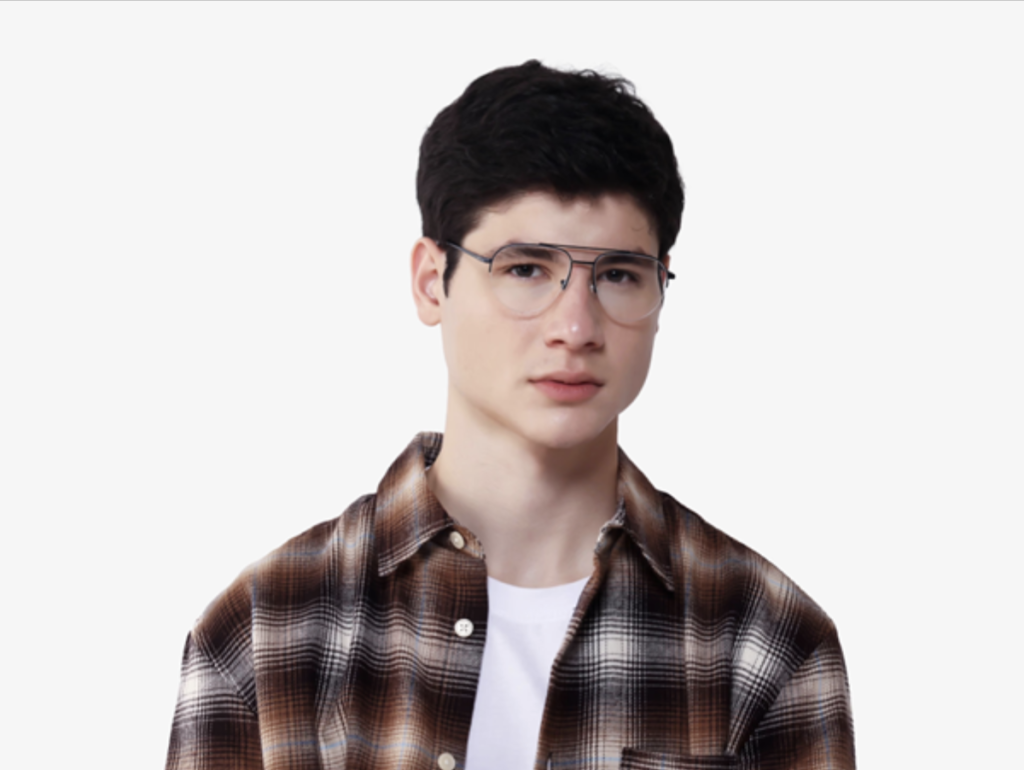
Chelsea is a different proposition. At a gallery opening, a private dinner or cocktails somewhere downtown, there is room for a little mischief. A restrained cat-eye, oversized pilot or deep tortoiseshell can introduce personality without requiring an entire wardrobe to change around it.
This is where colour and proportion become particularly useful. Tortoiseshell can bring depth to monochrome clothing. An oversized silhouette can make a simple cashmere sweater feel considered. A slightly unexpected shape can signal curiosity without resorting to costume.
The Creative Edge is not about following every trend. It is about knowing which ones belong to you.
The Psychology of the Frame Switch
There is also something quietly psychological about changing frames. Clothing has long been used to mark transitions. The jacket comes off after work. Sneakers replace dress shoes. A linen shirt appears on Saturday morning. Eyewear can perform the same function, perhaps more powerfully because it sits directly within the field of vision.
Putting on a different pair creates a small psychological reset. The dark acetate frame worn for negotiations belongs to one mode of life. The softer translucent frame worn on a Saturday afternoon belongs to another.
The distinction is not imaginary. What we wear can influence self-perception, while other people naturally form impressions from visual cues such as clothing and accessories. Frames therefore become part of the social shorthand of appearance: a severe silhouette may read as more formal, while a softer or more expressive shape can suggest a different degree of openness.
The point is not to perform a different personality every day. It is to give different sides of the same personality room to appear.
An optical wardrobe, then, is not really about owning more. It is about choosing better.
A few carefully considered frames can cover the territory from Madison Avenue to Montauk, from the Chelsea gallery to the black-tie dinner, without asking one pair to do every job.
Modern luxury has always understood the value of curation. The same principle applies to the face. The frame becomes part of the wardrobe, the setting and, ultimately, the signature.
Author

Written by
Recent Posts
What an Auto Accident Lawyer Can Recover After a Serious Wreck
What Ginger and Turmeric Shots Do for Your Body When Taken Daily
What Should You Know About Getting a Cold Sore Prescription Online?
Porch Enclosures That Let Outdoor Living Last Longer
What Your E1 Visa Lawyer Verifies in Substantial Trade Records
Categories
- Art
- Articles
- Business of Luxury
- Celebrities
- Culture
- Entertainment
- Events
- Faces of Summer 2026
- Fashion
- Fashion & Style
- Featured
- Finance
- Food, Spirits, Wine
- Hamptons
- Hamptons Celebrities
- Health
- Health & Beauty
- Lifestyle
- Luxury Lifestyle
- Press
- Profiles
- Real Estate
- Technology
- The Chronicles
- Travel
- Uncategorized
- Weddings