
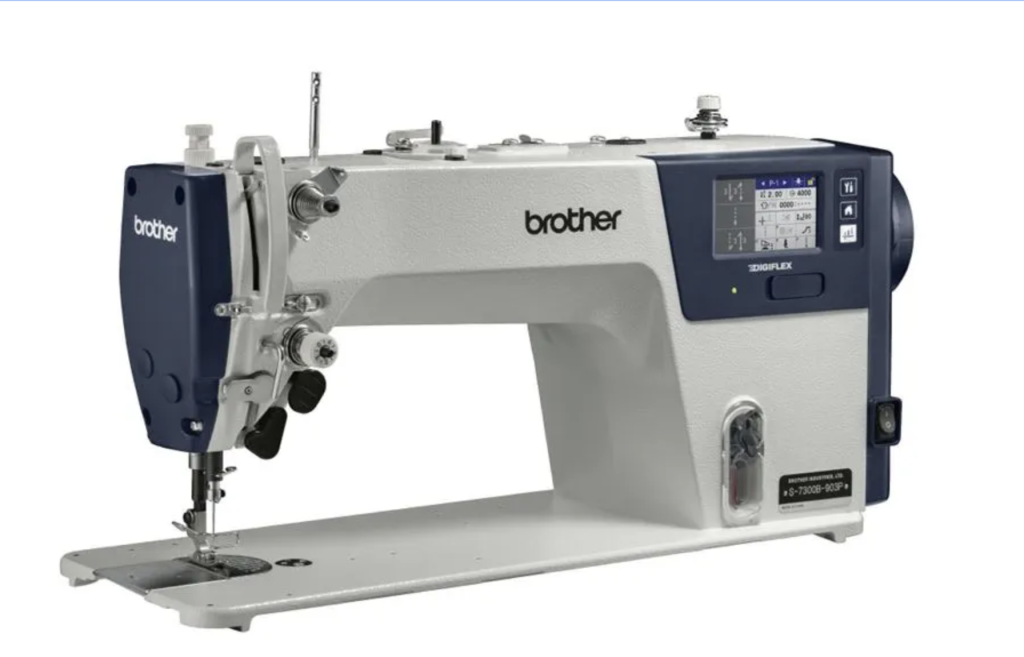
When professional sewing requires speed, consistency, and dependable performance, brother industrial sewing machines are designed to meet the demands of commercial and manufacturing environments. Brother offers a broad range of industrial equipment for applications including garment production, textiles, automotive products, upholstery, and other demanding sewing operations. Its industrial lineup includes machines designed for precision stitching, specialty sewing, automated pattern work, buttonholes, button attaching, and more.
What Makes Brother Industrial Sewing Machines Different?
Industrial sewing machines are built for production environments where equipment may operate for long periods and produce thousands of consistent stitches. Brother’s industrial sewing portfolio focuses on precision, productivity, durability, and ease of operation. The company has more than a century of experience in industrial sewing technology and continues to develop equipment for modern manufacturing requirements.
One important feature found on many Brother industrial models is direct-drive technology. Direct-drive systems connect the motor directly to the sewing machine, helping provide responsive operation while reducing some of the energy losses associated with traditional belt-driven systems. Certain Brother models also incorporate dry-head or sealed-oil technologies designed to help reduce the possibility of oil staining.
A Wide Range of Industrial Sewing Applications
Brother manufactures industrial machines for different sewing requirements rather than offering a single machine for every application. Choosing the right machine depends on the fabric, stitch type, production volume, and finished product.
Single-Needle Lockstitch Machines
Single-needle lockstitch machines are widely used for general-purpose industrial sewing. They can provide consistent straight stitching for a variety of garment and textile applications.
Twin-Needle Machines
Twin-needle machines create two parallel rows of stitching in a single operation. They can be useful for decorative seams, reinforced stitching, and applications where consistent parallel lines are required. Brother’s industrial range includes twin-needle lockstitch models as well as specialized machines for different materials.
Zigzag Sewing Machines
Zigzag machines provide greater stitch flexibility than standard straight-stitch equipment. Brother industrial zigzag models can be used for applications requiring zigzag, decorative, or specialty stitching. Some electronic models offer multiple programmed stitch patterns and high sewing speeds.
Buttonhole and Button-Related Machines
For clothing manufacturers, consistent finishing is essential. Brother produces specialized industrial equipment for buttonholes, eyelet buttonholes, and button attaching. These machines can automate repetitive finishing operations and help maintain consistent results across production runs.
Programmable Pattern Sewing Machines
Programmable electronic pattern machines are designed for repetitive stitching patterns that need to be produced accurately. Brother’s programmable models feature digital controls and pattern programming, allowing operators to set and reproduce specific sewing patterns. Some models are designed for heavy materials and provide large sewing areas.
Benefits for Professional Sewing Operations
Consistent Stitch Quality
In commercial sewing, consistency is just as important as speed. Industrial Brother machines are engineered to maintain controlled stitch formation and material feeding, helping manufacturers produce uniform results throughout a production run.
High-Speed Production
Production environments often require significantly higher sewing speeds than domestic machines. Depending on the model and application, Brother industrial machines can reach high operating speeds. For example, one of Brother’s electronic zigzag models is specified for speeds up to 5,000 stitches per minute, while certain programmable pattern machines operate at up to 2,800 stitches per minute.
Actual production speed will depend on the material, stitch type, machine configuration, operator, and other operating conditions.
Improved Operator Experience
Industrial sewing machines are used for extended periods, making ergonomics and ease of operation important considerations. Brother incorporates features such as accessible controls, direct-drive systems, and digital interfaces on selected models. Some programmable machines use LCD touch panels to simplify pattern setup and adjustments.
Specialized Construction
Different fabrics require different sewing mechanisms. Lightweight garments, medium-weight textiles, denim, leather, upholstery, and other heavy materials can require different feeding systems, needle configurations, and machine designs. Brother’s industrial range includes equipment specifically developed for different material weights and applications.
Choosing the Right Brother Industrial Sewing Machine
Before purchasing an industrial sewing machine, consider the type of work your business performs. Important factors include:
- Material: Determine whether you primarily sew lightweight, medium-weight, or heavy materials.
- Stitch type: Decide whether you need straight stitching, zigzag stitching, chain stitching, overlocking, buttonholes, or another specialty stitch.
- Production volume: High-volume operations may benefit from high-speed or automated equipment.
- Automation: Programmable machines can be useful when the same patterns need to be reproduced repeatedly.
- Needle configuration: Single-needle and twin-needle machines serve different production requirements.
- Feeding system: Specialized feed mechanisms may be beneficial when working with thick, layered, or difficult-to-feed materials.
- Maintenance and support: Consider the availability of parts, technical assistance, and service for the specific machine.
Why Industrial Equipment Matters for Growing Businesses
Investing in appropriate industrial sewing equipment can help a business establish a more efficient production workflow. Instead of relying on one general-purpose machine for every operation, manufacturers can use specialized equipment for individual stages of production.
For example, a garment manufacturer may use straight-stitch machines for assembly, specialized equipment for buttonholes and button attaching, and programmable pattern machines for repetitive reinforcement patterns. This approach can help standardize production and reduce unnecessary manual work.
Brother also offers industrial solutions beyond traditional sewing machines, including automation-related technologies and specialized equipment intended to support modern manufacturing operations.
Final Thoughts
Brother industrial sewing machines are designed for professional environments where precision, reliability, and productivity are important. With equipment covering straight stitching, twin-needle sewing, zigzag work, buttonholes, pattern sewing, overlocking, and specialized applications, manufacturers can select equipment according to their specific production requirements.
The best machine depends on the materials being sewn, the required stitch, production volume, and desired level of automation. Reviewing the specifications of each model and matching them to your workflow is an important step toward building an efficient industrial sewing setup.
Author
Written by
Recent Posts
How to Reduce Frown Lines: Treatments, Habits, and Long-Term Strategies

French Heritage Society
The Rise of Premium Supplement Brands
Manocha Bespoke
5 Ways To Make Money From Items You Already Own
Categories
- Art
- Articles
- Business of Luxury
- Celebrities
- Culture
- Entertainment
- Events
- Faces of Summer 2026
- Fashion
- Fashion & Style
- Featured
- Finance
- Food, Spirits, Wine
- Hamptons
- Hamptons Celebrities
- Health
- Health & Beauty
- Lifestyle
- Luxury Lifestyle
- Press
- Profiles
- Real Estate
- Technology
- The Chronicles
- Travel
- Uncategorized
- Weddings