
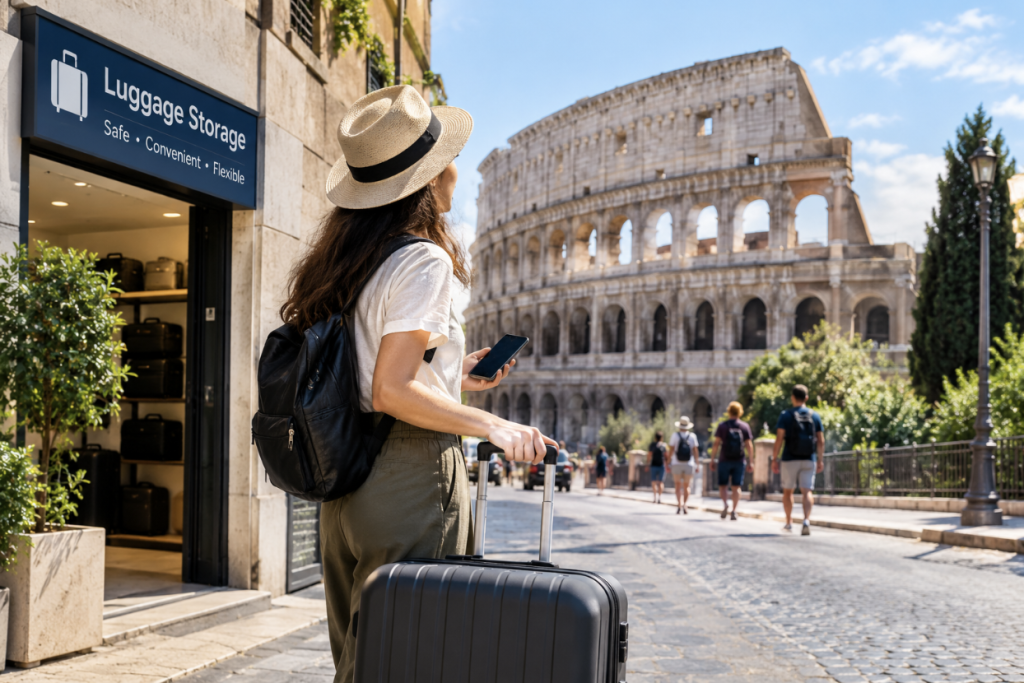
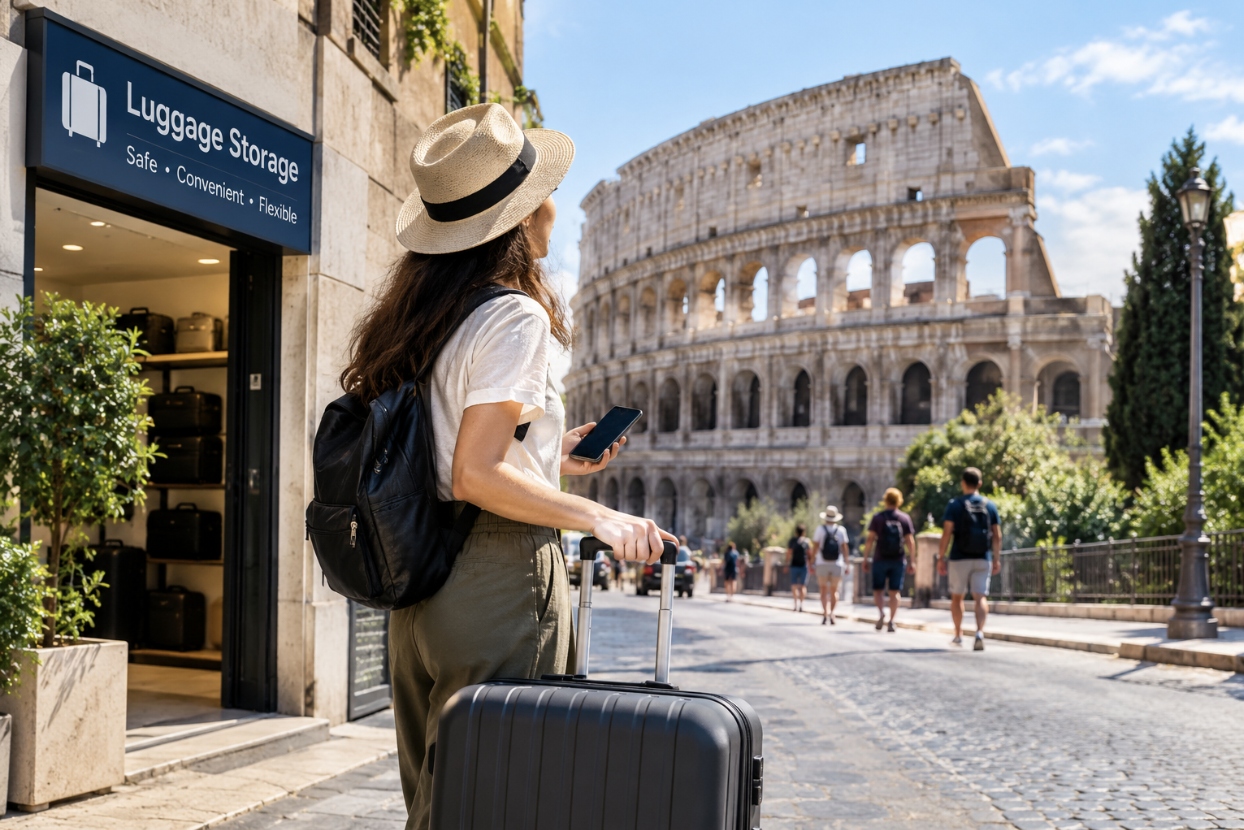
Travel days rarely fit neatly around hotel check-in and checkout times. A morning arrival can leave several hours before a room is ready, while an evening departure may mean leaving accommodation long before it is time to head to the airport or train station. In a city as large and walkable as Rome, those extra hours can be valuable opportunities to explore.
The challenge is deciding what to do with luggage during those gaps. Carrying suitcases through busy streets, crowded transportation, and historic areas can make a relaxed afternoon feel unnecessarily complicated. Rome’s major attractions are spread across different neighborhoods, so repeatedly returning to accommodation is not always practical.
A little planning can make these transition periods much easier. By organizing luggage arrangements around an existing sightseeing route, travelers can use their final or first hours in Rome efficiently while keeping the day flexible.
Plan Around Your Arrival and Departure Times
The first step is to look at the exact timing of a travel day. Instead of treating arrival and departure as separate logistical problems, consider them as part of the overall itinerary.
For example, a traveler arriving in Rome early in the morning may have several hours before hotel check-in. Rather than waiting in a lobby or returning to the accommodation multiple times, that period can be used for breakfast, sightseeing, or exploring a nearby neighborhood.
The same principle applies after checkout. If a train or flight leaves in the evening, there may be enough time for another museum visit, lunch, or a final walk through the city.
Travelers who need a convenient place to leave their bags can consider Luggage storage in Rome while planning their route. The important consideration is location: storage should fit naturally into the day’s journey rather than creating another unnecessary detour.
Use Termini as a Practical Travel Point
Roma Termini is more than a place to catch a train. Because it connects travelers with different parts of Rome and other destinations, it can also serve as a useful reference point when organizing an arrival or departure day.
Travelers arriving by train may want to begin sightseeing immediately rather than carrying luggage across the city. Similarly, visitors with an evening departure can spend more time exploring before returning toward the station.
Choosing luggage storage near a transportation hub can make this arrangement simpler. Luggage storage around Termini station can be particularly relevant when the station is already part of the day’s route.
However, travelers should check the specific location’s opening hours and booking conditions before making plans. Current storage locations can have different schedules, and checking these details in advance helps prevent last-minute changes.
Build a Walkable Sightseeing Route
Rome rewards travelers who explore on foot, but large bags can make walking between attractions much less convenient. Historic streets, uneven surfaces, stairs, and crowded pedestrian areas are easier to navigate without unnecessary luggage.
Rather than attempting to visit distant parts of the city in one continuous route, travelers can group attractions by area. A morning around ancient landmarks can be followed by lunch in a nearby neighborhood, while another part of the city can be explored later.
This approach reduces backtracking and makes the day feel more manageable. It also leaves room for unplanned discoveries, which are often part of the appeal of visiting Rome.
Travelers should consider where they will collect their bags when creating the route. A storage point located close to the next transportation connection can be more practical than one that requires crossing the city again.
Check Storage Details Before You Travel
Luggage arrangements are easier when the practical details are confirmed in advance. Travelers should check the selected location, opening hours, booking requirements, number of bags allowed, and pickup times before leaving accommodation.
It is also important to keep essential belongings separate. Passports, medication, travel documents, valuables, and items needed during the day should remain with the traveler rather than being placed inside stored luggage.
Booking information should also be easy to access. Keeping confirmation details on a phone can make both drop-off and collection more straightforward.
Current storage listings can vary by location. For example, Radical Storage’s Rome listings show different partner locations and opening schedules, while its Termini listings include locations with different operating arrangements.
Taking a few minutes to verify these details can prevent avoidable delays during a busy travel day.
Make the Extra Hours Count
The hours between check-in and sightseeing, or checkout and departure, do not have to feel like wasted travel time. With a sensible luggage plan, they can become some of the most flexible parts of a Rome itinerary.
A traveler may use an arrival afternoon to explore a nearby square, enjoy a relaxed meal, or visit a landmark that was not included in the original schedule. On departure day, the same approach can create time for one final walk or a leisurely coffee before heading to the station.
The key is to avoid creating an itinerary that depends on constant movement between accommodation, attractions, and luggage storage. A logical route is usually more comfortable and leaves more time for experiencing the city itself.
Rome is a destination where spontaneous exploration can be as memorable as visiting famous landmarks. Keeping luggage logistics simple allows travelers to take advantage of that flexibility.
Conclusion
Exploring Rome between hotel check-in, checkout, trains, and flights requires a little practical planning, but it does not need to complicate the trip. The main objective is to organize luggage arrangements around the itinerary rather than allowing bags to determine where and when the day can be spent.
Transportation hubs such as Roma Termini can be useful reference points, particularly when travelers are arriving or departing by train. Meanwhile, choosing storage near the areas being explored can reduce unnecessary backtracking and make walking through the city more comfortable.
Travelers should always confirm opening hours, booking requirements, pickup times, and other location-specific details before storing their belongings. With those basics handled in advance, the hours surrounding check-in and departure can become productive parts of the trip rather than inconvenient gaps.
For visitors exploring Rome, thoughtful luggage planning is ultimately about preserving time, flexibility, and the freedom to experience the city at a comfortable pace.
Author

Written by
Recent Posts
The Two-House Year: What Seasonal Residents Learn After the First Season
Trade Show Booth Decisions: What to Rent, What to Build, and What to Skip
Find Your Ideal Solar Battery Size in Minutes
How to Explore Rome Comfortably Between Check-In and Departure

Beyond the Beauty Template: Why Modern Cosmetic Surgery Is Moving Beyond the One-Size-Fits-All Face
Categories
- Art
- Articles
- Business of Luxury
- Celebrities
- Culture
- Entertainment
- Events
- Faces of Summer 2026
- Fashion
- Fashion & Style
- Featured
- Finance
- Food, Spirits, Wine
- Hamptons
- Hamptons Celebrities
- Health
- Health & Beauty
- Lifestyle
- Luxury Lifestyle
- Press
- Profiles
- Real Estate
- Technology
- The Chronicles
- Travel
- Uncategorized
- Weddings