
A logo tells you who made something. A beautiful pearl makes you look twice.
That is the appeal of pearl jewelry at its best. The quality shows up in the luster, the scale, the color, the way the pearls are matched, and how the piece sits against the rest of the outfit.
You do not need a monogram or a recognizable designer clasp to create a luxurious look. You can even find the perfect pearls at every price point. You need good materials, strong proportions, and enough restraint to let the jewelry register.
Start With Luster, Because That Is What the Eye Sees First
Luster is one of the biggest reasons a pearl looks rich.
A high-luster pearl reflects light sharply from its surface. That reflection gives it depth and makes the pearl look alive, especially in simple settings where there is very little competing for attention.
This matters more than chasing size alone when it comes to determining the value of pearls.
A smaller pearl with crisp, bright luster can look far more refined than a larger pearl with a dull surface. If you are choosing between size and glow, prioritize the glow.
That one decision does a lot of work.
Choose the Pearl Type That Matches Your Version of Luxury
Different pearl types create different moods, and you can mix-and-match with your existing jewelry box. (A popular combination is pearls with diamonds, for example.) So, the right choice depends on the wardrobe you already have.
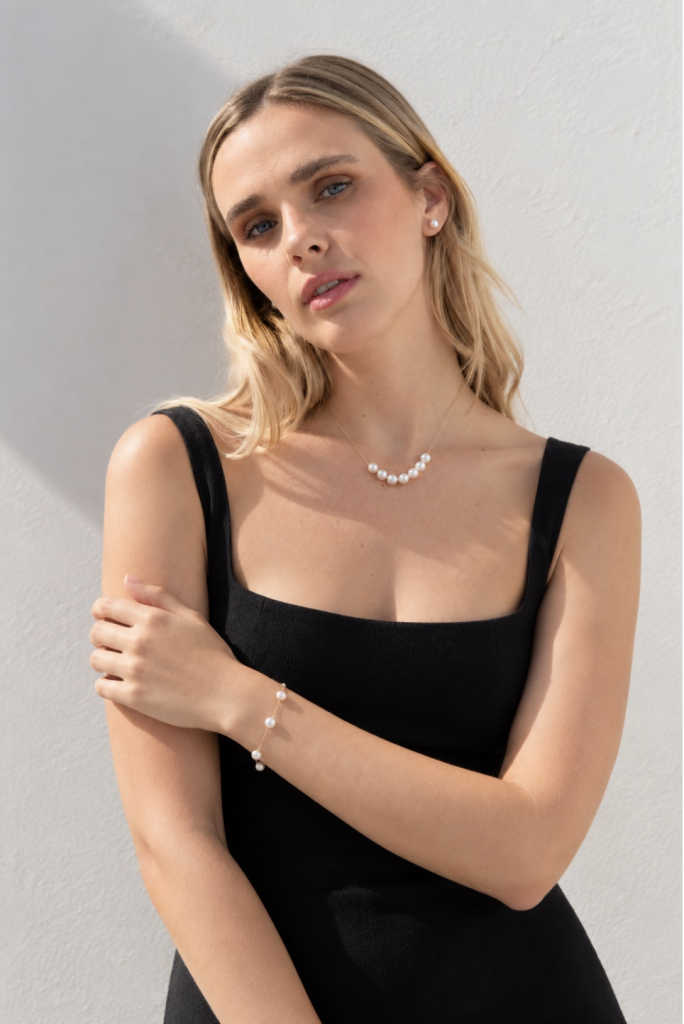
Akoya Pearls: Crisp and Precise
Akoya pearls suit a clean, polished aesthetic.
Their round shapes and sharp luster work beautifully with white shirts, tailored trousers, fine knits, loafers, and structured blazers. Small Akoya studs can make a simple outfit feel finished in seconds.
A classic strand also works here, especially when the rest of the look stays controlled and modern.
South Sea Pearls: Luxury Through Scale
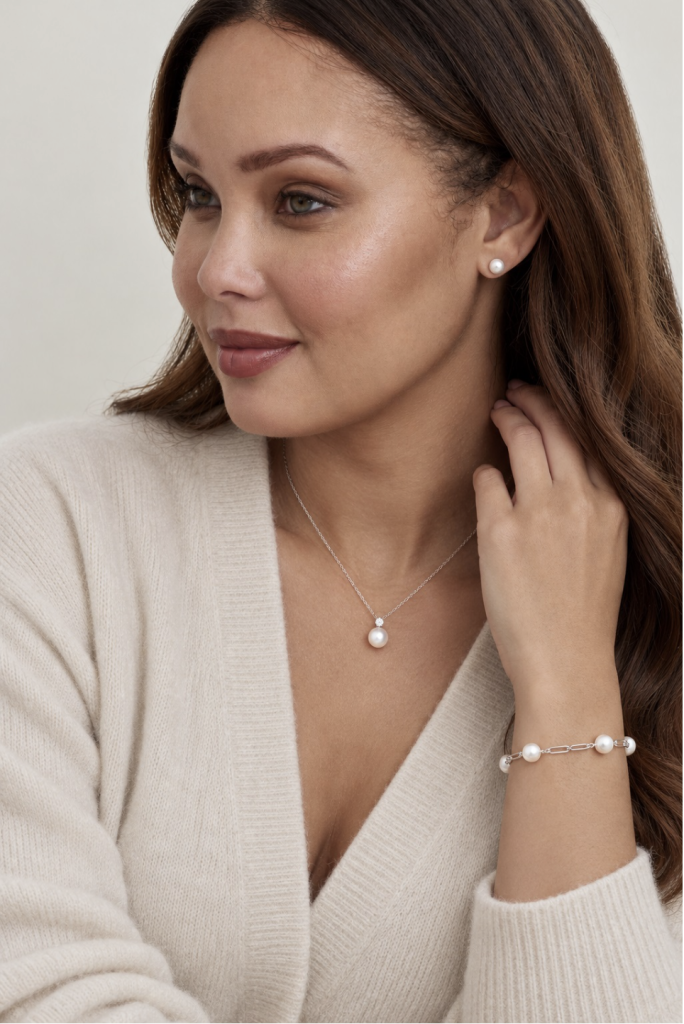
South Sea pearls create impact through size.
A single large pendant or pair of substantial earrings can carry an entire outfit. They work especially well with clean necklines, monochrome clothing, silk, cashmere, or simple tailoring.
The key is space.
Large pearls already bring enough presence, so give them room to stand out.
Tahitian Pearls: Dark and Dramatic
Tahitian pearls create a moodier kind of luxury.
Their gray, green, silver, and peacock tones pair naturally with black, navy, charcoal, deep green, and silver-toned metals.
They feel especially right with sharper clothing: an oversized blazer, sleek evening dress, leather jacket, or strong coat.
If your wardrobe already leans dark or architectural, Tahitian pearls fit in easily.
Freshwater Pearls: Character and Individuality
Freshwater pearls give you more variation in shape and color.
Baroque pearls, in particular, can feel artistic and very considered. Their irregular forms work well with linen, silk, relaxed tailoring, soft knits, and textured fabrics.
This is where luxury can feel personal.
A piece does not need perfect symmetry to look expensive. It needs intention.
Let Size Create Presence
Pearl size changes the entire mood of the piece.
Small pearls feel precise and quiet. They work well in studs, delicate drops, and fine pendants that add light without dominating the outfit.
Larger pearls naturally pull more focus.
If you are wearing large pearl earrings, keep the neckline simple. If you are wearing a substantial South Sea pendant, let it sit against a clean knit or dress.
Scale works best when the outfit gives it breathing room.
Matching Matters More Than Most People Realize
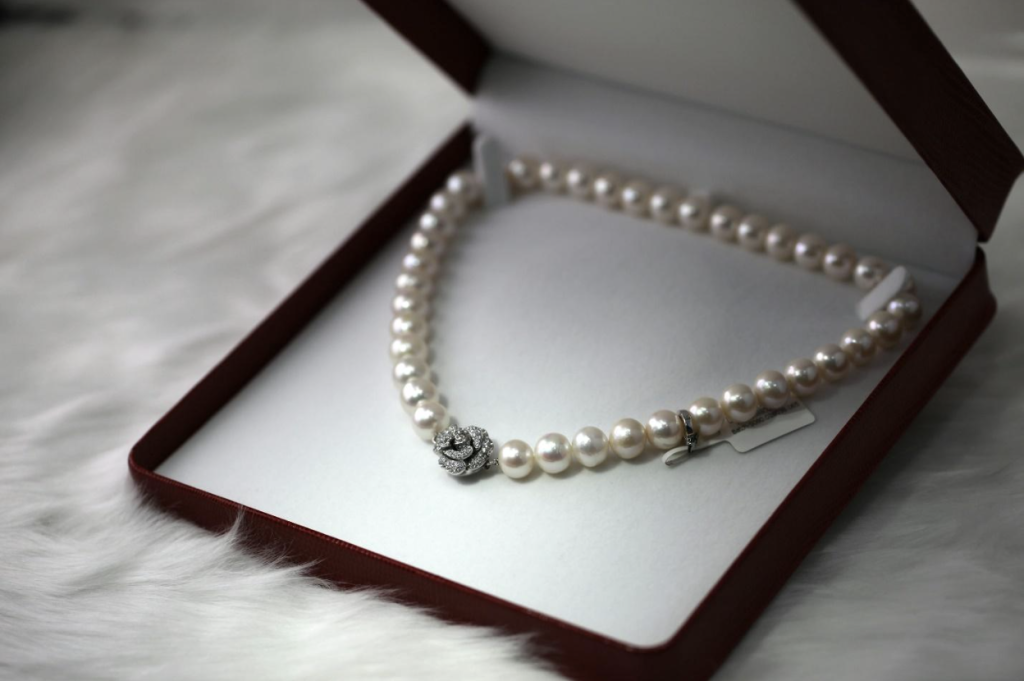
In traditional pearl jewelry, matching contributes heavily to the polished effect.
A pair of studs with similar size, color, shape, and luster looks controlled and deliberate. The same applies to a strand where the pearls create a consistent rhythm around the neck.
That visual precision reads as quality. But intentional mismatch can look equally strong.
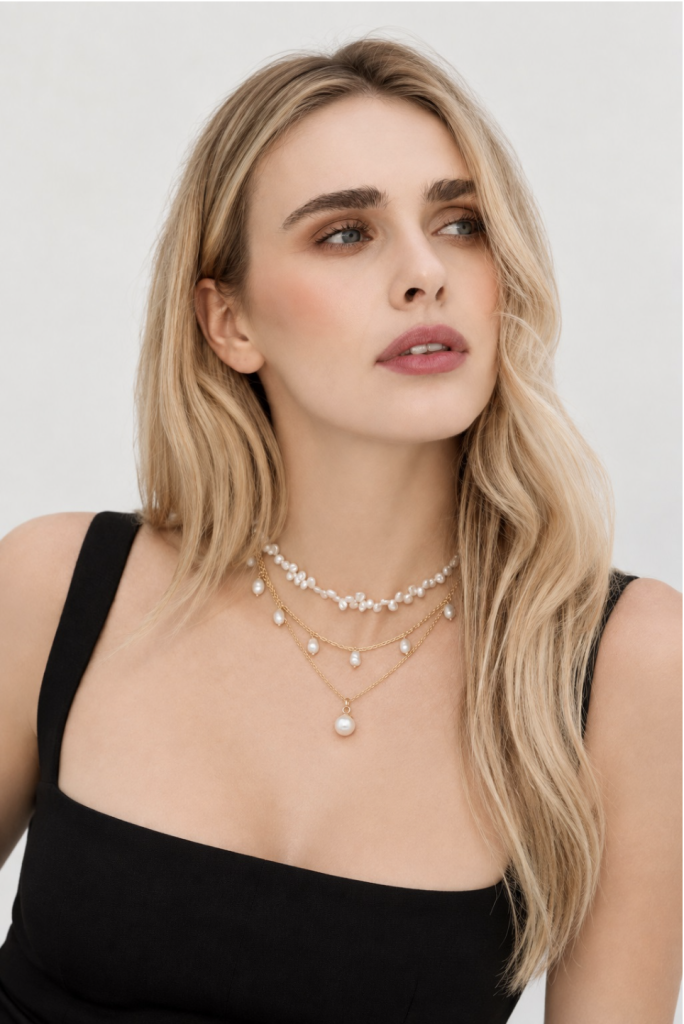
Baroque pearls, graduated strands, and mixed colors work when the variation feels clearly designed. You can also layer necklaces or build a ring stack for a deliberate mix-and-match. Just remember: pure randomness looks accidental, while deliberate variation creates character.
Keep the Outfit Simple Enough to Let the Pearls Register
Luxury often comes from editing.
Pearls work beautifully with materials that already have visual richness: crisp cotton, silk, linen, fine wool, cashmere, and leather.
Texture does plenty of the work.
A white pearl against black knitwear creates a sharp contrast. Golden South Sea pearls look rich against camel, cream, or chocolate. Tahitian pearls feel natural beside charcoal and navy.
A controlled palette gives the jewelry more room to show its quality.
Style Pearls With Everyday Clothes
Pearls become much more interesting when they leave formalwear behind. You can fit the pearls with your everyday style.
Try a strand with straight-leg jeans, loafers, and a white button-down. Add pearl studs to an oversized blazer and T-shirt. Wear a simple pendant with a crew-neck knit and tailored trousers.
The contrast between polished jewelry and ordinary clothing makes the pearls feel confident rather than precious. It also gives you more chances to wear them.
Use One Pearl Detail With Tailoring
Tailoring and pearls are an easy combination because both rely on clean lines.
Small studs with a strong blazer feel sharp. Pearl drops with a simple suit add movement. A single pearl ring beside a crisp white cuff gives the hands one clear focal point.
Simple pairings let the material speak.
Choose One Luxury Signal at a Time
A strong pearl piece deserves a little space around it.
If you are wearing oversized pearl earrings, skip the necklace. If you have layered pearl strands, keep the earrings smaller. If the ring is the main event, let the hands carry the look.
This keeps the outfit intentional.
Several statement pieces can work together, but they need a clear hierarchy. Decide what should catch the eye first.
Pay Attention to the Setting and Metal
The metal around a pearl changes its character.
Yellow gold adds warmth, especially with cream pearls and golden South Sea pearls. White gold and silver-toned metals create a cooler, sharper look beside white or Tahitian pearls.
The setting should also suit the scale of the pearl.
A substantial pearl needs enough structure around it to feel balanced. A petite pearl can handle a much finer chain or more delicate setting.
Proportion makes the piece look considered.
Build a Small Pearl Wardrobe
A good pearl collection does not need to be huge.
Start with one pair of everyday earrings, one pendant or necklace, and one stronger piece for evenings or days when you want more impact.
Each one should have a different job.
| Pearl Style | Luxury Effect | Best Styling Approach |
|---|---|---|
| Small Akoya pearls | Crisp and restrained | Tailoring, white shirts, fine knits |
| Large South Sea pearls | High-impact luxury | Minimal outfits, clean necklines |
| Tahitian pearls | Dark and modern | Black, charcoal, silver, structured clothing |
| Baroque freshwater pearls | Artistic and organic | Linen, silk, relaxed tailoring |
| Matched pearl strand | Highly polished | Simple dresses, tailoring, monochrome looks |
| Pearl drops | Elegant movement | Updos, open necklines, evening outfits |
The Real Rich-Girl Trick Is Knowing What to Leave Out
Logo-free luxury depends on the details people notice up close: material, proportion, finish, and how confidently the piece is styled.
With pearls, that means choosing beautiful luster, a scale that suits the outfit, a color that works with your wardrobe, and enough visual space for the jewelry to stand on its own.
Then stop.
A beautiful pearl already says plenty. The richest-looking styling knows when to let it speak for itself.
Author

Written by
Recent Posts
Sectional Sofa vs. Regular Sofa: Which One is Best for You?

Sober and Injured: How to Manage Pain Treatment After a Massachusetts Slip and Fall
Flexible Liquidity Options Are Reshaping How Modern Professionals Handle Unexpected Expenses
5 Best At-Home Teeth Whitening Kits for a Brighter Smile in 2026
From Spa Retreats to Aesthetic Care, the Luxury Travel Itinerary Is Changing
Categories
- Art
- Articles
- Business of Luxury
- Celebrities
- Culture
- Entertainment
- Events
- Faces of Summer 2026
- Fashion
- Fashion & Style
- Featured
- Finance
- Food, Spirits, Wine
- Hamptons
- Hamptons Celebrities
- Health
- Health & Beauty
- Lifestyle
- Luxury Lifestyle
- Press
- Profiles
- Real Estate
- Technology
- The Chronicles
- Travel
- Uncategorized
- Weddings