
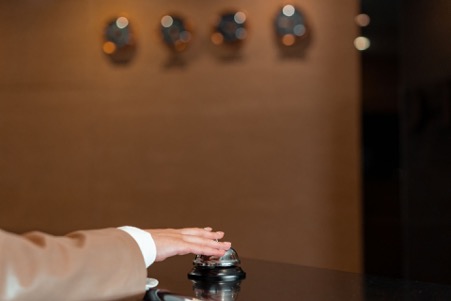
Your suitcase disappears through the hotel doorway while you pause on the terrace, where the sea is still visible beyond the last tables set for lunch. Someone offers to hold your coat. Someone else asks whether you would like to eat before going upstairs. The room may not be ready, but the weekend has begun. For a luxury hotel, that small distinction is important: hospitality starts before the key changes hands.
The traveler sees a graceful welcome. Behind it sits a series of practical decisions about luggage, room status, restaurant availability, and who needs to know what next. When those decisions connect, an early arrival becomes an opportunity rather than an inconvenience. The front desk doesn’t have to promise what housekeeping can’t deliver, and the restaurant can welcome you without sending you back across the lobby to settle a question.
A Weekend Takes Shape
By late afternoon, the concierge has helped turn a loose intention into an outing: a gallery visit, a walk through the village, perhaps dinner somewhere small enough that reservations matter.
Good concierge services begin with listening rather than reciting recommendations. A traveler interested in ceramics needs a different afternoon from someone looking for a lively terrace. The useful question isn’t simply where to send a guest, but what kind of experience that guest hopes to have.
That distinction follows you into the village. In a gallery window, a glazed vessel catches the light; inside, the conversation moves from its shape to its maker, then to whether it can travel safely.
A question such as “Could you send it to the hotel?” changes the encounter. Now the purchase involves packing, delivery, and a handoff to someone who knows which guest is expecting it. The object is beautiful. The arrangements should be reassuring.
The payment belongs to that same experience. Well-designed retail payment technology can let a traveler pay with a preferred supported method while giving the merchant a clear transaction record.
Contactless payments may make the exchange quicker, but speed alone isn’t the measure of good service. The amount should be easy to confirm, the receipt easy to obtain, and any delivery charge explained before the customer approves the purchase.
The Details That Preserve the Mood
For an international visitor, the currency shown on the terminal deserves attention. Dynamic currency conversion offers a choice to pay in a home currency rather than the local one, using the conversion terms presented by the provider.
That convenience shouldn’t be mistaken for a guarantee of better value. A considerate merchant gives the traveler time to read the options and choose, without turning a pleasant encounter into a hurried decision.
Back at the hotel, the gallery package arrives while you’re dressing for dinner. This is where the less visible parts of luxury become tangible: an item accepted carefully, a message passed along, a delivery placed somewhere appropriate rather than left unexplained.
For hotel operators, the challenge is continuity. A recommendation made by the afternoon concierge still needs to make sense to the evening team, especially when the guest returns with a question or a change of plan.
Digital systems can help, provided they support that continuity rather than replace conversation. Tokenization, for example, substitutes a token for card details in relevant payment workflows; it doesn’t remove a hotel’s responsibility to explain charges clearly.
Guests should be able to understand what has been paid, what remains pending, and what will appear on the final bill. The staff member answering those questions needs a usable record, not a reason to transfer the call.
The Last Morning
On departure day, the pace changes. Breakfast finishes, bags come downstairs, and the car is due. A disputed restaurant charge or an unexplained balance can suddenly occupy the attention that had belonged to the sea view.
An itemized bill available for review before departure gives both guest and hotel room to resolve questions. It’s a practical courtesy, particularly when someone else is waiting outside with the engine running.
There’s still one detail left: the ceramic vessel. Before the suitcase goes into the car, someone asks whether you want the package kept separate, within reach. It’s a modest question, but exactly the right one. The hotel has recognized that the fragile thing leaving with you is no longer merely a delivery. It’s something you chose, and something you want to bring home intact.
Author

Written by
Recent Posts

AI for personal finance: where PennyGuard fits

How to Pick a Homecoming Dress for Your Body Type (and Feel Amazing in It)

World Cup Injury Attorney for Vancouver Events
What a 3-Carat Engagement Ring Actually Costs in 2026: The Real Numbers
The Skincare Habits That Make a Real Difference Over Time
Categories
- Art
- Articles
- Business of Luxury
- Celebrities
- Culture
- Entertainment
- Events
- Faces of Summer 2026
- Fashion
- Fashion & Style
- Featured
- Finance
- Food, Spirits, Wine
- Hamptons
- Hamptons Celebrities
- Health
- Health & Beauty
- Lifestyle
- Luxury Lifestyle
- Press
- Profiles
- Real Estate
- Technology
- The Chronicles
- Travel
- Uncategorized
- Weddings