
Motorcycle accidents can leave behind crucial physical evidence that can provide a better understanding of how the accident occurred. A damaged vehicle, road markings and witness accounts usually get the focus when investigating a collision; however, a worn helmet can also become an important component of the investigation. Scratches, cracks, dents and other impact marks could provide clues for investigators regarding the direction and impact of the collision.
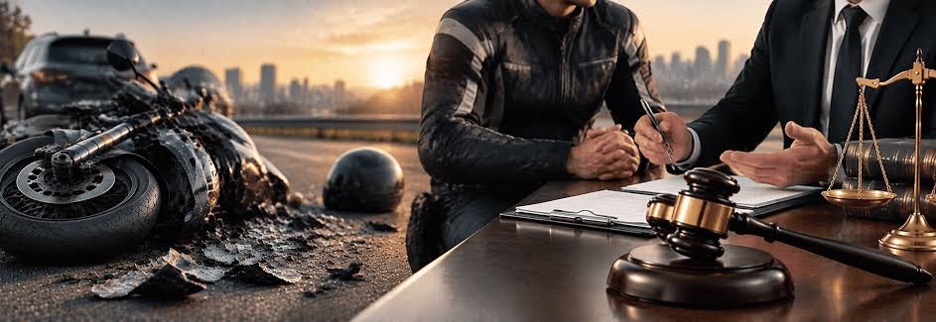
A Grand Rapids motorcycle accident lawyer can analyze the damage to the helmet as part of figuring out how the accident took place and if anyone else was involved in the accident that caused the rider to sustain injuries. A helmet is no evidence of fault in and of itself, but it can complement other evidence, help to determine the sequence of events and can assist in explaining the physical effects on the motorcyclist.
How Helmet Damage Helps Reconstruct a Motorcycle Accident
The purpose of a motorcycle helmet is to absorb and distribute forces of impact in an accident. If it’s visibly damaged, investigators can study the damage to see where the rider’s head struck a vehicle, pavement or an object.
Various types of damage may give various clues. For example:
Scratches & abrasions: These can be caused by contact with the pavement or a rough surface as the rider moved following a fall.
Cracks in the outer shell: These may indicate an area of violence but the extent of violence may not be apparent.
Dents and areas of concentrated impact: These can indicate where another object may have hit the item.
Damage to visor: Damaged or broken visors could mean the rider’s face or surrounding has come into contact.
Investigators can use these markings to help determine damage to the motorcycle, any nearby vehicles and objects at the scene of the accident. If there is a significant impact mark on one side of the helmet, for example, that may be compared to the rider’s position and the nature of the impact.
But the damage to the helmet needs to be taken with a grain of salt. A single mark doesn’t necessarily indicate the direction of the rider’s motion or its manner of occurrence. Its value is dependent on the correlation with other physical evidence.
Connecting Helmet Damage to the Rider’s Injuries
The condition of a helmet might also aid in understanding what kind of head injuries a rider may have suffered and where. The medical records, diagnostic images, and physical exams may allow for some information about the injuries sustained, and helmet damage can give some context about how things may have gone.
For instance, if one helmet is damaged around the side of the head, that detail could be pertinent in determining the extent of injury in an accident where the same location on the head suffered damage. Facial injuries or jaw injuries could also be explored in a similar manner to a broken chin bar. These observations could be used to help deem the physical evidence as consistent as the accounts of what happened in the crash.
However, there is not always a direct link between helmet damage and injuries. Even a relatively large amount of energy can be absorbed by the helmet without there being a visible crack on the outside. The other way around is true too: a broken surface doesn’t imply that the rider was injured seriously on that specific spot.
Doctors can assess the damages, and accident reconstruction experts can inspect the evidence. These results will contribute to understanding the cause of the accident and what impact it may have had on this rider.
Using Helmet Evidence in Insurance and Liability Disputes
Helmets can be a factor if there is a disagreement regarding the cause of a motorcycle accident. Physical evidence can be reviewed by an insurance company to assess accident reports, statements and injury claims. A torn helmet may back up or refute some of the theories surrounding the crash.
For example, a motorcyclist could argue that he or she crashed into the ground before the car hit him or her. Helmet markings, car damage or road marks, however, can offer clues that can assist investigators determine if the rider’s version of the events is credible in light of the facts.
Evidence of helmets may also be relevant when questions of protective equipment arise. Generally, motorcycle riders and passengers in Michigan must wear helmets, unless the persons are exempted by statute. Investigators should then be interested in whether a helmet was worn and if it was being used correctly. But damage to the helmet does not prove that the rider was not in compliance with applicable requirements or that any failure on the part of the rider played a part in causing the injuries.
Frequently Asked Questions
Are helmets capable of revealing the circumstances of a motorcycle accident?
The damage to the helmet can be helpful in determining where and how the impact occurred. But it cannot prove by itself, how the accident happened. Investigators need to compare it to other physical evidence and reports of the crash.
If you are involved in a motorcycle accident, should you keep your damaged motorcycle helmet?
Yes. The preservation of the helmet might enable investigators to inspect physical markings, cracks or any other damage. Failure to preserve or alter it prior to documentation may lead to the loss of potentially relevant evidence.
Is it possible for a motorcycle accident helmet to not show obvious damage when the accident was severe?
Yes. It is possible for some helmets to absorb a lot of impact without external damage being visible. There can also be damage to the inside that isn’t immediately obvious.
Conclusion
The helmet may provide significant clues in an investigation after a motorcycle accident. The markings can aid in reconstructing the collision, explain details about the injuries sustained by the rider and help facilitate conversations regarding liability and insurance claims. Its importance, however, will largely be in its preservation and in the comparison with other evidence.
When investigators compare the helmet with medical reports, car damage and witness accounts, and accident scene reports, they can gain a better perspective of what happened. This information allows for the preservation of important physical evidence in the event of a motorcycle accident case, and may be extremely helpful in the future.
Author

Written by
Recent Posts
How to Take a Sabbatical Without Putting Your Financial Future on Hold
What Helmet Damage Reveals About Motorcycle Accidents
Best Things to Do in Sacramento for Couples, Friends, and Groups
Chaz Dean’s Four-Season Formula: The New Gold Standard in Dog Beds
How Tourism and Cultural Capital Drive Abu Dhabi Real Estate Growth
Categories
- Art
- Articles
- Business of Luxury
- Celebrities
- Culture
- Entertainment
- Events
- Faces of Summer 2026
- Fashion
- Fashion & Style
- Featured
- Finance
- Food, Spirits, Wine
- Hamptons
- Hamptons Celebrities
- Health
- Health & Beauty
- Lifestyle
- Luxury Lifestyle
- Press
- Profiles
- Real Estate
- Technology
- The Chronicles
- Travel
- Uncategorized
- Weddings