
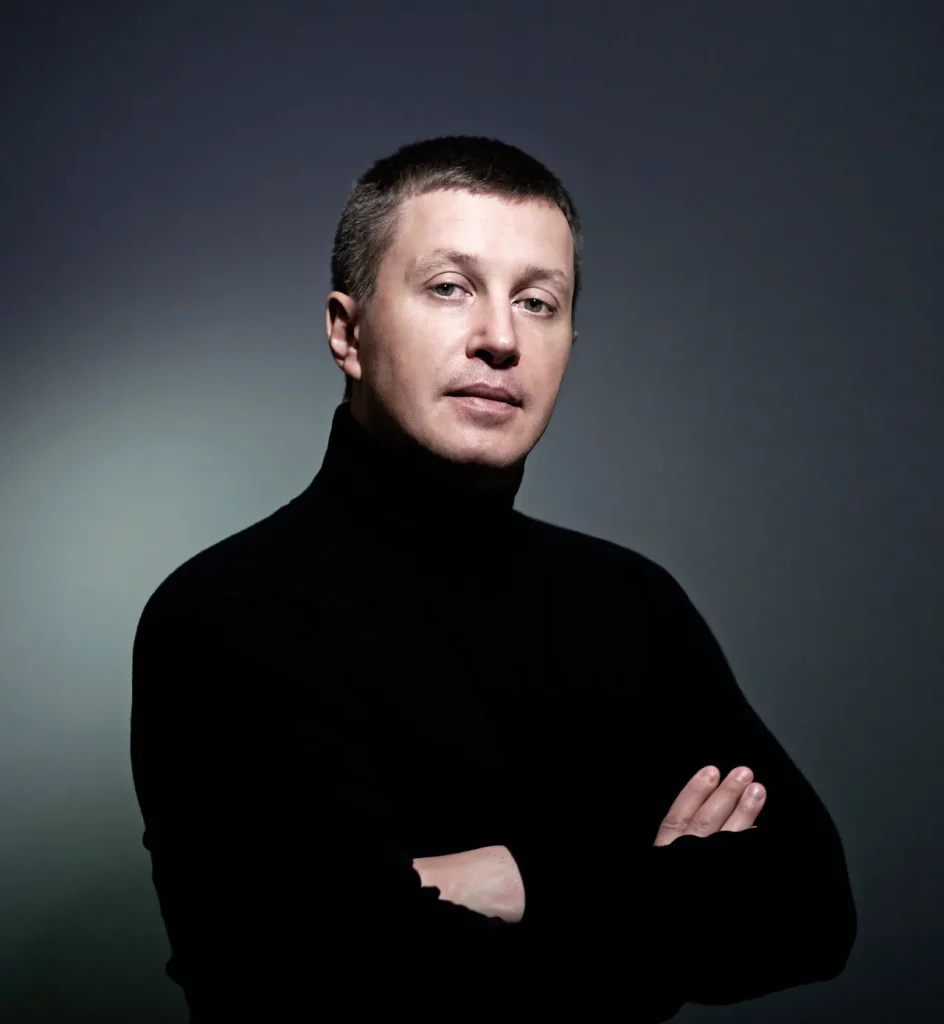
Maxim Artsinovich named his jewellery house after an emperor, and he did it on purpose. MaximiliaN London carries the name of Maximilian I, the Habsburg who ruled from Vienna after Rome split in two. At first it reads like old-world inheritance. In fact it is a strategy, and Artsinovich will tell you so before the coffee arrives.
His first rule sounds cold for a family business. Build the company for sale from day one, he says, because no one hands a jewellery house to their grandchildren. Own your design, your costs, your distribution, and no one can cancel you. So he built a brand, then went looking for the right flag to sail it under.
Under Which Flag Do You Park Your Boat
A mentor gave him the framing years ago. Every serious jewellery name lives in a city, and the city is part of the price. Harry Winston and Tiffany belong to New York. Cartier, Boucheron, Van Cleef and Arpels, and Chaumet are Paris. Bulgari is Rome, while Chopard and Piaget are Geneva. So where do you park your boat, the mentor asked.
Artsinovich picked London, and the timing was the whole bet. The 1990s were sending newly rich Russians to England by the planeload. A Moscow apartment and a London flat became the minimum entry fee for the new class, years before Roman Abramovich bought Chelsea. London already held Graff, Garrard, Asprey, and Moussaieff. So he planted his flag where his buyers were landing.
Access, of course, came young. Artsinovich met Nicolas Hayek, founder of the Swatch empire. He also knew Philippe Stern of Patek Philippe, who died this June at 88. Stern’s son Thierry, now a close friend, runs the house. He worked the global circuit hard. Three Hong Kong shows a year, then New York, then the Las Vegas show no serious dealer skips. Basel faded after the pandemic, so the gem world moved to Geneva. Still, the map he memorised then is the map he trades on now.
The Soul in the Stone
Ask him about synthetic diamonds and the temperature drops. A real stone comes from the earth, he says, and it carries the energy of whoever owns it. That is why he wants gems kept in families, passed from mother to daughter the way the Windsors move their jewels down the line. There is astrology in it too, stones matched to birth signs. Underneath the romance sits cold math.
The math is brutal for the lab-grown crowd. A synthetic one-carat that sold for around a thousand dollars a decade ago now trades near fifty. Set it in gold and the metal and the labour cost more than the stone. Artsinovich sides with Martin Rapaport, the Rapaport list founder who has waged public war on synthetics and watched natural prices slide with them. Real diamonds still cost real money, so real diamonds still mean something, at least to him.
Where You Can Still Wear the Big Ones
There is a reason his clients think hard about where they wear the good pieces. Jewellery theft has rewritten the map of the luxury world. He rattles off the robberies: Saint-Tropez, Paris, Monaco. In one Monaco job, thieves carried a client’s whole safe out of a hotel room in a sports bag. That client lost fifteen million dollars in stones. So the list of places where a woman can walk out in five-carat studs keeps shrinking.
Today the safe map runs through the Gulf. Dubai, Abu Dhabi, Doha, and Monaco still let real money show itself without a bodyguard trailing behind. Fifth Avenue after dark does not, and by his account neither does much of Europe. For the merely wealthy, the ones without private security, the big rock has quietly become a liability. That single fact is reshaping what he sells.
The Rise of Everyday Luxury
So the trade has moved from spectacle to discretion. He calls the new mode everyday luxury, and it is exactly what it sounds like. Wives of billionaires now wear tiny tennis bracelets, one-carat studs, a small pendant on a fine chain. Nothing that makes a stranger look twice. The stone still has to be real, but it no longer has to shout.
There is a jeweller’s trick that makes small look large. Surround a one-carat stone with micro-pavé and it can read like three carats. Harry Winston and Tiffany have used the move for years. The tiny setting stones cost, in his words, peanuts. Valérie Messika is his proof of concept, turning accessible diamond pieces into more than four hundred points of sale worldwide. He is candid about where the industry actually makes things. Bangkok first, Dubai second, and Tiffany’s production has moved to China.
The Diamond Revolution
His answer to all of it has a name. He calls it the Diamond Revolution, and it started in 2026 when conflict flared in the Gulf. When fear arrives, he says, even people with money lose the appetite to buy. Buyers did not vanish because they went broke. They vanished because nobody shops for diamonds while missiles are in the news.
So he rebuilt the offer around price. Real, GIA-certified natural diamonds, sold at a margin cut to ten or twenty percent. He will only issue the GIA paper, the one certificate he trusts over every rival lab. Dubai has no income tax, so the tax-free base lets the numbers work. A ring ships from Dubai to New York for around three hundred fifty dollars with insurance, and the client covers state tax on arrival.
Every order goes out with a loupe engraved MaximiliaN London, marketing disguised as a gift. Behind the pivot sits a darker read. He smells a global financial crisis coming, in real estate, in crypto, in Dubai property sliding daily. Prices for natural diamonds above two carats fell by half across 2024 and 2025. That collapse is precisely what lets him price the small ones to move.
What He Is Building Now
He is not building it alone. A Habsburg descendant, a private banker, sits on his board, part symbol and part deal-maker. The London firm Brand Finance valued the brand at four hundred eighty million dollars two years ago. He treats the figure as a signal to investors, not cash in hand. Meanwhile he is in talks with Gulf foundations in Qatar, Abu Dhabi, and Saudi Arabia. They decide fast when they like what they see.
His footprint plan is deliberately light. Next he wants counters inside multi-brand boutiques in Miami, New York, and LA, not a standalone store. The math is simple. A corner in the right room costs a fraction of a flagship and reaches the same client. For a man who built a brand to be sold, the point was never the shop. The point was always the name over the door.
Questions Readers Are Asking
What is MaximiliaN London?
MaximiliaN London is a London-based fine jewellery house founded by Maxim Artsinovich. It made its name on large ruby, sapphire, emerald, and diamond pieces for Gulf royal families, and more recently on its accessible Diamond Revolution line.
What is the Diamond Revolution?
It is Artsinovich’s 2026 strategy. He sells real, GIA-certified natural diamonds at thin margins from tax-free Dubai, aimed at buyers who now want value and provenance over spectacle.
Why does he reject lab-grown diamonds?
He argues natural stones hold meaning and value. By contrast, synthetics have collapsed to roughly fifty dollars a carat, worth less than the gold they sit in.
Where The Conversation Continues
Social Life Magazine has spent twenty-three years covering the people who set the tone Out East, and this is the room where those conversations happen. The brands that understand where luxury is heading are the ones already in the pages. The rest read about it later. If your house wants to be in the story rather than watching from the lawn, the July window is the one that matters. Yes puts you in front of exactly the readers sitting in the tents. No leaves the space open for someone else.
Author

Written by
Recent Posts

AI for personal finance: where PennyGuard fits
How to Pick a Homecoming Dress for Your Body Type (and Feel Amazing in It)

World Cup Injury Attorney for Vancouver Events
What a 3-Carat Engagement Ring Actually Costs in 2026: The Real Numbers
The Skincare Habits That Make a Real Difference Over Time
Categories
- Art
- Articles
- Business of Luxury
- Celebrities
- Culture
- Entertainment
- Events
- Faces of Summer 2026
- Fashion
- Fashion & Style
- Featured
- Finance
- Food, Spirits, Wine
- Hamptons
- Hamptons Celebrities
- Health
- Health & Beauty
- Lifestyle
- Luxury Lifestyle
- Press
- Profiles
- Real Estate
- Technology
- The Chronicles
- Travel
- Uncategorized
- Weddings