
In 2024 and 2025, she was at the Venice Film Festival. The Golden Globes followed. She directed a film, opened a fashion collective in Manhattan, and finalized an eight-year divorce. Yet the culture barely looked up.
Angelina Jolie’s net worth is $120 million. Furthermore, between 2024 and 2025 she was among the most technically active she had been in years. Two major projects. A directing credit, a retail venture, a settlement. Consequently, the most interesting thing about this period is not what she did but what it failed to produce: a cultural moment anyone can name. Indeed, she is present everywhere and registered by almost no one. Notably, that is not failure. Rather, this is the Ghost story — something stranger, and considerably more worth examining.
This is the Ghost story. Rather than a comeback, it is a study in what happens when a woman’s image becomes too large to update.
The Before: Born Into the Frame
Angelina Jolie Voight was born June 4, 1975, in Los Angeles, to Jon Voight and Marcheline Bertrand. Both were actors. Both carried the California volatility that the industry runs on and personal life rarely survives. Her parents divorced when she was two. Consequently, the father’s absence became the first defining fact of her life. Marcheline raised her in New York and Los Angeles, quietly ambitious on her daughter’s behalf in a way that never became public spectacle.
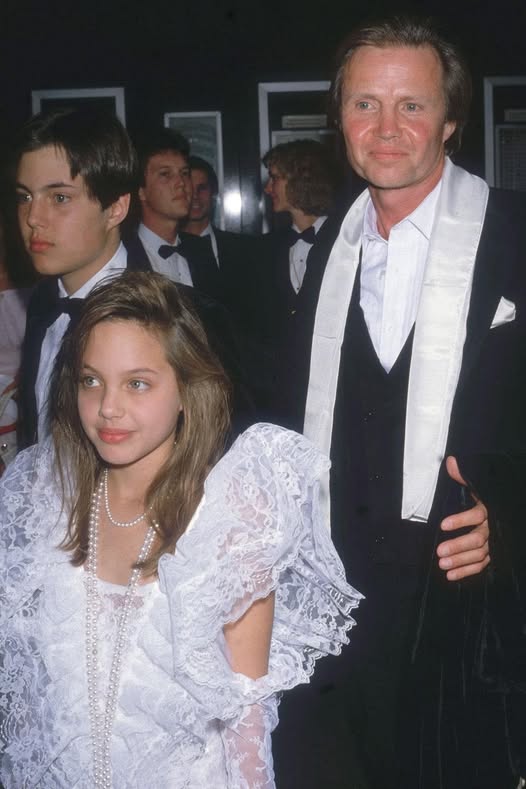
The origin story most people miss about Jolie is this: she arrived in Hollywood not as an outsider fighting for access. Rather, she arrived as someone who already understood the machinery from the inside. Additionally, she understood its costs before she had finished being a child. Consequently, the intensity that would later read as wildness was a sophisticated response to an environment she had been observing since birth. It consumed people she loved and rewarded performance she had studied since she could speak.
The Lee Strasberg Years
She enrolled at the Lee Strasberg Theatre and Film Institute in Los Angeles as a teenager. Method acting suited her emotional architecture. The technique requires excavating genuine feeling rather than simulating it — considerably easier for someone with real material to work with. By eleven she had done a bit part in her father’s film. By sixteen she was taking the craft seriously enough that the industry began taking her seriously in return. Hackers in 1995 introduced her to a wide audience. Gia in 1998 demonstrated what she was actually capable of. Girl, Interrupted in 1999 won her the Academy Award for Best Supporting Actress and began the process of making her image larger than any individual performance could contain.

The Wound: A Decade of Being Defined by Others
Notably, the early 2000s turned Angelina Jolie into a cultural symbol before she had finished becoming an actress. The tabloid machinery needed a villain during the Brad Pitt and Jennifer Aniston divorce — Jolie, having met Pitt on the set of Mr. and Mrs. Smith in 2004, provided the narrative. The same machinery that consumed the It Girls of the early 2000s extracted the same price from her, at greater scale. The specific accuracy of that narrative has been contested by everyone involved. However, the story was set before any version of the facts could intervene. Moreover, it attached to her image with a permanence that two decades of humanitarian work, six children, multiple acclaimed performances, and a directing career have not fully dislodged.
She has said she went dark for reasons she prefers not to explain. Furthermore, she told Vanity Fair that her light was dim during the years of the Pitt divorce proceedings. Additionally, she said she needed kind people around her to hold her hand. These are unusual disclosures for someone whose public image has always been constructed around self-sufficiency. Notably, the gap between the image and the admission is the wound. Not the divorce itself. Rather, it’s the decade of being defined by a story she didn’t write.
The Brangelina Problem
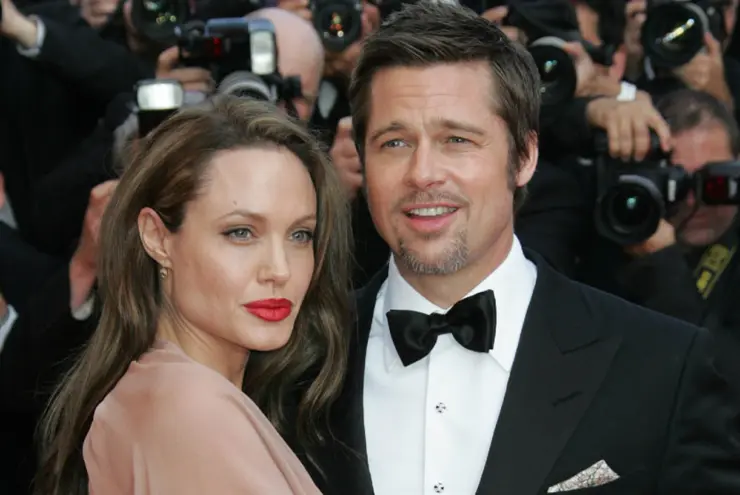
The cultural phenomenon of Brangelina was, from Jolie’s perspective, a trap with a pleasant exterior. The couple became the dominant celebrity narrative of the mid-2000s — covers, charity work, the children adopted and biological, the French château. Furthermore, her individual work during this period — A Mighty Heart, Changeling, Salt, Maleficent — commanded between $10 million and $35 million per film and demonstrated consistent range. Notably, none of it penetrated the Brangelina frame. She was the character in the story, not the author of it. When the story ended in 2016, she remained inside the frame it had built — no longer Brangelina, but still defined by something that no longer existed.
The Rise: Tomb Raider, the Oscar, and the Global Icon
Before the Pitt years, there was a different Angelina Jolie trajectory — one that the tabloid era partially obscured. Between 2001 and 2011, she earned over $120 million in film salaries alone. Lara Croft: Tomb Raider paid $7 million, then $12 million for the sequel. Mr. and Mrs. Smith paid $10 million. Wanted paid $15 million. Salt paid $20 million. Meanwhile, she served as UNHCR Special Envoy, undertaking field missions to refugee camps and conflict zones that generated their own sustained coverage.

Additionally, she directed In the Land of Blood and Honey in 2011, Unbroken in 2014, and First They Killed My Father in 2017. Furthermore, she earned more than $35 million for Eternals in 2021. The financial architecture of her career is, by any measure, extraordinary. Consequently, the $120 million net worth figure most sources treat as definitive almost certainly understates a fortune held in trusts, real estate, and structures that celebrity estimates cannot access. The Los Feliz mansion she purchased in 2017, once owned by Cecil B. DeMille, is valued by some estimates at $37 million based on market appreciation alone.
The Salary Architecture
The divorce settlement reportedly totalled approximately $80 million. Roughly $64 million came from the sale of her stake in Château Miraval, the French winery they had jointly owned. An $11.5 million Winston Churchill painting was also part of the settlement. These figures — plus eight figures in endorsements including a $10 million Louis Vuitton print campaign — suggest Jolie’s net worth is a floor, not a ceiling. Moreover, the ongoing Miraval litigation between the parties, still active as of 2025, means the final accounting has not yet been made.
The Pivot: Separation, the Dark Years, and the Vanishing
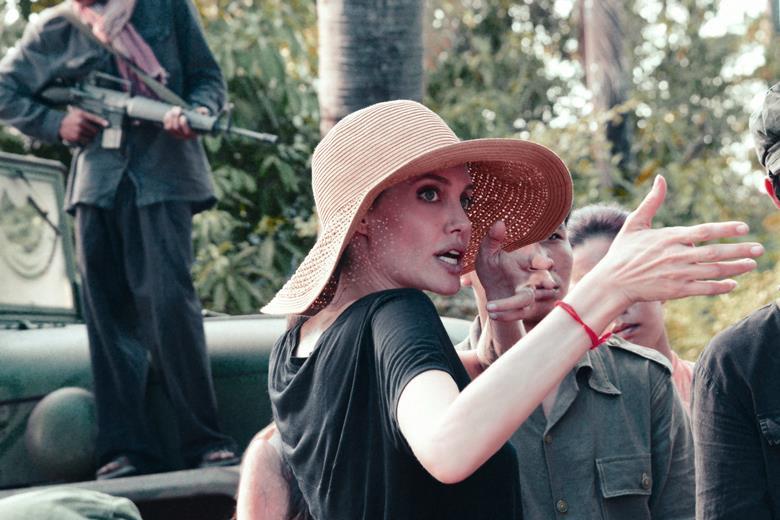
After the 2016 separation filing, Jolie largely withdrew from the Hollywood promotional circuit. She directed First They Killed My Father in 2017 — a Cambodian genocide story told through a child’s eyes, shot in Cambodia with a Cambodian cast. The film arrived without the global fanfare that had surrounded her earlier work. It was received seriously and discussed narrowly. Additionally, she underwent a double mastectomy following genetic testing for the BRCA1 mutation. She wrote about the decision in a New York Times op-ed that generated significant public health discourse. Like most things she did during this period, it receded from the cultural memory faster than it deserved.
She told Vanity Fair something specific ahead of the 2024 Venice Film Festival: she had gone very dark during those years. Her light was dim. She needed kind people to hold her hand through the return to work. It is the most direct account she has given of what the divorce years actually cost. Furthermore, it explains the Ghost dynamic more precisely than any critical analysis could — she was not absent. Rather, she was present and dimmed, which the culture read as absence because the culture required her to be either fully bright or invisible.
What She Told Vanity Fair
The Maria Callas parallel Pablo Larraín identified when casting Jolie is worth sitting with. He said she has an enormous amount of mystery, that she could play a woman trying to find her own identity. Callas, in the film’s telling, was too much for the world that made her. She was booed when she couldn’t be what the audience had decided she was, abandoned by the man she loved, unable to sing at the level her legend required. Jolie told interviewers she related to Callas’s softness most of all. That’s the part that doesn’t have room in the world to be as emotionally open as she truly is. That disclosure, from someone whose public image was constructed around hardness, is the tell. Ultimately, the Ghost is not haunting the culture. The culture is haunting her.
The Hamptons Chapter: The Register She Occupies
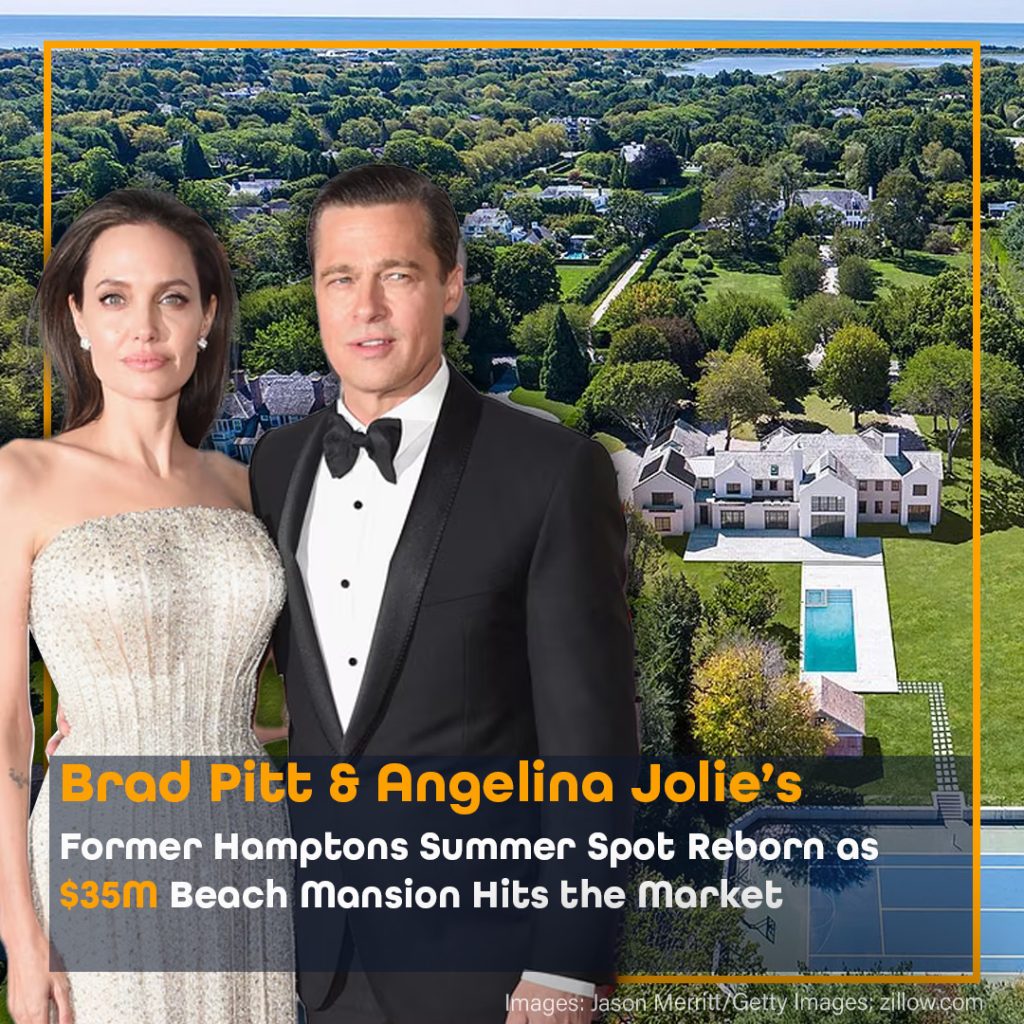
Jolie’s relationship with the East End exists in the register of serious film culture and serious money. That means the Hamptons International Film Festival audience and the philanthropic infrastructure of Bridgehampton and Southampton — the kind of wealth that funds the causes she has spent two decades advocating for. She is not a Hamptons regular in the celebrity-sighting sense. However, the humanitarian networks she operates within — refugee advocacy, women’s rights, conservation — intersect directly with the East End’s most significant philanthropic class.
For more on the women navigating cultural visibility and reinvention at this moment, see our full hub on female celebrities over 40 and the glow-up generation. The dining culture that hosts serious cultural conversation at the Hamptons’ best restaurants understands the specific kind of person Jolie has become — less spectacle, more institution.
The Register She Occupies Here
The East End’s most durable social tier has always known the difference between celebrity and legacy. Jolie is in the second category whether she shows up or not. Her UNHCR work brought her to 60 countries over 20 years. The directorial work on First They Killed My Father received the UN Peace Summit Award. Additionally, an honorary damehood from the British Crown places her in a category that has nothing to do with tabloid coverage. For context on the real estate landscape of the world this kind of legacy occupies, see our Hamptons luxury real estate guide. The East End has always understood that the most interesting people are not always the loudest ones in the room.
What She Built: Maria, Without Blood, Atelier Jolie
In 2024, Jolie premiered two films. Maria, directed by Pablo Larraín, opened at Venice and earned an eight-minute standing ovation. She played Maria Callas in the final days of the soprano’s life. Learning to sing at La Scala for the role, she began in a private room with one crew member. She built to a full house, terrified at each stage. The film earned 75 percent on Rotten Tomatoes, a Golden Globe nomination, and a reception that was broadly positive and commercially modest. Netflix distributed it. It did not become the cultural event that its Venice premiere suggested it might.
Additionally, Without Blood, which she directed and in which Salma Hayek starred, premiered at Toronto, where Jolie received a tribute award. Furthermore, Atelier Jolie opened in the Mercer Street space. Designers work with repurposed textiles, sustainability as organizing principle — a deliberate departure from the luxury consumption that normally surrounds her name. Notably, none of the three projects generated the sustained cultural traction that her earlier work produced automatically. She was present. The culture registered her presence as a kind of quality signal rather than an event.
The Ghost Returns With Two Films
The Didion framework applies here. She tells herself a story about what she is making. The culture tells itself a different story. Neither fully penetrates the other. Maria performance is genuinely good — critics who encountered it without the Brangelina frame found a deeply controlled, emotionally precise piece of work. However, the Brangelina frame persists. Consequently, even a Venice standing ovation reads, in the cultural metabolism, as Angelina Jolie doing something rather than something being done that happens to star Angelina Jolie. The distinction is the entire problem. Moreover, it may not be solvable within the current frame. The Ghost continues working. Cultural attention keeps noting her presence without fully registering it.
The Soft Landing: The Divorce Is Done
On December 30, 2024, the divorce from Brad Pitt was finalized. Eight years after the separation filing, the legal machinery stopped. She walked the 2025 Golden Globes red carpet in Alexander McQueen beadwork with daughter Zahara beside her. Matching gowns. Both composed in the way that suggests practice at composure. A Best Actress in a Drama nomination followed. The award, however, did not. Furthermore, the Miraval litigation between the parties continues as a separate matter, meaning the financial settlement remains incomplete in ways that won’t resolve quickly.
At 49, Jolie is building something that does not yet have a clear name. Directing is part of it. So is ethical fashion, and the children — now ranging from young adult to teenager, several of whom are working alongside her on productions. Additionally, it involves figuring out what the light looks like when it comes back after years of being dim. She said the Maria role required her to feel again and breathe again and open again in ways she hadn’t done for a long time.
The Verdict at 49
Two Academy Awards. Sixty countries visited on humanitarian missions. Over $120 million in film salaries between 2001 and 2011 alone. A directing career and a fashion collective. The Cecil B. DeMille mansion. Six children. An eight-year divorce that is finally over.
Angelina Jolie’s net worth of $120 million is the publicly available number for a fortune that almost certainly extends considerably further. Furthermore, it is the smallest fact about her. The largest fact is the specific quality of her invisibility — two films at major festivals, a Golden Globe nomination, a war drama directed. Still only a presence rather than an event. Ultimately, that is not because she lacks substance. Rather, it is because the frame the culture built around her became permanent before she had finished building herself. Nevertheless, she is still working on the version that lives outside it. Moreover, the work, when the frame finally loosens, will be worth the wait.
Related Reading
- The Glow-Up After 40: Women Who Peaked When Everyone Thought They Were Done
- Nicole Kidman Net Worth: $250M and Zero Regrets
- Renée Zellweger Net Worth: The $90M Cost of a Famous Face
- Living Legends Net Worth 2025: Hanks, Streep, and the Long Game
Social Life Magazine has spent 23 summers documenting the people, brands, and ideas that shape how serious wealth lives and plays on the East End. The ones who matter aren’t chasing access. They’re already inside.
Place your brand inside the conversation: A select number of feature partnerships, print placements, and digital sponsorships are available each season — reserved for brands that belong in the room. Inquire at sociallifemagazine.com/contact
Join us at Polo Hamptons 2026: One afternoon. The right 2,000 people. Deals that don’t happen in conference rooms. polohamptons.com
The print edition arrives where it matters: 25,000 copies distributed Memorial Day through Labor Day, from Westhampton to Montauk — and 15,000 more delivered to Upper East Side doorman buildings each fall. Subscribe at sociallifemagazine.com/subscription
Keep independent luxury journalism alive: Support with $10 here. The publications that last are the ones their readers decide to protect.
Author

Written by
Recent Posts
The Influence Of Social Media On Interior Style Trends
Where Can You Find the Best Made-to-Measure Bespoke Suits in NYC
The Financial Habits Every Successful Entrepreneur Swears By
What Happens If You Delay Hemorrhoid Treatment in New York City

James Franco Net Worth — A $30 Million Career Interrupted
Categories
- Art
- Articles
- Beauty & Skincare
- Celebrities
- Celebrities|Movies
- Celebrities|The Chronicles
- Chronicles
- Entertainment|Culture
- Event Photos
- Events
- Fashion
- Fashion & Style
- Featured
- Food & Beverage
- Food, Spirits, Wine
- Hamptons
- Hamptons Celebrities
- Hamptons Celebrities|Celebrities|The Chronicles
- Health
- Health & Beauty
- Lifestyle
- Luxury Lifestyle
- Movies|Culture
- Movies|Hamptons Lifestyle
- Press
- Profiles
- Real Estate
- Technology
- The Chronicles
- Travel
- Uncategorized
- Weddings