
The Lobby of the AMC on July 21, 2023
Consider the lobby. Not the films. The lobby. Women in coordinated pink outfits checking their phones for the best angle. Men in dark blazers performing intellectual seriousness for nobody in particular. Both groups stealing glances at the other, measuring themselves against a mirror they pretended not to see. Furthermore, the teenagers filming TikToks about which movie they chose, as though the choice itself were the content. It was. The Barbenheimer box office phenomenon was not about two movies. It was about the performance of choosing between them.
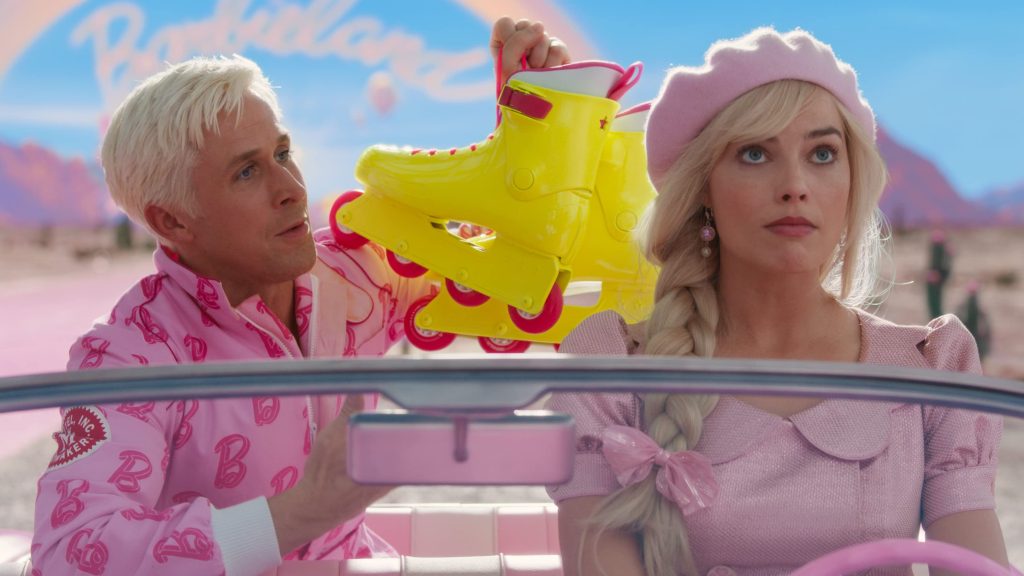
On that single weekend, Barbie opened to $162 million domestically. Meanwhile, Oppenheimer collected $82.4 million. Together they drove the fourth-largest box office weekend in American history, trailing only three Avengers and Star Wars openings. Additionally, they would go on to earn a combined $2.4 billion worldwide. Barbie alone crossed $1.44 billion globally. Furthermore, Oppenheimer, a three-hour R-rated biographical drama about nuclear physics, pulled in $952 million. The industry called it a miracle. Notably, the miracle required two conditions that will never repeat: a social media meme perfectly timed to a post-pandemic hunger for shared experience, and two films good enough to justify the hype after the hype did all the selling.
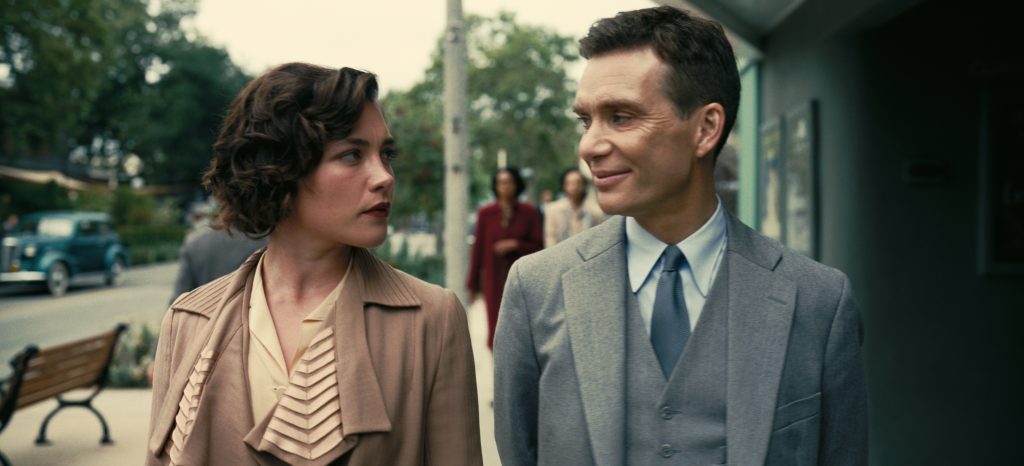
The Barbenheimer Box Office Was a Funeral Disguised as a Party
Here is what nobody in Hollywood wanted to say out loud. The Barbenheimer box office weekend proved that monoculture events still work. It also proved that they only work when the audience treats the movie as a social accessory rather than a standalone experience. You did not go see Barbie. You went to be seen having gone to see Barbie. The pink outfit was not for the theater. It was for the post. Consequently, the film industry celebrated this as proof of life when a more honest reading would be: the patient sat up in bed, looked incredible for the photo, and the photo was the entire point.
Consider that the combined $2.4 billion represented nearly a quarter of the entire 2023 summer box office. Two films carried an industry. Meanwhile, The Marvels became the biggest stumble in Marvel Studios history. The Flash collapsed. Haunted Mansion disappeared. The ecosystem was not thriving. Two organisms were thriving inside a dying ecosystem. That distinction matters. Ultimately, Barbenheimer did not save Hollywood. It revealed how few things can.
Margot Robbie: The Producer Who Happened to Star
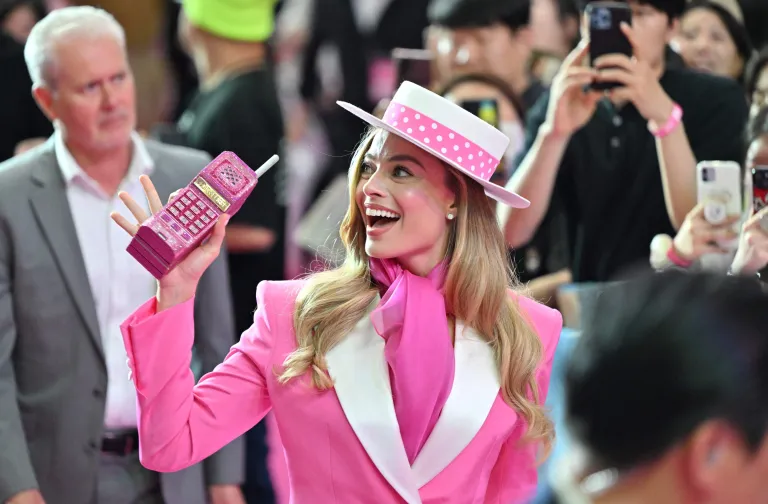
The most important fact about Margot Robbie is not that she played Barbie. It is that she produced Barbie. Her company LuckyChap Entertainment, founded in 2014 with her husband Tom Ackerley, acquired the rights and developed the project years before Warner Bros. greenlit it. By the time cameras rolled, Robbie was not an actress waiting for a role. She was the architect of a $1.44 billion machine.
Her base salary was $12.5 million. Backend deals, profit participation, and producing fees pushed her total Barbie earnings past $50 million. Notably, her estimated net worth climbed from roughly $40 million pre-Barbie to $60 to $80 million after. LuckyChap had already produced I, Tonya and the Oscar-winning Promising Young Woman. However, Barbie was the proof of concept at planetary scale: an actress could own the intellectual property, develop the project, star in it, and capture value at every level of the chain.
This is the detail that makes the Barbenheimer box office story something more than a weekend of good numbers. Robbie understood, earlier than almost anyone in her generation, that being a movie star was no longer enough. She built the production company before she needed it. She saw the cliff before the industry admitted there was one. Her fortune is not an acting fortune. It is a hedge against the irrelevance of acting fortunes.
Cillian Murphy: The Man Who Won by Disappearing

Cillian Murphy spent two decades being the kind of actor other actors admire and audiences cannot quite name. Peaky Blinders gave him cult devotion. Christopher Nolan gave him supporting roles in five films. Nevertheless, he remained, in the popular imagination, a man who was almost famous. Then Oppenheimer happened. His performance anchored a $952 million global run. He swept awards season, winning the Golden Globe, the BAFTA, the SAG Award, and the Academy Award for Best Actor, becoming the first Irish-born performer to claim the honor. Emily Blunt, who took a pay cut to $4 million for the role of Kitty Oppenheimer, earned her first Oscar nomination from the same film.
The fascinating part is what he did next. He did not chase a franchise. He did not sign with Marvel. Instead, he produced and starred in Small Things Like These, a quiet Irish drama about a coal merchant finding moral courage. He followed it with Steve, a Netflix film about a teacher at a school for at-risk teenagers. Both are small, intimate, and miles from the scale of Oppenheimer. When asked why he had not attached himself to a major blockbuster after his Oscar, Murphy told Variety with characteristic understatement that he simply was not available.
His entire career was built on a specific kind of refusal. Refusal of tabloid visibility, of franchise overexposure, of the promotional machine that turns actors into brands. The Oscar validated a style of fame that actively resists the mechanics of fame. Meanwhile, the Peaky Blinders movie, The Immortal Man, is set for 2026. Additionally, Murphy executive produced the 28 Years Later sequels. The work continues. So does the disappearing. Both, apparently, are the point.
Ryan Gosling: The Leading Man Who Survived by Becoming a Joke
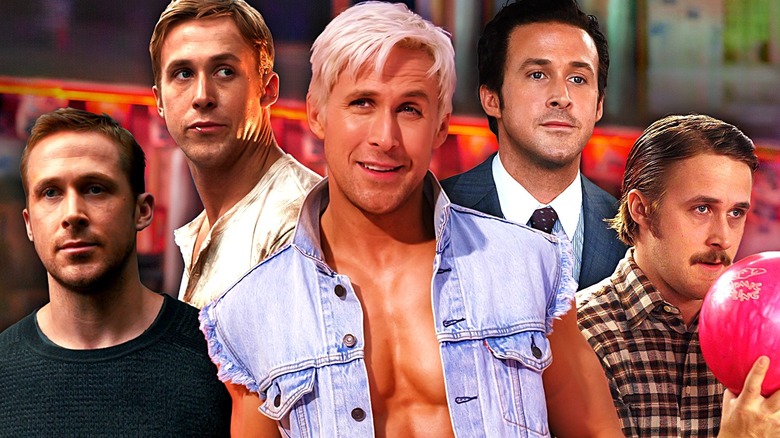
Ryan Gosling’s career before Barbie was a study in brooding intensity. Drive. Blue Valentine. Blade Runner 2049. He was the kind of handsome that implied suffering. Then he put on the bleached hair and the fur coat and played Ken as an existential punchline, and something shifted permanently. The performance earned him an Oscar nomination and a viral musical number. Additionally, it raised a question that Gosling’s entire next decade will have to answer: was this a brilliant reinvention or a surrender?
Ken is a man whose only value is ornamental. Essentially, he exists in relation to Barbie. He has no autonomous purpose. Gosling played this with such committed absurdity that the audience laughed. Moreover, they laughed because they recognized the critique. Given that context, the performance worked as both comedy and confession. In the 2020s fame economy, sincerity is expensive and irony is cheap, and the smartest thing a classically handsome man can do is make fun of being classically handsome. Consequently, Gosling followed Barbie with The Fall Guy and Project Hail Mary, leaning further into charm and comedy. The brooding man is gone. The funny man pays better.
His Barbenheimer box office contribution is not measured in his salary alone. It is measured in the way he redefined what a leading man does when the old definition stops selling tickets.
Greta Gerwig: The Director Who Became a Brand Without Meaning To
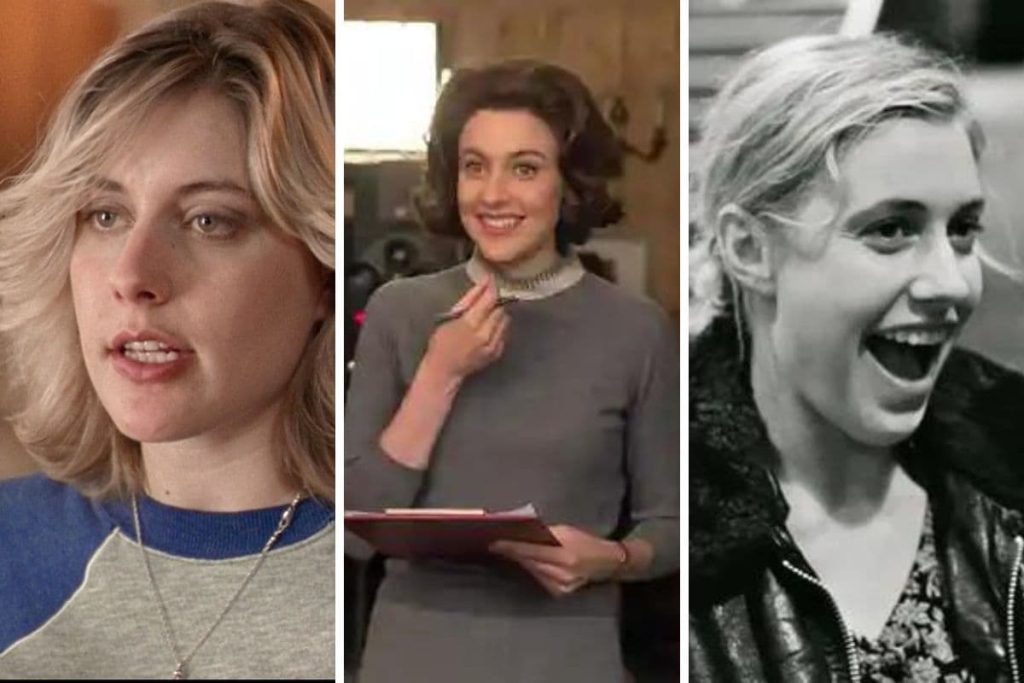
Before Barbie, Greta Gerwig was an indie darling with two critically beloved films: Lady Bird and Little Women. After Barbie, she was the first solo female director to cross $1 billion at the global box office. The distance between those two identities is where the interesting story lives. Gerwig did not set out to make a commercial juggernaut. She set out to make a film about existential emptiness, patriarchy, and the gap between how women are marketed and how they actually live. The fact that this film also sold $1.44 billion in tickets is either a vindication of her vision or the greatest act of cultural camouflage in recent cinema history.
Warner Bros. hired Gerwig precisely because her sensibility was unexpected. A Barbie movie directed by the Lady Bird filmmaker was a headline before it was a project. The contrast was the marketing. Consequently, Gerwig found herself in the position that every artist dreads and every studio prays for: she made something personal that became something enormous, and now the market expects the enormous part to repeat. Her next move will reveal whether the industry learned the right lesson from the Barbenheimer box office. The right lesson is that distinctive vision drives commercial success. The wrong lesson is that Greta Gerwig is a brand that can be deployed at will.
Christopher Nolan: The Ghost Who Ran the Table

Nolan was not in the lobby on July 21. Social media does not exist in his world. He famously does not use email or Instagram. Nevertheless, Oppenheimer’s $952 million worldwide gross made it the highest-earning biographical drama in history, the highest-grossing film to never debut at number one domestically, and the vehicle for seven of the eight combined Oscars that Barbenheimer collected, including Best Picture and Best Director.
Nolan’s absence from the cultural conversation is, paradoxically, his contribution to the cultural conversation. In essence, he refuses to be a brand, which is his brand. Practical effects, film stock, and theatrical exclusivity remain his non-negotiable demands in an era when every other filmmaker is negotiating streaming windows. Moreover, his contract with Universal for Oppenheimer included a guarantee that no other Universal film would release within three weeks of his opening date. Furthermore, the director demanded and received complete creative control over a three-hour period drama about physics. Ultimately, the studio agreed because they understood something the rest of Hollywood is still processing: Nolan’s refusal to play the game is the game. His next project, The Odyssey, arrives in 2026. Predictably, he will not promote it on TikTok.
What the Barbenheimer Box Office Actually Proved
Strip away the memes and the pink outfits and the discourse, and the Barbenheimer box office weekend proved exactly one thing: audiences will still leave their houses for movies, but only when the act of leaving the house becomes a social event larger than the movie itself. Admittedly, that is not nothing. However, it is also not a business model. After all, you cannot manufacture a meme. Similarly, you cannot schedule cultural lightning. You can only make something good enough that the lightning, if it arrives, has somewhere to land.
Barbie and Oppenheimer together received 21 Academy Award nominations and won eight. They represented two fundamentally different theories of cinema. One argued that joy and spectacle and feminist critique could coexist inside a $145 million toy commercial. The other argued that seriousness and length and moral complexity could still fill IMAX screens. Both were right. Both were also unrepeatable. Subsequently, the attempts to recreate the phenomenon (Saw Patrol, Glicked) have fizzled. The lesson was supposed to be: make great, distinctive films and audiences will come. The industry heard: schedule two movies on the same day and make a portmanteau.
Ultimately, the Barbenheimer box office weekend was the last time Hollywood looked like the version of itself it remembers being. Whether it becomes a template or just a memory depends on whether the industry takes the right lesson. As of now, that decision remains unmade.
Related Reading
Margot Robbie Net Worth 2025: From Farm Girl to Barbie Empire
Cillian Murphy Net Worth: The Reluctant A-Lister
Ryan Gosling Net Worth: The Leading Man Who Became a Joke on Purpose
Greta Gerwig Net Worth: The Indie Director Who Built a Billion-Dollar Film
Emily Blunt Net Worth: How Competence Built an $80M Fortune
Consider the scene. You are reading this on your phone during a dinner you mildly resent attending. Someone across the table is talking about a show they just binged. The food is fine. The company is fine. Everything is calibrated to be exactly fine. But nothing is actually happening. That is the condition Social Life Magazine was built to address. Not with noise. With signal. If you have a story worth telling, a brand worth positioning, or a name worth placing in the rooms where placement matters, the editorial team is listening. Reach out here.
For brands, founders, and tastemakers seeking editorial visibility at a higher frequency, Social Life now offers paid feature placements designed to position your story alongside the culture, not outside of it.
Join the 82,000+ readers who already receive our insider updates, event invitations, and exclusive content drops. Subscribe to the Social Life email list here.
Polo Hamptons is where the handshake happens before the deal does. Two dates. One field. The kind of afternoon that turns a stranger into a co-investor. Tickets and sponsorship details live at polohamptons.com.
The print edition of Social Life Magazine lands in 25,000 hands each summer issue, distributed from Westhampton to Montauk and into Upper East Side doorman buildings every fall and winter. A subscription is the cheapest luxury purchase you will make this year. Subscribe to print here.
Independent publishing survives on the generosity of people who believe good writing should exist outside of algorithms. If this piece on the Barbenheimer box office gave you something worth thinking about, a $5 contribution keeps the lights on and the editorial honest. Donate here.
Author

Written by
Recent Posts
Ryan Gosling Net Worth: The $70M Art of Not Trying
Cillian Murphy Net Worth: The Art of Quiet Fortune

Margot Robbie Net Worth: Barbie’s $80m Power Broker
Barbenheimer Box Office: The Weekend Hollywood Faked a Comeback
Top Gun Maverick and the Extinction of the Movie Star Species
Categories
- Art
- Articles
- Beauty & Skincare
- Celebrities
- Celebrities|Entertainment
- Celebrities|Television
- Celebrities|The Chronicles
- celebrities|the-archive
- Chronicles
- Entertainment|Culture
- Event Photos
- Events
- Fashion
- Fashion & Style
- Featured
- Food & Beverage
- Food, Spirits, Wine
- Hamptons
- Hamptons Celebrities
- Hamptons Celebrities|Celebrities|The Chronicles
- Health
- Health & Beauty
- Lifestyle
- Luxury Lifestyle
- Press
- Profiles
- Real Estate
- Technology
- The Chronicles
- Travel
- Uncategorized
- Weddings