

The Bling Ring A24 cast net worth story is the most delicious irony in A24’s entire catalog, and A24 is a company whose catalog runs on irony the way most studios run on sequels. A film about teenagers who broke into celebrity mansions to steal luxury goods, which is to say a film about the pathological endpoint of wanting what famous people have, was directed by Francis Ford Coppola’s daughter and starred the highest-paid young actress in the world, a woman whose personal net worth exceeded the combined value of everything the real-life Bling Ring members ever stole by a factor of roughly one thousand.
The people making the movie about coveting wealth had more money than the people they were portraying wanted to steal. You cannot write satire this clean. You can only film it and hope the audience catches the joke, which, because the audience is also participating in the same celebrity-worship economy being satirized, they frequently do not.
The Meta-Economics of Making a Film About Wanting Things
The Bling Ring is based on a true story that reads like a sociological experiment designed to test the upper limits of American materialism. Between 2008 and 2009, a group of teenagers in Calabasas, California, used celebrity gossip websites to determine when stars would be away from their homes and then broke in to steal clothes, jewelry, and handbags. Their targets included Paris Hilton, Orlando Bloom, and Lindsay Lohan. The total value of stolen goods exceeded $3 million, which sounds like a lot until you learn that Paris Hilton did not initially notice anything was missing, a detail that says more about the economics of celebrity than any think piece ever could.
Sofia Coppola took this material and turned it into a film that operates on at least three levels of commentary simultaneously, which is the kind of intellectual density that A24 recognized as commercially viable before anyone else in the distribution business understood that audiences would pay to feel smart while watching beautiful teenagers commit crimes in slow motion.
Emma Watson — The Hermione Fortune Deployed Against Type
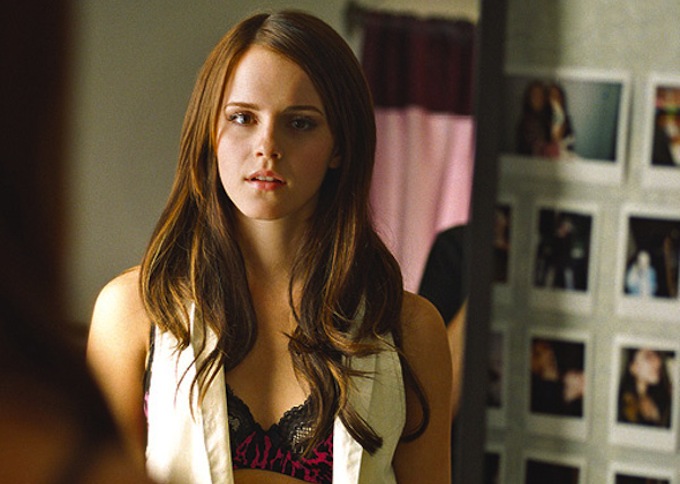
Emma Watson’s net worth is estimated at $85 million, a figure built almost entirely on one of the most successful film franchises in human history and then strategically reinforced through a series of decisions so precise that they read less like an acting career and more like a McKinsey case study on brand extension. The Harry Potter series generated over $7.7 billion in worldwide box office revenue. Watson’s compensation grew from approximately $250,000 for the first film, when she was eleven and her negotiating leverage consisted entirely of being adorable and British, to an estimated $15 million to $20 million for the final installments, plus backend points on a franchise that will generate revenue until the sun exhausts its hydrogen supply.
The Strategic Demolition of Hermione
Her decision to appear in The Bling Ring was a calculated detonation of her own image, the kind of career move that looks reckless from the outside but makes perfect sense if you understand that the most expensive thing a former child star can own is a single identity. After a decade as Hermione Granger, Watson needed to prove she could be someone other than the cleverest witch at Hogwarts. Coppola handed her a valley girl obsessed with celebrity culture and designer handbags. Watson played it with such gleeful vacancy, such committed emptiness, that critics had to recalibrate everything they assumed about her range.
In Perspective
Post-Potter, Watson’s career choices have prioritized cultural positioning over maximum quarterly earnings. Her role as Belle in Beauty and the Beast reportedly earned her $15 million plus backend on a film that grossed $1.26 billion worldwide. But her work with The Bling Ring, her UN Women ambassadorship, and her selective filmography signal someone building a legacy brand rather than maximizing revenue per project. The $85 million net worth is the byproduct of a strategy, not the strategy itself.
The Takeaway
The deeper irony of Watson’s Bling Ring appearance is that she played a character who defines herself through the acquisition of luxury goods while being, in real life, one of the few young actresses in Hollywood wealthy enough to be genuinely indifferent to luxury goods. She has $85 million does not need to steal Paris Hilton’s handbags. She could buy the company that makes them. That gap between the character’s desperation and the actress’s security is the engine that drives the film’s satire, and it is a gap that only someone with Watson’s specific combination of wealth, intelligence, and willingness to undermine her own image could have made visible. Lesser actresses would have played the role as commentary. Watson played it as a confession, which is significantly more interesting and significantly more dangerous.
The financial implications of this casting extend beyond the film itself. Watson’s willingness to work at indie scale, for a salary that represented a rounding error relative to her Harry Potter earnings, signaled to every other A-list actor that A24 was a legitimate destination for prestige work. When Emma Watson takes a pay cut to work with Sofia Coppola on a $15 million film, the message to the industry is not that the film is cheap but that the opportunity is expensive in ways that money alone cannot capture. That message, transmitted in 2013, would echo through every subsequent A24 production that attracted talent willing to trade salary for credibility.
For the full breakdown of how a child actress turned a wizard franchise into generational wealth, read our Emma Watson net worth origin story.
Sofia Coppola — The Director Whose Surname Is the Fortune and Whose Films Are Her Own
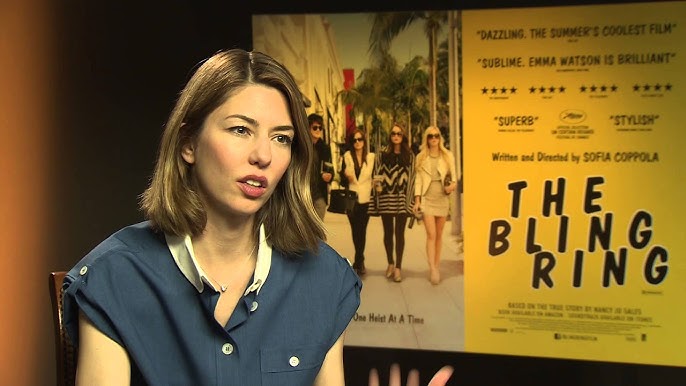
Sofia Coppola’s net worth is estimated at $40 million, though attempting to separate her personal earnings from the Coppola family’s collective wealth is an exercise in futility roughly equivalent to trying to determine which specific wave made the ocean. She is Francis Ford Coppola’s daughter. Her cousin is Nicolas Cage. Her family’s holdings include a wine empire in Napa Valley, film production companies, and resort properties in Belize. The Coppola financial ecosystem is so dense and interconnected that individual net worth figures are almost academic.
What She Built on Her Own Terms
What Coppola built independently is arguably more interesting than what she inherited access to, and the distinction matters because it is the distinction between access and accomplishment, between having a door opened for you and building something worth walking through that door to see. Lost in Translation cost $4 million and grossed $113 million worldwide, a return on investment that would make any venture capitalist abandon their current portfolio to study her methods. The Virgin Suicides established her as a voice, not a surname. Each subsequent film, from Marie Antoinette’s divisive beauty to Somewhere’s Venice Golden Lion, reinforced a brand so specific that “Coppola aesthetic” became shorthand for a particular frequency of beautiful melancholy that launched a thousand Tumblr accounts and influenced an entire generation’s approach to visual storytelling.
In Perspective

The Bling Ring was Coppola’s most overtly satirical work, and its relationship with A24 positioned her within the distributor’s prestige ecosystem at exactly the right moment. She directed the film. A24 distributed it. The partnership gave both parties what they needed: Coppola got indie credibility for a celebrity-culture satire that could have easily been dismissed as exploitation, and A24 got a famous name attached to an early release when the company was still building the brand that would eventually make it the most culturally significant distributor of its generation.
The Takeaway
The Bling Ring also marks a fascinating data point in Coppola’s ongoing experiment with wealth as subject matter. Every film she has directed is, at some level, about the relationship between privilege and emptiness, between having everything and feeling nothing, between the surfaces of luxury and the voids they are designed to conceal. Marie Antoinette explored this through historical spectacle. Lost in Translation explored it through the loneliness of expensive hotel rooms. The Bling Ring explored it through the specific madness of teenagers who believed that proximity to celebrity possessions would confer celebrity status, a belief that is ridiculous and also, if you think about it for more than thirty seconds, the foundational assumption of the entire luxury goods industry.
Coppola’s net worth of $40 million positions her as both the critic and the subject of her own critique. She makes films about the isolation of wealth while possessing the wealth that produces the isolation. This is not hypocrisy. It is an authority. She knows what she is talking about because she has lived inside the phenomenon she is dissecting, which gives her films a precision that no outside observer could replicate, because the outside observer has to imagine what wealth feels like while Coppola merely has to remember.
For the full story of how Hollywood’s most famous daughter built her own creative empire, read our Sofia Coppola net worth origin story.
What The Bling Ring Tells Us About A24 and the Value of Irony
The Bling Ring was not a box office success by any conventional metric. It earned $19 million against a $15 million budget, which in Hollywood accounting barely qualifies as breaking even once you factor in marketing costs, distribution fees, and the approximately seven layers of financial engineering that studios use to ensure that even profitable films appear to lose money on paper. But the film accomplished something more valuable for A24’s brand architecture than raw profit could have provided.
The Thesis Statement Disguised as a Heist Movie
It proved that A24 could attract major talent willing to work at an indie scale for the sake of the project. It demonstrated that the company understood something about cultural conversation that its competitors did not, namely that a film does not need to make money to generate value if the conversation it creates is interesting enough to attract the kind of audience that will pay for the next film. And it established, very early in A24’s corporate life, that irony, properly deployed, is a commercial asset.
The Deeper Math
The meta-narrative of The Bling Ring is irresistible to anyone who thinks about how money and culture interact, which is precisely the audience A24 was building and precisely the audience that would later make Moonlight, Lady Bird, and Everything Everywhere All at Once into cultural phenomena. A film about the emptiness of wanting what celebrities have, made by people who already have it, distributed by a company that would go on to prove that cultural capital converts to financial capital more reliably than the reverse. The Bling Ring is A24’s thesis statement disguised as a heist movie, and the heist, it turns out, was the audience’s attention.
What It Means Now
Explore our full A24 Movies and Actors Net Worth pillar for every cast, every fortune, every origin story behind independent cinema’s most valuable brand.
The Longer Arc
The Bling Ring’s position in A24’s catalog is also significant because it represents the company’s willingness to distribute films that critique the very audience most likely to watch them. The people who see A24 films in theaters skew affluent, educated, and culturally engaged, which means they are precisely the demographic most likely to recognize themselves in the Calabasas teenagers who believed that stealing a celebrity’s handbag would make them adjacent to celebrity. The film is a mirror held up to its own audience, and the audience’s willingness to pay $15 to see itself reflected is the final irony in a film constructed entirely from irony. A24 understood that self-aware audiences will pay for self-awareness, and that understanding is worth more than any individual film’s box office because it defines the company’s entire market position.
The Takeaway
Watson’s $85 million and Coppola’s $40 million combined represent more wealth than the entire Bling Ring crew stole across all their burglaries, multiplied by a factor of forty. The people making the film about wanting what you cannot have already had more than the characters could imagine wanting. That mathematical relationship between the cast’s real wealth and the characters’ stolen wealth is the cleanest expression of the film’s thesis, and it is a thesis that only A24 would have recognized as commercially viable.
You are reading this because you already understand something most people scroll right past. The intersection of culture, money, and taste is not a Venn diagram. It is a mirror. Social Life Magazine has spent 23 years holding that mirror up to the people who shape the Hamptons, Manhattan, and the corridors between them. If you see yourself in these pages, we should talk. Reach out at sociallifemagazine.com/contact.
Your brand, Your launch
Your personal story belongs in front of 82,000 affluent readers and a digital audience that keeps growing, our editorial features are built for exactly that moment. Learn more at Submit a Paid Feature.
Our email list reaches 82,000 subscribers who actually open, read, and act. If your audience is high-net-worth, culturally engaged, and based between Park Avenue and Montauk, you are already in the right place. Join the list.
Polo Hamptons returns to Bridgehampton this July with 1,200 guests, Getty Images coverage, and seven years of BMW title sponsorship behind it. If your brand belongs in that conversation, visit polohamptons.com.
A print subscription to Social Life Magazine puts 25,000 copies per issue into the boutiques, lobbies, and living rooms where decisions get made, from Westhampton to Montauk every summer and Upper East Side doorman buildings for Fall and Winter. Subscribe at sociallifemagazine.com/subscription.
If this publication has added value to your world and you want to support independent luxury journalism, you can contribute directly at our donation page.
Author

Written by
Recent Posts

The Bling Ring A24 Cast Net Worth — The Richest Cast Ever Assembled to Play Thieves

Timothée Chalamet Net Worth — The Hell’s Kitchen Dropout Printing $35 Million

Greta Gerwig Net Worth — She Made Movies for Free. Then She Made $1.4 Billion.

Lady Bird A24 Cast Net Worth — One $10M Movie Minted $100M in Combined Careers

Vanessa Hudgens Net Worth — The Firefighter’s Daughter Who Escaped Disney With $18M
Categories
- Art
- Articles
- Beauty & Skincare
- Celebrities
- Celebrities|Movies
- Celebrities|The Chronicles
- Chronicles
- Entertainment|Culture
- Event Photos
- Events
- Fashion
- Fashion & Style
- Featured
- Food & Beverage
- Food, Spirits, Wine
- Hamptons
- Hamptons Celebrities
- Hamptons Celebrities|Celebrities|The Chronicles
- Health
- Health & Beauty
- Lifestyle
- Luxury Lifestyle
- Movies|Culture
- Movies|Hamptons Lifestyle
- Press
- Profiles
- Real Estate
- Technology
- The Chronicles
- Travel
- Uncategorized
- Weddings