
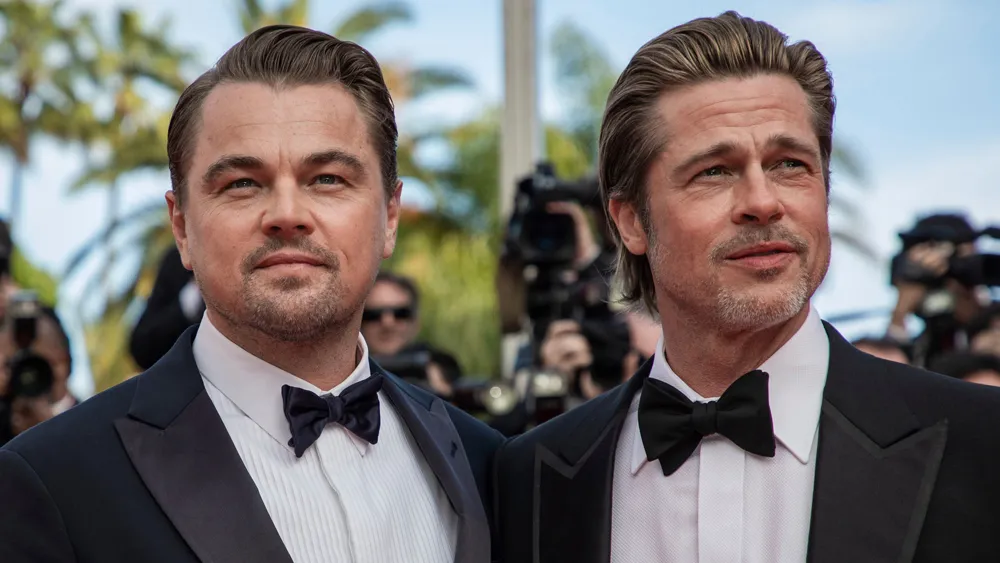
Same founding year. Same Oscar-tier critical credibility. Two completely different liquidity strategies. One man sold. One man held. The math underneath each choice is the real story.
Brad Pitt vs Leonardo DiCaprio is not a comparison of two actors. Rather, it is a comparison of two of the most sophisticated celebrity-producer operators in modern Hollywood, both of whom founded production companies in 2001, both of whom built prestige film catalogs across the subsequent 24 years, and both of whom reached strategic decision points about liquidity that produced opposite outcomes. Specifically, Pitt sold a majority stake in Plan B Entertainment to Mediawan in December 2022 at a valuation above $300 million. Meanwhile, DiCaprio has kept Appian Way Productions under his own ownership with first-look deals at Apple and Sony.
Both decisions are defensible. Nevertheless, they produce very different wealth architectures. This is the math underneath both choices.
The Shared Origin: 2001 and the Post-Oscar Infrastructure Decade
In 2001, both Brad Pitt and Leonardo DiCaprio founded production companies. Specifically, Plan B Entertainment was co-founded by Pitt, Jennifer Aniston, and Pitt’s manager Brad Grey. Furthermore, Appian Way Productions was founded solo by DiCaprio, named after the Roman road that ran from ancient Rome to Brindisi. Moreover, both companies launched in the post-2000 window when celebrity-producer structures were gaining institutional respect across Hollywood.
The Shared Early Slate Pattern
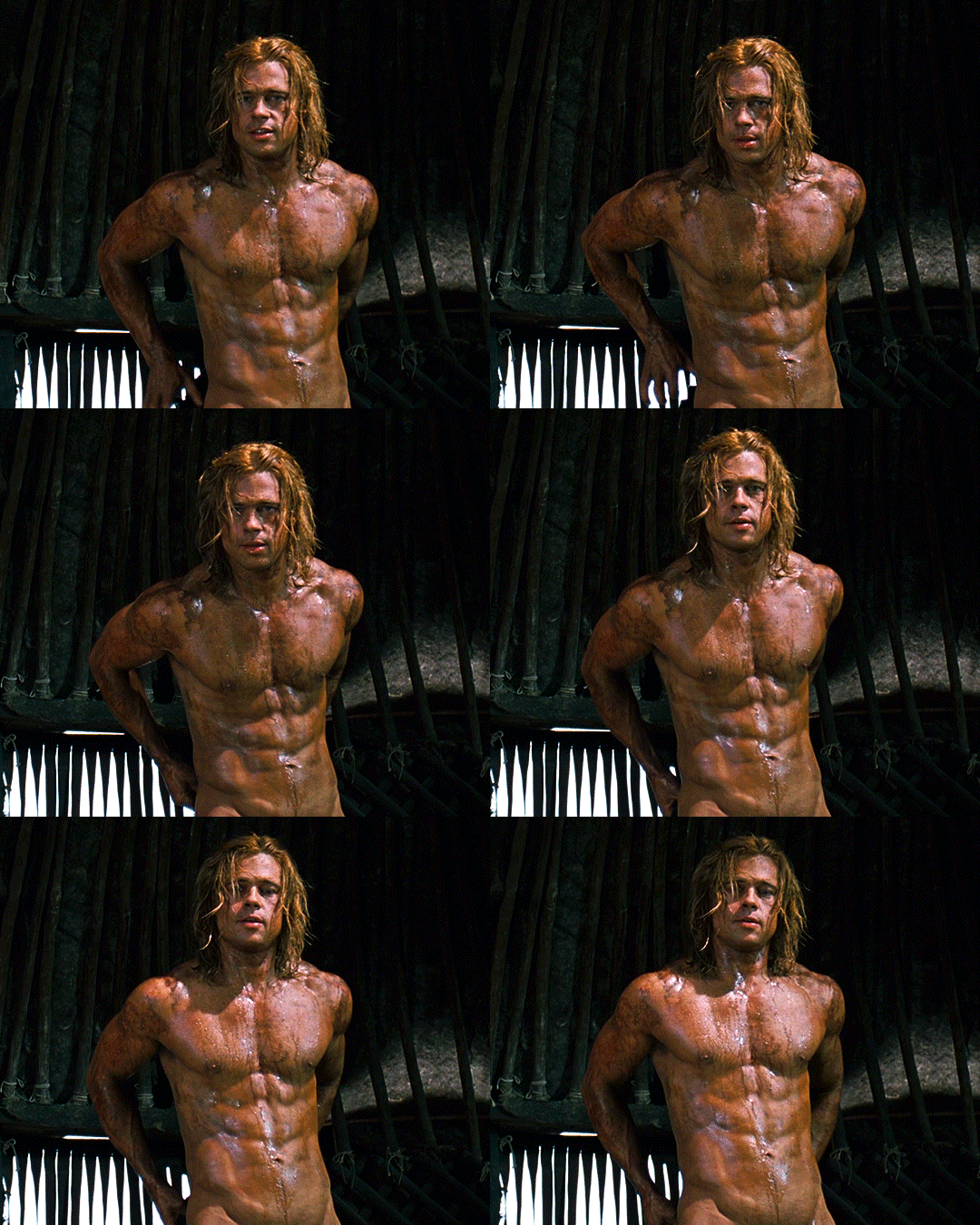
Plan B’s first major production was Troy in 2004, followed by the Best Picture winner The Departed in 2006. Additionally, Appian Way’s first major production was The Assassination of Richard Nixon in 2004, followed by The Aviator later that same year. Furthermore, both companies initially produced films primarily as vehicles for their founding actors. Nevertheless, by 2010 both had evolved into legitimate independent studios producing films that did not require Pitt or DiCaprio on screen.
For the complete arc of how Plan B evolved from vanity shingle to private-equity-grade asset, the Plan B Entertainment deep-dive walks through the full operational history. Additionally, the Brad Pitt net worth pillar treats the 2001 Plan B founding as the structural inflection point of Pitt’s Era 3 infrastructure era.
The Catalogs: Who Actually Produced What
Any honest Brad Pitt vs Leonardo DiCaprio producer comparison has to start with the catalog. Specifically, both companies have produced prestige films that earned Academy Award recognition. Nevertheless, the categories and win rates differ meaningfully.
Plan B’s Three Best Pictures
Plan B has produced three Academy Award Best Picture winners. Specifically, The Departed won in 2007, 12 Years a Slave won in 2014, and Moonlight won in 2017. Furthermore, the company has produced additional Best Picture nominees including Selma, The Big Short, Minari, and F1 in 2026. Moreover, the three Best Picture wins across a ten-year span is the strongest independent-company track record in modern Hollywood.
Appian Way’s Best Picture Position

Appian Way has not yet produced a Best Picture winner. Nevertheless, the company has produced several Best Picture nominees, including The Aviator (2004), The Ides of March (2011), and The Wolf of Wall Street (2013). Additionally, the 2026 Paul Thomas Anderson film One Battle After Another, which won the Best Picture Oscar at the 98th Academy Awards, listed DiCaprio as a producer on the film through Ghoulardi Film Company’s partnership with Appian Way. Specifically, that producer credit gave DiCaprio his first Best Picture win as a producer, even though Appian Way was not the lead production entity on the film.
The DiCaprio Acting Oscar Gap
Where DiCaprio structurally exceeds Pitt is as an on-screen actor rather than as a producer. Specifically, DiCaprio won Best Actor for The Revenant in 2016, earning Appian Way a 15-year timeline of Oscar-nominated performances it produced. Furthermore, DiCaprio has received eight Academy Award acting nominations total across his career, tying him with Richard Burton and Daniel Day-Lewis for the most Best Actor nominations in Oscar history. Moreover, the acting-credit density across Appian Way films is substantially higher than the acting-credit density across Plan B films. For the complete arc of DiCaprio’s current position, the Leonardo DiCaprio $300 million net worth story details his 2026 Oscar-nominated turn in One Battle After Another.
The Strategic Fork: 2020 to 2022
Both companies reached strategic decision points in the early 2020s. Specifically, the decision was whether to monetize accumulated equity through an institutional transaction or maintain independent ownership for continued operating upside. Nevertheless, the two companies chose opposite paths.
DiCaprio’s First-Look Deal Strategy
In August 2020, Appian Way signed a multi-year first-look television and documentary deal with Apple. Specifically, that deal includes projects like the 2026 Apple series Shining Girls, which Elisabeth Moss stars in and DiCaprio executive produces. Additionally, two weeks after the Apple deal, Appian Way signed a multi-year first-look film deal with Sony Pictures. Furthermore, Sony’s Tom Rothman publicly called the arrangement “a rare GOAT deal,” comparing DiCaprio to Michael Jordan and Tom Brady. Consequently, DiCaprio chose the first-look deal structure rather than equity sale. Specifically, the first-look arrangement generates operating revenue and development funding while preserving 100 percent of Appian Way’s underlying equity under DiCaprio’s ownership.
Pitt’s Mediawan Exit Strategy
In October 2022, Plan B retained Moelis & Co. to run a formal sell-side auction. Two months later, the Mediawan transaction closed. Specifically, the French media conglomerate paid more than $300 million for a majority stake, financed through a capital increase backed by KKR, Atwater Capital, and Societe Generale. Furthermore, the deal structure was 50 percent cash and 50 percent Mediawan equity. Consequently, Pitt, Dede Gardner, and Jeremy Kleiner received approximately $150 million in cash plus approximately $150 million in Mediawan stock. Moreover, Pitt personally received an estimated $120 to $150 million as his share of the transaction.
The Math: Who Made More From the Strategy
Brad Pitt vs Leonardo DiCaprio producer economics cannot be compared cleanly because the two structures produce different types of value on different timelines. Nevertheless, a rigorous comparison is possible using transaction value, operating income, and equity appreciation as the three variables.
Pitt’s Plan B Return: Quantifiable
Pitt’s direct personal return from the Mediawan transaction sits at approximately $120 to $150 million. Specifically, the cash portion of $60 to $75 million was immediate liquidity. Additionally, the Mediawan equity portion of $60 to $75 million continues compounding based on Mediawan’s operating performance. Furthermore, Plan B’s ongoing producer fees and back-end participation on F1 added an estimated $12 to $18 million to Pitt’s personal income in 2025 alone. Consequently, the total personal return to Pitt from his Plan B operator arc now exceeds $150 million and continues compounding through the ongoing operating business.
DiCaprio’s Appian Way Return: Harder to Quantify

DiCaprio has never sold equity in Appian Way, which means there is no public transaction value to measure. Nevertheless, first-look deal economics are partially knowable. Specifically, first-look producer arrangements at major studios and streamers typically generate between $5 and $15 million per year in overhead and development funding. Additionally, producer fees on specific films and series add incremental revenue that varies project by project. Moreover, DiCaprio’s producer credit on One Battle After Another would have carried a producer fee plus back-end participation potentially worth $5 to $10 million.
However, DiCaprio’s Appian Way equity value today is the more interesting question. Specifically, if Appian Way were sold using Plan B’s Mediawan transaction as a benchmark, the comparable valuation would likely land in the $250 to $350 million range, with DiCaprio personally receiving 100 percent of proceeds rather than the split Pitt executed. Furthermore, DiCaprio is deliberately preserving that theoretical equity for a future transaction that is not currently planned.
The Structural Advantage of Each Strategy
Pitt’s Mediawan sale and DiCaprio’s independence are both defensible strategies. Specifically, each has different structural advantages depending on the founder’s risk tolerance, ongoing income needs, and creative ambitions.
Why Pitt Sold When He Did
Pitt’s Plan B sale closed in December 2022, which was six years into his post-divorce reconstruction and immediately after the Amber Heard verdict cycle had re-scrutinized every A-list male celebrity. Specifically, selling when the market comp set was at its peak (Hello Sunshine at $900M, SpringHill at $725M) meant Pitt captured premium valuation before the celebrity-production bubble potentially deflated. Furthermore, the 50 percent cash component gave him immediate liquidity during the Miraval lawsuit’s highest-cost phase, when legal fees were consuming meaningful cash reserves.
Moreover, the 50 percent Mediawan equity portion means Pitt retains exposure to Plan B’s ongoing operating upside. Specifically, if Mediawan itself becomes a future acquisition target, Pitt’s stock captures that premium. Consequently, Pitt’s strategy is “partial exit with preserved upside,” which is the most common strategic choice when founders want liquidity without fully walking away.
Why DiCaprio Has Not Sold
DiCaprio’s decision not to sell Appian Way reflects different priorities. Specifically, at 51, he is a decade younger than Pitt and has a longer operating runway. Furthermore, his lifestyle and philanthropic spending are structured to function within his acting income plus Appian Way’s operating revenue, meaning he does not need a liquidity event to fund his current obligations. Additionally, his environmental and political advocacy work benefits from independent control of his production company’s messaging, which an institutional buyer might quietly constrain.
Moreover, DiCaprio’s investment portfolio, which includes early positions in Beyond Meat, Rivian, Diamond Foundry, and multiple environmental technology startups, generates returns that partially substitute for a production company liquidity event. Consequently, his strategy is “operating independence with optionality,” which preserves future sale potential without forcing a transaction at any particular moment.
The Personal Capital Architecture Compared
Brad Pitt vs Leonardo DiCaprio on personal net worth comparison is less definitive than most industry profiles suggest. Specifically, Pitt’s $400 million and DiCaprio’s $300 million are both reasonable estimates based on publicly available information. Nevertheless, the composition of those fortunes differs substantially in ways that matter.
Pitt’s Net Worth Composition
Pitt’s $400 million breaks down approximately as follows. Specifically, film and backend income contributes approximately $120 to $160 million. Additionally, Plan B equity plus the Mediawan transaction contributes approximately $180 to $220 million. Furthermore, real estate contributes approximately $60 million. Moreover, the design and art portfolio contributes approximately $20 to $40 million. Consequently, Pitt’s fortune is structurally weighted toward production company equity rather than pure acting earnings.
DiCaprio’s Net Worth Composition
DiCaprio’s $300 million is structurally different. Specifically, film and backend income contributes approximately $200 to $240 million. Additionally, Appian Way operating value contributes an estimated $30 to $60 million if valued based on ongoing operations rather than comparable transactions. Moreover, his real estate portfolio across Los Angeles, Malibu, Silver Lake, and Palm Springs adds approximately $80 to $100 million. Furthermore, his environmental technology investment portfolio adds an estimated $40 to $80 million, with pre-IPO positions in Beyond Meat, Rivian, and Diamond Foundry being the largest contributors. Consequently, DiCaprio’s fortune is structurally more diversified than Pitt’s, with less concentration in production company equity and more in personal real estate plus venture technology positions.
For the full diversification analysis on DiCaprio’s portfolio, the Leonardo DiCaprio net worth deep-dive covers each component in detail.
The Peer Framework: Celebrity Production as Asset Class
Both Pitt and DiCaprio operate in a broader peer set that has converted celebrity brand equity into production company valuations. Specifically, Reese Witherspoon sold Hello Sunshine to Blackstone-backed Candle Media in 2021 at a $900 million valuation. Furthermore, LeBron James sold a minority stake in SpringHill to RedBird Capital at a $725 million valuation. Additionally, Ryan Reynolds has generated significant wealth through Maximum Effort Productions alongside his Mint Mobile exit to T-Mobile.
Where Pitt and DiCaprio Sit in the Comp Set
Plan B’s $300 million valuation sits below Hello Sunshine’s $900 million and SpringHill’s $725 million. Nevertheless, the delta is partially explained by Plan B’s catalog concentration in art-house prestige films rather than commercial franchise content. Furthermore, Hello Sunshine’s valuation was driven by its Reese’s Book Club adaptation pipeline, which generated predictable commercial television content at scale. Additionally, SpringHill’s valuation was driven by LeBron’s global cultural scale and the Space Jam franchise. Consequently, Plan B’s premium is proportional to its prestige credentials rather than its commercial velocity.
DiCaprio’s hypothetical Appian Way valuation, if it were to sell, would most likely benchmark between Plan B and Hello Sunshine. Specifically, the company has fewer Best Picture wins than Plan B but stronger acting credit density. Moreover, DiCaprio himself carries global brand scale comparable to LeBron’s, which would add premium to any acquisition. Consequently, a theoretical Appian Way transaction today might land in the $400 to $550 million range, with DiCaprio retaining 100 percent of proceeds rather than splitting with operating partners.
For the framework that explains why celebrity production companies command these premium valuations, the Celebrity Private Equity analysis walks through the 2x to 3x financial-buyer multiple premium. Additionally, the Celebrity Ownership Wealth framework tracks Tyler Perry, Oprah Winfrey, Jerry Seinfeld, and other billion-dollar operators who built fortunes through structural ownership rather than salary.
The Late-Career Trajectory Comparison

Pitt at 61 and DiCaprio at 51 are at different points in their commercial curves. Specifically, Pitt’s F1 film in 2025 proved that a 61-year-old actor can still anchor a $631 million global commercial release. Furthermore, DiCaprio’s One Battle After Another in 2025 proved that a 51-year-old actor can still anchor prestige films that win Best Picture. Consequently, both men are operating at commercial peaks that most actors of their cohort have already passed.
Why the Ten-Year Age Gap Matters
The decade gap between Pitt and DiCaprio is the hidden variable that explains much of the strategic divergence. Specifically, Pitt at 61 is making decisions about legacy, liquidity, and ongoing risk tolerance. Furthermore, DiCaprio at 51 is still in pure compounding mode, which rewards operational independence and deferred liquidity decisions. Moreover, if DiCaprio holds Appian Way through his early 60s and then executes a transaction at Plan B’s current trajectory, he could capture a $500 to $700 million valuation with 100 percent of proceeds flowing to him personally.
Consequently, DiCaprio’s strategy is not “never sell.” Rather, it is “sell later at a higher multiple with fewer operating partners to split proceeds with.” Additionally, that approach is structurally correct for a 51-year-old operator with another decade of peak commercial earning potential ahead of him.
What Each Strategy Reveals About the Operator
Pitt’s Mediawan sale reflects an operator who wants to monetize accumulated equity while preserving some upside through the stock component. Specifically, that strategy rewards founders who value optionality and immediate liquidity over maximum long-term outcome. Furthermore, DiCaprio’s independent operation reflects an operator who values maximum creative control and is willing to defer liquidity for higher eventual exit value. Moreover, neither strategy is universally superior. Rather, each is optimized for the operator’s specific personal circumstances, risk tolerance, and career stage.
The Hidden Third Variable: Life Circumstances
Pitt’s 2022 sale closed during the peak cash-demand phase of his Miraval lawsuit, his ongoing divorce proceedings, and his personal rebuild post-sobriety. Specifically, the Chateau Miraval deep-dive covers the $164 million lawsuit’s legal fees context. Additionally, the sobriety rebuild deep-dive covers the broader Era 5 context. Consequently, Pitt’s decision to sell was not purely about valuation timing. Rather, it was about converting equity into cash during a specific life window when cash had elevated strategic value.
DiCaprio, by contrast, has no equivalent cash-pressure event in his current life. Specifically, he is unmarried, has no children, maintains significant personal real estate holdings, and has a diversified venture portfolio that generates passive cash flow. Consequently, his strategic patience around Appian Way is partially enabled by the absence of life circumstances that would force liquidity. Nevertheless, the moment DiCaprio’s circumstances shift, whether through marriage, children, or a larger strategic ambition, his willingness to transact could change quickly.
The Bigger Question: Will DiCaprio Eventually Sell?
Industry consensus holds that DiCaprio will eventually execute an Appian Way liquidity event. Specifically, the first-look deals with Apple and Sony are structured to maximize operating value without constraining future sale potential. Furthermore, DiCaprio has been repped by LBI Entertainment on his production-side affairs, which is a firm known for sophisticated structuring rather than pure talent management. Additionally, multiple sources have indicated that Appian Way received inbound acquisition interest during the 2021 Hello Sunshine bid cycle and the 2022 Plan B process.
The Most Likely Timing
The most likely Appian Way transaction window opens between 2028 and 2032. Specifically, by 2028 DiCaprio will be 53 with additional prestige credits likely including the Anderson collaboration’s halo effect and potentially a Scorsese final collaboration. Furthermore, by 2030 he will be 55, which is the peak age at which celebrity-producer operators execute liquidity events based on historical precedent. Moreover, 2032 would mark his company’s 31st anniversary, which is a natural symbolic milestone for strategic review.
Consequently, if DiCaprio does sell Appian Way within that window, the valuation could reasonably benchmark between $500 million and $1 billion depending on slate performance and peer comp set at the time. Additionally, DiCaprio’s retention of 100 percent equity means his personal consideration from such a transaction would exceed Pitt’s Plan B return by a substantial margin, even if the headline enterprise value is comparable.
Who Is Winning: A Fair Answer
Brad Pitt vs Leonardo DiCaprio as producer-operators does not have a clean winner. Specifically, Pitt has already executed the liquidity event and banked the capital. Furthermore, DiCaprio retains the optionality to execute a potentially larger liquidity event in the future. Moreover, both operators have built prestige production companies that would be considered commercial successes by any rational valuation framework.
Nevertheless, if the question is which strategy produces more wealth over a 30-year operating horizon, DiCaprio’s path is mathematically more likely to compound to a higher absolute number. Specifically, 100 percent ownership through a longer hold period usually generates more total return than 50 percent ownership through an earlier liquidity event, assuming the business continues appreciating. Consequently, the math favors DiCaprio’s patience. Nevertheless, the risk structure favors Pitt’s execution. Pitt has cash in hand. DiCaprio has a paper valuation that depends on future circumstances he does not fully control.
Both men are winning. They are just winning different games with different risk profiles on different timelines. That is what competitive producer economics actually looks like when both operators are running their strategies at full intelligence.
Everything else is arithmetic.
The Social Life Reader Chapter
If you read this far, you are the kind of person who understands that the most important decisions in any operator’s career are almost always the ones about liquidity timing. That is the water you are already swimming in. Most readers scroll. However, you stayed. That is the only actual difference between audiences and the people they read about.
Social Life Magazine covers the kind of stories most outlets miss or sanitize. If your firm sits in the intersection of private equity, media M&A, wealth management, or founder-class liquidity advisory, our editorial team takes direct submissions for feature coverage. Reach out here to start the conversation.
For firms that want to move faster, our Submit A Paid Feature program offers three production tiers at $975, $3,200, and $6,500. Each tier includes editorial development, SEO-optimized placement, and distribution through the full Social Life network.
Our email list reaches 82,000 subscribers who actually open, read, and act. If your audience sits between Park Avenue and Montauk, join the list here.
Polo Hamptons returns to Bridgehampton in July 2026 with 1,200 guests, Getty Images coverage, and seven years of BMW title sponsorship behind it. Sponsorships, cabanas, and activation slots are available now at polohamptons.com.
The print edition of Social Life Magazine delivers 25,000 copies per issue to the boutiques, lobbies, and living rooms where Hamptons decisions actually get made from Westhampton to Montauk each summer, and to Upper East Side doorman buildings each fall and winter. Subscribe here.
If this publication has added value to your week and you want to support independent luxury journalism that does not answer to algorithms, contribute directly at our donation page.
Read Next
- Brad Pitt Net Worth 2026: The Five Lives of a Movie Star
- Brad Pitt Plan B Entertainment: The $300M Operator Play
- Leonardo DiCaprio Net Worth 2026: The $300M Blueprint
- Brad Pitt F1 Salary: The $30M Payday That Grossed $631M
- Reese Witherspoon Net Worth: The $400M Hello Sunshine Exit
- Celebrity Private Equity: Why PE Pays Premium Multiples
- Celebrity Ownership Wealth: Why Salary Alone Never Wins
- Hollywood Actor Net Worth Rankings 2026
Author

Written by
Recent Posts

Powerful Strategies to Stay Ahead in a Fast-Moving Real Estate Market
How Latino Players Have Helped Shape Modern Basketball Culture
10 Best Designer iPhone 18 Pro Cases to Choose From

AI for personal finance: where PennyGuard fits

How to Pick a Homecoming Dress for Your Body Type (and Feel Amazing in It)
Categories
- Art
- Articles
- Business of Luxury
- Celebrities
- Culture
- Entertainment
- Events
- Faces of Summer 2026
- Fashion
- Fashion & Style
- Featured
- Finance
- Food, Spirits, Wine
- Hamptons
- Hamptons Celebrities
- Health
- Health & Beauty
- Lifestyle
- Luxury Lifestyle
- Press
- Profiles
- Real Estate
- Technology
- The Chronicles
- Travel
- Uncategorized
- Weddings