
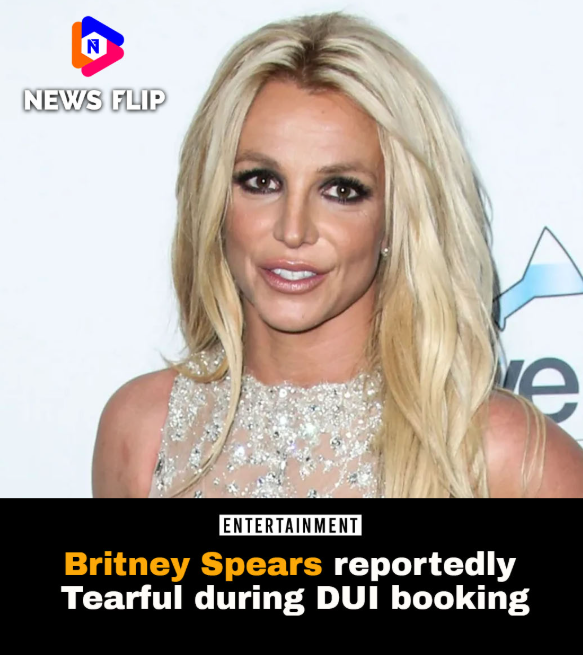
Britney’s team signed the catalog paperwork on December 30, 2025. The ink was barely dry on a $200 million transaction — her entire music library, every song from Baby One More Time through Toxic through Womanizer, transferred to Primary Wave Music Publishing in what her team called a “landmark deal.” She rang in 2026 as a woman who had just converted her most famous asset into liquid wealth. Sources said she was celebrating by spending time with her kids. Indeed, that seemed, for a moment, like the right ending to a story that had taken thirteen years of legal warfare to finish.
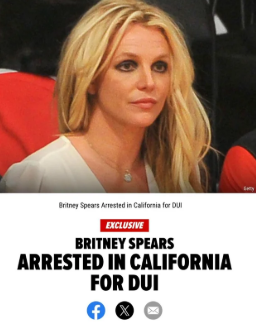
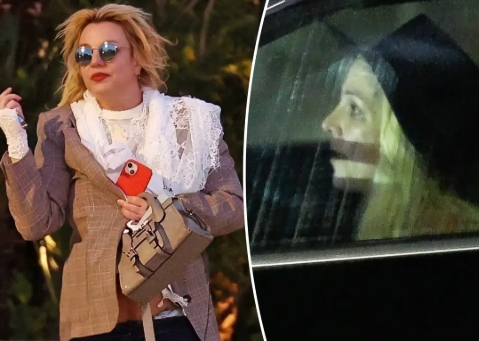
Twenty-two days later, on March 4 at approximately 9:28 p.m., someone reported a black BMW driving erratically at high speed southbound on US-101 in Newbury Park, California — seven miles from her home in Thousand Oaks. California Highway Patrol responded. The vehicle pulled over at the Westlake Boulevard exit. The driver was alone. She showed signs of impairment. Officers found an unknown substance inside the car. After sobriety tests, officers detained Britney Jean Spears, 44, and transported her to a hospital to determine her blood-alcohol content. Officers booked her into Ventura County Jail. Authorities will not release her mugshot.
Between those two dates, she had fired her sober coaches.
Britney Spears DUI: The Three Weeks That Change the Story
The sequence matters more than any single event within it. Read it again slowly: December 30 — signs away her most valuable asset for $200 million. Sometime in mid-to-late February — dismisses the support structure her team had built around her sobriety. March 4 — arrested on the highway nearest her home with an unknown substance in her car.
Furthermore, each of those decisions, in isolation, is defensible. Selling a catalog in a hot market is rational. Feeling ready to live without sober coaches after four-plus years of freedom is human. Driving a car at 44 is not a crime. What the sequence suggests — and this is the thing nobody is quite saying directly — is a person who believed, in the span of about ten weeks, that she had arrived somewhere she had not yet arrived.
Her representative issued a statement that managed to say something true and something hopeful in the same breath: “This was an unfortunate incident that is completely inexcusable. Britney is going to take the right steps and comply with the law, and hopefully this can be the first step in long overdue change that needs to occur in Britney’s life.”
Notably, that last phrase. Long overdue change. From her own team. That is not the language of a press release managing a minor incident. That is the language of people who have been watching something build and are now saying so in public for the first time.
When the Timeline Gets Suspicious
Her former assistant and longtime friend Sean Phillip told Extra that the timing felt “suspicious” — pointing specifically to the catalog sale. “I think there are some people out to get her,” he said. “The timing is so off that she gets financial independence and then she gets arrested.” That theory deserves to be named and then examined: some observers have noted anomalies in the CHP report, including that a six-lane highway with heavy traffic at 9 p.m. produced no independent witnesses or footage of erratic driving, and that the seven miles she covered in forty minutes is notably slow for freeway travel. Authorities denied a FOIA request for the full 911 call, body camera footage, and additional documentation, citing an ongoing investigation. Spears’ court date is May 4.
The conspiracy theory is available. The facts are also available. They do not cancel each other out.
The $200 Million Question: What Financial Freedom Actually Costs
To understand what this arrest means, you need to understand what the catalog sale meant — not financially, but psychologically. For the full financial breakdown, read Social Life Magazine’s complete analysis of the Britney Spears catalog sale. The short version: Primary Wave paid approximately $200 million for her ownership stake in songs that generate an estimated $5–8 million annually in streaming and licensing revenue. At that multiple, they are betting on her cultural permanence, on the Jon M. Chu biopic in development, and on the general upward trajectory of catalog values in the streaming era.
What the $200 million gave Britney Spears was something she had never had as an adult: total, uncontested control over a large sum of money with no conservator, no court, no father, and no oversight structure of any kind. She signed those papers on December 30. The conservatorship had ended in November 2021. Consequently, this sale represented the last remaining piece of the financial architecture her father had controlled.
Consider what that means experientially. She spent her entire adult professional life — from age twenty-six to age thirty-nine — unable to make a phone call without permission, unable to access her own bank account, unable to hire or fire the people around her. The conservatorship overhead consumed an estimated $20–30 million over its life in management fees, legal fees, and the salary her father paid himself: $16,000 per month from her accounts. She generated wealth she was not allowed to touch. When the conservatorship ended, she had never once managed her own finances as an adult.
What $130M in Cash Looks Like Without Scaffolding
At 44, she now holds approximately $130 million in liquid assets and no income-generating music catalog. She has no touring plans. Moreover, she has released no album in nearly a decade. The spending concerns sources have described to outlets — private jets to Mexico at $20,000 a night, middle-of-the-night shopping, gifts for an expanding entourage — are not evidence of recklessness so much as evidence of someone who spent her entire adulthood being told no, and who now experiences yes without any of the scaffolding that usually surrounds a person learning to say it.
The sober coaches were part of that scaffolding. She removed them. Three weeks later, she was on the 101.
The Water: What Thirteen Years of #FreeBritney Actually Asked of Her
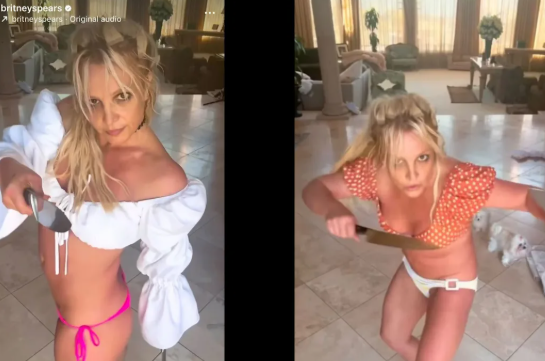
Here is the thing worth sitting with. We spent thirteen years demanding that Britney Spears be free. Not metaphorically — millions of people, globally coordinated, made the dismantling of her conservatorship into a cause. TikTok built careers on it. Documentaries won awards over it. The word “Britney” became a shorthand for something larger than one woman: the way institutions control women, the way the public consumes female distress, the way fame constructs a person and then refuses to let her out of the construction.
The conservatorship ended in November 2021. We declared victory and went home. What we did not do — what no movement can do — is stay for the aftermath. Freedom, when it arrives after thirteen years of enforced constraint, is not a destination. It is a condition that requires learning. Most people learn to manage freedom incrementally, over a lifetime, with parents and peers and mistakes that cost less than $200 million and a court date. Britney Spears got her freedom at 39, all at once, with a global audience watching and a publishing infrastructure that paid her $200 million more or less simultaneously with her losing the last guardrail in her personal life.
Now we are watching what that looks like. We are reporting on it. Meanwhile, everyone is clicking on the articles. That is the water. The same apparatus that covered the conservatorship as entertainment now covers its aftermath the same way. Its subject has changed. The structure has not.
What Happens Next: The Stakes Between Now and May 4
The legal exposure is real but manageable at this stage. A first-offense misdemeanor DUI in California carries a maximum of six months in county jail, though first-time offenders without aggravating circumstances typically receive probation, fines, and mandatory DUI education courses. The unknown substance found in the vehicle is the variable — if it tests as something other than Adderall at legal prescription levels, charges could escalate. The CHP report identified the pills as Adderall, reportedly obtained during her frequent trips to Mexico. Labs are currently testing the pills. Results will inform what prosecutors do with the case before the May 4 hearing.
The Real Stakes Aren’t in a Courtroom
The more significant stakes are not legal. They are personal and financial. Read Social Life Magazine’s full Britney Spears net worth breakdown here — the catalog proceeds sit in her accounts, under her control, for the first time. The question of whether she has the support structure to protect them, and herself, over the next several years is not a tabloid question. It is the actual question.
Her representative’s statement said this could be “the first step in long overdue change.” That phrasing is careful and honest. Change is available. However, it is not automatic. Ultimately, the court date is May 4. The real timeline is longer than that, and everyone who ever cared about this story knows it.
Eventually, she got her freedom. The work of being free is what comes next. That part doesn’t have a hashtag.
Related: Britney Spears Net Worth 2026: The Full Financial Picture After the Catalog Sale | The Britney Spears Catalog Sale: What $200M Really Means
Want your brand featured alongside stories like this? Contact Social Life Magazine about partnerships and editorial opportunities. Join us this summer at Polo Hamptons — where New York’s power players meet in person. Subscribe to the print edition or join our email list for Hamptons insider access delivered first. And if this story moved you, support independent luxury journalism for $5.
Author

Written by
Recent Posts
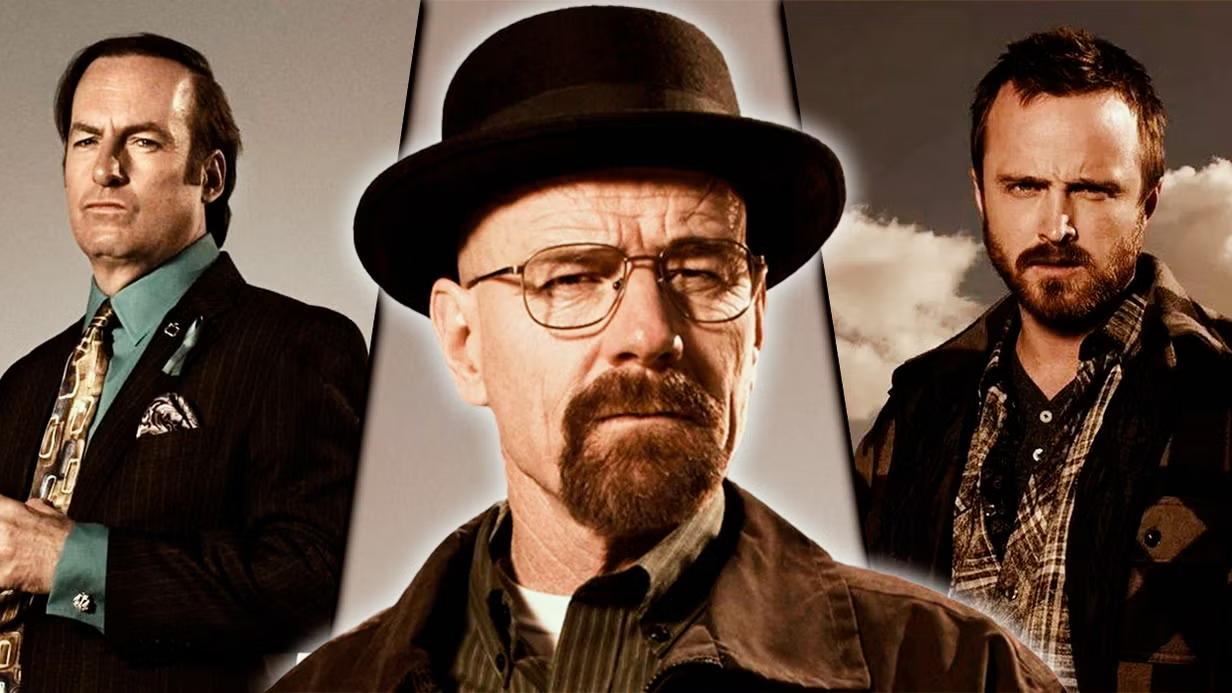
Breaking Bad Cast Net Worth. $130 Million Cooked in Five Seasons of Perfect Television

Cailee Spaeny Net Worth — From Springfield, Missouri to A24 and Alien in Three Years Flat

Wagner Moura Net Worth — He Learned Spanish to Play Escobar. Then He Learned English to Take Hollywood.

Robert Eggers Net Worth — He Made a $3.5 Million Film in Puritan English and Hollywood Listened
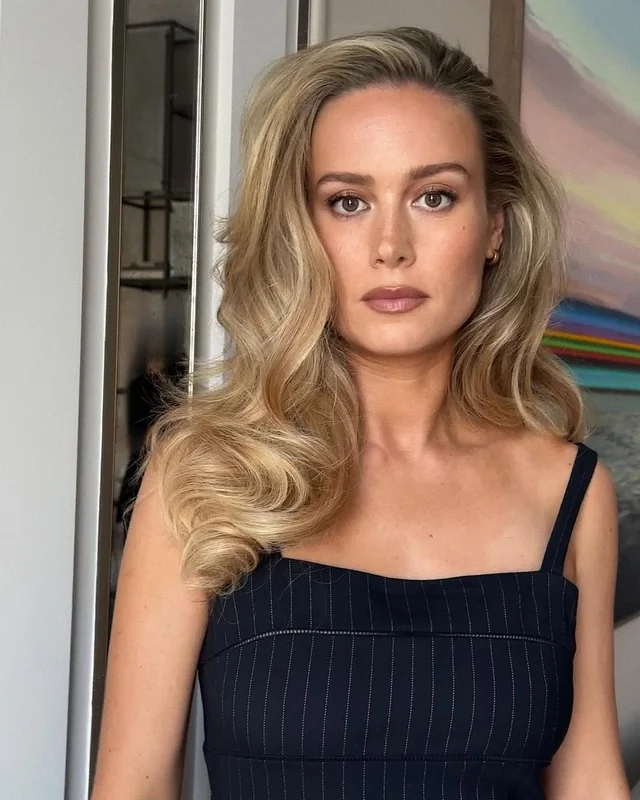
Brie Larson Net Worth — A $6 Million Indie Film Won Her an Oscar. Marvel Paid Her the Rest.
Categories
- Art
- Articles
- Beauty & Skincare
- Celebrities
- Celebrities|Movies
- Celebrities|The Chronicles
- Chronicles
- Entertainment|Culture
- Event Photos
- Events
- Fashion
- Fashion & Style
- Featured
- Food & Beverage
- Food, Spirits, Wine
- Hamptons
- Hamptons Celebrities
- Hamptons Celebrities|Celebrities|The Chronicles
- Health
- Health & Beauty
- Lifestyle
- Luxury Lifestyle
- Movies|Culture
- Movies|Hamptons Lifestyle
- Press
- Profiles
- Real Estate
- Technology
- The Chronicles
- Travel
- TV
- Uncategorized
- Weddings