

Every decade rewrites the definition of power. In the 1990s, power meant omnipresence — more covers, more tour dates, more franchise extensions. By 2015, it meant reach: follower counts as currency, the algorithm as both employer and executioner. Then something shifted. The celebrities who stepped back from fame — deliberately, strategically, often against every advisor’s counsel — started winning. Not eventually. Immediately.
The soft exit is not retirement. It is not cancellation dressed up as a sabbatical. Notably, it is a precise strategic move: the calculated decision to become harder to access, harder to read, and consequently harder to ignore. Harvard Business Review has written extensively on scarcity signaling — the deliberate reduction of supply to amplify perceived value. Meanwhile, Bain & Company has tracked the same phenomenon across luxury categories for 30 years. The limited edition always outperforms the permanent line. The same logic governs human brands.
What nobody discusses is how rarely anyone pulls this off. The pull of relevance runs too deep, the financial incentive arrives too fast, and the terror of disappearance is too total. The celebrities who executed the soft exit successfully shared one quality: they valued the asset more than the attention. This is what that choice looks like up close — and what happens when you miscalculate it.
What the Celebrities Who Stepped Back From Fame Actually Understood
The soft exit requires three conditions in sequence. First, you need a reason to leave that the audience reads as intentional — not involuntary. Second, you need something to move toward that is clearly more valuable than what you left. Third, and most critically, you need an heir to your attention: someone who absorbs the cultural space you release so the market does not register your exit as a vacancy.
Most celebrities get the first condition right and miss the next two entirely. They announce the exit eloquently. They frame the withdrawal as a values statement. However, without a successor for their cultural real estate — and without a credible next chapter — the audience interprets the departure as failure wearing a press release.
The scarcity equation
What makes the soft exit work is counterintuitive. Stepping back increases perceived value only when the original presence was already significant enough to create genuine demand. Scarcity amplifies what was already there — it cannot manufacture what was not. Additionally, the exit must execute cleanly. Partial exits, where the celebrity keeps one foot in the machine while claiming to have left, read as inauthentic within weeks. The audience is more sophisticated than the publicist assumes. McKinsey’s research on luxury brand equity confirms that deliberate access reduction, executed at the right moment, can increase brand value by 30 percent or more. The principle applies equally to people.
Gwyneth Paltrow: The Trial That Became Mythology

In 2023, Gwyneth Paltrow sat in a Utah courtroom accused of a ski collision and emerged, somehow, more famous and more trusted than before the lawsuit began. The proceedings were a masterclass in soft exit strategy that she did not plan and could not have scripted. By treating the trial as an inconvenience rather than an existential threat, she communicated something no PR firm can engineer: the confidence of someone who no longer needs the audience’s approval.
Paltrow’s withdrawal from acting in the late 2000s seemed, at the time, like a pivot toward domesticity. Goop launched in 2008 as a newsletter and grew into a $250 million wellness brand. However, the brand’s real engine was never the jade eggs or the controversial health claims. It was the persona — a woman wealthy enough, and secure enough, to be wrong in public and frame it as research.
Consequently, every controversy became content. Every lawsuit became a clarifying moment about who Goop was for and who it was not. Among the celebrities who built empires after stepping back from the spotlight, Paltrow wrote the most durable template: exit the thing that made you famous, build the thing you actually believe in, and let the critics finance your marketing. Read Gwyneth Paltrow’s full profile and net worth breakdown.
Meghan Markle: When the Exit Story Swallows the Reinvention
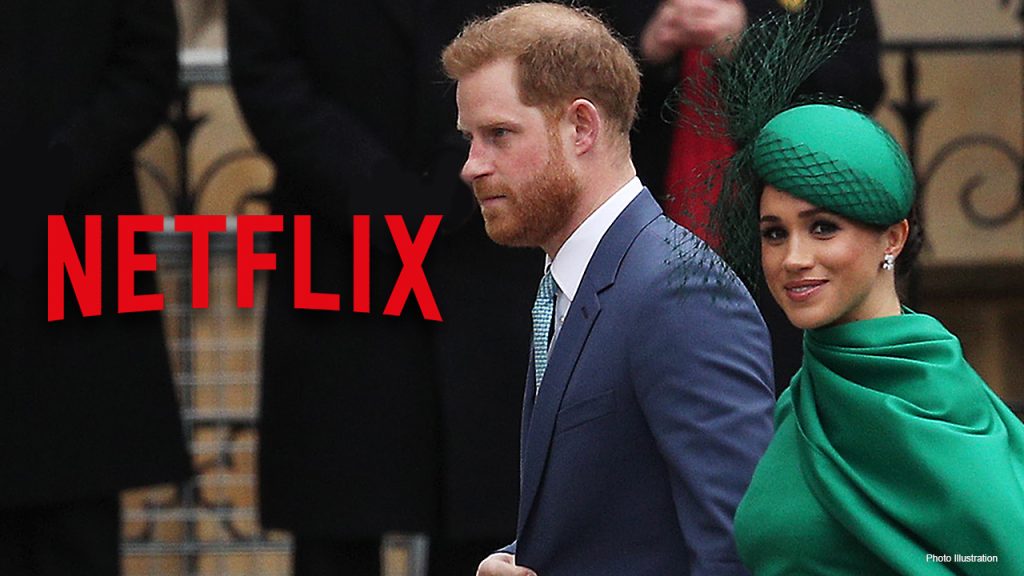
The exit itself was extraordinary. Meghan Markle and Prince Harry walked away from the most storied institution in Western public life, relocated to California, and brought their story directly to the audience through Netflix and Spotify deals reported to exceed $100 million combined. The framing was precise: this was not a departure, it was a liberation. The audience agreed.
The problem arrived in Phase 2. The brand needed a second chapter — something that moved beyond the departure narrative and established what the Sussexes were building rather than what they had left. Additionally, the Spotify podcast deal ended without renewal. The Netflix documentary performed strongly at launch but failed to generate the follow-up projects that would have anchored a long-term creative identity.
By contrast, the original exit was perfectly choreographed. The strategic error was structural: the couple had correctly identified an heir to their royal attention (the press would cover them regardless) but had not built the second thing decisively enough. Furthermore, the ongoing commentary on the institution they left kept them tethered to the narrative they were trying to escape. The soft exit demands a clean break. Without it, the audience cannot update its mental model of who you are. Read Meghan Markle’s full profile and net worth breakdown.
Adele: Monetizing Scarcity Before It Had a Name

Adele released 21 in 2011, 25 in 2015, and 30 in 2021. Between each album: near-total silence. No podcast circuit, no brand partnerships, no social media calendar. Meanwhile, the music industry was moving toward perpetual content output — artists dropping singles every few weeks, sustaining parasocial pressure across every platform simultaneously. Adele went the opposite direction and the audience followed every time.
The Las Vegas residency launched in November 2022 at Caesars Palace. BCG’s analysis of the experience economy documents exactly why the model worked: finite, location-specific, premium-priced events carry value that digital content cannot replicate. Tickets sold in minutes. Fans flew from Europe. The deliberate removal of Adele from the everyday content stream had converted a concert into a pilgrimage — and the economics reflected that transformation accordingly.
Notably, the personal narrative reinforced the strategy at every interval. Each album documented a specific emotional chapter — marriage, divorce, therapy, recovery. The gaps between records were not silences. They were accumulation. Given that Adele built this framework before “quiet luxury” or “soft exit” existed as cultural vocabulary, she may be its original practitioner in the music industry. Read Adele’s full profile and net worth breakdown.
Kim Kardashian and the Heir Problem

In 2021, Kim Kardashian enrolled in law school, launched SKIMS toward what Forbes reported as a $4 billion valuation, and quietly began repositioning herself away from the reality television identity that had made her a global name. The destination was sound. The transition revealed a structural problem few analysts addressed: she had not identified who would inherit her cultural real estate.
The Kardashian-Jenner family had operated for 15 years as an interconnected ecosystem — each member occupying a distinct lane, the collective greater than the sum of its parts. However, Kim’s pivot toward seriousness required a clean break from the machine. That break never fully materialized. The family dynamic, the ongoing coverage of personal relationships, and the shared content apparatus kept her tethered to the identity she was working to evolve beyond.
The lesson the soft exit demands
Furthermore, SKIMS as a standalone brand is genuinely impressive. The legal studies represent a credible long game. The issue is not the destination — it is the transition period. The soft exit requires a window of relative silence that allows the new identity to crystallize without competition from the old one. Without that window, the audience cannot update its mental model. Ultimately, Kim Kardashian may complete the move. She simply has not yet created the conditions for the exit to register. Read Kim Kardashian’s full profile and SKIMS breakdown.
Sofia Coppola and Lauren Conrad: The Originals

Sofia Coppola never needed a soft exit because she never built an empire that requires one. From The Virgin Suicides in 1999 through Priscilla in 2023, she has released seven features across 24 years. Each one was precisely what she intended it to be. Consequently, her career carries no wasted motion, no brand extension for its own sake, and no chapter she needs to quietly disavow.
The dark horse position fits her exactly. Coppola is the soft exit practitioner who never announced the strategy because she was already living it from the beginning. She attends Cannes selectively, grants interviews rarely, and collaborates only with people she trusts over the long term. Among female directors who have built independent creative identities in Hollywood, she represents the purest expression of deliberate scarcity. The name provides context without constraining the work. That is a difficult balance and she has maintained it for decades.

Lauren Conrad, meanwhile, executed a textbook exit from reality television into lifestyle entrepreneurship — built a credible brand, married quietly, and receded almost entirely from the cultural conversation. By contrast with the cautionary tales above, her disappearance reads as intentional. However, unlike Paltrow, Conrad’s post-exit brand did not develop the cultural gravity to sustain her name in her absence. The ghost label is precise: present in the archive, absent from the present tense. Read Lauren Conrad’s full profile and net worth breakdown.
The Soft Exit and the Hamptons: What This Means Here
The Hamptons is, in its way, the soft exit capital of America. It is where the powerful come to be visible without being seen — where a presence at the right dinner communicates more than a week of content, and where genuine access functions as the currency that cannot be purchased, only accumulated over years. The social logic of the East End and the social logic of the soft exit are identical at their core.
The celebrities who stepped back from fame and won did not stop playing the game. They changed the terrain. They moved from the mass attention economy — where anyone with a phone and a following can compete — to the scarce access economy, where the barriers to entry are genuinely high and the rewards compound over time. That distinction is understood here without explanation.
Furthermore, the trend is accelerating. As AI floods digital platforms with synthetic content at scale, the value of authentic scarcity compounds rapidly. The celebrity who appears less will, in time, be worth more — not in spite of their absence, but because of it. Beyond that, the audiences most attuned to this shift are the same audiences who summer on the East End. For the luxury estates where this social calculus plays out in private, the Hamptons remains without equal. The soft exit, it turns out, has always had a home here among the celebrities who stepped back from fame and chose something harder to manufacture than attention.
Author

Written by
Recent Posts
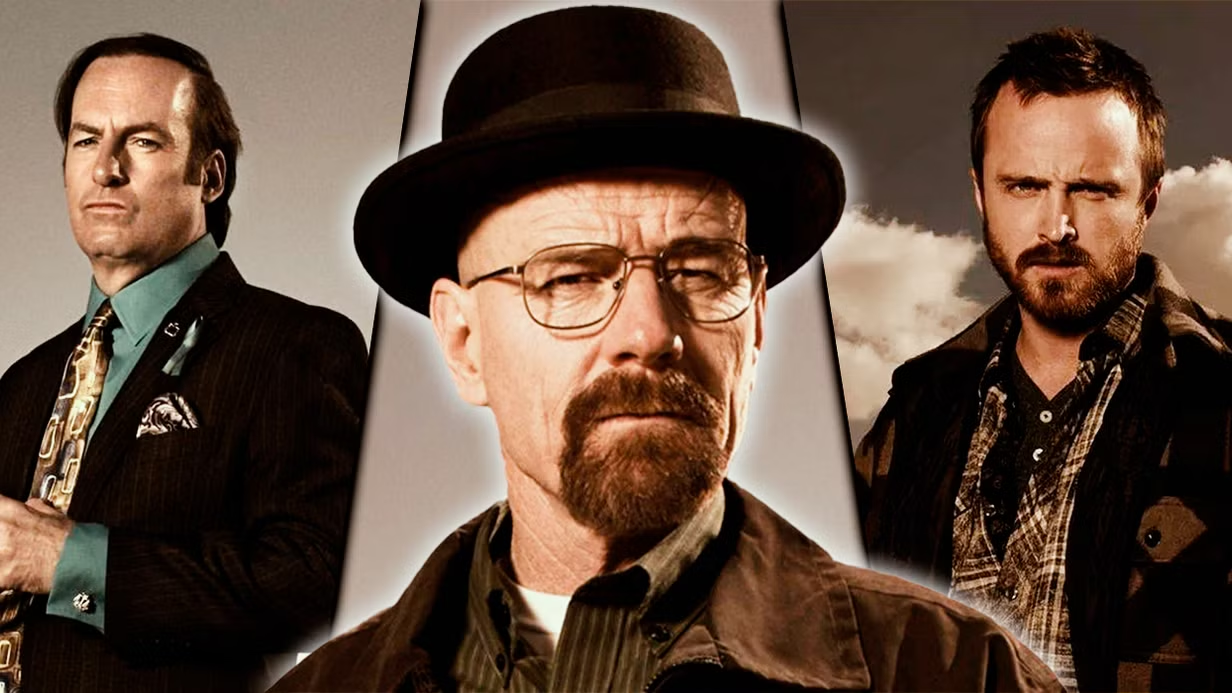
Breaking Bad Cast Net Worth. $130 Million Cooked in Five Seasons of Perfect Television

Cailee Spaeny Net Worth — From Springfield, Missouri to A24 and Alien in Three Years Flat

Wagner Moura Net Worth — He Learned Spanish to Play Escobar. Then He Learned English to Take Hollywood.

Robert Eggers Net Worth — He Made a $3.5 Million Film in Puritan English and Hollywood Listened

Brie Larson Net Worth — A $6 Million Indie Film Won Her an Oscar. Marvel Paid Her the Rest.
Categories
- Art
- Articles
- Beauty & Skincare
- Celebrities
- Celebrities|Movies
- Celebrities|The Chronicles
- Chronicles
- Entertainment|Culture
- Event Photos
- Events
- Fashion
- Fashion & Style
- Featured
- Food & Beverage
- Food, Spirits, Wine
- Hamptons
- Hamptons Celebrities
- Hamptons Celebrities|Celebrities|The Chronicles
- Health
- Health & Beauty
- Lifestyle
- Luxury Lifestyle
- Movies|Culture
- Movies|Hamptons Lifestyle
- Press
- Profiles
- Real Estate
- Technology
- The Chronicles
- Travel
- TV
- Uncategorized
- Weddings