
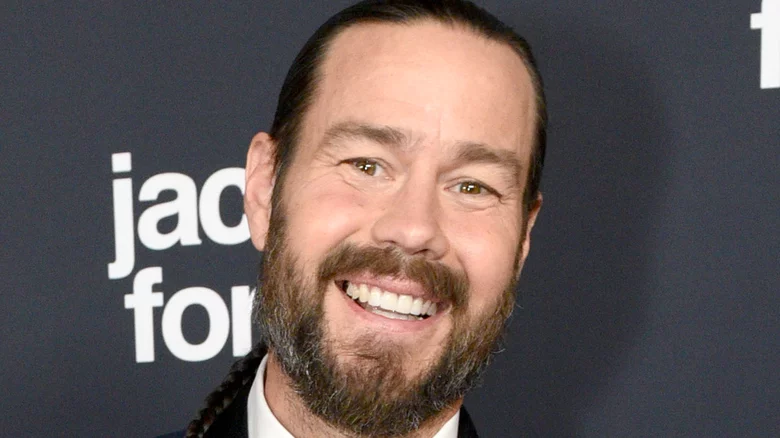
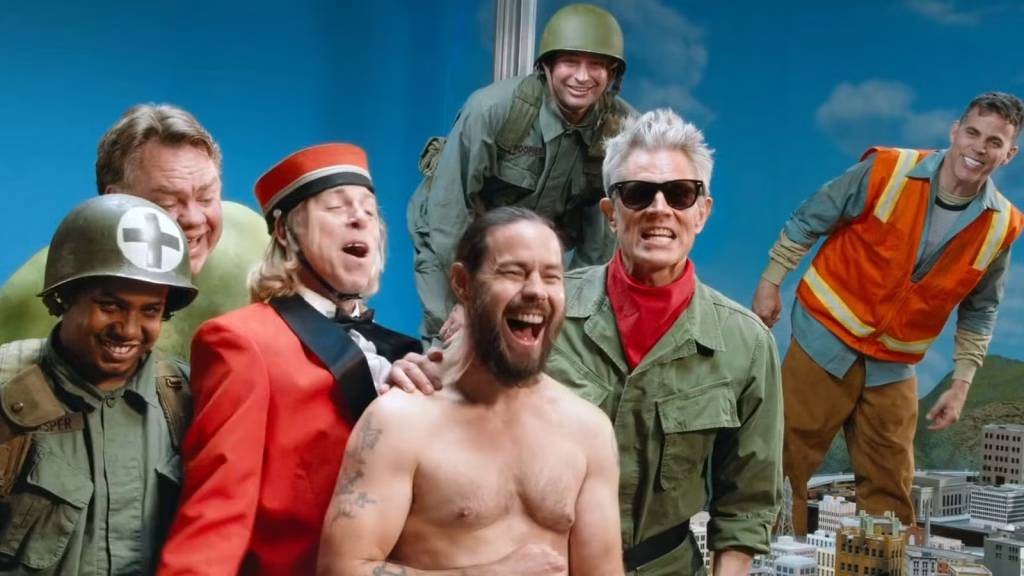
Chris Pontius net worth sits somewhere around $5 million. That figure is accurate enough. It is also beside the point. That distinction is specific to him and not to anyone else from the franchise. The money story is not the interesting story here. He may be the only person who passed through that particular cultural machine intact. Something irreplaceable survived the trip. That is not a small thing. Pay attention to it.
The Before: Ojai and the Frequency That Fit
Ojai, California sits inland from the Ventura coast, ringed by the Topa Topa mountains. It operates at a frequency somewhere between spiritual retreat and sun-stunned small town. It produces people with a particular relationship to the physical world. Not athletes, exactly. Something quieter than that. People are comfortable in their bodies in a way that has nothing to do with performance. Everything to do with having grown up outside.
Chris Pontius was born there on March 16, 1974. He surfed, he motorcycled he developed an interest in wildlife that would eventually become something more than a hobby. None of this was in preparation for anything. It was just what living there looked like.
The Character Who Arrived Fully Formed
The Jackass origin story, for most of its principals, involves some version of discovery. Someone found a skateboarder, a prankster, a kid doing something reckless for a camera in a parking lot. Pontius came in differently. He already had the character. Party Boy, the bit he would become famous for, involved removing his clothes and dancing with total unselfconscious commitment. Whatever music happened to be playing, he was in it. The gag required no setup. The gag was him.
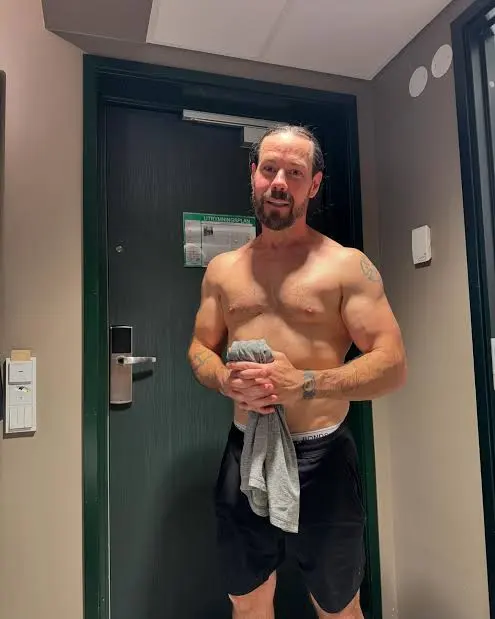
What the production did not anticipate was that the performance was not a performance. Or not entirely. His physicality on camera had a quality you cannot manufacture in a casting session. That loose, genuinely amused relationship to his own body — you either had it or you did not. He had it completely.
The Climb: Jackass and What Actual Joy Looks Like Under Production
The first Jackass episode aired on MTV in October 2000. By 2002, the film franchise had begun. The cast had become one of the more closely observed social experiments in American entertainment. Put a group of young men inside a structure rewarding escalating physical risk. Give them cameras and a production budget. Then watch what the incentive system does to the people inside it over time.
What it did to each of them was different. The differences were instructive. Steve-O documented his own deterioration with a camera. Bam Margera’s trajectory became one of entertainment’s more public unravelings over two decades. Ryan Dunn died in a car accident in 2011. The franchise did not produce uniform outcomes. It produced individual ones. Those individual outcomes revealed character the format had been obscuring while it exploited it.
Wildboyz and the Animal Turn
Between 2003 and 2006, Pontius co-hosted Wildboyz with Steve-O for MTV. The show sent them into actual wilderness to interact with actual wildlife. Part nature documentary, part Jackass energy exported to ecosystems that did not care about the bit. The format was ridiculous. The animal knowledge Pontius displayed was not. Handlers who worked with the production noted, in various interviews, that his interest in the animals was genuine. His instincts around wildlife were better than his training had any right to explain.
This detail matters more than it seems. It is evidence of something continuous. The person who grew up in Ojai watching wildlife did not disappear. He did not get replaced by the person performing Party Boy on camera. Both were present simultaneously. That kind of continuity, in a format designed to dissolve the boundary between performance and self, is unusual.
Chris Pontius Net Worth: What the Party Boy Economy Pays
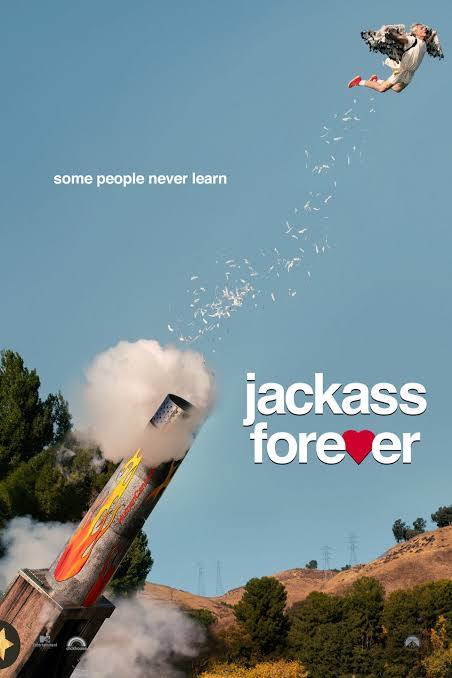
Net worth estimates of around $5 million reflect a career built across the full franchise arc. Jackass ran for three television seasons on MTV between 2000 and 2002. The film series produced Jackass: The Movie in 2002, Jackass Number Two in 2006, and Jackass 3D in 2010. Jackass Forever followed in 2022. Per entertainment industry reporting, cast members on the film side received compensation packages that scaled with box office performance. According to Box Office Mojo, Jackass 3D grossed over $170 million worldwide against a reported $20 million budget.
Additionally, there were merchandise streams, television residuals, and the cultural equity of permanent franchise association. The $5 million figure, if accurate, suggests restraint. He did not convert that cultural capital into real estate empires. He did not supplement income through the sustained celebrity visibility that inflates net worth figures for people of comparable fame.
The Cast Divergence and the Quiet Exit
Johnny Knoxville’s net worth estimates run considerably higher, around $75 million. That figure reflects film acting and production infrastructure built well beyond the franchise. Steve-O, post-sobriety, built a media presence through podcasting, stand-up, and book deals. Bam Margera’s finances became public record in the worst way, tied to legal disputes and recovery costs rather than accumulation.
Pontius followed none of these trajectories. He did not build a media empire. Visible unraveling held no appeal. He did not pivot to inspirational content or sobriety branding. He married professional surfer Anastasia Ashley in 2012. They divorced in 2019. He continued working when the franchise called him back and living in the physical world the rest of the time. The absence of a dramatic narrative is, in this context, its own kind of data.
The Question Nobody Thought to Ask About Party Boy
Here is what takes on weight when you look at him long enough. The thing that sits underneath the career summary and the net worth estimate and the franchise timeline. The Jackass format was built on a specific premise. Young men performing escalating physical harm to themselves and others were, at some level, performing. The performance required a self separate from the act. The audience understood it as performance. Legal frameworks required it. Consent, after all, implies a subject who could have said no.
For most of the cast, this remained true. The performance and the person maintained workable distance. What happened to several of them over time was that the distance collapsed. The format dissolved the boundary between self and stunt. For some, it stayed dissolved in directions the cameras never followed.
The Anatomy of Performed Happiness
Pontius’s character asked something different. Party Boy did not require pain. It required joy — or something that presented as joy. Specifically, the willingness to remove your clothes and dance with total commitment in situations designed to produce embarrassment. The audience laughed because the gap between social expectation and his response was infinite. He seemed to feel no embarrassment whatsoever.
Watch the footage with that question active. Every performer has a tell. It is the micro-second where the character and the person behind it briefly separate. You catch the gap between expression and felt experience. Pontius does not have it on camera. Either he is the most technically disciplined performer in the franchise — or the joy was real. Remarkable in any context. Not performed. Not approximated. Real. The evidence points toward the second option. It is also the more interesting one.
Reclamation: The Man Who Survived Being Himself
By 2022, when Jackass Forever arrived, enough had happened to the people around him. His continued equilibrium carried different weight. He was 47. He had passed through the full franchise arc. His marriage had ended. He was not in crisis. He appeared at the Jackass Forever premiere in a tuxedo and a thong. Because of course he did. The joke landed exactly as intended. Not as a desperate bid. Not as a callback mining nostalgia. Just as him.
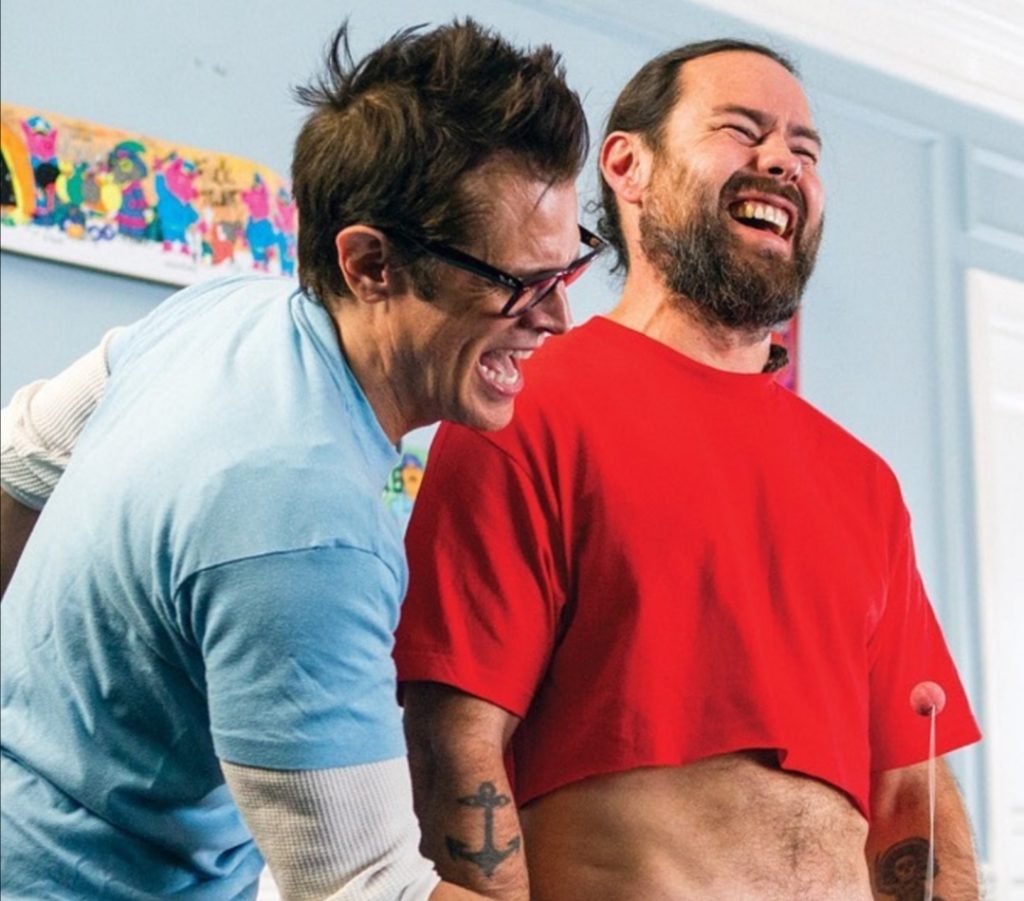
That continuity is the reclamation. Not a comeback from a dark period. Not a sobriety story or a reinvention arc or a pivot to wellness content. Simply the same person, apparently intact, on the other side of a format designed to consume its participants. Furthermore, among the Jackass principals, he makes the strongest argument. The format did not have to cost what it cost.
Chris Pontius Net Worth, Measured in Continuity
Chris Pontius net worth in the conventional sense is around $5 million. That figure is fine. It reflects a career that paid real money without producing the kind of celebrity infrastructure that generates high-end estimates. He did not build a brand. Leverage held no interest. He did not convert.
What he has instead is harder to calculate. He has a self that appears continuous with the self he started with. It moved through twenty-plus years of a format calibrated specifically to dissolve selves. It came out the other side recognizably intact. In the Jackass universe, where participation extracted a documented and sometimes fatal cost, that outcome is not minor.
The man who was actually joyful turned out to be actually okay. Measured against the company he kept, the Chris Pontius net worth that matters most is that. In the company he kept, that is the headline.
Related Reading
For the full landscape of legacy TV and film careers and where they landed, visit our Legacy TV and Film Deep Cuts hub. Sandy Mahl’s net worth tells the opposite story — a career built on refusal rather than joy. For more profiles of cultural figures who defined and outlasted their moments, explore our Celebrities hub.
Chris Pontius built something the celebrity industrial complex has no metric for: a self that remained continuous across twenty years of institutional pressure to dissolve it. Social Life Magazine runs on the same logic, inverted. We create the narrative, curate the placement, and put your brand or name in front of the 25,000 readers who summer between Westhampton and Montauk — and the 15,000 more waiting in Upper East Side doorman buildings come fall. If you have built something real and the right people have not heard about it yet, we know exactly which door opens first. Tell us what you’re building.
The Conversation You Want To Be Part Of
It moves through inboxes, dinner tables, and beach clubs from Memorial Day to Labor Day, and it does not pause for people who were not introduced properly. Our email list reaches 82,000 readers who match the demographic that closes the deals you are trying to close. Get on the list before the season starts.
Polo Hamptons is not a party. It is a room where the right 500 people are in the same place at the same time, and the introduction happens over champagne instead of a cold email. Platinum sponsors own the conversation. Gold sponsors get heard. Corporate cabanas get the access without the overhead. The season fills fast. See what is still available.
The print edition of Social Life Magazine lands in Hamptons boutiques and Upper East Side doorman buildings in the hands of people who still read things that matter. Further Lane is where the culture lives between the headlines. Subscribe and stay inside it.
Twenty-three years of this magazine have been funded by readers who understood that independent luxury media does not sustain itself on advertising alone. If something you read here was worth five dollars to you, the button below takes thirty seconds. No obligation. No upsell. Just the honest math of keeping something real alive. Contribute what feels right.
Author

Written by
Recent Posts

Cailee Spaeny Net Worth — From Springfield, Missouri to A24 and Alien in Three Years Flat
Wagner Moura Net Worth — He Learned Spanish to Play Escobar. Then He Learned English to Take Hollywood.
Robert Eggers Net Worth — He Made a $3.5 Million Film in Puritan English and Hollywood Listened
Brie Larson Net Worth — A $6 Million Indie Film Won Her an Oscar. Marvel Paid Her the Rest.
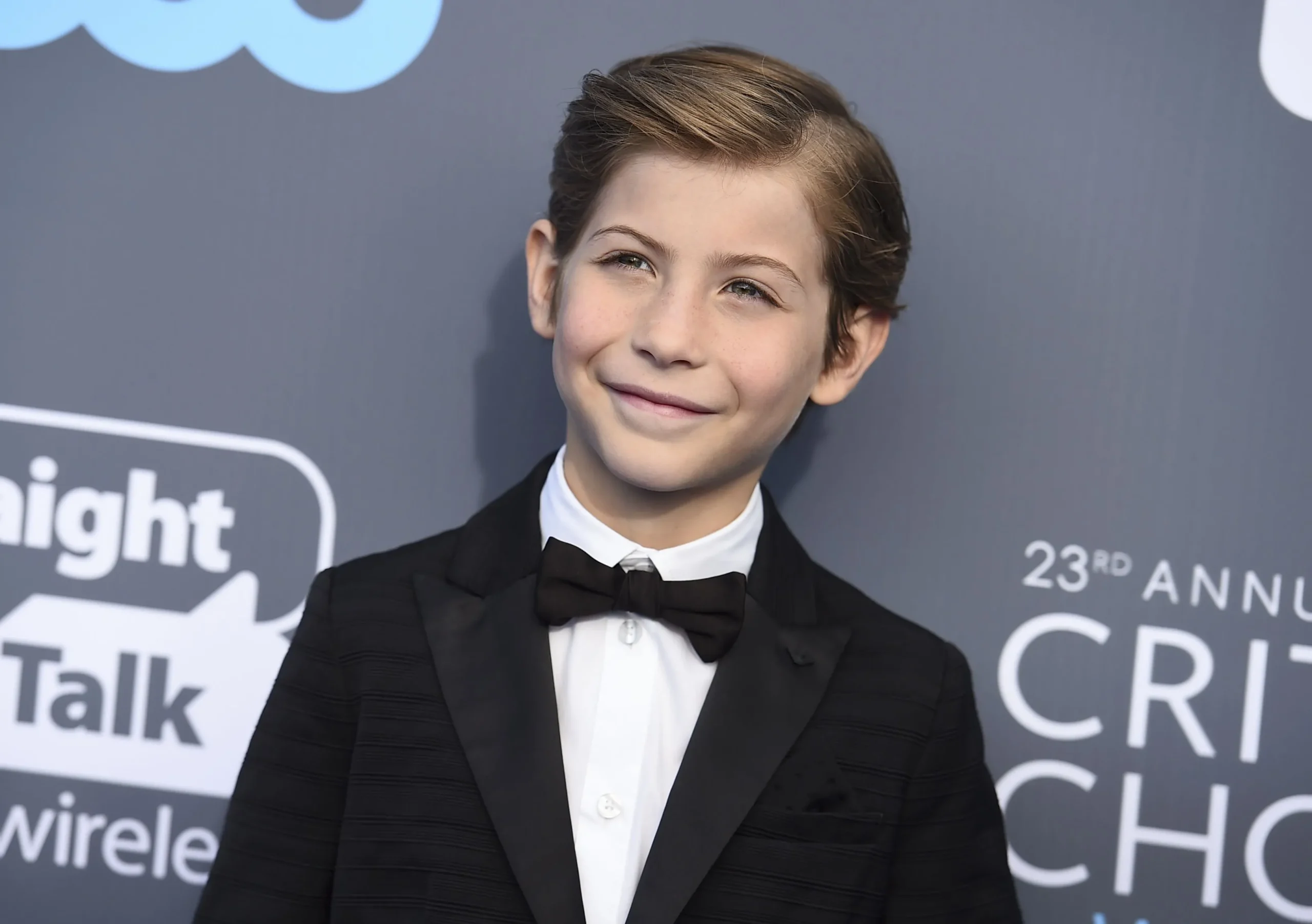
Jacob Tremblay Net Worth — He Was Nine Years Old and Already Better Than Most Adults in the Room
Categories
- Art
- Articles
- Beauty & Skincare
- Celebrities
- Celebrities|Movies
- Celebrities|The Chronicles
- Chronicles
- Entertainment|Culture
- Event Photos
- Events
- Fashion
- Fashion & Style
- Featured
- Food & Beverage
- Food, Spirits, Wine
- Hamptons
- Hamptons Celebrities
- Hamptons Celebrities|Celebrities|The Chronicles
- Health
- Health & Beauty
- Lifestyle
- Luxury Lifestyle
- Movies|Culture
- Movies|Hamptons Lifestyle
- Press
- Profiles
- Real Estate
- Technology
- The Chronicles
- Travel
- Uncategorized
- Weddings