
The Cynthia Erivo Net Worth Number Nobody Can Explain
Cynthia Erivo net worth sits at an estimated $5 million in 2026. Read that figure again. Five million dollars. For a woman who has won a Tony Award, a Grammy, two Daytime Emmys, earned two Academy Award nominations, hosted the 2025 Tony Awards opposite Oprah, and starred as Elphaba in a film that grossed $758.8 million worldwide. Furthermore, she is one award away from EGOT status. The number is not a reflection of her talent. It is a reflection of what the industry pays for talent when the person possessing it is a Black woman from East London with no social media empire, no fragrance line, and no interest in performing availability for the algorithm.
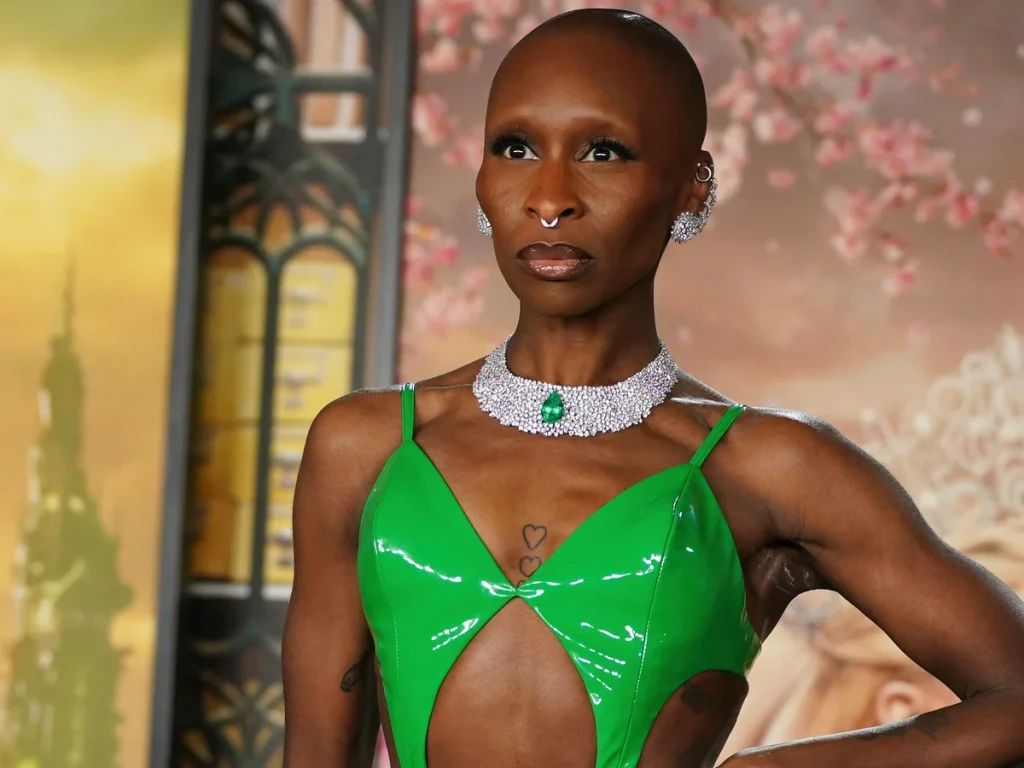
However, the Cynthia Erivo net worth story is not ultimately a story about underpayment, although it is that too. It is a story about the gap between accomplishment and visibility — and about what happens when a $758 million film finally forces the industry to close it. She was always the more accomplished performer. She was always the better singer. What changed with Wicked was not her. What changed was the size of the room she was allowed to fill.
East London, Nigerian Parents, and the Royal Academy
Born January 8, 1987, in London to Nigerian immigrant parents, Erivo grew up in circumstances that could not be more different from her Wicked co-star’s Boca Raton comfort. She has a sister named Nicolette. She attended La Retraite Roman Catholic Girls’ School — a state school in South London, not a performing arts conservatory. The path to acting was not paved. It was hacked through underbrush with a machete made of talent and stubbornness.
She began at the University of East London before transferring to the Royal Academy of Dramatic Art — one of the most competitive drama schools on the planet. RADA graduates include Anthony Hopkins, Ralph Fiennes, and Alan Rickman. Erivo graduated in 2010 with a bachelor’s degree in acting. The training was rigorous, classical, and focused on craft rather than celebrity. It produced a performer whose technical range exceeds almost everyone working in film today. Notably, that range spent the better part of a decade being recognized primarily by theater audiences and awards voters — the people who actually understand what they are watching.
The Color Purple and the Broadway Credential Nobody Valued Properly
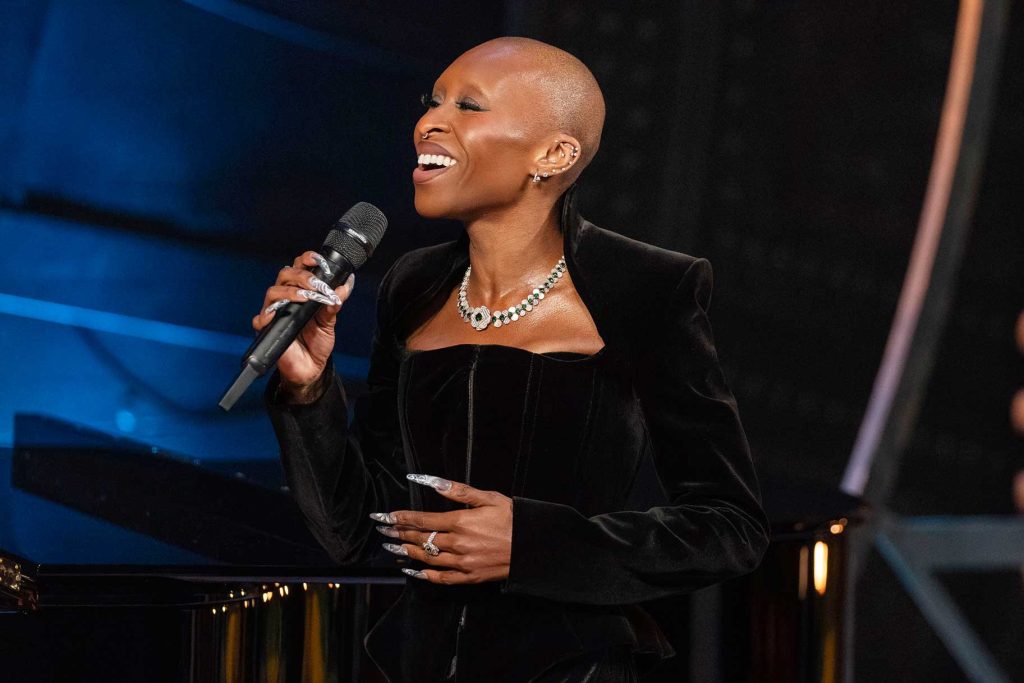
The career began on the stage in 2010 with the premiere of Marine Parade at the Brighton Festival. What followed was a grinding apprenticeship through London theater — The Umbrellas of Cherbourg, Sister Act, Henry IV. In 2013, she debuted as Celie Harris in the Menier Chocolate Factory production of The Color Purple. The performance was revelatory. When the production transferred to Broadway in late 2015, Erivo went with it.
The Broadway run lasted until early 2017. Erivo won the Tony Award for Best Actress in a Musical and shared the Grammy Award for Best Musical Theater Album. She performed alongside Jennifer Hudson and Danielle Brooks. The awards were definitive — the kind of institutional recognition that, in a functional industry, would have opened every door in Hollywood simultaneously. Instead, the doors opened slowly, partially, and with the persistent suggestion that she should be grateful for the crack of light.
Broadway compensation provides useful context for the Cynthia Erivo net worth figure. The pay range for a Broadway actor runs from approximately $50,000 to $220,000 per year. Even at the top of that range, a two-year run generates less than half a million dollars. The Tony Award was artistically priceless and financially modest. This is the structural reality of the performing arts pipeline — you can be the best in the world at what you do and still not earn enough to buy a modest apartment in the city where you do it.
Harriet and the Oscar Nomination That Should Have Changed Everything

The film career began in 2018 with two strong entries — Steve McQueen’s Widows and Drew Goddard’s Bad Times at the El Royale. Both earned her critical praise. Neither made her famous in the way the industry means when it uses that word. Then came Harriet in 2019, the Harriet Tubman biopic that earned Erivo two Academy Award nominations — Best Actress and Best Original Song for “Stand Up,” which she co-wrote.
Two Oscar nominations from a single film is extraordinary. Consequently, it should have been the inflection point — the moment the industry recognized her as a leading-lady franchise player and adjusted her compensation accordingly. It was not. The roles that followed — The Outsider on HBO, Genius: Aretha on National Geographic, Pinocchio for Disney, Luther: The Fallen Sun, Drift — were steady work but not the kind of projects that generate wealth. They were the film-industry equivalent of treading water while waiting for the wave.
At TheWrap’s Power Women Summit in 2021, Erivo addressed the pay disparity directly. “It’s really bloody hard, that’s my experience. It’s always a fight. You spend so much time explaining why you’re worth the money that you’re worth.” The statement landed with the weight of someone who had earned every credential the industry claims to value and still had to negotiate from a position of justification rather than leverage.
Wicked: The $758 Million Proof of Concept
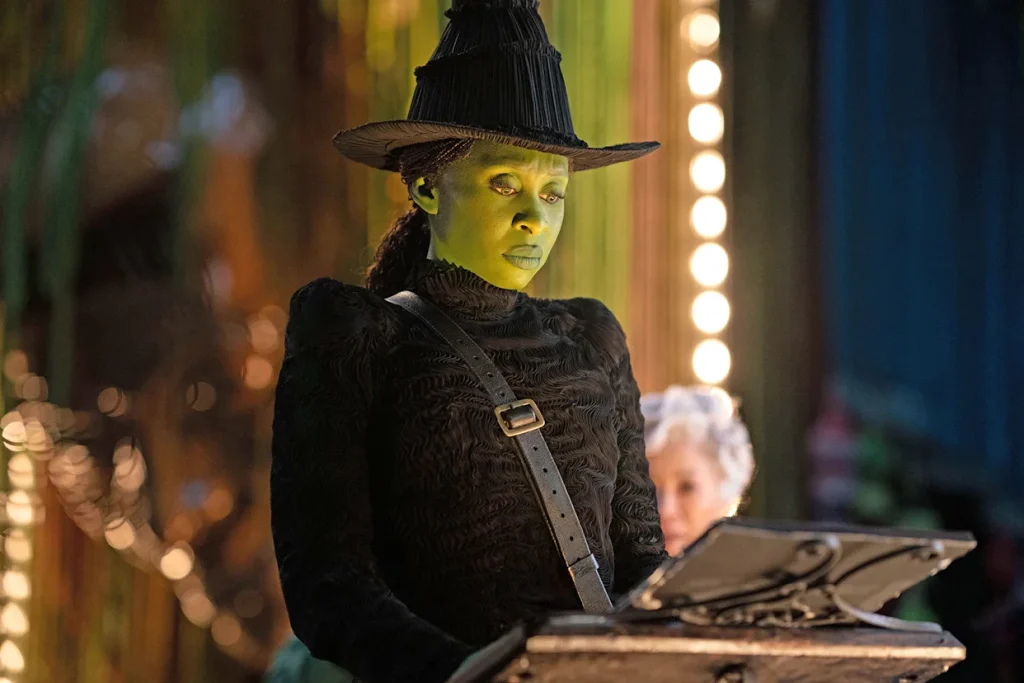
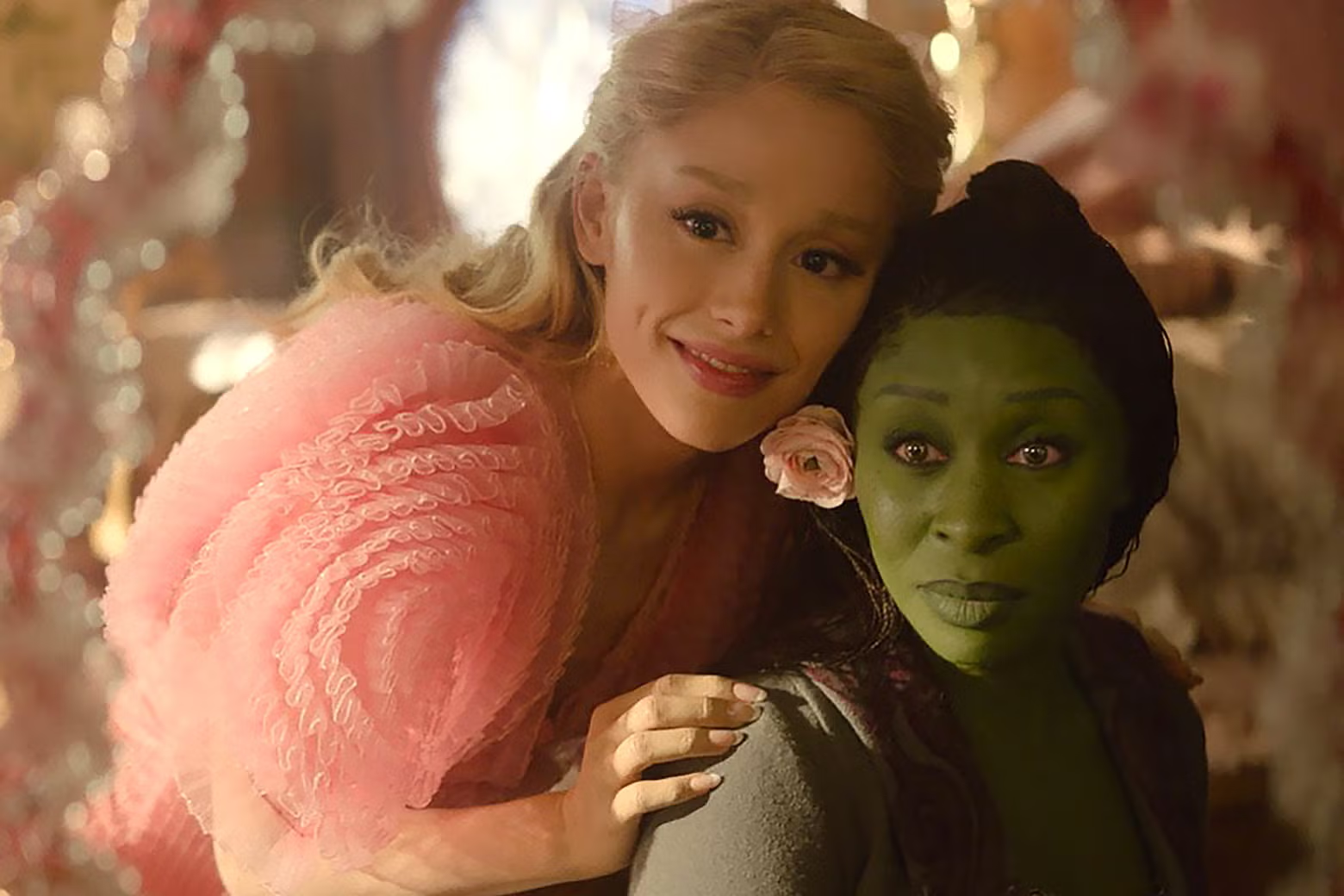
Jon M. Chu’s Wicked changed the scale overnight. The film opened November 22, 2024, to $112.5 million domestically and $162.9 million worldwide — the largest opening for any Broadway adaptation in cinema history. It finished at $758.8 million globally, earned ten Academy Award nominations including Best Picture, won Best Costume Design and Best Production Design, and generated $230 million in net profit. Erivo’s Elphaba was the emotional engine of every dollar.
The most revealing detail about the Wicked production is the pay negotiation. When rumors circulated that Ariana Grande earned $15 million while Erivo received $1 million, Universal issued a public statement: “Reports of pay disparity between Cynthia and Ariana are completely false.” Both leads confirmed they negotiated their contracts together. “We went through our contracts together and called each other up,” Grande told Variety. “‘What number are we doing? How do you feel about that?'” Erivo added: “We were really f***ing honest. And that’s really rare.”
The honesty matters because it represents something the industry almost never produces — two women, at different levels of commercial leverage, choosing transparency over competition. Grande could have taken the bigger check and said nothing. Instead, she and Erivo coordinated their negotiations, which means whatever number they arrived at, they arrived at it together. Wicked: For Good followed on November 21, 2025, completing the two-part franchise and extending Erivo’s highest-profile role into a second year of visibility.
The EGOT Chase and the Jesus Christ Superstar Bet
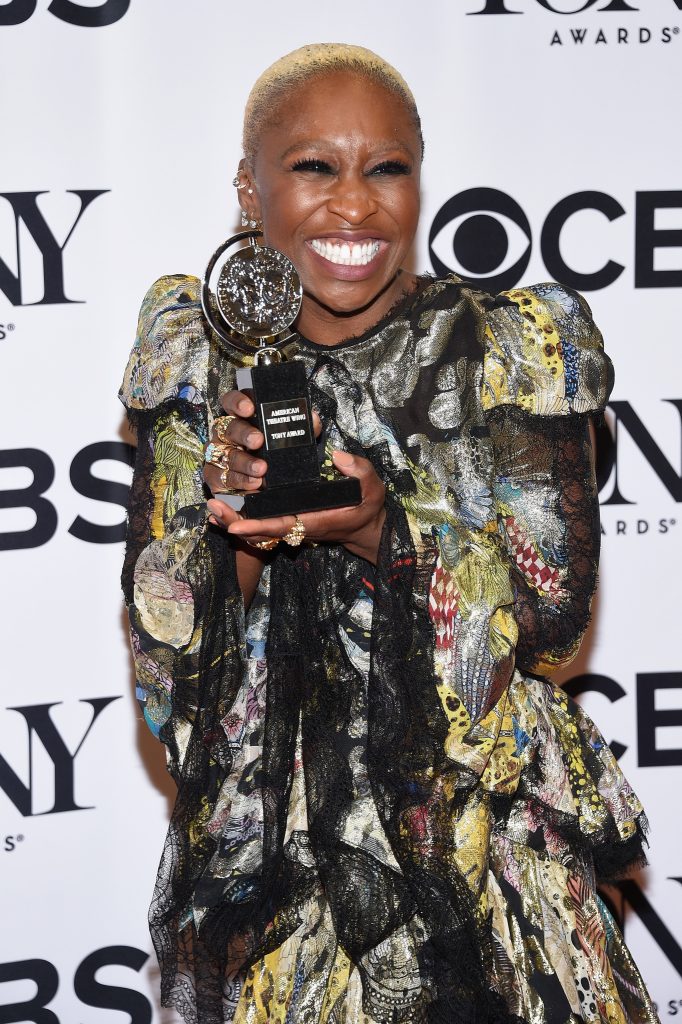
Erivo holds a Tony, a Grammy, and two Daytime Emmys. She has been nominated for two Oscars. The EGOT — Emmy, Grammy, Oscar, Tony — requires only a Primetime Emmy or an Academy Award to complete. She is closer than almost any performer of her generation. The 2025 Tony Awards hosting gig, where she opened with an original number and executed ten costume changes alongside Oprah, demonstrated the kind of live-performance command that makes awards voters pay attention.
In February 2025, the Hollywood Bowl announced Erivo would play Jesus Christ in its production of Jesus Christ Superstar — a casting choice that is both audacious and perfectly calibrated for someone whose instrument can handle Andrew Lloyd Webber at full volume. Additionally, her second album I Forgive You, released June 2025, peaked at number eleven on the Top Album Sales chart — evidence that the music career is building independently of the acting credits.
She has spoken about wanting to produce — to create material not just for herself but for other women of color. “I want to create platforms for people to showcase them,” she told Backstage in 2015, a full decade before Wicked made her a household name. The ambition was always there. The opportunity is only now catching up.
The Cynthia Erivo Net Worth Verdict
The honest accounting of Cynthia Erivo net worth requires confronting a discomfort that the entertainment industry prefers to aestheticize rather than address. She is a Tony winner, a Grammy winner, a two-time Oscar nominee, the lead of the highest-grossing Broadway adaptation in film history, and one of the most technically gifted performers alive. Her net worth is $5 million. Her co-star’s net worth is $250 million. The gap is not a mystery. It is a document.
What makes the story worth telling is not the gap itself — those gaps exist across the industry and always have. It is the fact that Erivo refused to let the gap become a reason to be less excellent. She trained at RADA. A Tony followed for a role that required channeling two hundred years of American pain through a voice that could crack granite. Harriet Tubman came next, played with enough authority to earn two Oscar nominations. Furthermore, she negotiated her Wicked contract in collaboration with a co-star fifty times richer than her, with radical honesty rather than resentment.
The Cynthia Erivo net worth figure will climb substantially in the coming years. The Wicked franchise, the album, the producing ambitions, and the EGOT proximity all point toward a financial trajectory that is finally beginning to match the artistic one. Whether the industry sustains the visibility Wicked created or does what it typically does with Black female leads after the opening weekend passes is the question her career keeps asking. Based on the evidence — the training, the discipline, the voice that could strip paint off the walls of the Dolby Theatre — the answer has always been clear. The industry just took twenty years to hear it.
Related Reading
- Inside Out 2, Wicked, and the Emotional Blockbuster
- Ariana Grande Net Worth: The $250 Million Identity Pivot
- Timothée Chalamet Net Worth: The Fashion-Logic Movie Star
- Dune, Timothée Chalamet, and the New Prestige Blockbuster
- Barbenheimer and the Weekend America Pretended Movies Still Work Like That
There is a particular kind of person who reads an article like this and does not just absorb the information — they see the angles. The positioning. The gap between what the industry says it values and what it actually rewards. If you are that person, you are already operating in the same water we swim in at Social Life Magazine. You just might not have realized we were in the same pool.
If your brand, your business, or your personal story belongs in front of the audience that summers between Westhampton and Montauk — and winters on the Upper East Side — an editorial feature in Social Life is not advertising. It is a strategic placement. Reach out to our editorial team here and let us build something worth reading.
For brands and entrepreneurs seeking elevated visibility with guaranteed placement, our Paid Feature program offers a direct path into the hands of our readership — 25,000 copies per summer issue, distributed to the boutiques, estates, and private clubs where decisions get made. Submit a Paid Feature here.
Our Email List Reaches 82,000 Readers
They do not need to Google what a family office is. If you want your name, your brand, or your event in front of that audience, join the list.
Every summer, Polo Hamptons brings together the kind of crowd that turns a weekend afternoon into a three-year business relationship. If you have not been, you are missing the field where the real networking happens — with a polo match as the backdrop.
A print subscription to Social Life Magazine means the issue arrives before the conversation starts. Five summer issues. Two off-season editions. The paper stock alone tells you this is not a newsletter. Subscribe here.
If this article gave you something — a new angle, a sharper read on the culture, a line you will use at dinner — consider a $5 contribution to keep independent luxury journalism alive. Not because we need it. Because you value what we do. Donate here.
Author

Written by
Recent Posts
Cynthia Erivo Net Worth: The Voice That Was Always There
Inside Out 2, Wicked, and the Emotional Blockbuster That Ate 2024
7 Mindful Meal Prep Tips for Stop Food Waste Day

Rebecca Ferguson Net Worth: The Advantage of Not Being the Lead
What Makes a Dinner Party Truly Unforgettable (Hint: It’s Not the Food)
Categories
- Art
- Articles
- Beauty & Skincare
- Celebrities
- Celebrities|Entertainment
- Celebrities|Television
- Celebrities|The Chronicles
- celebrities|the-archive
- Chronicles
- Entertainment|Culture
- Event Photos
- Events
- Fashion
- Fashion & Style
- Featured
- Food & Beverage
- Food, Spirits, Wine
- Hamptons
- Hamptons Celebrities
- Hamptons Celebrities|Celebrities|The Chronicles
- Health
- Health & Beauty
- Lifestyle
- Luxury Lifestyle
- Movies
- Press
- Profiles
- Real Estate
- Technology
- The Chronicles
- Travel
- Uncategorized
- Weddings