
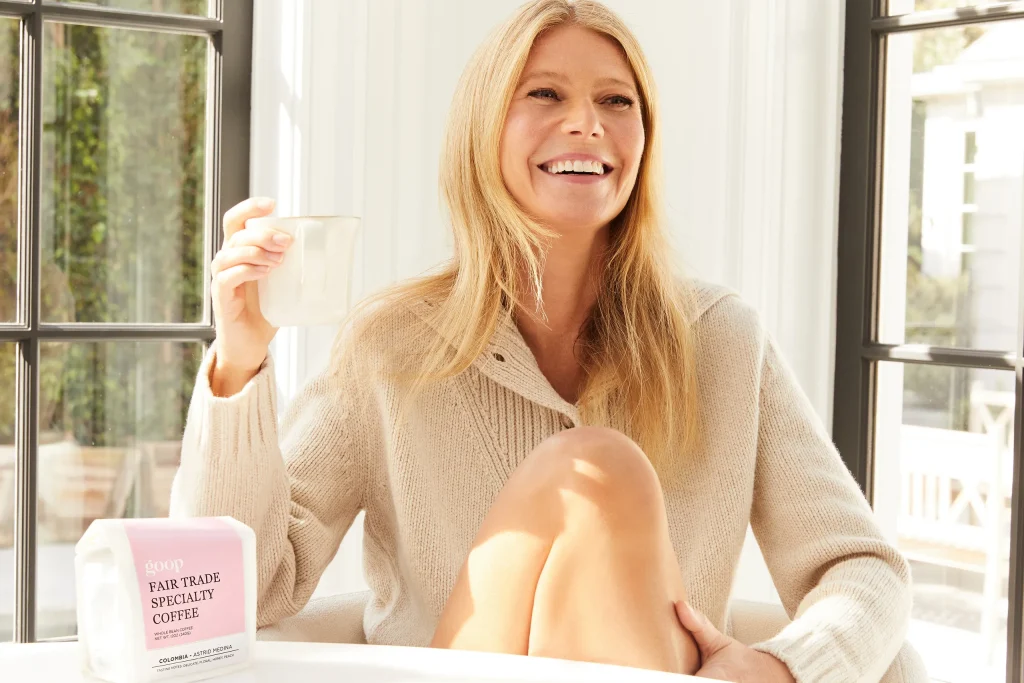
The question people ask about Gwyneth Paltrow’s net worth is usually framed as a mystery. Analysts estimate it today at approximately $200 million. How does a woman who quit A-list films at 35 end up wealthier than peers who never stopped? The answer is a case study: what happens when someone correctly identifies that their most monetized asset is not their most valuable one. Gwyneth Paltrow spent her twenties building a film career. She spent everything after that building something the film industry cannot manufacture. That asset was a direct relationship with a specific kind of woman — one who would follow her anywhere she chose to go.
That relationship did not begin with Goop. It began in Los Angeles in 1972, in a house where Steven Spielberg joined the dinner table. The assumption there was always that creative work and serious money shared the same room. Her father was director and producer Bruce Paltrow. Actress Blythe Danner was her mother. Spielberg himself served as godfather. Consequently, Hollywood was never a dream for Gwyneth Paltrow — it was the default.
The Before: What She Was Supposed to Be
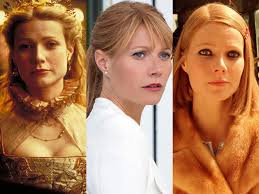
By 26, Paltrow had already appeared alongside Brad Pitt in Se7en and Emma Thompson in Emma. By 29, she had an Oscar. Shakespeare in Love won Best Picture in 1999. The acceptance speech — the tearful, pearls-and-blush moment — became one of the defining images of late-nineties celebrity. The Hollywood machine registered her as a permanent A-list fixture. Directors wanted her. Publicists built campaigns around her face. The trajectory pointed in one direction only.
What the machine did not register was how little she seemed to want it. Furthermore, the post-Oscar roles — The Talented Mr. Ripley, Bounce, Possession — carried a selectivity that read, at the time, as artistic integrity. In hindsight, they read as the early movements of a woman who was already calculating an exit. Among celebrities who traded Hollywood for something harder to replicate, she moved earliest and with the most precision.
The Pivot Moment: A Newsletter No One Took Seriously
In September 2008, Gwyneth Paltrow sent an email to a small list of friends. It contained a recipe, a travel recommendation, and a note about a book she had been reading. She called it Goop. The media registered it as a vanity project — a celebrity playing at editorial, the digital equivalent of a mood board. Meanwhile, the people on that initial list forwarded it. Then their friends subscribed. Within months, the list had grown without a dollar of marketing behind it.
The pivot moment, properly understood, was not the newsletter launch. It was the decision to continue when the mockery arrived. The New York Post found it precious. Bloggers found it aspirational to the point of parody. Notably, every piece of coverage — including the critical kind — sent new readers to the site. Paltrow seemed to understand this intuitively. BCG’s research on premium lifestyle positioning confirms it empirically: consumers who discover a brand through confrontation often become its most loyal buyers. Controversy, handled correctly, is a filtering mechanism. It removes the people who were never going to buy and concentrates the people who will.
The Climb: Building Goop Into a $250 Million Company
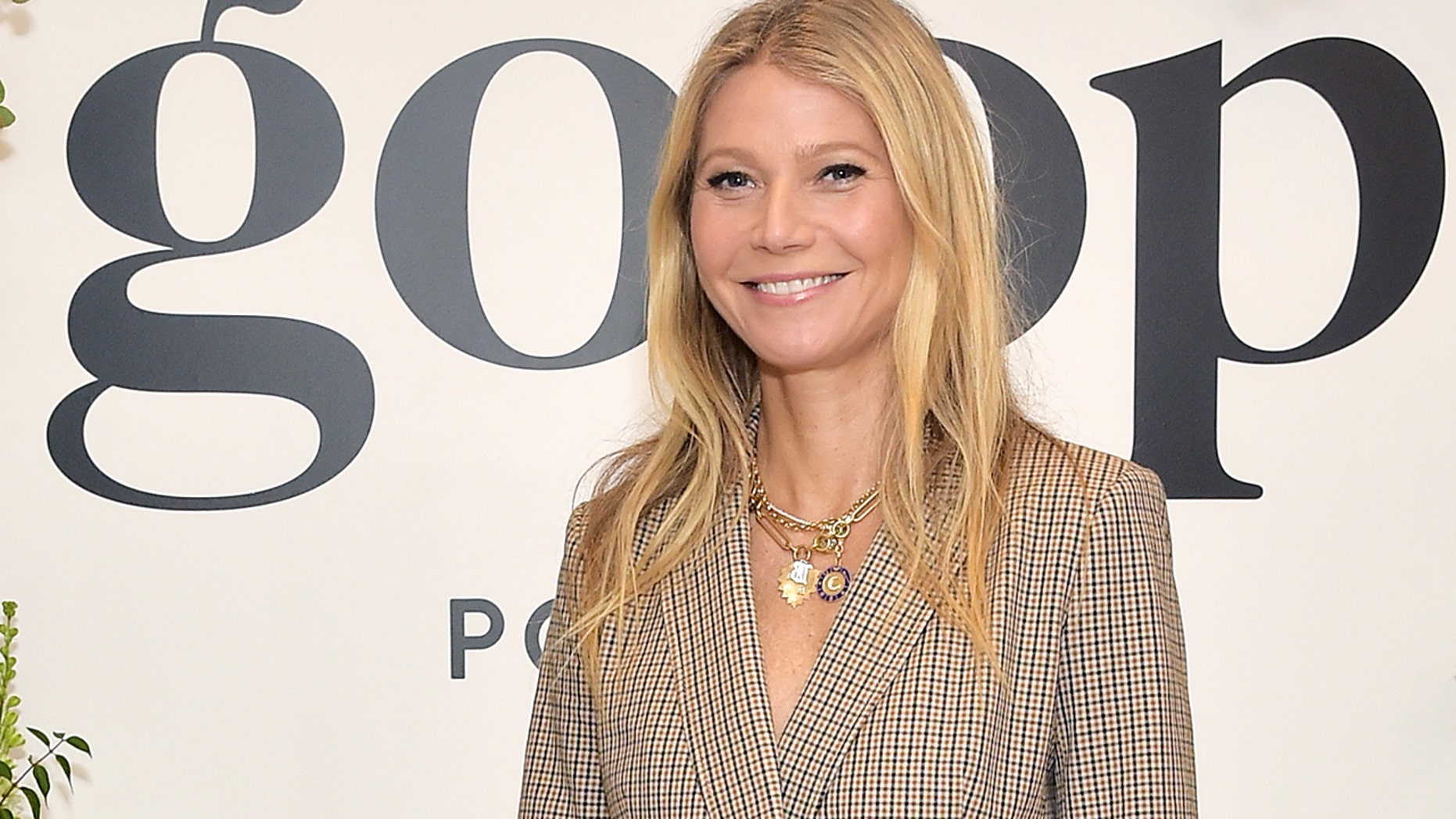
How an email list became a wellness empire
By 2012, Goop had begun selling products. By 2016, Goop held its first In Goop Health summit — a day-long wellness conference that sold out immediately. It generated more editorial coverage than most film premieres. Forbes tracked Goop’s valuation as it moved from media property to fully integrated consumer brand. By 2018, the company had raised $50 million in Series C funding and was valued at $250 million. The Oscar was worth exactly one statue. Goop, at its peak, was worth a quarter of a billion dollars.
The product controversies arrived with reliable frequency. The jade eggs, the vaginal steaming recommendations, the vitamin protocols with no clinical backing — each generated a wave of press that should, by conventional logic, have damaged the brand. Each, by actual metrics, increased traffic and revenue instead. Additionally, Paltrow’s response to criticism — calm, undefensive, framed as ongoing research — reinforced exactly the persona her consumer wanted to buy. She was not selling certainty. She was selling the confidence to experiment.
The celebrities who stepped back from fame and built genuinely durable businesses share one structural quality: their brand survives their absence. Goop runs editorial cycles, product launches, and wellness events with or without Paltrow’s daily presence. That infrastructure — built deliberately over 15 years — is what separates a celebrity brand from a celebrity business.
The Hamptons Chapter: Where She Actually Lives
Paltrow’s relationship with the Hamptons is characteristically understated. She and Brad Falchuk — television writer, producer, husband since 2018 — maintain a home in Amagansett. That enclave east of the highway is where old Hamptons money has always preferred to summer. The property does not appear in the social pages. Notably, it rarely surfaces in the celebrity real estate coverage that moves through the tabloids every August.
That invisibility is entirely consistent with her brand logic. The Hamptons, like Goop, rewards the consumer who knows enough to look past the obvious. Hamptons real estate in Amagansett commands a premium for one reason: the addresses require cultural fluency to appreciate. Furthermore, the social calendar here reflects the same scarce-access economy she built at Goop. Private dinners, intimate fundraisers, gatherings that leave no Instagram trace. The Hamptons dining scene operates on the same logic. Reservation lists function as social credentials. The presence of certain people communicates something the décor never could.
What She Actually Built: The Gwyneth Paltrow Net Worth Breakdown
The assets behind the number
The $200 million figure requires context to be useful. Paltrow’s film residuals account for a meaningful share. She appeared as Pepper Potts across multiple Marvel films through Avengers: Endgame in 2019. Marvel compensation at that level does not arrive modestly. However, the majority of her net worth now derives from equity and revenue in the Goop ecosystem rather than entertainment work.
McKinsey estimates the global wellness market at $1.8 trillion and growing at pace. Goop occupies a premium niche within that market. Counterintuitively, the brand’s willingness to occupy uncomfortable territory built consumer trust rather than eroded it. Harvard Business Review documents why: consumers challenged by a brand become more invested, not less. Goop’s controversies functioned as sorting mechanisms, delivering a highly engaged customer base with above-average lifetime value.
Additionally, the brand’s direct-to-consumer architecture means margin structures that legacy media and retail models cannot match. When Goop sells a $98 vitamin protocol, the distance between cost and revenue is not mediated by a studio, a distributor, or a retail partner. The business was designed for exactly the economics it now enjoys.
The Soft Landing: What the Utah Courtroom Actually Proved

In March 2023, Gwyneth Paltrow sat in a Park City courtroom. A retired optometrist alleged she had collided with him on a ski slope and skied away. The trial lasted eight days. Paltrow won. She was awarded one dollar in symbolic damages. She looked, throughout, mildly inconvenienced.
The cultural afterlife of that trial is more interesting than the verdict. “I wish you well” — her parting words to the plaintiff — became a cultural marker instantly. It captured something specific: composed, self-possessed dismissal of attack. Consequently, the trial became a public demonstration of the exact persona Goop had been selling for 15 years. Legal opposition, in her rendering, read as a minor scheduling conflict.
When the crisis becomes the campaign
Bain’s research on luxury brand resilience documents a consistent pattern. Premium brands that survive public crisis emerge stronger. The crisis filters out uncertain consumers and reconfirms loyalty among core buyers. Goop traffic spiked during and after the trial. The brand’s social following grew. Furthermore, the mainstream cultural conversation finally caught up with what the Goop audience already knew: Paltrow was not performing wellness. She was living it, and the performance — composed, unrattled, certain — was simply the evidence.
That is what makes Gwyneth Paltrow’s net worth more than a number worth tracking. It is the financial record of a woman who saw the play two decades before it had a name. The most defensible position in the attention economy is genuine self-possession — and no one can manufacture that at scale. She did not step back from fame. She decided, quietly, that she had somewhere better to be.
Feature your brand in Social Life Magazine: sociallifemagazine.com/contact
Polo Hamptons sponsorships and tickets: polohamptons.com
Subscribe to Social Life Magazine: sociallifemagazine.com/subscription
Support independent luxury media — donate $10: paypal.com/donate
Related Reading: Celebrities Who Stepped Back From Fame and Actually Won | Meghan Markle Net Worth: The Exit That Needed a Second Chapter
Author

Written by
Recent Posts
Breaking Bad Cast Net Worth. $130 Million Cooked in Five Seasons of Perfect Television

Cailee Spaeny Net Worth — From Springfield, Missouri to A24 and Alien in Three Years Flat

Wagner Moura Net Worth — He Learned Spanish to Play Escobar. Then He Learned English to Take Hollywood.

Robert Eggers Net Worth — He Made a $3.5 Million Film in Puritan English and Hollywood Listened

Brie Larson Net Worth — A $6 Million Indie Film Won Her an Oscar. Marvel Paid Her the Rest.
Categories
- Art
- Articles
- Beauty & Skincare
- Celebrities
- Celebrities|Movies
- Celebrities|The Chronicles
- Chronicles
- Entertainment|Culture
- Event Photos
- Events
- Fashion
- Fashion & Style
- Featured
- Food & Beverage
- Food, Spirits, Wine
- Hamptons
- Hamptons Celebrities
- Hamptons Celebrities|Celebrities|The Chronicles
- Health
- Health & Beauty
- Lifestyle
- Luxury Lifestyle
- Movies|Culture
- Movies|Hamptons Lifestyle
- Press
- Profiles
- Real Estate
- Technology
- The Chronicles
- Travel
- TV
- Uncategorized
- Weddings