
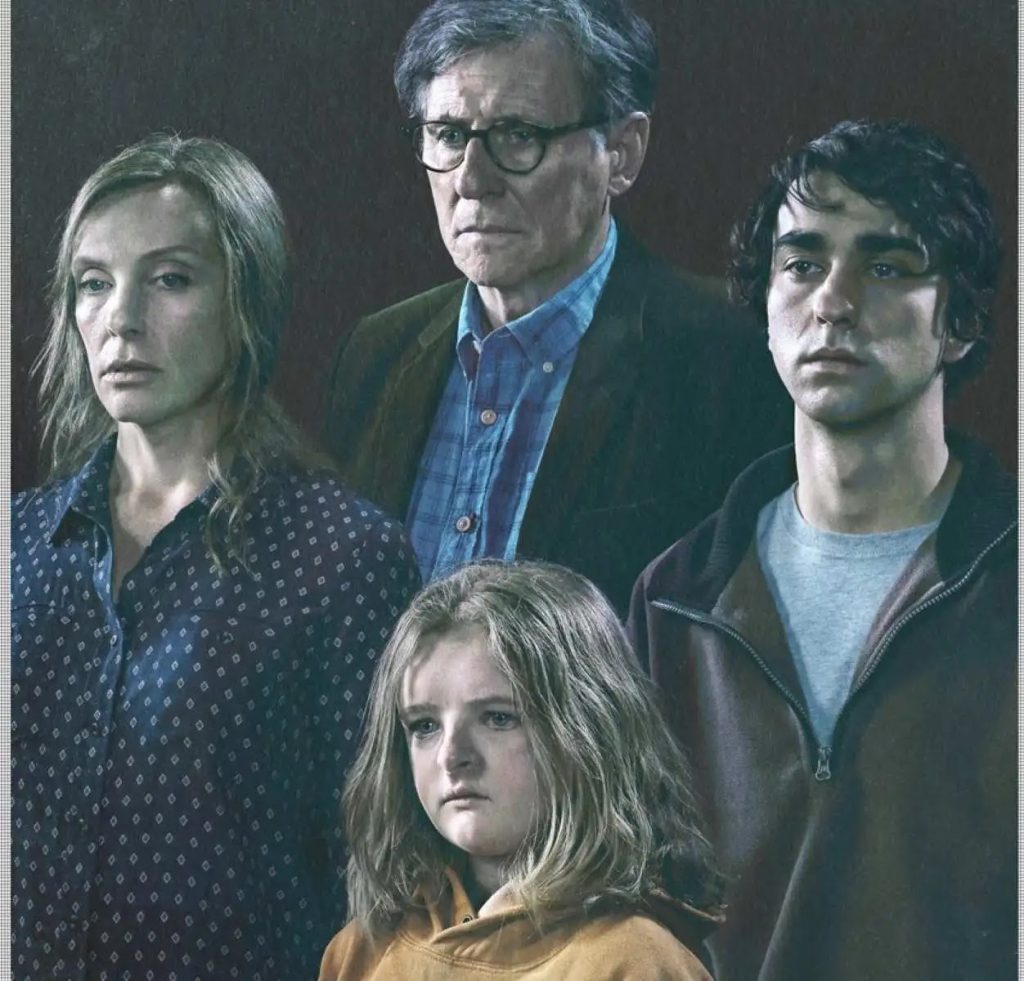
The Hereditary A24 cast net worth story begins with a question that the horror genre had stopped asking. That Ari Aster, at twenty-nine years old with no feature film credits. Had the audacity to answer: what happens when you make a horror film that is also. Without qualification or apology, one of the best films of its year in any genre? The answer, it turns out, is that you gross $80 million against a $10 million budget. You launch a subgenre that critics will spend the next decade calling “elevated horror” before deciding that term is condescending. And you restructure the careers of every actor who was brave enough or reckless enough to sign on before anyone knew what they were signing on for.
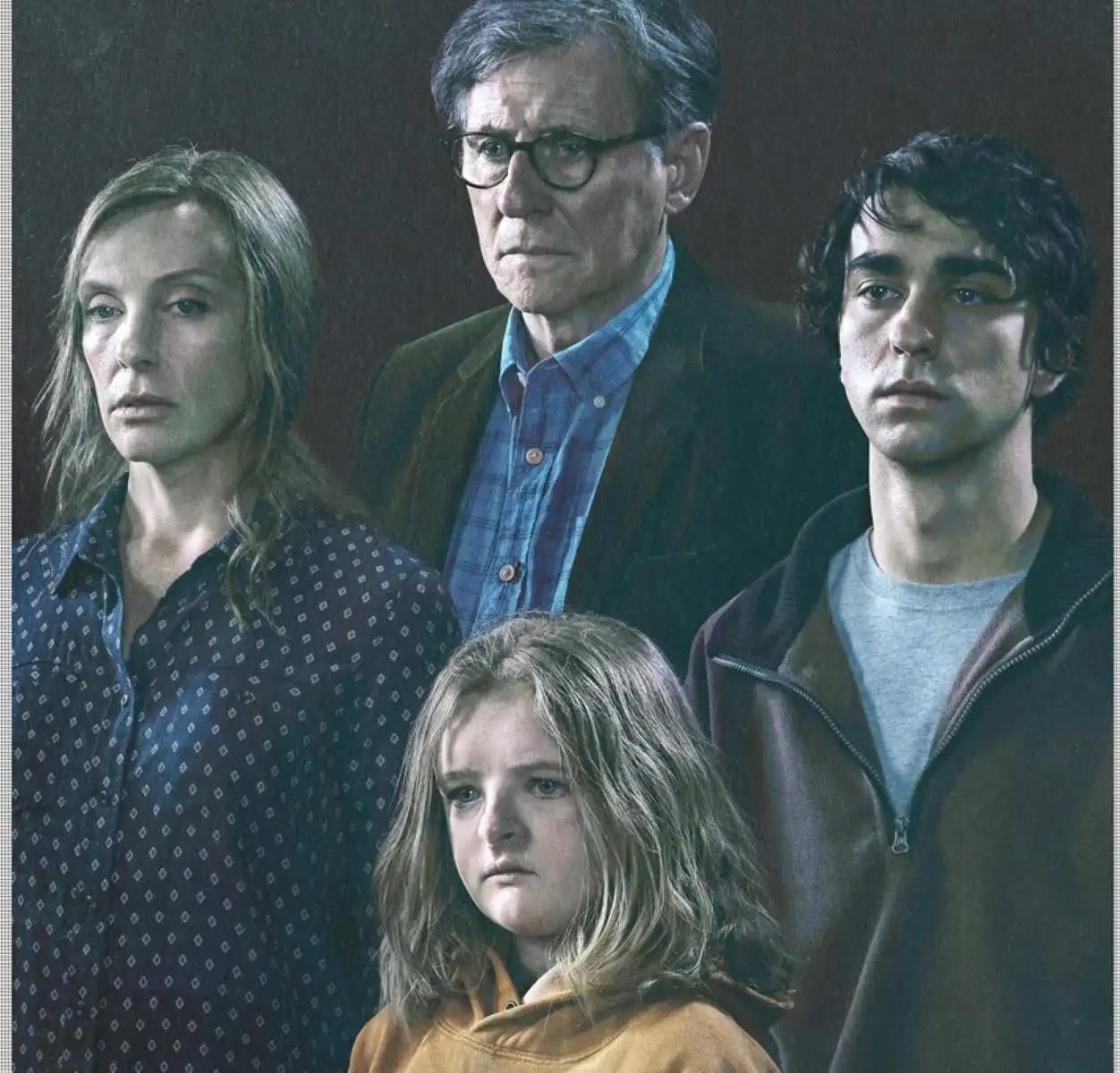
Toni Collette and Alex Wolff are the principal cast members whose careers Hereditary transformed. The transformation, in both cases. Operates on the same mechanism that every A24 film uses: below-market compensation in exchange for material so extraordinary that the career value generated exceeds any salary the actors could have negotiated on a project with more conventional ambitions and less emotional danger.
The Economics of Elevated Horror
Before Hereditary, the horror genre’s financial model was built on a simple equation: spend as little as possible. Scare as efficiently as possible, and accept that critical respect and commercial success are separate outcomes pursued by separate films. The Conjuring franchise generated billions by perfecting jump scares. Paranormal Activity proved that a $15,000 budget could produce a $193 million return. But the critics who reviewed these films. The audiences who paid to see them existed in different economic ecosystems that rarely overlapped.
The Aster Innovation
Ari Aster changed the equation by refusing to accept its premise. Hereditary is a horror film about grief. Mental illness. The inherited trauma that passes between generations like a genetic disease that no amount of therapy can cure. It uses the vocabulary of horror, the dark houses. The strange sounds and the things that should not be in the corner of the room but are. To explore emotional terrain that prestige dramas rarely access with this much visceral force. The result was a film that horror audiences found genuinely terrifying and that prestige critics found genuinely excellent. This meant that for the first time in decades. A horror film was being discussed in the same conversations as the year’s best dramas.
The Deeper Math
The financial implications of this crossover were significant. Hereditary’s $80 million world
wide gross was driven not just by horror fans but by the broader audience that reads reviews. Follows critical discourse, and pays attention to films that generate the kind of cultural conversation that Hereditary generated. The audience was larger than the genre usually attracts. The reason is that the film was better than the genre usually produces. That gap between those two facts is the entire A24 horror business model.
The $10 million budget also tells a story about the specific economies of horror production that give A24 a structural advantage over studios attempting to compete in the same space. Horror films do not require expensive locations, elaborate costumes, or name-brand visual effects. They require darkness, silence. And actors willing to inhabit states of terror and grief that are psychologically taxing but cinematically inexpensive. A single room, properly lit and scored. Can generate more dread than a $200 million CGI spectacle. This means the ratio of emotional impact to production cost in horror is the highest of any genre. A24 understood this arithmetic before anyone else and has been compounding the returns ever since.
Toni Collette — The $18 Million Fortune Built on Inhabiting Women Nobody Else Could Play
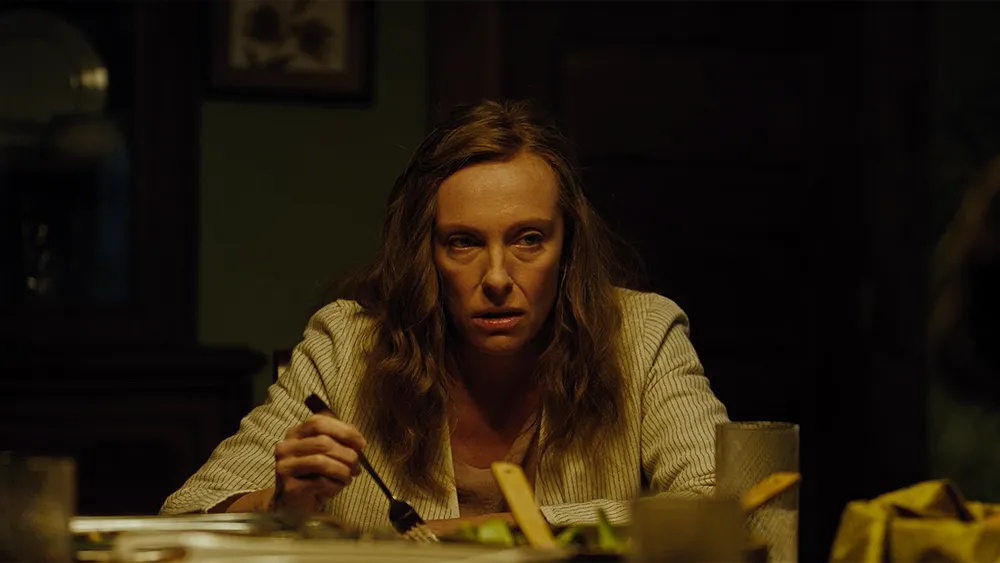
Toni Collette’s net worth sits at an estimated $18 million. Built across three decades of playing women so complex that no other actress would have been offered the roles because no other actress could have made them work. From Muriel’s Wedding in 1994, where she gained forty pounds to play a socially awkward dreamer. To The Sixth Sense, where she earned an Oscar nomination for playing a mother who cannot understand her son’s terror, to United States of Tara. Where she played a woman with dissociative identity disorder and won an Emmy. Collette has made a career out of inhabiting people who exist at the extremes of human experience without ever making the extremes feel like performance.
The Hereditary Performance
In Hereditary, she delivered what many critics consider the greatest horror performance since Shelley Duvall in The Shining. She plays Annie Graham, a miniature artist whose mother’s death triggers a cascade of supernatural and psychological horrors that dismantles her family with the methodical cruelty of a malevolent intelligence that has been planning the dismantling for generations. The performance is physically and emotionally extreme in ways that most actors would not attempt. That most directors would not request. Involving screaming, sobbing, convulsing. A dinner scene monologue so raw that the crew reportedly stood in stunned silence after Aster called cut.
Her compensation for Hereditary was likely in the $500,000 to $1 million range. Consistent with A24’s budget constraints. The fact that Aster was a first-time director with no commercial track record. The career impact, however, was disproportionate. Hereditary reminded the industry that Collette was not just a reliable character actress but a performer capable of anchoring a film at the highest level of emotional intensity. This repositioned her for the prestige television roles that followed: Unbelievable on Netflix. The Staircase on Max, and Wayward on Netflix in 2025.
For the full origin story of how a girl from Blacktown, Sydney became the most fearless actress of her generation, read our Toni Collette net worth deep dive.
Alex Wolff — The Young Actor Who Survived Hereditary and Emerged Transformed
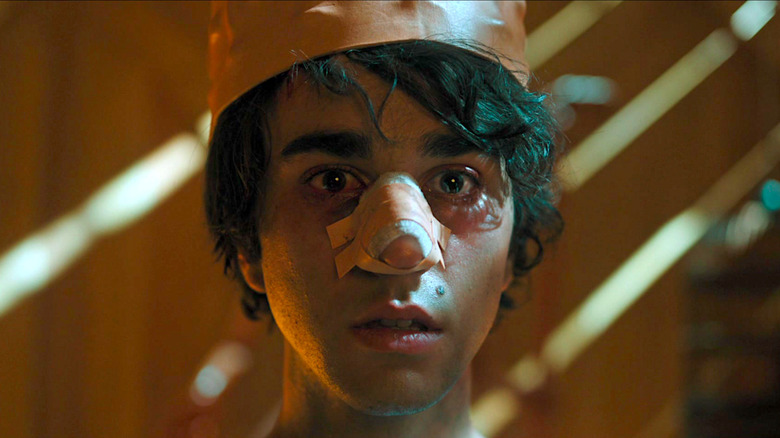
Alex Wolff’s net worth sits at an estimated $4 million. Built through a career that began in childhood. That Hereditary branded with a permanent association with on-screen terror so convincing that audiences who saw the film years ago still flinch when they see his face. He was twenty years old when Hereditary hit theaters. His performance as Peter Graham, the teenage son whose terrible mistake sets the film’s horrors in motion. Required him to portray guilt, trauma. And psychological disintegration with a rawness that actors twice his age would find difficult to sustain.
The Physical Cost of the Role
Wolff has spoken publicly about the toll Hereditary took on his mental health. Describing the experience as emotionally devastating and the aftermath as a period of genuine psychological difficulty. The performance required him to spend months inhabiting a character whose defining experience is the worst thing he has ever done and who watches his family destroy itself as a consequence. That kind of immersion generates extraordinary on-screen results and significant off-screen costs. The fact that Wolff delivered the performance at twenty years old. Without the coping mechanisms and professional distance that more experienced actors develop, makes it all the more remarkable.
His post-Hereditary career includes Pig with Nicolas Cage. A film that proved he could do quiet intensity as effectively as he could do screaming terror. And a growing filmography that benefits from the credibility Hereditary permanently attached to his name. The $4 million net worth reflects a career still in its early stages. With the Hereditary credential functioning as a career asset that will generate opportunities and escalating compensation for decades.
For the full origin story of the young actor who survived A24’s most terrifying set and emerged ready for everything that followed, read our Alex Wolff net worth deep dive.
What Hereditary Built Beyond Its Own Box Office
Hereditary’s $80 million gross on a $10 million budget is an 8x return that would satisfy any investor. But the film’s real value to A24 extends far beyond its own financial performance. Hereditary established A24 as the home of intelligent horror. This attracted Ari Aster back for Midsommar, which attracted Ti West for X and its sequels. Which attracted the Philippou brothers for Talk to Me. This grossed $92 million and became A24’s highest-grossing horror film. The pipeline that Hereditary created has now generated hundreds of millions of dollars in aggregate box office. Every dollar traces its lineage back to a $10 million bet on a first-time director who believed that horror and excellence were not mutually exclusive.
The Elevated Horror Economy
The term “elevated horror” has been criticized, correctly, for implying that most horror is not worth elevating. But the economic phenomenon it describes is real: a category of horror film that attracts both genre audiences and prestige audiences. That generates both box office returns and critical acclaim. That transforms the careers of its actors in ways that conventional horror cannot. Hereditary invented this category. Or at the very least proved it was commercially viable at a scale that made the rest of the industry pay attention. Every horror film that has been marketed with the phrase “from the studio that brought you Hereditary” is paying tribute. Whether it knows it or not. To the $10 million film that proved fear and art could share the same screen without either one diminishing the other.
The Deeper Math
Explore our full A24 Genre Stars Net Worth pillar for every cast, every fortune, every origin story behind A24’s horror, sci-fi, and Oscar-winning films.
What It Means Now
The Ari Aster pipeline deserves specific economic analysis. The reason is that it represents the single most productive director-distributor relationship in A24’s history. Hereditary cost $10 million and grossed $80 million. Midsommar cost $9 million and grossed $48 million. Beau Is Afraid cost $35 million and grossed $11 million. This represents Aster’s only commercial disappointment and which, notably. Did not damage his relationship with A24. The reason is that the company’s model is built on portfolio thinking rather than project-by-project accounting.
The Director-Distributor Bond
Two hits and one miss across three films still produces an aggregate return that justifies the investment. The cultural capital generated by all three films. Even the one that lost money, contributes to A24’s brand positioning in ways that financial statements cannot capture.
The actors who appear in Aster’s films accept a specific bargain: they will be asked to go further emotionally and psychologically than any other director will ask them to go. And in exchange they will receive performances that redefine their careers. Toni Collette in Hereditary. Florence Pugh in Midsommar. Joaquin Phoenix in Beau Is Afraid. Each actor delivered work that expanded what the industry believed they were capable of. Each actor’s subsequent career reflects the expansion.
The Venture Capital of Human Capital
The bargain is not comfortable. It is not safe. But it is, measured by career outcomes, one of the most reliably productive arrangements in contemporary cinema.
The Longer Arc
For the Hamptons audience, the parallel to alternative investments is instructive. Hereditary is the equivalent of a seed-stage venture investment that returns 8x. The risk was real. The director was unproven. A genre was undervalued by traditional metrics. But the thesis, that intelligent horror could generate both commercial returns and career transformation. Was sound. The actors who invested their time and talent at below-market rates received returns that conventional career paths could not have produced. The A24 horror model is, in financial terms, a venture fund that invests in human capital rather than technology. Each returns. Measured across the careers it has restructured, are competitive with the best funds in any asset class.
In Perspective
The Collette-Wolff dynamic within the film also reveals something about the economics of ensemble casting that applies to every hub in this pillar. In Hereditary, Collette’s established reputation provided the marketing hook that attracted audiences. While Wolff’s relative anonymity allowed his performance to land with the element of surprise that no established star can generate. The combination of known and unknown is a casting strategy that A24 has refined across its catalog: attach a recognizable name to justify the marketing spend. Then surround that name with emerging talent whose breakout performances generate the word-of-mouth that drives second and third weekend box office. It is an ensemble economics strategy. And Hereditary executed it at a level that set the template for every A24 horror film that followed.
You are reading this because you already understand something most people scroll right past. The intersection of culture, money, and taste is not a Venn diagram. It is a mirror. Social Life Magazine has spent 23 years holding that mirror up to the people who shape the Hamptons, Manhattan, and the corridors between them. If you see yourself in these pages, we should talk. Reach out at sociallifemagazine.com/contact.
If your brand, your launch, or your personal story belongs in front of 82,000 affluent readers and a digital audience that keeps growing, our editorial features are built for exactly that moment. Learn more at Submit a Paid Feature.
Our email list reaches 82,000 subscribers who actually open, read, and act. If your audience is high-net-worth, culturally engaged, and based between Park Avenue and Montauk, you are already in the right place. Join the list.
Polo Hamptons Returns
Bridgehampton this July with 1,200 guests, Getty Images coverage, and seven years of BMW title sponsorship behind it. If your brand belongs in that conversation, visit polohamptons.com.
A print subscription to Social Life Magazine puts 25,000 copies per issue into the boutiques, lobbies, and living rooms where decisions get made, from Westhampton to Montauk every summer and Upper East Side doorman buildings for Fall and Winter. Subscribe at sociallifemagazine.com/subscription.
If this publication has added value to your world and you want to support independent luxury journalism, you can contribute directly at our donation page.
Author

Written by
Recent Posts

Florence Pugh Net Worth — The Oxford Girl Whose Collapsed Windpipe Could Not Stop a $12 Million Rise
Kirsten Dunst Net Worth — She Was Spider-Man’s Girlfriend at 19. At 42 She Finally Got the Roles She Deserved.
Jack Reynor Net Worth — The $4 Million Actor Who Played Cinema’s Most Memorably Terrible Boyfriend
Hereditary A24 Cast Net Worth — The $10 Million Horror Film That Changed What Fear Is Worth

Civil War A24 Cast Net Worth — A24 Bet $50 Million on the End of America and Won
Categories
- Art
- Articles
- Beauty & Skincare
- Celebrities
- Celebrities|Movies
- Celebrities|The Chronicles
- Chronicles
- Entertainment|Culture
- Event Photos
- Events
- Fashion
- Fashion & Style
- Featured
- Food & Beverage
- Food, Spirits, Wine
- Hamptons
- Hamptons Celebrities
- Hamptons Celebrities|Celebrities|The Chronicles
- Health
- Health & Beauty
- Lifestyle
- Luxury Lifestyle
- Movies
- Movies|Culture
- Movies|Hamptons Lifestyle
- Press
- Profiles
- Real Estate
- Technology
- The Chronicles
- Travel
- Uncategorized
- Weddings