
How the Inside Out 2 Wicked Box Office Proved Feelings Are a Business Model
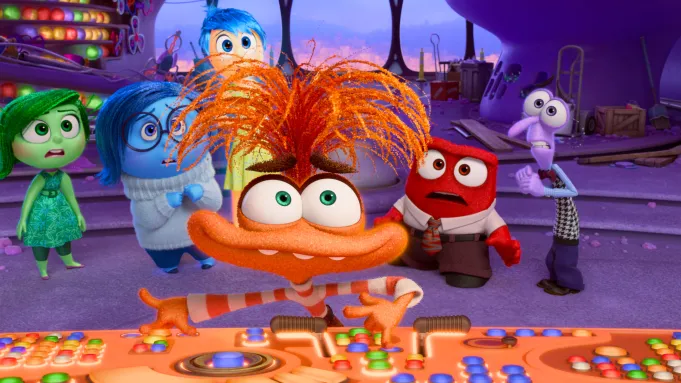
The biggest movies of 2024 were about feelings. Not explosions, not universes, not IP rebooted for the fourth time — feelings. Inside Out 2 made anxiety its literal protagonist and grossed $1.699 billion worldwide. Wicked made exclusion its engine and grossed $758.8 million. Combined, the Inside Out 2 Wicked box office total crosses $2.46 billion — roughly the GDP of a small Caribbean nation, generated entirely by movies about emotions that their audiences recognized from their own lives.
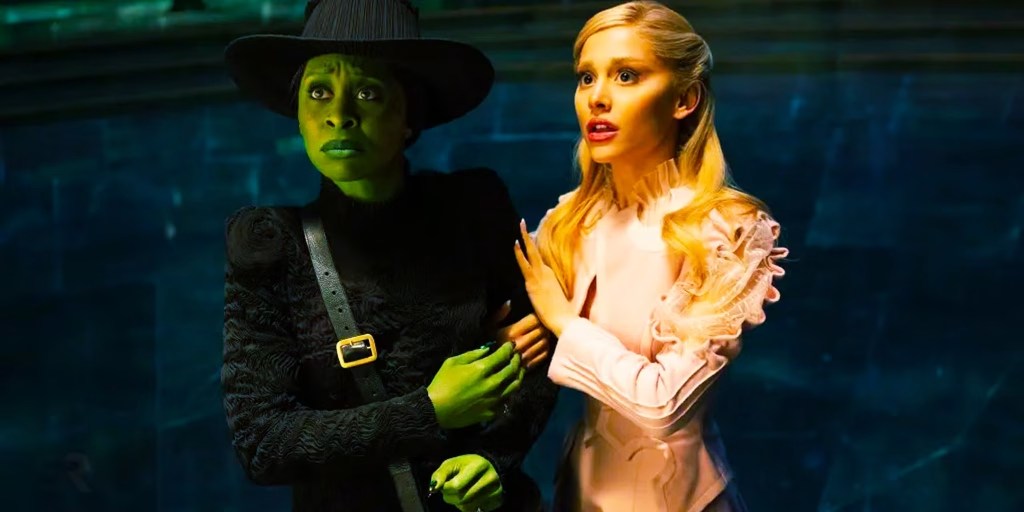
Furthermore, the counterintuitive part is not that feelings sell. The counterintuitive part is that feelings turned out to be the most commercially ruthless strategy of the decade. Superhero movies forgot how to make audiences feel something they recognized. Franchise sequels forgot that emotional resonance is the thing that separates a blockbuster from a forgettable spectacle. Pixar and Universal remembered. The receipts suggest nobody else was even close.
Inside Out 2: $1.699 Billion in Animated Anxiety
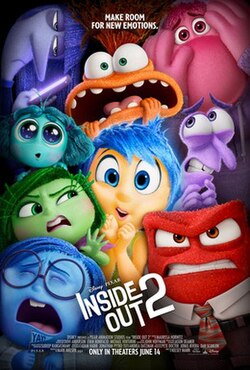
Inside Out 2 opened June 14, 2024, to $154.2 million domestically — shattering industry projections of $80 to $90 million. The sequel became the first film of 2024 to open above $100 million. It crossed $1 billion worldwide in nineteen days, tying The Lion King as the fastest animated film to reach that threshold. By the time it finished its theatrical run, it had become the highest-grossing animated film of all time and the highest-grossing film of 2024 by a margin of over $300 million. Deadline calculated the net profit at $650 million.
The premise was elegant in its commercialism. Thirteen-year-old Riley enters puberty, and her emotional headquarters gets demolished to make room for new feelings — Anxiety, Envy, Ennui, and Embarrassment. The original crew (Joy, Sadness, Anger, Fear, Disgust) gets displaced. Anxiety takes over. Every parent in the theater recognized the metaphor instantly. Every teenager recognized the experience. Consequently, the film did something that no Marvel movie has managed since Endgame — it gave the audience a reason to cry that had nothing to do with CGI destruction and everything to do with the feeling of losing control of your own mind.
Notably, the film arrived after three consecutive Pixar releases went directly to Disney+ (Soul, Luca, Turning Red) and two theatrical underperformers (Lightyear, Elemental). Industry experts had declared Pixar’s theatrical model damaged, possibly beyond repair. Inside Out 2 answered that diagnosis with the largest second weekend in animated film history — $101.2 million, a drop of only 34.4 percent. The patient was not dying. The patient was waiting for something worth getting out of bed for.
Wicked: $758.8 Million in Theatrical Witchcraft
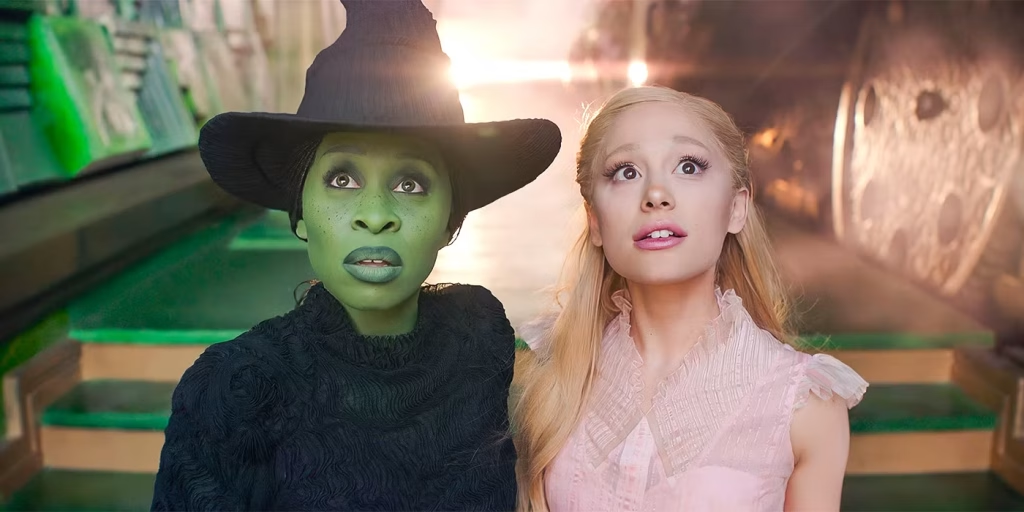
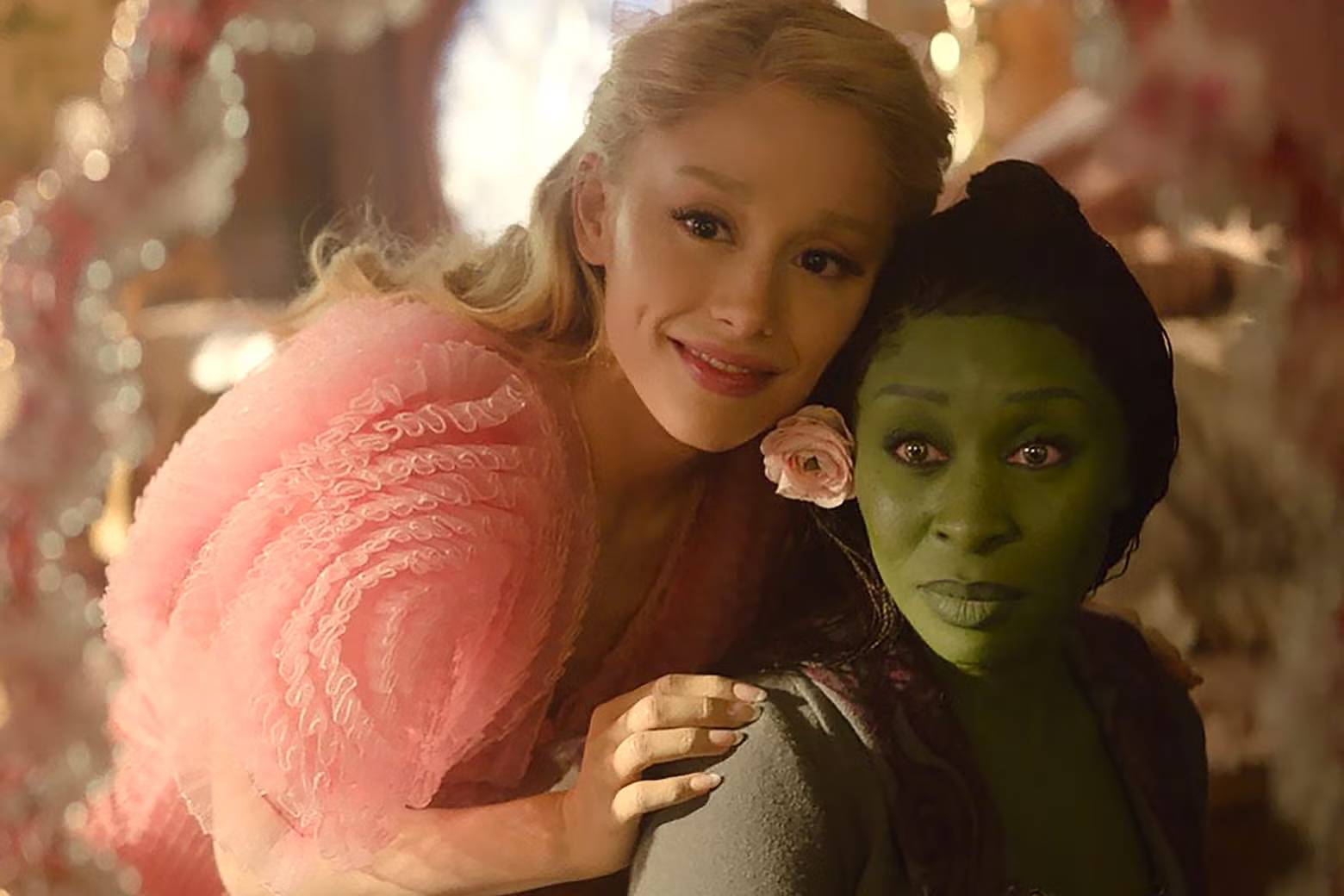
Wicked opened November 22, 2024, to $112.5 million domestically and $162.9 million worldwide — the largest opening for any Broadway adaptation in cinema history. The previous record holder, Les Miserables, had opened to $103 million worldwide in 2012. Wicked surpassed it on day one. By December, the film had overtaken Mamma Mia! to become the highest-grossing musical film adaptation of all time. Ten Academy Award nominations followed, including Best Picture.
Ariana Grande played Glinda with a discipline that surprised even skeptics — refusing a hip-hop reimagining of “Popular” because she wanted to be Glinda, not Ariana Grande playing Glinda. Cynthia Erivo played Elphaba with a voice that could reorganize the molecules in a theater. Together, they negotiated their contracts collaboratively — comparing numbers, demanding equal pay, and getting it confirmed publicly by Universal. The partnership was as commercially potent as the performances.
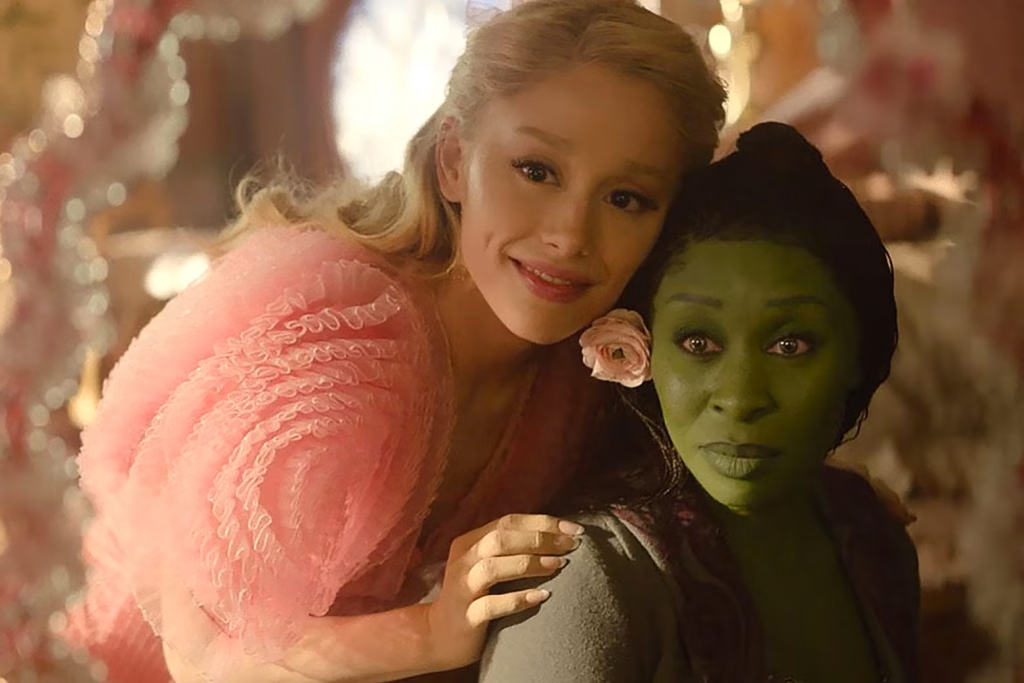
Additionally, the premium VOD performance extended the revenue story beyond theaters. Wicked generated over $70 million in PVOD sales in its first week — the best first-week premium digital performance Universal had ever recorded. Wicked: For Good, the sequel, arrived November 21, 2025, meaning the franchise occupied two consecutive holiday seasons. The total net profit for Part One alone: $230 million.
The Feelings Economy and Why Superheroes Lost
The question the Inside Out 2 Wicked box office forces the industry to confront is uncomfortable. Why did two movies about emotions outperform almost every action franchise in 2024? The answer is not complicated. It is just inconvenient for studios that have spent fifteen years investing in spectacle over substance.
Superhero movies stopped making audiences feel things they recognized. The multiverse gave viewers infinite versions of characters, which had the unintended effect of making none of them matter. The stakes became so cosmic they became abstract. Nobody cries when the universe is at risk because nobody has ever experienced a universal threat. However, everyone has experienced anxiety taking over their brain at two in the morning. Everyone has experienced the particular pain of being excluded by the people they most want to accept them. Inside Out 2 and Wicked weaponized recognition. The audience did not need to understand lore or remember previous installments. They needed a pulse.
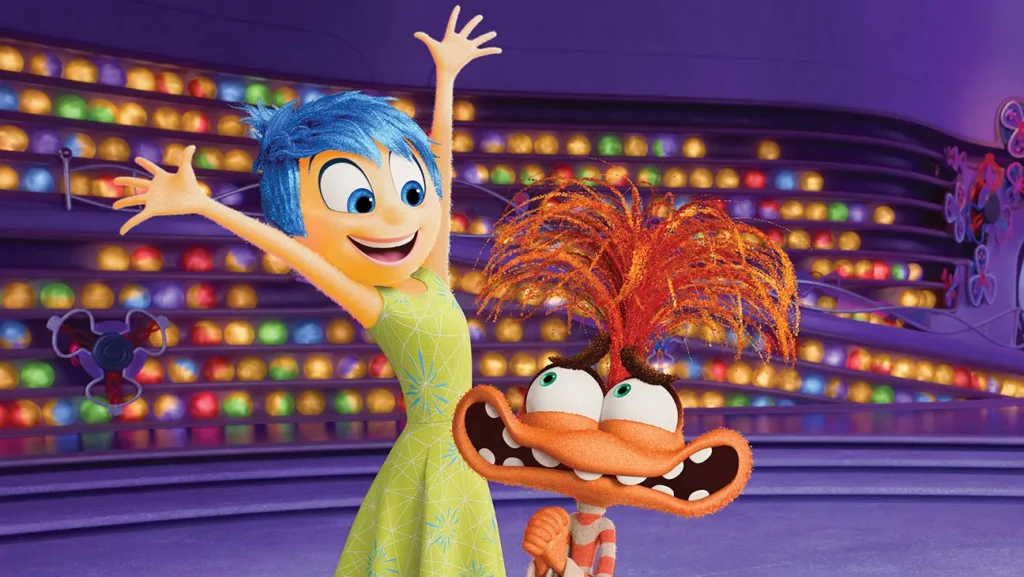
David Foster Wallace spent his career arguing that the purpose of art was to make people feel less alone. Inside Out 2 literalized this thesis — it turned loneliness and anxiety into characters and then charged fifteen dollars to sit in a dark room and cry about them with strangers. The transaction was honest. The audience knew they were being manipulated. Consequently, they did not care. They wanted the manipulation. They wanted to feel recognized by a Pixar movie more than they wanted to feel impressed by a Marvel one.
Ariana Grande: The $250 Million Pivot
Grande’s presence in Wicked represents the most aggressive identity pivot of the decade. She was not cast because she could act — although she proved she could. She was cast because she could sing, because her fame would sell tickets, and because the role required exactly the kind of relentless, slightly desperate perfectionism that built her music career. Wicked did not give her a new identity. It gave her the same identity in a different costume.

The Ariana Grande net worth stands at $250 million — a fortune built on six number-one albums, $400 million in touring revenue, a billion-dollar fragrance empire, and a beauty brand valued above $500 million. Wicked added prestige to the portfolio. The Eternal Sunshine Tour, beginning June 2026, adds scale. She is positioning herself as the first pop star since Barbra Streisand to maintain simultaneous commercial dominance in music and film.
Cynthia Erivo: The Voice Nobody Paid Properly

Erivo is the opposite case. She was always the more accomplished performer — the one with the Tony, the RADA training, the voice that could strip paint off the walls of the Dolby Theatre. In the 2020s fame economy, accomplishment is not the same as visibility. Wicked made her visible on the scale her talent always warranted. Whether the industry sustains that visibility is the question her entire career has been asking.
The Cynthia Erivo net worth sits at $5 million — for a Tony winner, Grammy winner, two-time Oscar nominee, and star of a $758 million film. The gap between that figure and Grande’s $250 million is not a reflection of relative talent. It is a reflection of which revenue streams the industry makes available to which performers. Grande has fragrance, beauty, touring, and streaming royalties. Erivo has acting salary and music royalties. Furthermore, the structural difference explains the number better than any individual decision ever could.
The Emotional Blockbuster Verdict
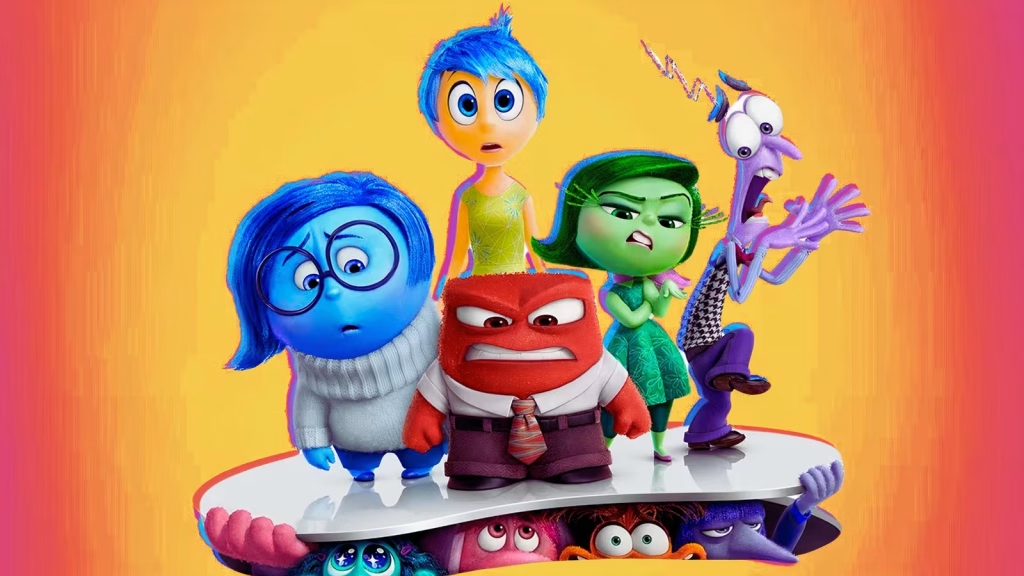
The honest assessment of the emotional blockbuster era goes like this. Inside Out 2 proved that the most commercially powerful thing a studio can do is name the feeling the audience is already having. Wicked proved that the most emotionally powerful thing a studio can do is show an audience the version of exclusion they survived as teenagers. Both films broke records not because they invented new technology or expanded existing universes, but because they remembered the first principle of storytelling — make the audience feel something real.
The Inside Out 2 Wicked box office — $2.46 billion combined — is not an anomaly. It is a correction. The industry spent fifteen years betting that bigger spectacle meant bigger returns. The 2024 numbers suggest the opposite. The biggest returns come from the smallest emotions — anxiety, exclusion, the desperate need to belong — projected at IMAX scale onto screens where millions of people can finally see what they have always felt. The emotional blockbuster did not displace the action blockbuster. It reminded the action blockbuster what blockbusters were supposed to do all along.
Related Reading
- Ariana Grande Net Worth: The $250 Million Identity Pivot
- Cynthia Erivo Net Worth: The Voice That Was Always There
- Dune, Timothee Chalamet, and the New Prestige Blockbuster
- Barbenheimer and the Weekend America Pretended Movies Still Work Like That
There is a particular kind of person who reads an article like this and does not just absorb the information — they see the angles. The positioning. The gap between what the industry says it values and what it actually rewards. If you are that person, you are already operating in the same water we swim in at Social Life Magazine. You just might not have realized we were in the same pool.
If your brand, your business, or your personal story belongs in front of the audience that summers between Westhampton and Montauk — and winters on the Upper East Side — an editorial feature in Social Life is not advertising. It is a strategic placement. Reach out to our editorial team here and let us build something worth reading.
For brands and entrepreneurs seeking elevated visibility with guaranteed placement, our Paid Feature program offers a direct path into the hands of our readership — 25,000 copies per summer issue, distributed to the boutiques, estates, and private clubs where decisions get made. Submit a Paid Feature here.
Our Email List Reaches 82,000 Readers
They do not need to Google what a family office is. If you want your name, your brand, or your event in front of that audience, join the list.
Every summer, Polo Hamptons brings together the kind of crowd that turns a weekend afternoon into a three-year business relationship. If you have not been, you are missing the field where the real networking happens — with a polo match as the backdrop.
A print subscription to Social Life Magazine means the issue arrives before the conversation starts. Five summer issues. Two off-season editions. The paper stock alone tells you this is not a newsletter. Subscribe here.
If this article gave you something — a new angle, a sharper read on the culture, a line you will use at dinner — consider a $5 contribution to keep independent luxury journalism alive. Not because we need it. Because you value what we do. Donate here.
Author

Written by
Recent Posts
Cynthia Erivo Net Worth: The Voice That Was Always There
Inside Out 2, Wicked, and the Emotional Blockbuster That Ate 2024
7 Mindful Meal Prep Tips for Stop Food Waste Day

Rebecca Ferguson Net Worth: The Advantage of Not Being the Lead
What Makes a Dinner Party Truly Unforgettable (Hint: It’s Not the Food)
Categories
- Art
- Articles
- Beauty & Skincare
- Celebrities
- Celebrities|Entertainment
- Celebrities|Television
- Celebrities|The Chronicles
- celebrities|the-archive
- Chronicles
- Entertainment|Culture
- Event Photos
- Events
- Fashion
- Fashion & Style
- Featured
- Food & Beverage
- Food, Spirits, Wine
- Hamptons
- Hamptons Celebrities
- Hamptons Celebrities|Celebrities|The Chronicles
- Health
- Health & Beauty
- Lifestyle
- Luxury Lifestyle
- Movies
- Press
- Profiles
- Real Estate
- Technology
- The Chronicles
- Travel
- Uncategorized
- Weddings